Range War Decides the Winner! Tesla Model Y vs Ford Mustang Mach-E Range Comparison
Real-World Range Figures, EPA Ratings, Cold-Weather Performance Data, Highway Efficiency Numbers and the Definitive Answer to the Question Every American Electric SUV Buyer Must Resolve Before Signing — Does the Tesla Model Y's Range Advantage Over the Ford Mustang Mach-E Justify Its Price Premium, or Has Ford Closed the Gap Further Than the Specification Sheets Suggest
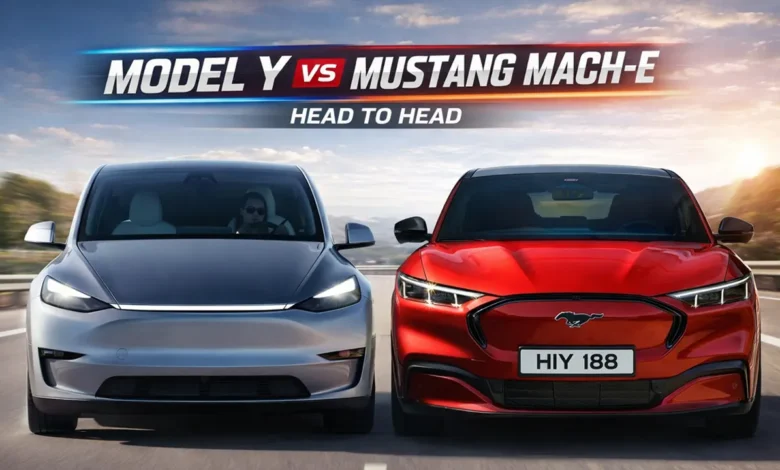
There are purchasing decisions in the electric vehicle market that ultimately reduce to a single variable — and for the American buyer choosing between the Tesla Model Y and the Ford Mustang Mach-E, that variable is range. Not because performance, interior quality, charging network access or software sophistication are irrelevant considerations in this comparison — they are not — but because range is the specification that determines whether an electric vehicle functions as a genuine replacement for the combustion-powered SUV it is intended to succeed, and because the gap between these two vehicles on that specific dimension is wide enough, and the implications of that gap consequential enough, that every other comparative consideration flows from it rather than standing independently beside it.
The Tesla Model Y and the Ford Mustang Mach-E are the two electric SUVs that have defined the American battery-electric utility vehicle segment since the Mach-E’s arrival in 2021 positioned Ford as the first traditional American manufacturer to mount a credible challenge to Tesla’s dominance in the category. Both vehicles target broadly similar buyers — households transitioning from combustion-powered crossovers who want the practicality of a five-seat utility vehicle, the running cost advantages of electric power and the technological sophistication that the best current battery-electric vehicles provide. The question that separates them in the consideration set of that buyer is straightforward and consequential: which one goes further, how much further, and does the difference matter in the real world of American driving conditions, seasonal temperature variation and the highway-dominated long-distance use cases that reveal the true capability gap between competing electric vehicle architectures.
EPA Ratings: The Official Starting Point
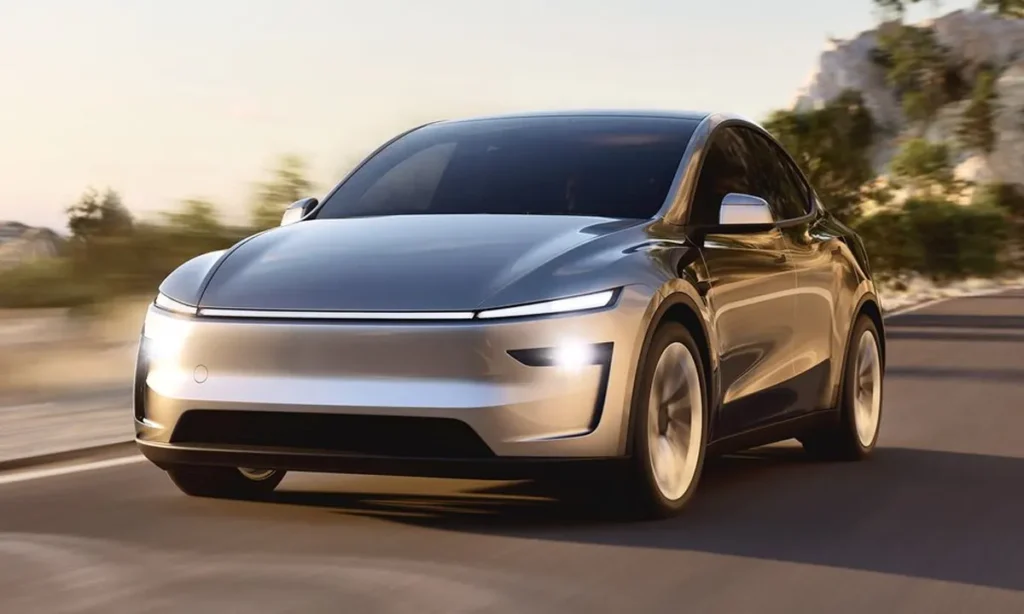
The Environmental Protection Agency’s range ratings provide the standardised starting point for any electric vehicle range comparison in the American market — a consistent methodology applied across all vehicles that enables direct comparison while carrying the important caveat that EPA figures represent a testing cycle whose mix of urban and highway driving, controlled temperature conditions and consistent driving behaviour produces numbers that real-world ownership conditions rarely replicate precisely.
The Tesla Model Y Long Range All-Wheel Drive — the variant most directly comparable to the Mustang Mach-E’s volume-selling configuration in price and positioning — carries an EPA-rated range of 320 miles in its current specification. The rear-wheel-drive Model Y Standard Range achieves 260 miles on the EPA cycle, while the Model Y Performance variant trades some efficiency for its enhanced acceleration, returning 303 miles. Across the Model Y lineup, the range figures represent some of the strongest EPA ratings in the compact electric SUV segment — a reflection of Tesla’s sustained investment in aerodynamic efficiency, powertrain calibration and battery management software optimisation across multiple years of iterative development on the same fundamental platform.
The Ford Mustang Mach-E’s EPA ratings tell a different story. The Mach-E Select Standard Range rear-wheel drive achieves 230 miles. The Mach-E Premium Extended Range rear-wheel drive reaches 312 miles — the closest the Mach-E comes to matching the Model Y Long Range’s EPA figure. The Mach-E GT Performance Edition, the range’s performance flagship, returns 270 miles. The all-wheel-drive configurations of the Mach-E consistently return lower EPA figures than their rear-wheel-drive equivalents — a pattern shared with the Model Y but more pronounced in the Mach-E’s case given the greater efficiency penalty that Ford’s AWD implementation imposes relative to Tesla’s more optimised dual-motor architecture.
Real-World Range: Where the Gap Becomes Consequential
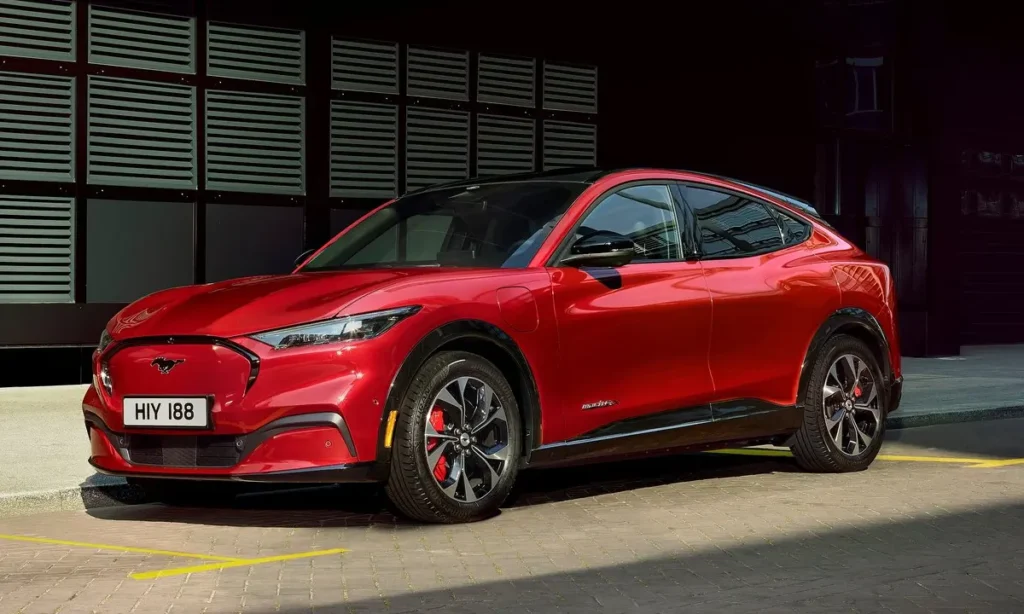
EPA figures establish the comparison framework. Real-world ownership data closes the gap between laboratory methodology and the conditions that American drivers actually encounter — and it is in this real-world dimension that the Model Y’s range advantage over the Mach-E becomes most clearly visible and most practically significant.
Aggregated real-world range testing conducted by automotive publications and independent EV testing platforms consistently demonstrates that the Tesla Model Y achieves a higher percentage of its EPA-rated range under real-world mixed driving conditions than the Mustang Mach-E equivalent. The Model Y Long Range AWD typically achieves between 290 and 310 miles of real-world range under moderate temperature conditions and mixed urban and highway driving — representing approximately 90 to 97 percent of its EPA rating, a retention figure that reflects Tesla’s conservative EPA testing approach and the powertrain efficiency that its years of software and hardware refinement have produced.
The Mustang Mach-E Extended Range rear-wheel drive typically achieves between 270 and 295 miles under equivalent real-world conditions — a retention rate of approximately 87 to 94 percent of its EPA figure. The gap between the two vehicles in absolute real-world range terms is therefore approximately 20 to 30 miles under moderate temperature mixed driving — a differential that is meaningful for drivers whose daily patterns approach the boundaries of their vehicle’s range but manageable for the majority of American owners whose average daily driving falls well within both vehicles’ capability envelopes.
Highway Range: The Most Revealing Test
Highway driving represents the most demanding efficiency test for any electric vehicle because sustained high speeds impose aerodynamic drag loads that the EPA testing cycle’s urban-weighted methodology does not fully capture. At 70 to 75 miles per hour — the realistic American interstate cruising speed that most highway journeys sustain — both the Model Y and the Mach-E return range figures meaningfully below their EPA ratings, but the Model Y’s efficiency advantage becomes proportionally larger at highway speeds than the mixed-driving comparison suggests.
Independent highway range testing at consistent 70 miles per hour cruise speeds typically returns approximately 270 to 285 miles of real-world highway range for the Model Y Long Range AWD — a figure that reflects the Model Y’s aerodynamic coefficient of drag advantage over the Mach-E’s more traditionally styled crossover body. The Mustang Mach-E’s Mustang-influenced exterior design, while visually distinctive and commercially appealing, carries an aerodynamic penalty relative to the Model Y’s more optimised silhouette that becomes directly measurable in highway efficiency numbers.
The Mach-E Extended Range rear-wheel drive achieves approximately 240 to 260 miles of real-world highway range at equivalent speeds — a figure that places the highway range gap between the two vehicles at approximately 25 to 35 miles. For buyers whose electric vehicle use includes regular interstate travel, this gap translates directly into charging stop frequency on long journeys — a practical consequence that compounds across multiple road trips annually into a measurable difference in the ownership experience that specification sheet comparisons alone do not capture.
Cold-Weather Range: The American Winter Reality
No range comparison between electric vehicles intended for American market buyers is complete without addressing cold-weather performance — because the battery chemistry degradation that low ambient temperatures impose on lithium-ion cells affects every electric vehicle and because the magnitude of that effect varies between vehicles in ways that matter enormously for owners in the northern United States, the upper Midwest and the mountain states where winter temperatures regularly reach the range at which electric vehicle range reduction becomes most pronounced.
The Tesla Model Y’s thermal management system — a heat pump architecture introduced across the lineup that recovers waste heat from the drive unit and power electronics to supplement battery and cabin heating — provides cold-weather range retention that independent testing consistently rates among the best available in the compact electric SUV segment. At ambient temperatures of 20 degrees Fahrenheit — a realistic winter condition across a substantial portion of the American continental market — the Model Y Long Range typically retains approximately 70 to 75 percent of its temperate-weather range, returning usable real-world figures in the 215 to 235-mile range under conservative highway driving conditions.
The Mustang Mach-E’s cold-weather performance has been a more variable characteristic across its production history. Earlier model year examples demonstrated cold-weather range retention that fell below the Model Y’s equivalent performance, with some owner-reported figures suggesting retention rates closer to 60 to 65 percent of temperate-weather range at comparable temperatures. Ford’s subsequent software updates and thermal management refinements have improved this characteristic in more recent production examples, narrowing but not eliminating the cold-weather range gap between the two vehicles. For American buyers in cold-climate markets — a buyer population that represents a substantial geographic segment of the country — this differential carries practical weight that warmer-climate buyers may reasonably discount.
Charging Network Access and Its Effect on Effective Range
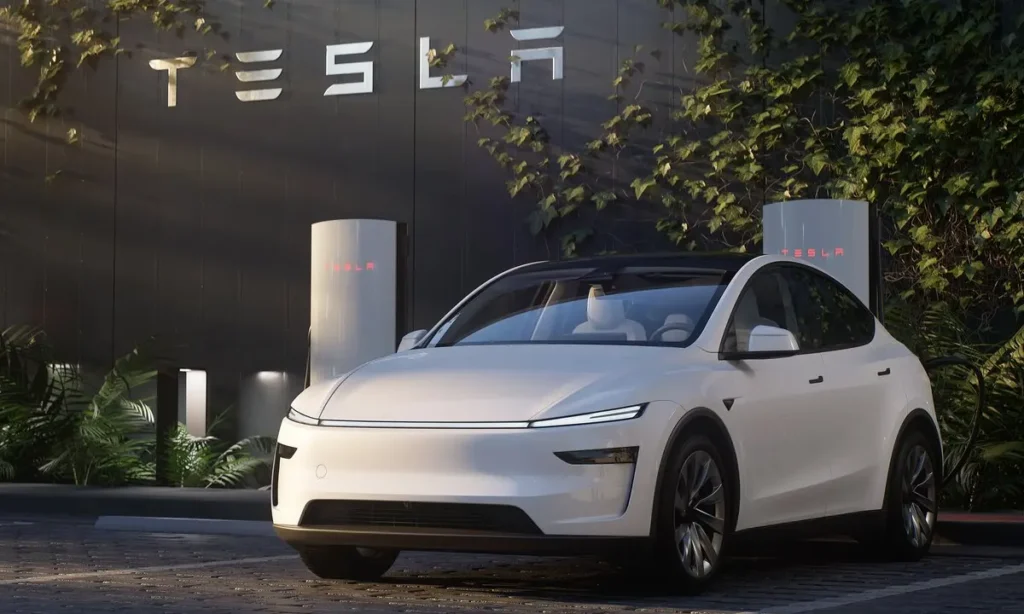
Range figures in isolation do not determine the practical ownership experience of an electric vehicle — charging network access transforms the effective range available to a driver by determining how quickly range can be replenished and how conveniently charging stops can be integrated into journey planning. This dimension of the comparison has shifted significantly in recent years and continues to evolve in ways that affect the real-world range calculus for both vehicles.
Tesla’s Supercharger network — the most extensive, most reliable and most consistently high-powered public charging network available to American EV owners — is accessible to Model Y owners as a native experience, with seamless navigation integration, automatic payment and charging speed optimisation that requires no configuration or third-party account management. The Mach-E accesses the Supercharger network through Ford’s adoption of the NACS connector standard, providing Mach-E owners with Supercharger access that was previously unavailable and that meaningfully improves the Mach-E’s long-distance travel capability relative to its pre-NACS situation.
The effective range advantage that Supercharger access provides — through the ability to plan journeys with shorter, more frequent charging stops at reliably high charging speeds — benefits Model Y owners more completely than Mach-E owners in practice, because the Model Y’s deeper software integration with the Supercharger network produces charging experiences that the Mach-E’s adapter-based access does not fully replicate.
The Verdict: Range Comparison Conclusion
The Tesla Model Y maintains a clear and consistently demonstrated range advantage over the Ford Mustang Mach-E across every dimension of this comparison — EPA ratings, real-world mixed driving, highway efficiency and cold-weather retention. The magnitude of that advantage ranges from approximately 20 miles in the most favourable Mach-E conditions to over 40 miles in cold-weather highway scenarios — a differential that is real, measurable and practically consequential for a meaningful segment of American buyers.
For the buyer whose ownership profile involves regular long-distance highway travel, cold-climate winter driving or a usage pattern that approaches the boundaries of either vehicle’s range envelope — the Model Y’s range advantage is a decisive differentiator that justifies serious weight in the purchase decision. For the buyer whose daily driving patterns are comfortably within both vehicles’ real-world range capability and whose long-distance travel is infrequent — the Mach-E’s range figures are entirely adequate, and the comparison shifts to the dimensions where Ford’s offering presents genuine competitive strengths.
The range war between these two vehicles has a clear winner. Whether that winner’s margin matters to any individual buyer depends entirely on how they drive, where they live and how far they go.
Read: From Aston Martin to Denza Z9 GT, Could 007 Switch to Electric?
Tesla Model Y vs Ford Mustang Mach-E Range Comparison Chart
| Category | Tesla Model Y LR AWD | Ford Mustang Mach-E ER RWD |
| EPA Rated Range | 320 Miles | 312 Miles |
| Real-World Mixed Range | 290–310 Miles | 270–295 Miles |
| Highway Range (70 mph) | 270–285 Miles | 240–260 Miles |
| Cold Weather Range (20°F) | 215–235 Miles | 195–210 Miles |
| EPA Range Retention | ~90–97% | ~87–94% |
| Cold Weather Retention | ~70–75% | ~60–68% |
| Thermal Management | Heat Pump (Standard) | Heat Pump (Recent Models) |
| Charging Network | Tesla Supercharger (Native) | Tesla Supercharger (NACS) |
| Peak Charging Rate | 250 kW | 150 kW |
| Battery Capacity | 82 kWh (Usable) | 91 kWh (Usable) |
| Drivetrain Options | RWD / AWD | RWD / AWD |
| Starting MSRP (2025 US) | Approx. $43,990 | Approx. $42,995 |