- Average insurance ~$322/month for Model 3
- Rates range from ~$98 to $441+ per month
- Varies by driver profile, location and coverage
- Newer models cost more to insure
- Strategies available to lower premiums
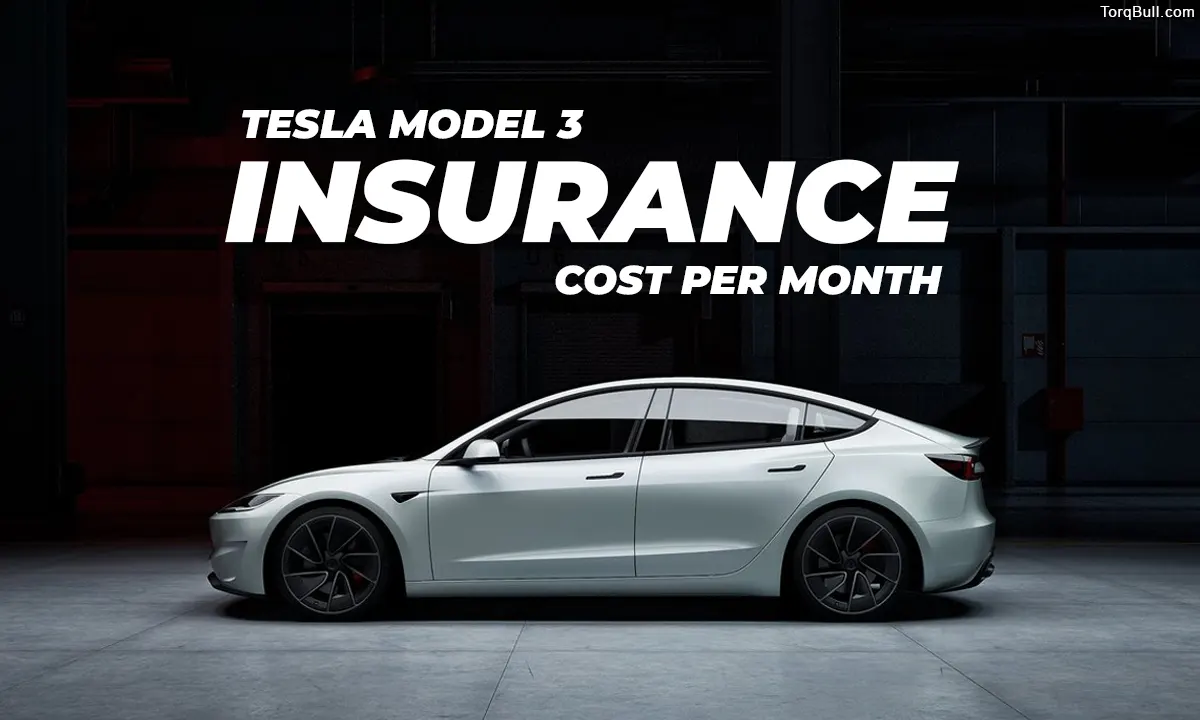
Tesla Model 3 Insurance Cost Per Month: Insurance is the Model 3’s most significant hidden cost surprise — the expense that buyers who focused on low fuel costs and minimal maintenance rarely budget for adequately. While the Model 3 saves approximately $1,000 to $1,500 per year in fuel and maintenance relative to a comparable gasoline sedan, it costs approximately $300 to $600 more per year to insure than that same gasoline competitor. The national average for full coverage on a Tesla Model 3 in 2026 is approximately $3,466 to $3,871 per year — $289 to $323 per month — meaningfully above the national full-coverage average of $3,037 per year for all vehicles. Understanding exactly why this premium exists, which insurers charge the least and what specific actions reduce the monthly rate is the knowledge that determines whether the Model 3’s total cost of ownership remains competitive with gasoline alternatives for any specific buyer’s situation.
Why Tesla Model 3 Insurance Costs More Than Average: The Three Core Reasons
The Tesla Model 3’s above-average insurance cost is not arbitrary — it reflects three specific and quantifiable characteristics that increase the statistical likelihood and severity of insurance claims relative to comparable gasoline sedans.
High repair costs are the primary driver of elevated Model 3 insurance premiums. Tesla vehicles use aluminium body panels, tightly integrated driver assistance sensors — cameras, radar and ultrasonic sensors embedded throughout the body — and a unibody construction approach involving large aluminium sections bonded with adhesives. A minor rear-end collision that costs $800 to repair on a conventional steel-bodied sedan may cost $2,500 to $4,500 on a Model 3 because the impact may require sensor recalibration, aluminium panel replacement and specialised adhesive bonding work unavailable at most conventional body shops. Insurance companies set premiums based on actuarial tables of expected claim costs — and Model 3 claim costs are demonstrably higher than those of equivalent gasoline vehicles. As noted by Janet Ruiz of the Insurance Information Institute: electric vehicles are often more expensive to insure due to the cost of repairs, parts, labour and the limited availability of qualifying repair facilities.
Limited repair network compounds the parts cost issue. Not all body shops can repair a Tesla. Facilities certified to work on Tesla vehicles use proprietary tools and original Tesla parts — alternatives are typically unavailable through the aftermarket supply chain that keeps repair costs competitive for conventional vehicles. This limitation reduces competitive pressure on repair pricing and means insurers pay higher labour rates and longer rental car coverage periods when Model 3s are waiting for authorised repair availability.
Vehicle value relative to comparable gasoline sedans increases the comprehensive and collision premium directly. A 2026 Model 3 starts at $36,990 — significantly higher than a comparable Honda Accord or Toyota Camry at $28,000 to $32,000. Insurers calculate collision and comprehensive premiums as a percentage of replacement value. A more expensive vehicle is more expensive to replace after a total loss, producing higher premiums for those coverage types independent of the repair cost considerations.
The Wide Range: From $98 to $441 Per Month — What Explains the Spread

The most important practical insight about Model 3 insurance costs is that the range between the cheapest and most expensive option for any given driver is enormous — sometimes $2,000 to $3,000 per year — making insurer selection the single most financially impactful insurance decision available to most owners.
National aggregated data from multiple insurance comparison platforms shows Model 3 full-coverage monthly premiums ranging from approximately $98 to $263 per month across major insurers for a good driver profile, rising significantly with younger drivers, poor driving records, high-cost states and newer model years. Insurify’s 2026 data places the average 2025 Model 3 full-coverage premium at $441 per month — a figure driven upward by the inclusion of younger drivers and higher-risk profiles that skew the average. NerdWallet’s median analysis, which controls for driver age at 35 years old with a clean record and good credit, places the Model 3 full-coverage median at approximately $2,459 to $2,800 per year — $205 to $233 per month — reflecting the dramatically lower rates available to lower-risk drivers at competitive insurers.
The spread between sources reflects different driver profiles and methodology, not contradictory data. A 22-year-old with a recent at-fault accident in California insuring a 2025 Model 3 at a high-rate insurer may genuinely pay $441 per month or more. A 40-year-old with a clean 10-year record in Iowa insuring a 2022 Model 3 at the cheapest available insurer may pay $98 to $150 per month. Both numbers are accurate — they describe different drivers and circumstances, not the same cost. The most important takeaway is that every Model 3 owner’s insurance cost is individually determined by a combination of the vehicle, the driver and the market — and aggressive quote comparison is the highest-leverage action available.
Tesla Model 3 Insurance Cost by Insurer — 2026 Cheapest Options
Multiple insurance comparison platforms converge on a consistent set of insurers offering the lowest rates for Model 3 coverage, with meaningful differences between the most and least expensive national carriers.
State Farm consistently ranks as the most accessible mainstream insurer with competitive Model 3 rates, averaging approximately $1,545 per year — approximately $129 per month — according to Insurance.com’s April 2026 analysis. NerdWallet’s analysis places State Farm among the top three cheapest Model 3 insurers nationally. Travelers offers the lowest full-coverage rates for the Long Range and Performance trims according to Insure.com’s 2026 data, averaging approximately $2,505 per year — $209 per month — for the Long Range variant. USAA, available exclusively to military members, veterans and their families, consistently offers the cheapest rates across all Model 3 variants in analyses — MoneyGeek identifies USAA at approximately $187 per month for a 2025 Model 3, while The Zebra places USAA at $167 per month for a 6-month full-coverage policy on the current Model 3. Nationwide also appears among the cheapest conventional carriers across multiple analyses.
Tesla Insurance — Tesla’s own usage-based insurance programme, available in most U.S. states — operates on a different pricing model that may produce lower rates for drivers with good Tesla Safety Scores. Tesla Insurance tracks real-time driving behaviour through the vehicle’s telematics systems, adjusting premiums based on metrics including following distance, hard braking frequency and speed. Drivers with strong Safety Scores report receiving competitive rates that sometimes undercut conventional insurers by 10 to 25 percent. The programme is not ranked in conventional insurer comparisons due to its usage-based pricing structure, but it is worth obtaining a quote before finalising any conventional policy.
Tesla Model 3 Monthly Insurance Cost — Complete Reference Chart
| Driver/Coverage Profile | Monthly Premium Range | Annual Equivalent | Notes |
| National average (all drivers, full coverage) | $289–$323/mo | $3,466–$3,871/yr | Multiple source average, 2026 |
| 35-yr-old, clean record, good credit, full coverage | $166–$233/mo | $1,992–$2,796/yr | NerdWallet / Recharged median range |
| Best rate (USAA, military eligible) | $167–$187/mo | $2,004–$2,244/yr | Restricted to military/veterans |
| Best mainstream rate (State Farm) | $129–$175/mo | $1,545–$2,100/yr | For good drivers in moderate-cost states |
| Travelers Long Range / Performance | $209–$223/mo | $2,505–$2,678/yr | Insure.com 2026 data |
| High-rate state (CA, FL, LA) + good driver | $250–$350/mo | $3,000–$4,200/yr | State market conditions add 25–50% |
| Young driver (age 22–25), clean record | $350–$500+/mo | $4,200–$6,000+/yr | Age surcharge drives cost significantly higher |
| Liability only (good driver, moderate state) | $94–$130/mo | $1,127–$1,560/yr | Exposes owner to full vehicle loss risk |
| Used Model 3 (2021–2022), good driver | $150–$220/mo | $1,800–$2,640/yr | Lower replacement value reduces premium |
All figures are estimates based on aggregated insurance comparison data as of April 2026. Individual rates vary significantly by driver profile, location and insurer.
Read: The Hidden Costs of Owning an EV in the USA. What Nobody Tells You Before You Buy
How State and Location Affect the Monthly Premium
State of residence is one of the three most powerful variables in any Model 3 insurance calculation — capable of moving the monthly premium by $100 to $200 or more independent of any driver or vehicle characteristic.
MoneyGeek’s analysis shows Tesla Model 3 minimum coverage rates ranging from approximately $42 per month in Wyoming — a low-density, low-litigation state with favourable insurance market conditions — to $205 per month in Louisiana for the same minimum coverage. Florida, California, Michigan and New York consistently rank among the highest-cost states for Model 3 insurance, driven by high population density, elevated accident frequencies, costly litigation environments and in Michigan’s case, a unique no-fault insurance structure that historically produces among the highest premiums in the country. Illinois, Washington state, Iowa and Ohio represent moderate-cost markets where good drivers with competitive insurers achieve the lower end of the national range.
Within any given state, ZIP code produces additional variation. Urban core locations — dense downtown areas with high traffic accident rates, elevated vehicle theft and vandalism frequencies — carry higher premiums than equivalent suburban or rural addresses in the same state. Garaging a Model 3 — parking in an enclosed structure rather than on the street — is typically reported as a material rating factor that reduces comprehensive premium by 5 to 15 percent at most insurers.
Model Year and the Insurance Cost Difference: New vs Used Model 3
One of the most actionable insurance cost levers available to Model 3 buyers is the choice of model year — because newer vehicles with higher replacement values carry meaningfully higher full-coverage premiums than older, depreciated examples.
MoneyGeek’s analysis confirms that a 2025 Model 3 averages approximately $284 per month in full coverage across all driver profiles, while older model years command progressively lower premiums as their market values decline. A well-maintained 2021 or 2022 Model 3 insured by a 40-year-old with a clean record might carry a full-coverage premium of $150 to $200 per month — $84 to $134 per month less than the equivalent 2025 model at the same insurer. Over 12 months, this represents $1,008 to $1,608 in annual insurance savings from choosing a used rather than new Model 3 — savings that compound with the lower purchase price of the used vehicle to produce a substantially lower total cost of ownership.
Read: Average Lifespan of Tesla Model 3 Battery in Hot Climates. The Hidden Data Every Owner Needs In 2026
Six Strategies That Meaningfully Reduce the Monthly Premium
Obtain quotes from at least four to five insurers before purchasing. The spread between the most and least expensive insurer for an identical Model 3 and driver profile routinely exceeds $100 per month — $1,200 per year. Spending 30 minutes obtaining quotes from State Farm, Travelers, Nationwide, GEICO and Tesla Insurance before committing to a policy is the highest-return activity available to any new or renewing Model 3 owner.
Enrol in Tesla Insurance if available in your state and your driving habits support it. Tesla Insurance’s telematics-based pricing rewards genuinely safe drivers with premiums that can undercut conventional insurers significantly. Drivers who rarely hard-brake, maintain appropriate following distances and avoid aggressive acceleration consistently report lower Tesla Insurance rates than equivalent conventional coverage.
Choose a higher deductible. Moving from a $500 to a $1,000 deductible on collision and comprehensive coverage typically reduces the premium for those coverages by 10 to 25 percent. For drivers with adequate emergency savings to cover a higher deductible in the event of a claim, this is one of the most reliable premium reduction strategies available.
Bundle home and auto insurance. Most major insurers offer multi-policy discounts of 10 to 20 percent when home and auto policies are placed with the same carrier. For a Model 3 owner paying $2,800 annually in full coverage, a 15 percent bundle discount saves $420 per year.
Maintain an excellent driving record and credit score. Both factors are priced directly into most insurers’ rate calculations. A single at-fault accident can increase a Model 3 premium by 30 to 50 percent. A credit score decline from excellent to fair can produce similar percentage increases at most conventional insurers.
Consider a used Model 3 in a moderate-cost state. The combination of lower replacement value on an older model year and residing in a state with moderate insurance market conditions produces the lowest absolute monthly premiums available. A 2021 Model 3 owned by a 40-year-old with a clean record in Iowa or Illinois at a competitive insurer represents the lower bound of the national Model 3 insurance cost range.