- Home charging as low as $0.06/kWh on off-peak plans
- Full Model 3 charge for under $5
- Cost per mile around 1.5 cents
- Supercharger vs home vs solar cost comparison
- Strategies to minimize EV charging expenses
Cheapest Way To Charge Tesla Model 3: One of the most compelling financial arguments for Tesla Model 3 ownership is what it costs per mile to operate — and nowhere is that argument more favourable than when the charging strategy is optimised correctly. At the national average residential electricity rate of approximately $0.17 per kilowatt-hour, charging a Model 3 costs approximately 4 to 4.5 cents per mile. At a Tesla Supercharger, that cost rises to approximately 8 to 12 cents per mile depending on the station’s rate. At a time-of-use off-peak electricity rate of $0.06 to $0.09 per kilowatt-hour — available through many American utility companies’ EV charging programmes — the Model 3’s cost per mile drops to 1.5 to 2.5 cents, making it one of the cheapest forms of personal transportation available in the United States. This guide ranks every charging method by cost, explains how to access the cheapest rates and provides the specific steps every Model 3 owner can take to minimise their charging costs without sacrificing convenience.
Understanding Tesla Model 3 Charging Economics: The Baseline Numbers
The Tesla Model 3 consumes approximately 0.25 to 0.28 kilowatt-hours per mile in real-world mixed driving conditions — one of the most efficient energy consumption rates of any electric vehicle in the American market. This efficiency figure is the foundation of every charging cost calculation, because it determines how many kilowatt-hours must be purchased from any source to cover any given distance.
At the national average residential electricity rate of $0.17 per kilowatt-hour as of 2026, the Model 3’s energy cost per mile is approximately 4.3 to 4.8 cents. Driving 1,000 miles per month costs approximately $43 to $48 in home electricity — compared to approximately $146 per month for a 30 MPG gasoline vehicle at $3.50 per gallon. The annual saving from home-charged Model 3 ownership versus an equivalent gasoline vehicle is approximately $1,200 for the average American driver covering 15,000 miles per year.
The full Model 3 battery — approximately 57.5 kilowatt-hours usable on the Standard Range RWD and approximately 75 kilowatt-hours on the Long Range — costs approximately $9.20 to $12 to fully charge from empty at the national average rate. In low-rate states like Louisiana and Oklahoma where residential electricity averages $0.11 to $0.12 per kilowatt-hour, a full Long Range charge costs approximately $8.25. In high-rate states like California where rates average $0.29 per kilowatt-hour, the same charge costs approximately $21.75 — a reminder that the cheapest charging strategy varies significantly by geography and local utility pricing.
Method 1: Time-of-Use Off-Peak Home Charging — The Cheapest Available Option
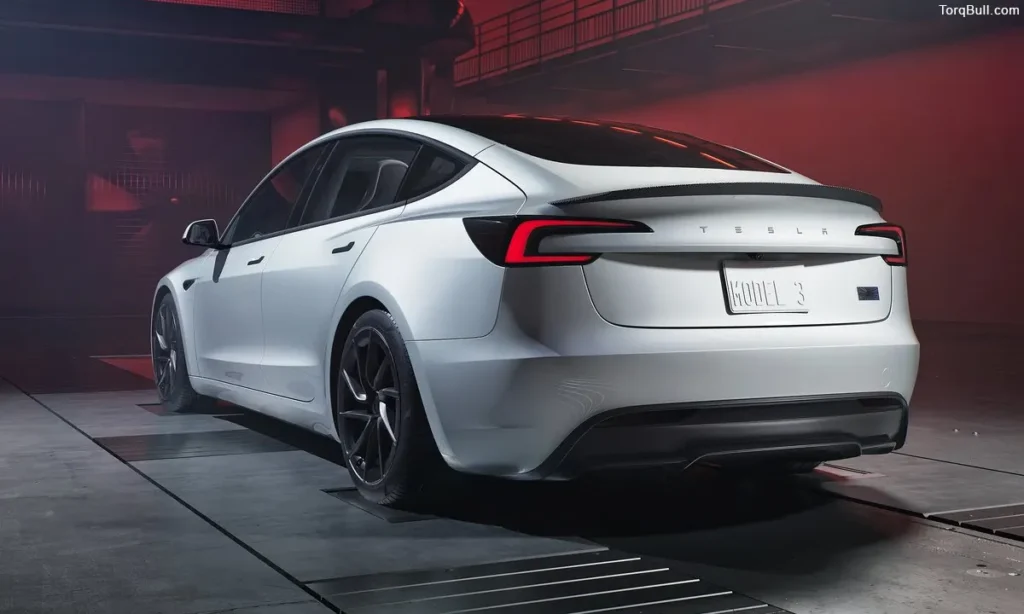
Time-of-use electricity pricing is the most powerful and most accessible tool available to any Tesla Model 3 owner seeking to minimise charging costs — and it requires nothing more than switching to an available utility rate plan and configuring the Tesla app’s scheduled charging feature.
Many American utility companies — particularly in California, Texas, Colorado, Georgia, Illinois and other states with active EV adoption incentive programmes — offer time-of-use rate plans that provide dramatically lower electricity prices during off-peak overnight hours, typically between 9 PM and 6 AM, in exchange for higher rates during peak demand hours in the late afternoon. Off-peak rates on these plans range from approximately $0.06 to $0.13 per kilowatt-hour, compared to peak rates that may reach $0.35 to $0.45 per kilowatt-hour in the same market. Charging exclusively during off-peak overnight hours, when the lower rate applies, can reduce a Model 3 owner’s effective charging cost by 30 to 50 percent relative to a flat-rate electricity plan.
The practical implementation requires two steps. First, contact the local utility company and switch to an available time-of-use or EV rate plan — many utilities have created these specifically for EV owners and actively promote them. Second, configure the Tesla app’s Scheduled Charging or Scheduled Departure feature to ensure charging begins within the off-peak window and completes before it ends. The Tesla app manages this automatically once the schedule is set — the owner does nothing beyond plugging in each night. In states like California with EV-specific utility programmes, the effective off-peak rate can fall as low as $0.06 to $0.07 per kilowatt-hour, reducing the cost per mile to approximately 1.5 to 2 cents — a figure that makes the Model 3 genuinely cheaper to operate per mile than almost any vehicle on the road.
Read: Best Level 2 Home Charger for Tesla Model 3 With Solar Panels
Method 2: Standard Home Level 2 Charging — The Most Practical Everyday Choice
For the majority of Model 3 owners who do not have access to a specialised time-of-use plan or who live in markets where off-peak rates are modest, standard home Level 2 charging on a 240-volt circuit remains the cheapest and most practical everyday charging method — substantially cheaper than any public charging alternative.
A Tesla Universal Wall Connector or third-party NACS-compatible Level 2 charger, hardwired on a 60-amp circuit, delivers up to 44 miles of range per hour at the full 11.5-kilowatt capacity of the Long Range and Performance Model 3’s onboard charger. At the national average rate of $0.17 per kilowatt-hour, this adds 44 miles of range for approximately $1.97 per hour of charging — a cost per mile of approximately 4.5 cents. For the average driver covering 37 miles per day, the daily charging cost is approximately $1.65 at the national average rate, or approximately $50 per month.
The Level 2 charger’s advantage over a standard 120-volt Level 1 outlet is speed rather than cost — both charge at the same electricity rate, but Level 2 delivers up to 10 times more miles per hour. Both are equally cost-effective per mile. Level 1 charging on a standard 120-volt household outlet is adequate for drivers covering 20 miles or fewer daily but impractical for most American commuters whose round-trip commute exceeds what 3 to 5 miles-per-hour Level 1 charging can reliably restore overnight.
Method 3: Solar-Powered Home Charging — The Cheapest Per-Mile Option Available
Solar-powered home charging represents the theoretical lowest cost available to any Model 3 owner who owns or plans to own a rooftop solar installation — and for owners with existing solar capacity whose system produces surplus electricity, it can reduce the effective cost of Model 3 charging to near zero in the long term.
The effective electricity cost of a home solar system, calculated across the 25-year lifespan of a typical residential installation, is approximately $0.05 to $0.08 per kilowatt-hour — significantly below the national average grid rate. An 8-panel solar addition of approximately 3.2 kilowatts — costing approximately $3,500 to $5,000 before the federal 30 percent solar tax credit — generates sufficient electricity to cover approximately 12,000 miles of annual Model 3 driving in most American sunbelt markets. For owners who have installed solar for home energy purposes and have surplus production capacity, the incremental cost of charging the Model 3 from that surplus is effectively zero — already-paid-for sunshine powering transportation without any additional grid electricity purchase.
At an effective solar electricity rate of $0.06 per kilowatt-hour, the Model 3’s solar-charged cost per mile is approximately 1.5 cents — the lowest achievable by any method currently available to American consumers. Over 15,000 annual miles, the difference between solar charging at 1.5 cents per mile and standard home charging at 4.5 cents per mile is approximately $450 per year — meaning a dedicated solar addition for EV charging can pay for itself in incremental fuel savings alone within approximately 8 to 12 years, after which the charging is effectively free.
Method 4: Tesla Supercharger — Convenient but the Most Expensive Regular Option
Tesla Superchargers are the fastest, most convenient public charging option available to any Model 3 owner and an essential tool for road trip planning — but they are the most expensive charging method for owners who have home charging access and should not be the primary daily charging source for any driver who can avoid it.
Tesla Supercharger rates in 2026 range from $0.28 to $0.42 per kilowatt-hour depending on the station’s location, local utility costs and the time of day. At the midpoint rate of $0.35 per kilowatt-hour, charging the Model 3 Long Range from 10 to 80 percent — the typical road trip charging session — costs approximately $18.38 for approximately 52.5 kilowatt-hours of delivered energy. A full charge from empty to 100 percent at Supercharger rates costs approximately $26.25 for the Long Range — approximately $14 more than the same charge at home on a standard electricity rate.
The cost per mile at Supercharger rates is approximately 8.75 to 11.76 cents — two to three times the home charging equivalent, though still meaningfully less than the 11.67 to 15.56 cents per mile of a 30 MPG gasoline vehicle at $3.50 per gallon. Tesla charges idle fees of $0.50 to $1.00 per minute when a vehicle remains connected after charging is complete, and congestion fees at busy locations — both of which add meaningfully to the session cost if the owner is not monitoring the session and moving the vehicle promptly at completion.
Method 5: Third-Party Public DC Fast Charging — Most Expensive Per kWh
Third-party DC fast charging networks — Electrify America, EVgo, ChargePoint and comparable providers — charge $0.35 to $0.50 per kilowatt-hour in most markets, with most networks also charging session initiation fees of $1.00 to $1.50 that increase the effective rate on shorter top-up sessions. Membership plans with networks like Electrify America or EVgo reduce per-kilowatt-hour rates by $0.03 to $0.06, partially offsetting the baseline cost for frequent users.
At $0.45 per kilowatt-hour with a $1.50 session fee, charging 30 kilowatt-hours at a third-party fast charger costs approximately $15.00 — a cost per mile of approximately 11 to 12 cents. This is the most expensive regular charging scenario for a Model 3 owner with home charging access, and represents a per-mile cost approaching the equivalent of gasoline at $3.50 per gallon in a 30 MPG vehicle. Third-party public fast charging is most rationally used as an occasional convenience when home charging is unavailable or when travel routing takes the owner past an available non-Tesla fast charger.
Complete Tesla Model 3 Charging Cost Comparison Chart 2026
| Charging Method | Cost Per kWh | Full Charge Cost (75 kWh LR) | Cost Per Mile | Annual Cost (15K miles) | Best For |
| Solar home charging | ~$0.05–$0.07 | ~$3.75–$5.25 | ~1.25–1.75 cents | ~$188–$263 | Solar panel owners |
| Off-peak TOU home charging | ~$0.06–$0.13 | ~$4.50–$9.75 | ~1.5–3.25 cents | ~$225–$488 | TOU plan + scheduled charging |
| Standard home Level 2 (national avg.) | ~$0.17 | ~$12.75 | ~4.25–4.75 cents | ~$638–$713 | Most homeowners |
| Home Level 2 (low-rate state) | ~$0.11–$0.12 | ~$8.25–$9.00 | ~2.75–3.0 cents | ~$413–$450 | LA, OK, ND, WA owners |
| Home Level 2 (high-rate state) | ~$0.29 (CA avg.) | ~$21.75 | ~7.25–8.0 cents | ~$1,088–$1,200 | CA, HI owners |
| Tesla Supercharger | ~$0.28–$0.42 | ~$21–$31.50 | ~7.0–10.5 cents | ~$1,050–$1,575 | Road trips, occasional use |
| Third-party DC fast charger | ~$0.35–$0.50 | ~$26.25–$37.50 | ~8.75–12.5 cents | ~$1,313–$1,875 | Emergency or travel use |
Annual costs calculated at 15,000 miles per year, 0.25–0.28 kWh/mile. Actual results vary by driving style, climate and battery condition.
Read: Tesla Model 3 Real-World Range at 75 MPH. Road Trip Planning Numbers You Actually Need
Five Strategies That Lower Your Model 3 Charging Cost Right Now
Switch to a time-of-use electricity plan immediately. This is the single highest-impact action available to any Model 3 owner — a 30 to 50 percent reduction in effective charging cost with no hardware investment and no change to the daily routine except configuring the Tesla app’s scheduling feature. Contact the local utility company and ask specifically about time-of-use or EV rate plans.
Use Tesla’s Scheduled Charging feature to charge within the off-peak window. In the Tesla app, navigate to Charging, then Scheduled Charging, and set the window to align with the utility’s off-peak hours. The car charges automatically within the set window every night without any further owner action — capturing the lowest available electricity rate consistently.
Avoid Supercharging for daily charging needs. Supercharger rates are two to three times home rates. Owners who primarily Supercharge rather than home-charge are paying two to three times more than necessary and also accelerating battery degradation through frequent high-current DC charging. Reserve Supercharging for road trips and genuine convenience situations.
Monitor charging efficiency with the Tesla app. The app displays energy delivered per session, cost and miles added. Owners who track this data identify inefficiencies — unusually high energy consumption suggesting a need for tyre pressure adjustment or a charging equipment issue — that silently increase per-mile costs over time.
Consider a dedicated solar addition for EV charging in sun-belt states. For owners in California, Arizona, Texas, Florida and other high-sun-hour markets, the incremental solar capacity required to cover annual Model 3 charging needs is modest — typically 8 to 12 additional panels — and the long-term effective electricity rate of approximately $0.05 to $0.06 per kilowatt-hour delivers the lowest achievable per-mile charging cost available to any American EV owner.