Fuel Economy Fight That Matters Most. Ford F-150 vs Ram 1500 Compared
Real-World MPG Figures, EPA Ratings Across Every Powertrain Configuration, Highway Efficiency Data and the Honest Answer to the Question Every American Truck Buyer Asks at the Pump — Which Full-Size Pickup Actually Costs Less to Fuel Across a Year of Real American Driving, the Ford F-150 or the Ram 1500
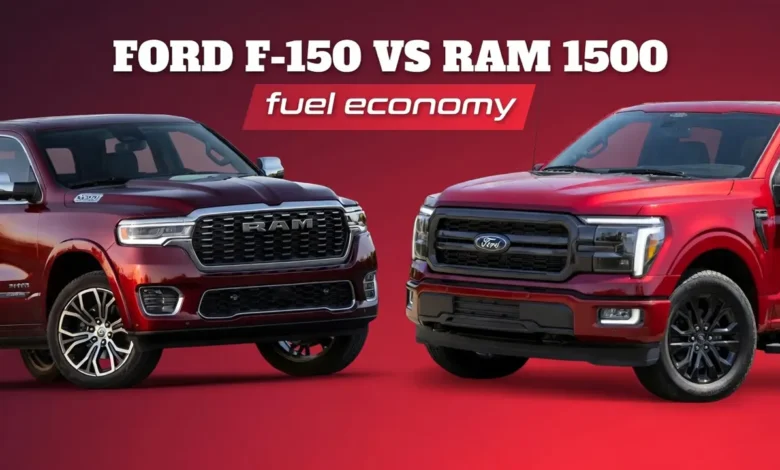
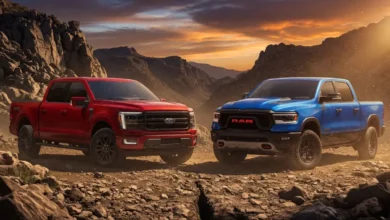
Ford F-150 vs Ram 1500: Fuel economy has never been the first conversation American truck buyers have historically wanted to have — but it has become, across a period of sustained fuel price volatility and increasing powertrain diversity that now spans conventional V8s, turbocharged V6s, hybrid systems and fully electric variants, the conversation that increasingly determines which full-size pickup a buyer drives home. The Ford F-150 and Ram 1500 are the two trucks whose fuel economy comparison matters most in the American market — not because they are the only full-size pickups worth considering, but because they are the two that American buyers choose most frequently and whose powertrain portfolios are now sufficiently broad and sufficiently different in their engineering approaches that comparing them requires examining multiple engine configurations rather than a single representative figure.
Both trucks have invested heavily in fuel economy improvement across their current generations — Ford through the sustained development of its EcoBoost turbocharged V6 family, the addition of a PowerBoost hybrid system and the fully electric F-150 Lightning, and Ram through the eTorque mild hybrid system that it has applied across its V6 and V8 engine lineup as a standard feature rather than an optional upgrade. The result is two trucks whose best fuel economy figures would have been unimaginable from full-size pickups a decade ago and whose worst figures remain the honest reality for buyers who need maximum towing capacity or who prefer the V8 driving experience that a meaningful portion of the truck market continues to choose.
EPA Ratings: F-150 vs Ram 1500 Across Every Engine
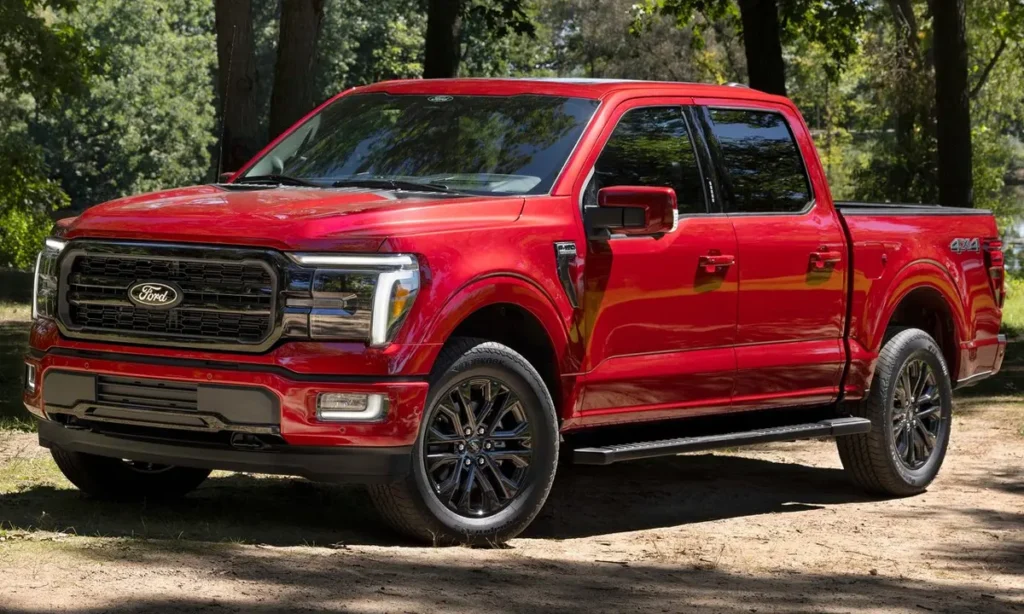
The Ford F-150’s powertrain lineup in current specification spans the 2.7-litre EcoBoost V6, the 3.5-litre EcoBoost V6, the 5.0-litre naturally aspirated V8 and the 3.5-litre PowerBoost full hybrid — each carrying EPA ratings that reflect meaningfully different fuel economy profiles depending on drivetrain configuration and cab and bed combination.
The 2.7-litre EcoBoost F-150 in two-wheel-drive configuration achieves an EPA rating of 20 miles per gallon city, 26 highway and 22 combined — making it the most fuel-efficient non-hybrid powertrain in the F-150 lineup and the configuration that Ford recommends for buyers whose truck use involves modest payload and towing requirements alongside a genuine concern for running costs. The 3.5-litre EcoBoost returns 18 city, 24 highway and 20 combined in two-wheel-drive specification — a modest efficiency penalty for the significant capability increase it provides. The 5.0-litre V8 returns 17 city, 23 highway and 19 combined — figures that reflect the inherent efficiency disadvantage of large-displacement naturally aspirated architecture relative to smaller turbocharged alternatives. The PowerBoost hybrid 3.5-litre achieves the lineup’s peak efficiency at 24 city, 24 highway and 24 combined in two-wheel-drive SuperCrew configuration — a remarkable figure for a full-size pickup and one whose city cycle advantage over the non-hybrid alternatives reflects the hybrid system’s regenerative braking contribution in stop-and-go driving conditions.
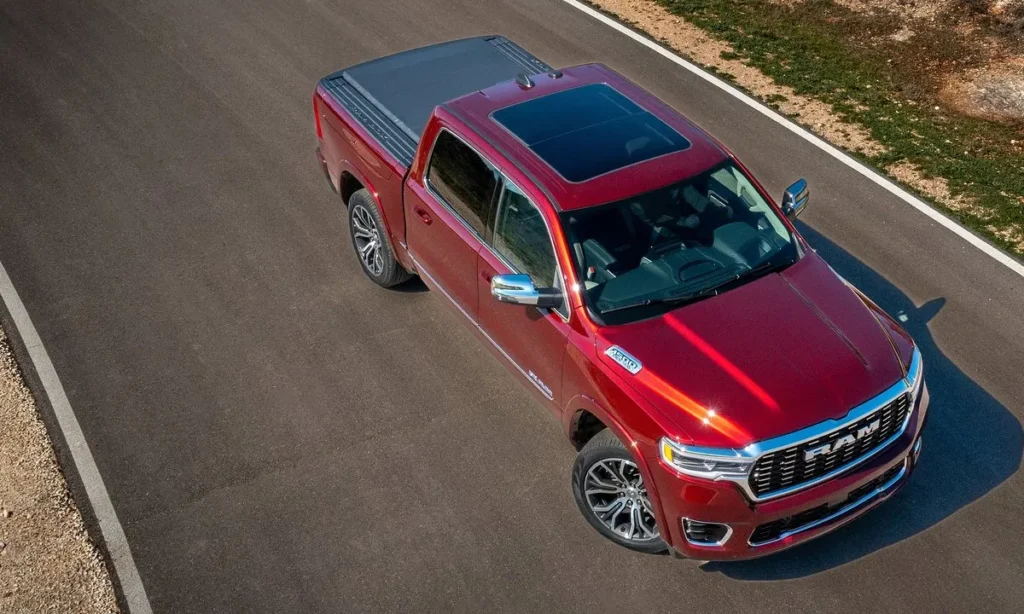
The Ram 1500’s powertrain structure differs from the F-150’s in one significant respect — the standard inclusion of the eTorque mild hybrid system across both its 3.6-litre Pentastar V6 and 5.7-litre HEMI V8 engines, providing a baseline efficiency improvement over non-hybridised equivalents without the full hybrid system’s complexity or cost. The 3.6-litre V6 with eTorque achieves 20 city, 26 highway and 22 combined in two-wheel-drive configuration — matching the F-150’s 2.7-litre EcoBoost precisely on the EPA combined figure. The 5.7-litre HEMI V8 with eTorque returns 17 city, 23 highway and 19 combined in two-wheel-drive specification — again matching the F-150’s V8 figure with near-identical precision on the combined rating. The Ram 1500 TRX’s supercharged 6.2-litre V8, the performance flagship of the lineup, returns 10 city, 14 highway and 11 combined — figures that buyers of that specific variant have already factored into their ownership calculus.
Real-World Fuel Economy: Where the Differences Emerge
The near-identical EPA combined figures across directly comparable F-150 and Ram 1500 configurations suggest a fuel economy competition whose outcome is essentially a draw — and for the majority of real-world American truck owners driving mixed routes across a typical ownership year, that assessment is broadly accurate. Both trucks deliver real-world fuel economy figures that track closely to their EPA ratings under moderate driving conditions, with owner-reported averages across large sample populations typically falling within one mile per gallon of the EPA combined figure in either direction.
Where meaningful real-world differentiation emerges is in specific use conditions. The F-150 PowerBoost hybrid demonstrates a city driving efficiency advantage over all Ram 1500 configurations that the EPA figures suggest but that real-world urban driving amplifies — because the full hybrid system’s electric motor contribution at low speeds and its regenerative braking energy recovery in stop-and-go traffic produces efficiency gains that the eTorque mild hybrid’s more limited electric intervention cannot match. Ram 1500 owners in predominantly urban driving environments who choose the V8 eTorque configuration over the PowerBoost-equivalent F-150 are leaving measurable fuel economy on the table across a high-mileage ownership timeline.
On the highway, the gap between the trucks narrows considerably — because highway driving’s sustained speed profile reduces the regenerative braking advantage that favours the PowerBoost in city conditions and because the Ram 1500’s aerodynamic refinement and cylinder deactivation system on the HEMI V8 contribute to highway efficiency retention that keeps the V8 Ram competitive with V6 F-150 alternatives at sustained cruise speeds.
Read: Toyota Hilux GR Sport: The Ultimate Evolution of Toyota’s Off-Road Performance Pickup
The Hybrid Advantage: PowerBoost vs eTorque
The most consequential fuel economy decision in this comparison is not F-150 versus Ram 1500 but full hybrid versus mild hybrid — and understanding the difference between Ford’s PowerBoost system and Ram’s eTorque clarifies why the two trucks’ real-world fuel economy outcomes diverge most significantly for buyers with specific usage patterns.
The PowerBoost system integrates a 35-kilowatt electric motor into the 3.5-litre EcoBoost’s drivetrain with a 1.5-kilowatt-hour lithium-ion battery — providing sufficient electric motor contribution to meaningfully supplement the combustion engine in low-speed driving, enable a degree of electric-only creep capability and recover braking energy at a rate that the eTorque’s smaller motor and more modest battery cannot approach. The eTorque system’s primary contribution is stop-start refinement improvement and mild torque fill during gear changes and low-speed acceleration — valuable contributions to driving smoothness and modest fuel economy improvement, but not the category-shifting efficiency gain that the PowerBoost delivers in urban driving conditions.
For the American truck buyer whose annual mileage is heavily weighted toward urban and suburban driving — commuting, urban delivery, construction site access in built-up areas — the PowerBoost F-150’s fuel economy advantage over the eTorque Ram 1500 translates into a real annual fuel cost saving that compounds meaningfully across a five or ten-year ownership period.
Read: Why Toyota Hilux Is The Toughest Pickup Truck In The World
The Verdict: Which Truck Wins at the Pump
Across the full spectrum of powertrain configurations and real-world American driving conditions, the fuel economy competition between the Ford F-150 and Ram 1500 produces a result that is closer than either manufacturer’s marketing might suggest and more nuanced than a single combined MPG figure captures.
For buyers choosing naturally aspirated V8 or base V6 powertrains — the Ram 1500’s eTorque standard fitment and the F-150’s EcoBoost V6 deliver essentially equivalent real-world fuel economy across mixed driving, and the decision should be made on powertrain character, capability and preference rather than efficiency differentiation. For buyers willing to invest in the most fuel-efficient configuration each truck offers — the F-150 PowerBoost hybrid holds a genuine and meaningful advantage over every Ram 1500 variant in urban and mixed driving conditions, delivering full-size pickup capability with fuel economy figures that the Ram lineup cannot match in its current configuration.
At the pump, across a full year of American truck ownership, the PowerBoost F-150 wins. For every other powertrain combination — the result is a tie that neither manufacturer needs to be embarrassed by.
Ford F-150 vs Ram 1500 Fuel Economy Comparison
| Configuration | EPA City | EPA Highway | EPA Combined |
| F-150 2.7L EcoBoost V6 2WD | 20 mpg | 26 mpg | 22 mpg |
| F-150 3.5L EcoBoost V6 2WD | 18 mpg | 24 mpg | 20 mpg |
| F-150 5.0L V8 2WD | 17 mpg | 23 mpg | 19 mpg |
| F-150 PowerBoost Hybrid 2WD | 24 mpg | 24 mpg | 24 mpg |
| Ram 1500 3.6L V6 eTorque 2WD | 20 mpg | 26 mpg | 22 mpg |
| Ram 1500 5.7L HEMI V8 eTorque 2WD | 17 mpg | 23 mpg | 19 mpg |
| Ram 1500 TRX 6.2L Supercharged V8 | 10 mpg | 14 mpg | 11 mpg |