Tesla Model 3 Real-World Range at 75 MPH. Road Trip Planning Numbers You Actually Need

- EPA range: 363 miles (Model 3 Long Range)
- Real highway range: ~260–310 miles at 75 MPH
- 15–28% gap between rated and real-world range
- Climate control and speed reduce efficiency
- Critical insight for EV buyers and trip planning
Tesla Model 3 Real-World Range: The EPA range figure on a Tesla Model 3 window sticker is the most cited and least useful number for the driver planning a real highway road trip. It is a combined rating — blending 55 percent city driving and 45 percent highway driving on a standardised test cycle conducted at moderate speeds — and it bears little relationship to what a Tesla Model 3 actually delivers when cruising at 75 MPH on an American interstate with the air conditioning running, a couple of passengers and luggage in the back. For road trip planning, for Supercharger stop calculations and for the honest assessment of whether the Model 3 fits a buyer’s lifestyle, the 75 MPH real-world highway range is the number that matters. This guide provides that number for every current Model 3 variant, explains why the gap from EPA to highway reality exists, and identifies the specific variables that push any individual owner’s results above or below the baseline.
The EPA vs Real-World Highway Gap: Why It Exists and How Large It Is
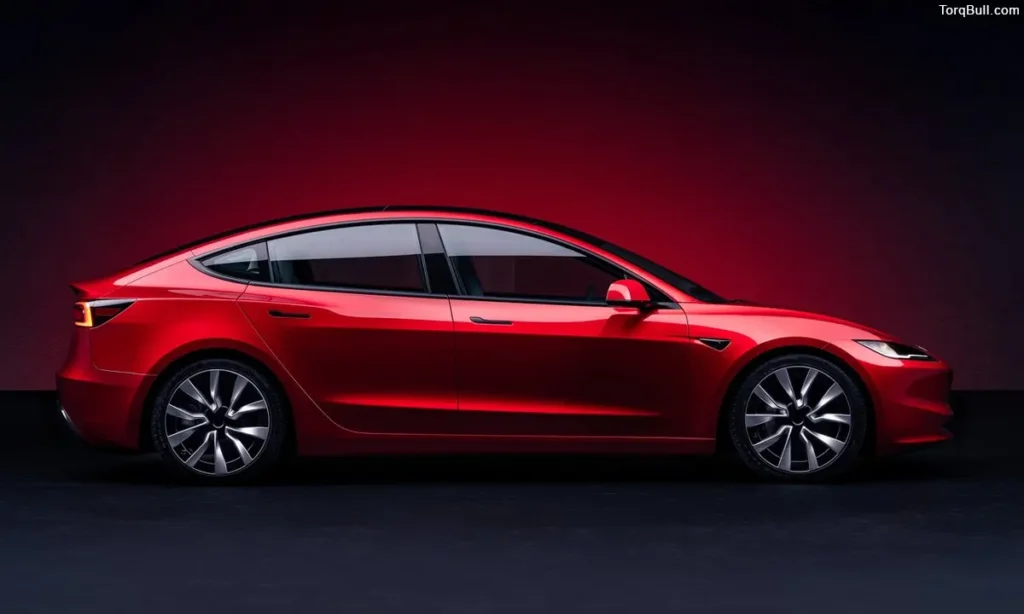
Understanding the Tesla Model 3’s real-world range at 75 MPH begins with understanding why the EPA rating systematically overstates highway range for any electric vehicle — and why this gap is larger for EVs than for gasoline vehicles.
The EPA test cycle assumes an average driving speed across city and highway phases that is significantly lower than the 70 to 75 MPH that represents typical American interstate travel. When an EV hits 75 MPH, aerodynamic drag becomes the dominant force consuming energy — and aerodynamic drag increases with the square of velocity. Doubling speed from 40 to 80 MPH increases aerodynamic drag by a factor of four. The practical consequence is that highway driving at 75 MPH consumes dramatically more energy per mile than city driving at lower speeds, even though a gasoline car’s fuel economy tends to improve on the highway due to the elimination of stop-and-go losses.
The Model 3’s regenerative braking system — which recovers kinetic energy during deceleration and converts it back into usable battery charge — is the primary source of its city driving efficiency advantage. In stop-and-go urban traffic, the Model 3 regularly achieves 190 to 220 watt-hours per mile, its most efficient operating condition. At a steady 75 MPH on the highway with minimal braking, regenerative recovery is minimal, aerodynamic drag is dominant and consumption climbs to 240 to 280 watt-hours per mile depending on the configuration.
Recharged’s comprehensive synthesis of independent instrumented tests and aggregated owner data establishes that the Model 3 family at 70 to 75 MPH typically delivers 15 to 25 percent less range than the EPA label. For the Long Range variants, this still means crossing the 300-mile mark in ideal conditions — a meaningful highway range by any standard. For Standard Range and older generations, the gap brings real-world 75 MPH range down to 200 to 240 miles, which still comfortably covers most American interstate driving distances between Supercharger locations.
Read: Best Level 2 Home Charger for Tesla Model 3 With Solar Panels
Tesla Model 3 Highland: Real-World 75 MPH Range by Trim
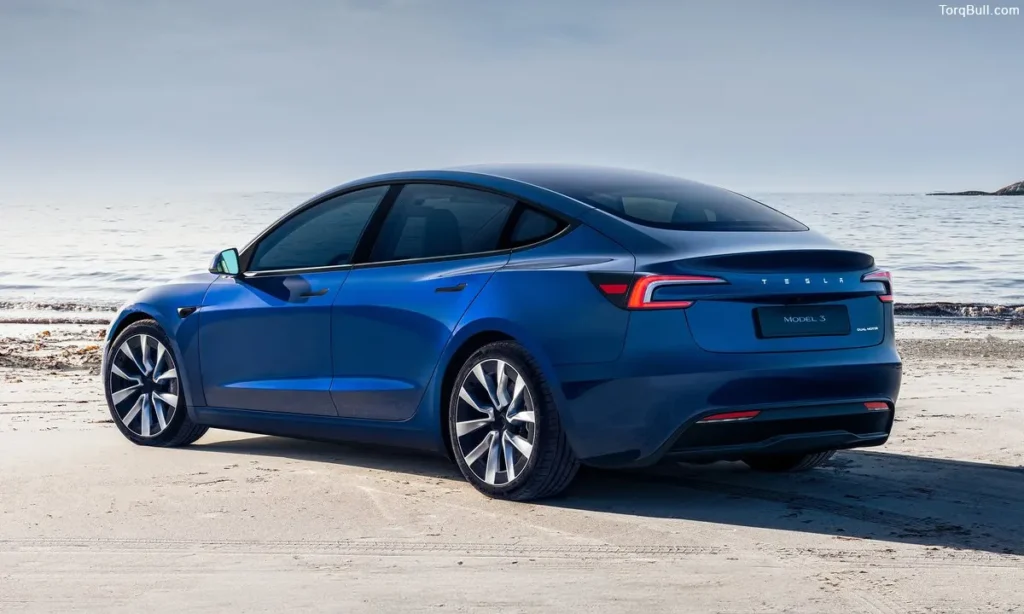
The current Model 3 lineup in the American market is the Highland-generation car — a refresh introduced for 2024 and carrying forward into 2025 and 2026 with aerodynamic improvements, updated battery chemistry in some configurations and low-rolling-resistance 18-inch Photon wheels on Long Range variants that contribute meaningfully to efficiency.
Model 3 Long Range RWD (EPA: 363 miles)
The Long Range RWD is the efficiency leader of the Model 3 family and the variant that produces the most impressive real-world highway range results. An Out of Spec Reviews test at 70 MPH recorded 386 actual miles — exceeding the EPA figure — driven at the lower, more efficient highway speed. At a more representative 75 MPH, Car and Driver’s instrumented highway loop recorded results in the 300-mile range, making the Long Range RWD the first Model 3 to consistently cross 300 miles in the Car and Driver 75 MPH highway test. The Out of Spec test recorded energy consumption of 206 watt-hours per mile at 70 MPH — an exceptionally efficient figure reflecting the 18-inch wheel specification and the Highland’s aerodynamic improvements. At 75 MPH, consumption rises to approximately 220 to 240 watt-hours per mile in mild conditions, producing a practical highway range of 290 to 330 miles.
Model 3 Long Range AWD (EPA: 341 miles)
The Long Range AWD trades approximately 22 miles of EPA range for all-wheel drive traction, but the real-world 75 MPH penalty versus the RWD is more pronounced than the EPA gap suggests. The front electric motor adds drag at highway speeds even when not actively driving the front wheels, increasing consumption to approximately 240 to 265 watt-hours per mile at 75 MPH. The Out of Spec five-car comparison recorded 365 actual miles for the Panasonic-battery Long Range AWD at 70 MPH — exceeding EPA — while the LG-battery variant with 19-inch Sport wheels recorded 308 miles at the same speed, demonstrating that wheel choice alone produces a 57-mile range difference between two otherwise similar vehicles. EVspecsHub’s analysis of owner data at 75 MPH places the Long Range AWD consistently in the 240 to 260-mile range — approximately 70 to 76 percent of EPA in mild conditions.
Model 3 Performance AWD (EPA: 303 miles)
The Performance trim’s 20-inch wheels and performance-oriented tyres are the primary cause of its substantially lower highway efficiency relative to the Long Range variants. The Out of Spec test recorded 288 actual miles at 70 MPH — below EPA — and energy consumption of 265 watt-hours per mile, significantly higher than the Long Range RWD’s 206 watt-hours per mile at the same speed. At 75 MPH, the Performance delivers approximately 240 to 270 miles of real-world highway range — meaningful for a sports-performance vehicle but substantially below the Long Range variants. Car and Driver’s 75 MPH test result for the Performance was also lower than its Long Range counterpart, consistent with the wheel and tyre specification’s dominant effect on highway efficiency.
Model 3 Standard Range / Rear-Wheel Drive (EPA: 272 miles)
The Standard Range Model 3 uses an LFP (lithium iron phosphate) battery chemistry rather than the nickel-based packs in Long Range variants. The Out of Spec five-car comparison recorded 277 actual miles at 70 MPH — just above EPA — with energy consumption of 213 watt-hours per mile. At 75 MPH in mild conditions, real-world range typically falls in the 210 to 240-mile range, providing adequate coverage for the majority of American Supercharger spacings but leaving less comfort margin than the Long Range variants on stretches with wider charger separation.
Read: Tesla Model 3 vs Toyota Prius. Which Car Actually Wins In 2026?
Tesla Model 3 Real-World Range at 75 MPH — Complete Reference Chart
| Model 3 Variant | EPA Range | 70 MPH Test Range | Est. 75 MPH Range | Wh/mi at 70 MPH | Key Factor |
| Long Range RWD | 363 miles | ~386 miles | ~290–330 miles | 206 Wh/mi | Most efficient, 18″ wheels |
| Long Range AWD (Panasonic) | 341 miles | ~365 miles | ~260–300 miles | 215 Wh/mi | AWD traction, slight drag |
| Long Range AWD (LG / 19″ wheels) | 305 miles | ~308 miles | ~240–270 miles | 249 Wh/mi | 19″ wheels hurt highway |
| Performance AWD | 303 miles | ~288 miles | ~240–270 miles | 265 Wh/mi | 20″ perf tyres, highest drag |
| Standard Range RWD | 272 miles | ~277 miles | ~210–240 miles | 213 Wh/mi | LFP battery, smaller pack |
All figures based on mild weather (approximately 70°F), flat highway, climate control active. Real results vary significantly with speed above 75 MPH, temperature and load.
Read: Range War Decides the Winner! Tesla Model Y vs Ford Mustang Mach-E Range Comparison
The Five Biggest Factors That Determine Your Specific 75 MPH Range
Speed Above 75 MPH — The Most Controllable Variable
The relationship between speed and energy consumption is not linear but exponential. Recharged’s analysis demonstrates that dropping from 78 to 70 MPH can recover 10 to 15 percent additional range — sometimes eliminating an entire Supercharger stop on a long trip. Owner data from the Tesla Motors Club forum confirms that drivers who maintain 65 to 70 MPH on highway sections consistently achieve energy consumption closer to 200 to 215 watt-hours per mile, while those cruising at 78 to 80 MPH see consumption climb to 270 to 290 watt-hours per mile. The mathematical implication on the Long Range RWD is a real-world range difference of approximately 70 to 80 miles between a 70 MPH and an 80 MPH cruise — a difference larger than the gap between the Standard Range and Long Range variants at the same speed.
Temperature — Cold Weather’s Dramatic Effect
Cold temperatures reduce the Model 3’s real-world highway range more than any factor except speed. Recharged’s data shows that cold temperatures, wet roads and headwinds can reduce highway range by a further 10 to 30 percent below mild-weather results — meaning that winter highway range at 75 MPH can fall to 60 to 70 percent of EPA for any Model 3 variant. A Long Range RWD rated at 363 miles EPA might achieve 290 to 310 miles at 75 MPH in mild conditions, and only 215 to 250 miles at 75 MPH in 20 to 30°F temperatures with the heat pump managing cabin heating. The heat pump on the Highland-generation Model 3 is significantly more efficient than resistance heating — recovering some of the winter range penalty relative to older Model 3 generations — but cold weather remains the most significant uncontrollable variable in highway range planning.
Wheel Size — The Easily Overlooked Choice
The Out of Spec five-car comparison produced the most compelling wheel-size data in any publicly available Model 3 range test. The 18-inch Photon wheel Long Range AWD achieved 365 miles at 70 MPH, while the 19-inch Sport wheel Long Range AWD achieved 308 miles at the same speed — a 57-mile difference entirely attributable to wheel and tyre specification. This 15.6 percent range penalty from upgrading to 19-inch wheels is consistent with data from European owners who report 15 percent consumption increases switching from 18-inch to 19-inch wheels, and directly applicable to American buyers considering the 19-inch Sport wheel upgrade. At 75 MPH highway speeds, the aerodynamic and rolling resistance cost of larger wheels is maximally expressed — buyers who prioritise road trip range should always select 18-inch wheels.
Headwinds — The Road Trip Variable Most Plans Ignore
A sustained 15 MPH headwind increases the Model 3’s effective aerodynamic resistance by the equivalent of driving faster — producing energy consumption increases of 10 to 20 percent at highway speeds. A Long Range AWD planning a 250-mile highway leg with comfortable margin in calm conditions may find its plan stressed by an afternoon headwind developing across a flat prairie route. Trip planning that accounts for weather conditions — particularly in the Midwest and Great Plains where sustained headwinds are common — prevents the kind of range anxiety that results from optimistic planning assumptions encountering real atmospheric conditions.
Passenger and Cargo Load — Modest but Real
A fully loaded Model 3 — four adult passengers, roof cargo and luggage — can add 10 to 20 percent to highway energy consumption relative to a solo driver with no cargo, primarily through the increased rolling resistance and the greater kinetic energy that must be managed at speed. This effect is modest compared to speed and temperature but meaningful on very long legs where margins are thin.
Practical Road Trip Planning at 75 MPH
The most useful application of the 75 MPH range data is practical Supercharger stop planning. Recharged recommends building in a 10 to 15 percent buffer beyond the tested range figure — meaning a Long Range RWD that delivers 300 miles in a 75 MPH test should be planned with comfortable legs of 250 to 265 miles rather than pushed to its tested limit. This buffer accommodates speed variation, unexpected traffic, brief detours and the temperature variability that real-world routes involve.
The Model 3’s onboard trip planner, which accounts for speed, temperature, elevation change and current battery level, provides stop-by-stop charging recommendations that are generally accurate within 5 to 10 percent of actual consumption for drivers who maintain near-planned speeds. Trusting the trip planner’s recommendations rather than attempting to beat them by pushing speed produces the least stressful and most time-efficient road trip outcomes — because arriving at a Supercharger with 15 percent rather than 5 percent does not meaningfully increase charging time at the speeds the V3 Supercharger network delivers, while it eliminates the anxiety of monitoring a dropping percentage indicator.