Best Level 2 Home Charger for Tesla Model 3 With Solar Panels
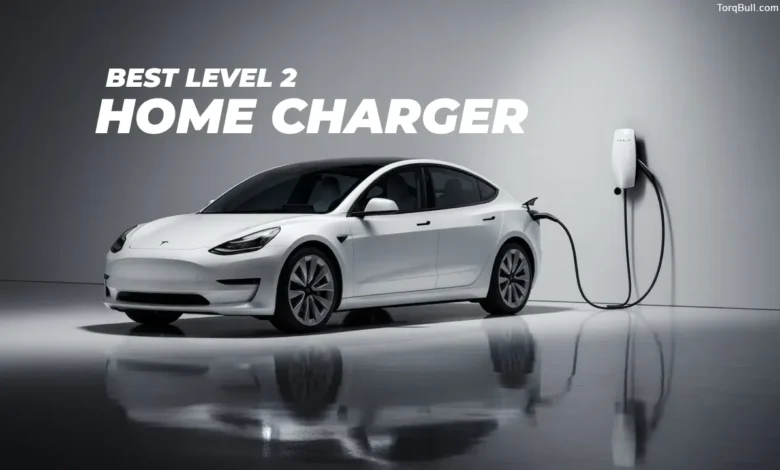
- Tesla Wall Connector delivers 11.5 kW with NACS support
- Emporia charger offers solar integration and energy monitoring
- Lower-cost options under $450 available
- Focus on solar compatibility and load management
- Best Level 2 chargers ranked by speed and total cost
Best Level 2 Home Charger for Tesla Model 3: Charging a Tesla Model 3 at home with solar panels represents one of the most financially and environmentally compelling combinations available to American homeowners in 2026. A fully solar-powered Level 2 charging setup eliminates fuel costs entirely, produces zero tailpipe emissions and — in states with favourable net metering policies — delivers the lowest possible per-mile operating cost of any vehicle on the road. But making the combination work optimally requires choosing the right Level 2 charger for the specific demands of a solar-integrated system — because not all home chargers are created equal when it comes to smart scheduling, solar monitoring integration, dynamic load management and the specific connector requirements of the Tesla Model 3. This guide identifies the five best Level 2 chargers for Tesla Model 3 owners with solar panels, explains what makes each one superior or inferior in a solar context and provides the specific technical guidance needed to optimise the combination of rooftop solar and home EV charging.
How Solar Panels and a Level 2 Charger Work Together
Before selecting a charger, understanding how a home solar system interacts with an EV charger eliminates the most common misconceptions and helps set realistic expectations for the charging system’s performance.
The most important insight for solar-plus-EV charging is that direct solar-to-EV charging — where the Model 3 charges exclusively from real-time solar production during daylight hours — is possible but requires specific solar inverter and charger compatibility to function correctly, and is not the approach most solar homeowners use. The more common and more practically effective approach is net metering: solar panels generate power during daylight hours and export surplus electricity to the grid, earning bill credits. The Tesla Model 3 charges from the grid at night — typically between midnight and 6 AM during off-peak rates — and the monthly net result is that solar production offsets EV charging consumption with no battery storage required.
The 2025 Model 3 Long Range achieves approximately 3.5 to 4.0 miles per kilowatt-hour in real-world conditions. Average daily driving of 37 miles requires approximately 9.4 to 10.6 kilowatt-hours of charging per night — the equivalent of 13 to 18 percent of the Model 3’s 60 to 82 kilowatt-hour battery. This modest daily charging requirement means that most home solar systems of 6 kilowatts or larger generate sufficient surplus electricity across a full day to cover the next night’s EV charging, without expanding the existing solar installation for the majority of American climate zones.
A Level 2 charger — operating at 240 volts versus the 120 volts of a standard household outlet — is essential for practical daily Model 3 charging. The Tesla Wall Connector delivers up to 11.5 kilowatts at 48 amps, fully recharging a Model 3 Long Range from empty in approximately seven hours. A 32-amp Level 2 charger delivers approximately 7.7 kilowatts, completing the same charge in approximately ten hours — adequate for overnight charging of typical daily driving distances.
Read: Average Lifespan of Tesla Model 3 Battery in Hot Climates. The Hidden Data Every Owner Needs In 2026
1. Emporia EV Charger: The Best Level 2 Charger for Solar Integration

Price: Under $450 | Power: 48A / 11.5kW | Cable: 24 feet | NACS: Via included adapter | Solar Integration: Best in class | Tax Credit: Qualifies ($500 federal)
The Emporia EV Charger is the superior choice for Tesla Model 3 owners with rooftop solar — specifically because of its deep integration with Emporia’s whole-home energy monitoring ecosystem. Multiple independent review sources, including Recharged and SimpleSwitch, identify Emporia as the standout choice for owners who want to understand and optimise their home energy usage alongside EV charging. The charger offers solar integration, dynamic load management, detailed usage statistics and dependable performance at a price below $450 — significantly less than the Tesla Wall Connector or ChargePoint Home Flex.
The Emporia EV Charger’s dynamic load management feature automatically adjusts the Model 3’s charging speed based on real-time household electrical consumption, preventing the total load from exceeding the panel’s rated capacity. For solar homeowners, this means the charger can be configured to increase charging speed when solar production is high — reducing grid draw during peak solar hours — and throttle back automatically when appliances like air conditioning or an electric dryer are running simultaneously. Owners who also use Emporia’s Vue whole-home energy monitor gain a unified dashboard showing solar production, home consumption and EV charging in real time — the most complete picture of household energy flows available in any residential charger integration.
The 24-foot cable includes a NACS adapter for compatibility with all Tesla Model 3 variants, and the charger qualifies for the federal 30 percent tax credit on installation costs — capped at $500 for residential installations — further reducing its effective cost. SimpleSwitch specifically notes that Emporia “delivers premium smart features at an unbeatable price” and describes it as “perfect for homeowners who want to understand their energy usage.”
2. Tesla Universal Wall Connector: The Seamless Tesla Ecosystem Choice
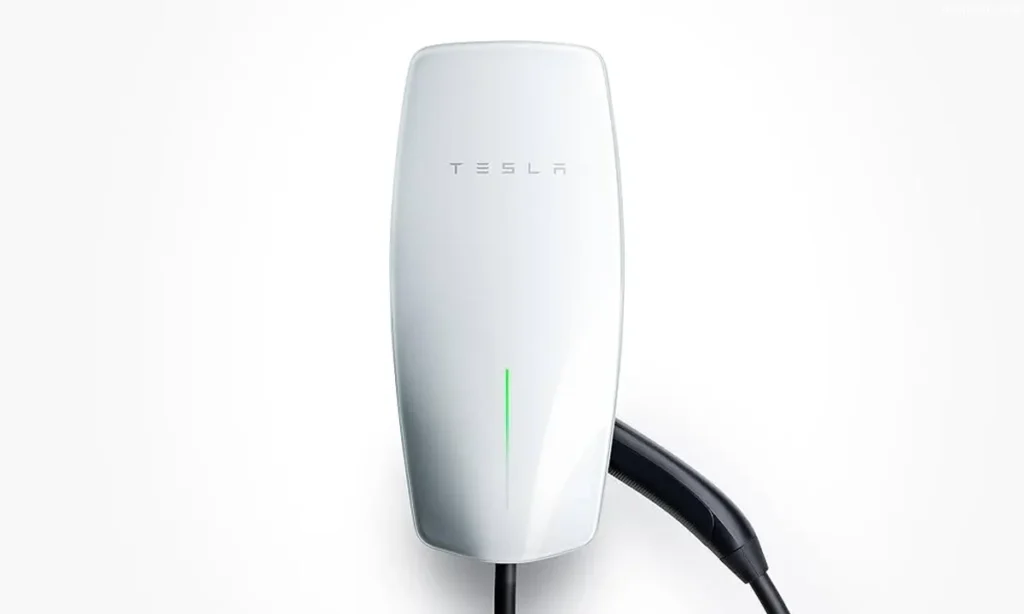
Price: ~$550 | Power: 48A / 11.5kW | Cable: 24 feet | NACS: Native | Warranty: 4 years | Tax Credit: Does not qualify
The Tesla Universal Wall Connector is the most seamlessly integrated charging solution for Tesla Model 3 owners — the charger Tesla itself produces, designed natively for the NACS connector used on all current Model 3 variants and fully integrated with the Tesla app for scheduling, monitoring and charging history review. EnergySage specifically praises its four-year warranty — a full year longer than any other charger on its top five list — as providing additional ownership confidence for a device used daily.
The Tesla Universal Wall Connector’s key advantage over third-party chargers is its native app integration: Model 3 charging schedules set in the Tesla app sync automatically with the Wall Connector, requiring no separate charger-specific app configuration. Owners can set departure times, precondition the battery before driving and monitor charging status without switching between applications. At 48 amps and 11.5 kilowatts, it matches the maximum AC charging rate of the Model 3 Long Range — delivering the fastest possible Level 2 home charging speed.
The primary limitation for solar homeowners is the Wall Connector’s relative lack of solar-specific smart features compared to the Emporia. It does not natively integrate with most home solar monitoring systems, does not offer dynamic load management in response to solar production curves and does not provide the whole-home energy monitoring dashboard that Emporia includes in its ecosystem. For Model 3 owners whose primary priority is Tesla ecosystem seamlessness over solar optimisation, the Universal Wall Connector is the correct choice. For owners whose primary priority is maximising the financial benefit of their solar system, the Emporia’s solar integration makes it the superior option.
The Tesla Universal Wall Connector does not currently qualify for the federal 30 percent tax credit on residential EV charger installations — a distinction that adds approximately $165 in effective cost advantage to competing chargers that do qualify.
3. ChargePoint Home Flex: The Best Overall Third-Party Charger
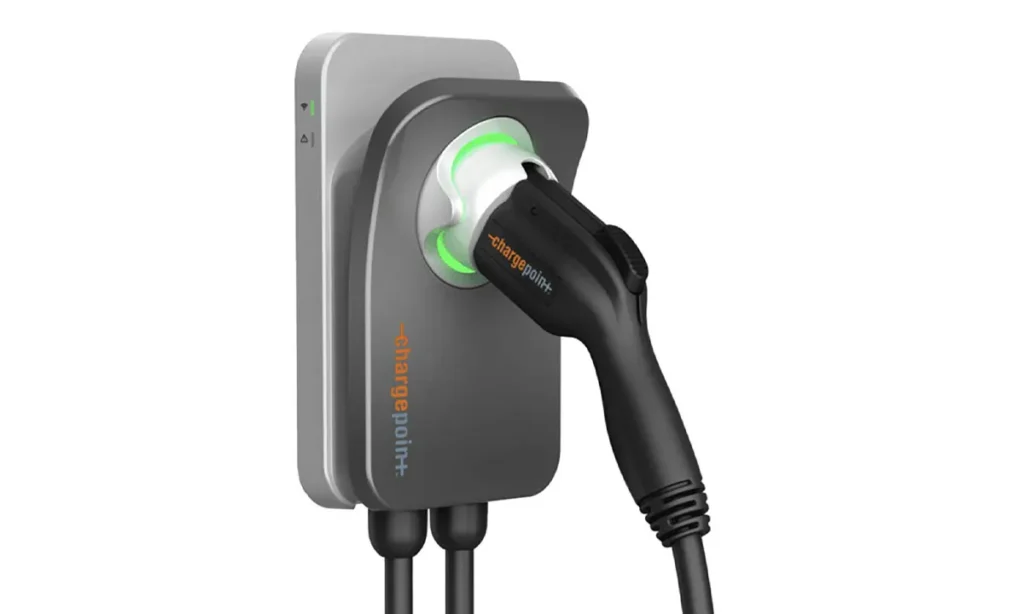
Price: ~$600–$700 | Power: 16–50A adjustable / up to 12kW | Cable: 23 feet | NACS: Available | Warranty: 3 years | Tax Credit: Qualifies
EnergySage ranks the ChargePoint Home Flex as its overall top Level 2 charger for 2026, citing its “strong mix of power, flexibility, and reliability.” The Home Flex’s adjustable amperage — configurable from 16 to 50 amps — is its most distinctive feature, allowing installation on a 30-amp circuit today and upgrade to 50 amps when the electrical panel is expanded, without replacing the charger. This future-proofing capability makes it the best choice for Model 3 owners who anticipate panel upgrades or who are uncertain of their current panel’s available capacity.
ChargePoint’s scheduling capabilities are comprehensive — off-peak charging windows, cost tracking and time-of-use optimisation are all available through the ChargePoint app. The app’s reliability and detail have made it a consistent industry reference point for charging management quality. ChargePoint Home Flex now supports NACS connector directly, eliminating the adapter requirement that earlier J1772-only versions imposed. Multiple sources confirm it qualifies for the full $500 federal tax credit through 2032.
4. Grizzl-E Classic: The Durable Outdoor Specialist
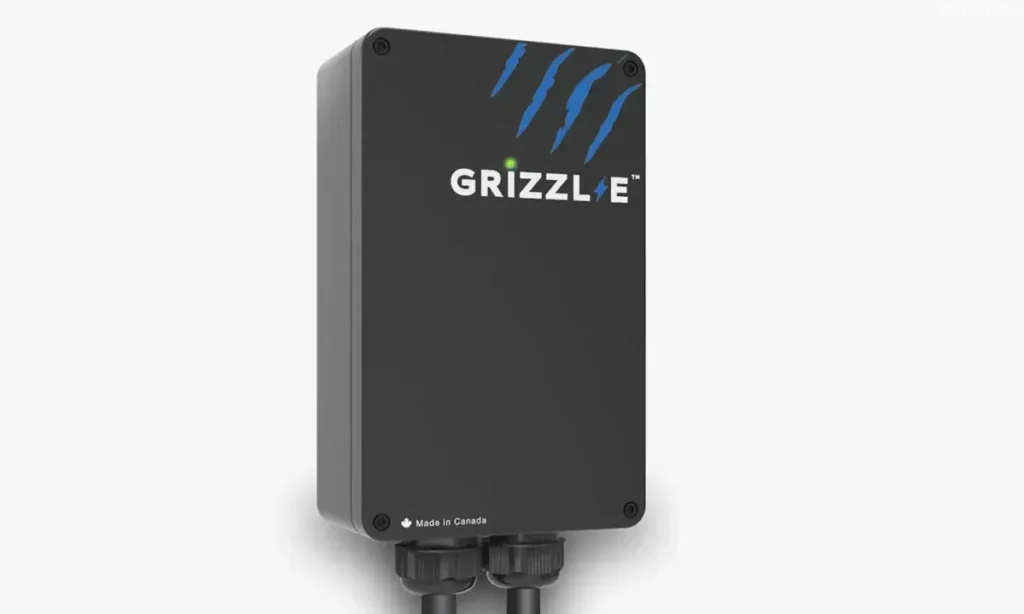
Price: ~$350–$400 | Power: 40A / 9.6kW | Cable: 24 feet | NACS: Via adapter | Warranty: 3 years | Tax Credit: Qualifies
The Grizzl-E Classic is the optimal choice for Tesla Model 3 owners whose charging installation is in a harsh outdoor environment — cold northern climates, coastal salt-air environments or high-humidity regions. Its metal enclosure with NEMA 4 outdoor rating provides waterproofing and weather resistance that outperforms the plastic enclosures of most competing chargers. SimpleSwitch notes the Grizzl-E has “the best long-term reputation” among the chargers it evaluated, with “mechanical components that last 20-plus years.”
The Grizzl-E’s simplicity is its primary limitation for solar-integrated setups — it does not offer smart scheduling, solar integration, dynamic load management or app connectivity in its Classic configuration. For owners who prefer to schedule charging using the Tesla app’s native scheduling rather than a charger-side smart system, this limitation is irrelevant. For owners who want sophisticated solar optimisation, the Grizzl-E’s simplicity is a meaningful disadvantage relative to the Emporia.
Read: How Smart Is the Changan Deepal S05 Compared to Tesla and BYD?
5. Wallbox Pulsar Plus: Compact Form Factor With Smart Features

Price: ~$650 | Power: 40A / 9.6kW | Cable: 25 feet | NACS: Via adapter | Warranty: 3 years | Tax Credit: Qualifies
The Wallbox Pulsar Plus is the most compact Level 2 home charger in the top five — an advantage for garages with limited wall space or multi-vehicle households where visual footprint matters. Recharged notes Wallbox as occupying the space “where you want smart features but don’t want to pay Tesla or ChargePoint money,” and highlights its ability to share power between two Wallbox units — a specific advantage for homes with two EVs that need load balancing without a panel upgrade.
For solar homeowners specifically, the Wallbox Pulsar Plus supports time-of-use charging schedules and app-based monitoring, but its solar integration is less sophisticated than the Emporia’s dedicated solar monitoring ecosystem.
Read: Tesla Model 3 vs Toyota Prius. Which Car Actually Wins In 2026?
Level 2 Chargers for Tesla Model 3 With Solar — Complete Comparison Chart
| Charger | Max Power | NACS | Solar Integration | Smart Features | Price (Unit) | Tax Credit | Best For |
| Emporia EV Charger | 48A / 11.5kW | Adapter included | Excellent (whole-home) | Dynamic load management, monitoring | Under $450 | Yes ($500 federal) | Solar homeowners |
| Tesla Universal Wall Connector | 48A / 11.5kW | Native | Basic (Tesla app) | App scheduling, Tesla integration | ~$550 | No | Tesla ecosystem users |
| ChargePoint Home Flex | 50A / 12kW | Available | Good (scheduling) | Off-peak scheduling, adjustable amps | ~$600–$700 | Yes ($500 federal) | Future-proofing, panel flexibility |
| Grizzl-E Classic | 40A / 9.6kW | Adapter needed | None | None | ~$350–$400 | Yes | Harsh outdoor environments |
| Wallbox Pulsar Plus | 40A / 9.6kW | Adapter needed | Basic | Load sharing, app scheduling | ~$650 | Yes | Two-EV households |
Key Buying Considerations for Solar-Plus-Model 3 Charging
Electrical panel capacity is the first consideration before purchasing any Level 2 charger. A 48-amp charger requires a dedicated 60-amp circuit. A 40-amp charger requires a 50-amp circuit. Homes with limited panel capacity may need a panel upgrade — adding $500 to $2,000 to installation costs — or a charger with dynamic load management, like the Emporia, that adjusts charging speed in real time to prevent panel overloads without requiring an upgrade.
Net metering versus direct solar charging determines how much solar-specific software intelligence the charger needs. Owners on standard net metering — where solar credits offset overnight charging costs — can use any charger with basic scheduling capability, setting the charging window to off-peak overnight hours. Owners on California’s NEM 3.0 or other reduced-credit net metering structures benefit specifically from direct solar charging capability — using solar production in real time during daylight hours — which requires either the Emporia’s dynamic load management or a compatible solar inverter that communicates directly with the charger.
Installation cost varies significantly by home configuration. Charger hardware costs range from $350 to $700. Professional installation by a licensed electrician ranges from $300 to $1,500 depending on panel proximity, the need for conduit, and local permit requirements. The federal 30 percent tax credit on installation costs — capped at $500 for residential installations and available through 2032 — applies to the combined hardware and installation cost for qualifying chargers. Emporia, ChargePoint, Grizzl-E and Wallbox all currently qualify. The Tesla Universal Wall Connector does not.
For the majority of Tesla Model 3 owners with rooftop solar who want to maximise the financial return on their solar investment through intelligent EV charging, the Emporia EV Charger at under $450 with its whole-home energy dashboard, dynamic load management and solar integration capability is the most technically complete and financially rational choice. For owners who want the most seamless Tesla ecosystem experience at the cost of solar optimisation capability, the Tesla Universal Wall Connector remains the native choice.