- Final model year before EV transition in 2027
- KBB ranks it among best midsize SUVs
- U.S. News score: 8.6/10
- NHTSA five-star overall safety rating
- Toyota Safety Sense 2.5+ standard on all trims
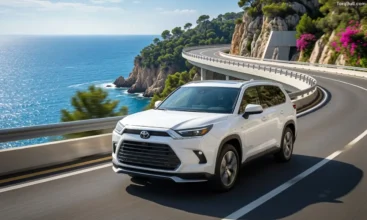
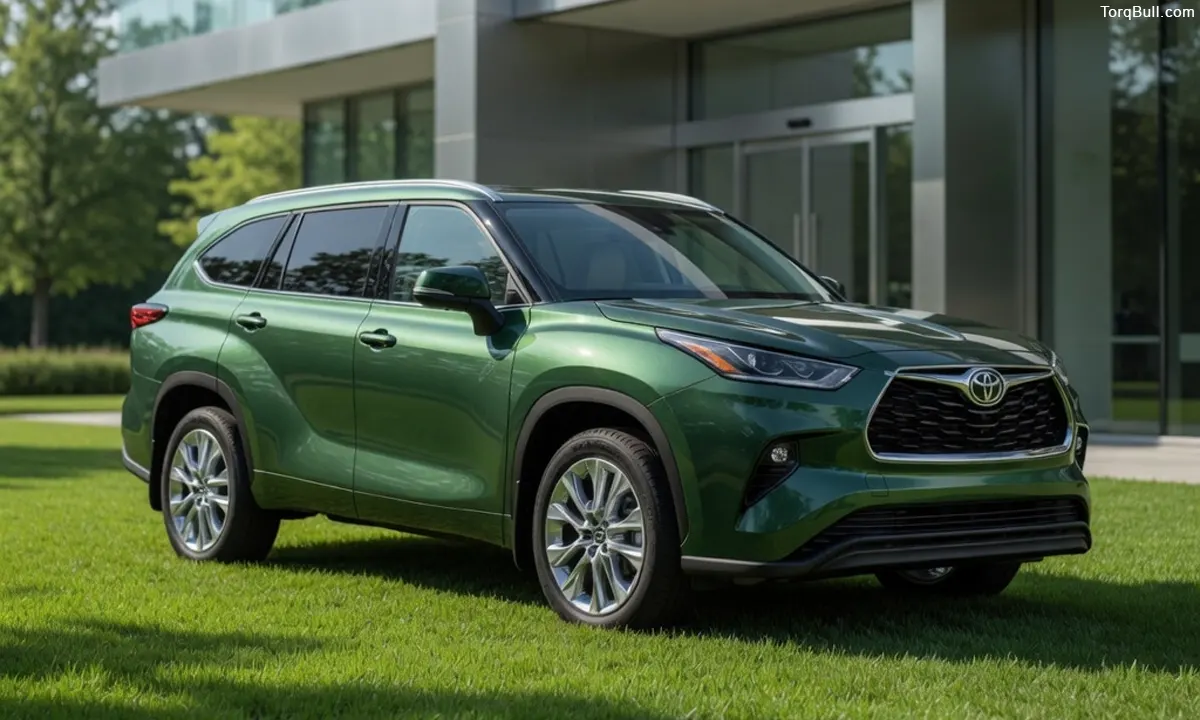
For twenty-six years the Toyota Highlander has served as the benchmark against which American families measure every three-row midsize SUV purchase — not because it is the most dramatic vehicle in its class, but because it consistently delivers the specific combination of reliability, safety, practicality and comfort that defines what a family SUV should be. The 2026 model is the final year of the gas-powered Highlander before Toyota transitions the nameplate to an all-electric platform for 2027. If you want a gas-powered Highlander, this is your last opportunity. KBB names it one of the Best Midsize SUVs. U.S. News gives it a score of 8.6 out of 10. RepairPal ranks it sixth out of 32 midsize SUVs for reliability with a 4 out of 5 rating. This guide examines every feature that earns the Highlander its family SUV reputation and provides the honest context about where it leads and where competitors have closed the gap.
Feature 1: Standard All-Wheel Drive Across the Entire 2026 Lineup
One of the most significant changes to the 2026 Toyota Highlander is the standardisation of all-wheel drive across every trim level — a change that eliminates the configuration complexity that previously required buyers to specify AWD as an optional addition on entry and mid-range trims. Every 2026 Highlander, from the base XLE through the top Platinum, comes with AWD as standard equipment at no additional cost.
For family buyers, this change is directly relevant to year-round confidence and safety. Families in northern states, mountain regions and areas that experience snow, ice or heavy rain benefit from AWD’s traction management without needing to select an upgrade or verify that a specific configuration includes it. Toyota’s AWD system is enhanced on XSE, Limited and Platinum trims with dynamic torque vectoring — distributing torque independently between the rear wheels for improved handling dynamics in cornering situations, not just in slippery conditions. The standardisation of AWD also simplifies the used vehicle purchase decision for buyers evaluating 2026 examples after their initial ownership period.
Read: Toyota Highlander Engine Performance. Which Powertrain Is Right for Your Driving Needs?
Feature 2: Toyota Safety Sense 2.5+ — Comprehensive Protection at Every Trim Level
Toyota’s approach to safety technology has been one of the most consistently praised aspects of Highlander ownership — and it is the feature that most directly differentiates the Highlander from competitors who charge separately for safety equipment that Toyota provides as standard.
Toyota Safety Sense 2.5+ is included on every 2026 Highlander regardless of trim level. This comprehensive suite includes pre-collision warning with automatic emergency braking and pedestrian detection, full-speed adaptive cruise control with lane centring capability, lane departure alert with steering assist, automatic high beam control, blind-spot monitoring with rear cross-traffic alert and road sign assist. The full-speed adaptive cruise control — which maintains following distance, manages stop-and-go traffic automatically and centres the vehicle within detected lane markings — is particularly valuable for family highway driving where driver fatigue on long trips is a genuine safety concern.
NHTSA awarded the 2026 Highlander a five-star overall safety rating, with five stars in the side crash test. IIHS testing earned the Highlander a Good rating in small overlap front and side crash tests — the Institute’s highest rating — along with a Good rating for its standard vehicle-to-pedestrian front crash prevention system. The IIHS previously awarded the Highlander Top Safety Pick status, and U.S. News specifically praises the Highlander’s long list of standard features as a core value proposition.
Feature 3: Three-Row Seating for Up to Eight Passengers
The 2026 Highlander seats up to eight passengers in the XLE and Limited trim levels when configured with a second-row bench seat, with the XSE and Platinum offering seven-passenger captain’s chair configurations. This seating flexibility — the ability to carry a full family of five comfortably or eight people when the occasion demands — is a defining family SUV feature that compact crossovers cannot match.
The first and second rows are genuinely comfortable. U.S. News specifically praises the Highlander’s spacious and supportive first and second rows as a notable strength. Autoblog’s comprehensive review describes the cabin as accommodating up to eight humans at a pinch — a qualification that introduces the honest limitation of the third row, which Edmunds and U.S. News both identify as cramped for adults and better suited to children. This third-row limitation is the most consistently noted competitive weakness of the standard Highlander, and the most compelling reason Toyota also sells the Grand Highlander — which rides on a longer wheelbase that provides 33.5 inches of third-row legroom against the standard Highlander’s more restricted dimensions.
For families whose third-row passengers are typically children under twelve, the standard Highlander’s third row is adequate. For families who regularly need to carry full-sized adults in all three rows, the Grand Highlander is the more appropriate choice.
Read: Toyota Highlander Hybrid Real World Fuel Economy. Why This SUV Tells A Very Different Story
Feature 4: 14 Cupholders — the Family Road Trip Detail That Matters
KBB specifically highlights the 2026 Highlander’s 14 cupholders as a family feature notable enough to mention alongside the vehicle’s major safety and technology credentials. This is not accidental: the Highlander’s interior designers specifically prioritised the storage and convenience details that family daily driving demands — drink holders at every seating position, USB charge ports for multiple passengers and multiple-zone climate control that addresses every row’s occupant comfort independently.
Five USB charge ports serve the first and second rows in Edmunds’ test configuration. Tri-zone automatic climate control — available on upper trims — allows separate temperature management for the front, second and third zones. The available second-row heated seats on upper trim levels and the front-row ventilated seats ensure year-round comfort for the passengers who spend the most time in the vehicle. Power door releases, a power liftgate and large door openings facilitate the effortless entry and exit that families with young children, car seats and grocery loads require from a daily vehicle.
Feature 5: Dual 12.3-Inch Displays — Technology That Keeps Every Passenger Connected
The Limited and Platinum trims of the 2026 Highlander feature a dual 12.3-inch display system — pairing a 12.3-inch digital instrument cluster with a 12.3-inch central infotainment touchscreen in a unified visual experience. KBB specifically identifies this dual display as a standout feature, noting that one screen controls infotainment functions while the other provides digital driver information that adapts to various driving modes.
Edmunds describes the optional 12.3-inch touchscreen as huge by class standards and characterises it as responding quickly to inputs with modern software that looks genuinely current rather than dated. Wireless Apple CarPlay and Android Auto are standard — allowing seamless smartphone connectivity without the cable management that wired connections require. The voice controls handle natural speech commands effectively for navigation, radio and phone functions. For families managing navigation, entertainment for children and hands-free communication simultaneously, these technology features reduce the distraction that complicated multi-tasking in traffic creates.
Read: 2027 Toyota Highlander Brings Hybrid Efficiency and Modern SUV Technology
Feature 6: ToyotaCare — Two Years of Free Scheduled Maintenance
Every 2026 Toyota Highlander purchase includes Toyota’s ToyotaCare programme — providing two years or 25,000 miles of complimentary scheduled maintenance, whichever comes first. This covers all factory-recommended service intervals including oil changes, tyre rotations and multi-point inspections at no cost.
For the average Highlander owner covering 12,000 to 15,000 miles annually, ToyotaCare covers approximately $400 to $600 in maintenance costs during the first two years of ownership — reducing the effective total cost of ownership below what the sticker price comparison against competing vehicles suggests. This benefit should be incorporated into any cost comparison against competitors who do not offer complimentary maintenance, as it directly reduces the financial burden during the critical early ownership period when unexpected costs create the most budget disruption.
Feature 7: Hybrid Option With 35 MPG Combined — The Most Fuel-Efficient Choice
The Highlander Hybrid — available on XLE, Limited and Platinum trims — replaces the turbocharged 2.4-litre gasoline engine with Toyota’s fifth-generation 2.5-litre naturally aspirated four-cylinder hybrid system, producing 243 combined horsepower through three electric motors. The EPA rates the Highlander Hybrid at 35 to 36 MPG combined — approximately 11 MPG better than the gas model’s 24 MPG combined — a difference that saves approximately $700 per year in fuel costs for a family driving 15,000 annual miles at national average gasoline prices.
For families who regularly cover high annual mileage — school runs, sports transport, weekend activities and occasional road trips — the Hybrid’s fuel cost saving accumulates meaningfully across five years of ownership and partially offsets the approximately $3,000 to $4,000 hybrid premium. The hybrid system’s regenerative braking also extends brake pad and rotor service intervals, adding a maintenance cost saving on top of the fuel economy advantage. U.S. News specifically praises the Highlander’s good fuel economy as a core competitive strength, and the hybrid variant maximises this advantage to a degree that no competing non-plug-in three-row SUV at equivalent pricing matches.
Toyota Highlander 2026 Family Features — Complete Summary Chart
| Feature | Availability | Why It Matters for Families |
| Standard AWD (all trims) | All 2026 trims | Year-round traction without configuration guesswork |
| Toyota Safety Sense 2.5+ | All trims standard | Full safety suite at every price point; no extra cost |
| NHTSA 5-Star Overall Rating | 2026 model year | Independent crash safety validation |
| 3-Row seating (up to 8) | XLE/Limited (bench) | Full family capacity; third row best for children |
| 14 cupholders | All trims | Road trip convenience; one per seating position |
| Dual 12.3-inch displays | Limited, Platinum | Premium tech at mid-to-upper trim levels |
| ToyotaCare (2 yr free maintenance) | All new purchases | $400–$600 in covered services; reduces ownership cost |
| Wireless Apple CarPlay / Android Auto | All trims | Seamless smartphone integration |
| Highlander Hybrid (35–36 MPG) | XLE, Limited, Platinum | ~$700/yr fuel saving over gas model |
| RepairPal Reliability #6 of 32 | All model years | Below-average repair cost; proven long-term durability |
| 48.4 cu ft cargo (seats 2 folded) | All trims | Competitive cargo capacity in family configuration |
| Tri-zone climate control | Upper trims | Independent temperature for all rows |
| Toyota 5-yr/60K powertrain warranty | All new purchases | Standard coverage; hybrid battery 8 yr/100K |
| 5,000 lb towing capacity | Properly equipped | Camper, boat, trailer capability for weekend adventures |
The Honest Assessment: Where the Highlander Leads and Where It Trails
The 2026 Highlander’s family SUV case is built on a combination of attributes that individually are matched by various competitors but that no single alternative combines as consistently: Toyota’s documented reliability record, comprehensive standard safety technology at every trim, the option of a highly efficient hybrid powertrain, 14-cup-holder family convenience details and the confidence of purchasing the final year of a long-validated gas-powered generation before the nameplate transitions to all-electric in 2027.
Where the Highlander genuinely trails its most capable competitors is in third-row space and total cargo volume — Edmunds specifically notes that the Kia Telluride and Volkswagen Atlas offer more spacious, easier-to-access third-row seats, and the 16 cubic feet of cargo behind the third row is small by class standards. U.S. News places the Highlander seventeenth in the midsize SUV category overall, noting that its high starting price — $46,765 for the 2026 XLE with now-standard AWD — leaves it trailing the Kia Telluride, Hyundai Palisade and Honda Pilot on some value metrics.
For families who prioritise Toyota’s reliability legacy, the comprehensive standard safety suite, the hybrid’s genuine fuel efficiency and the brand’s established ownership infrastructure — service network, resale value and long-term dependability data — the Highlander’s specific combination of features remains the most coherently family-focused package in the three-row midsize segment. For families whose third-row passenger count regularly includes adults, the Grand Highlander’s additional 4 inches of length and meaningfully improved third-row dimensions represent the more complete solution at a comparable or lower price.