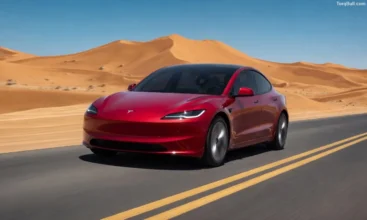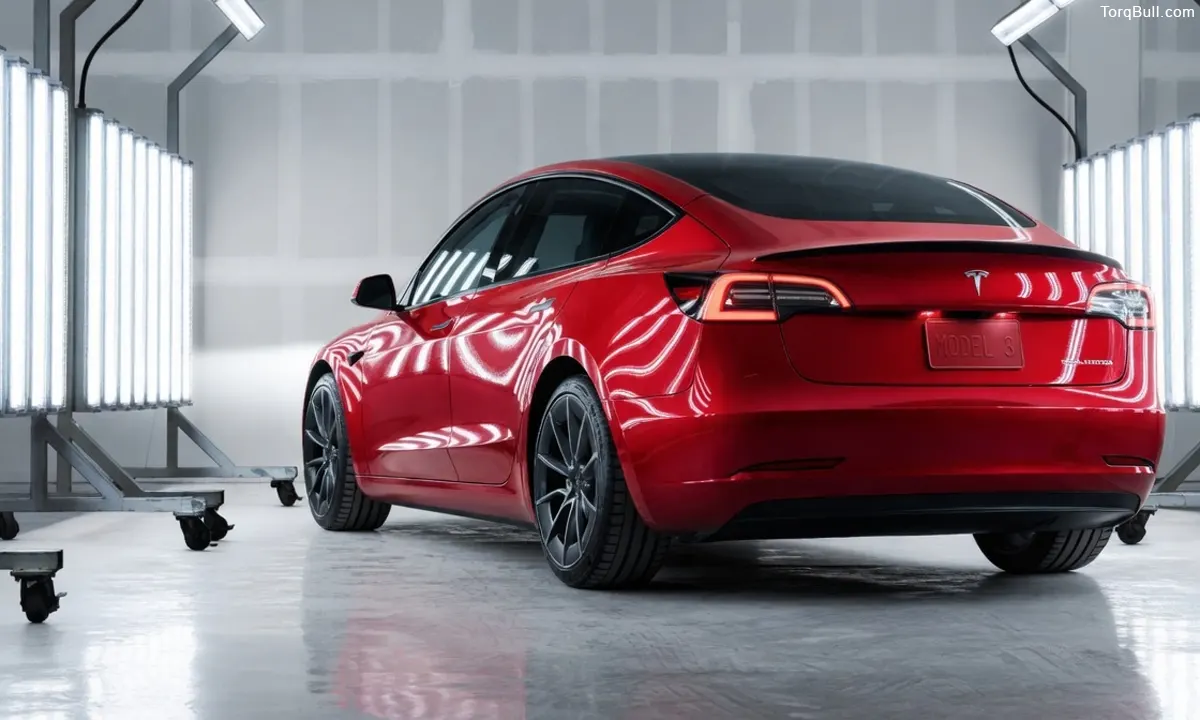
- Annual maintenance: ~$500–$650 for Model 3
- Roughly half the cost of a comparable gasoline car
- Lower servicing due to fewer moving parts
- 5-year savings of ~$1,000–$1,500
- Key advantage in total cost of ownership
When most buyers compare the Tesla Model 3 to a comparable gasoline sedan, they focus on the purchase price, the fuel cost and occasionally the insurance premium. The maintenance cost difference — the quietest and most consistently underestimated financial advantage of Model 3 ownership — rarely receives the same scrutiny, despite representing one of the most reliable and compounding savings in the total cost of ownership equation. The Model 3 has no engine oil to change, no timing belt, no spark plugs, no exhaust system, no transmission fluid and no catalytic converter. It has approximately 20 moving parts in its electric motor — compared to thousands in a comparable internal combustion engine — and its regenerative braking system means the friction brake pads rarely experience the wear rates that gasoline vehicle brake systems accumulate. This guide quantifies exactly what those differences mean in actual dollars across the ownership period, compares them to real gasoline sedan maintenance costs and identifies the specific areas where the Model 3’s maintenance advantage is largest.
What Tesla Model 3 Does Not Need and What That Saves
The most efficient way to understand the Model 3’s maintenance cost advantage is to begin with the items it eliminates entirely — services that gasoline car owners pay for routinely and that simply do not exist in a Model 3’s service life.
Engine oil changes are the most frequent maintenance expense in a gasoline vehicle. A synthetic oil change at a dealer or independent shop costs $75 to $120. Performed every 5,000 to 7,500 miles, a driver covering 15,000 miles annually incurs two to three oil changes per year — costing $150 to $360 annually that a Model 3 owner never pays. Over five years, this single item alone saves the Model 3 owner $750 to $1,800.
Spark plug replacement occurs at 30,000 to 100,000-mile intervals depending on the engine and plug type, typically costing $150 to $400 per service. Transmission fluid service — required every 30,000 to 60,000 miles on most automatic transmissions — costs $150 to $250. Coolant flush — required every 30,000 to 50,000 miles on most gasoline engines — costs $100 to $150. Air filter replacement for the engine intake costs $25 to $75. The catalytic converter, timing belt and exhaust system require no maintenance on the Model 3 because they do not exist. Collectively, these eliminated services represent $800 to $2,000 in maintenance expense over a five-year, 75,000-mile ownership period that the Model 3 owner avoids entirely.
What the Tesla Model 3 Does Need — The Actual Recurring Cost Items
The Model 3’s maintenance schedule is genuinely short by automotive standards, focused on a handful of wear items and periodic checks rather than the comprehensive multi-point service schedules that gasoline vehicles require. Tesla’s own guidance and independent cost analyses identify the following as the recurring maintenance items for a Model 3 in typical American use.
Tyres represent the single largest recurring maintenance expense for most Model 3 owners — and the one area where the Model 3’s advantage over gasoline vehicles is smallest. The Model 3’s electric powertrain delivers instant torque, and the vehicle is heavier than an equivalent gasoline sedan due to battery weight. Both factors accelerate tyre wear relative to a comparable gasoline vehicle. Tesla recommends rotation every 6,250 miles. A set of four replacement tyres for the 18-inch Photon wheel specification costs approximately $600 to $900 installed, with performance and larger-wheel variants costing $800 to $1,200. At 15,000 miles per year, most owners replace tyres every 30,000 to 40,000 miles — once in years two to three and again around years four to five of a five-year ownership period.
Cabin air filter replacement is recommended approximately every two years or 25,000 miles and costs $15 to $25 as a DIY replacement or $60 to $90 at a service centre. Over five years, two replacements represent $30 to $180 depending on whether the owner replaces the filter independently or pays for service centre installation.
Brake fluid is recommended to be checked every four years and replaced when its water content exceeds Tesla’s specification. A brake fluid service costs $150 to $250 and typically occurs once in the first five years. In salt-belt states with harsh winter road conditions, annual brake caliper cleaning and lubrication — costing $100 to $200 at a shop — is recommended as preventative maintenance against corrosion.
Wiper blades require annual or as-needed replacement at $25 to $40 for most Model 3 specifications, identical to any other vehicle.
Alignment and suspension checks become relevant in areas with rough roads or pothole exposure. Alignment service costs $80 to $130 and is recommended after any significant road impact or if uneven tyre wear is observed. Minor suspension wear items — bushings, ball joints — begin to appear after 60,000 to 80,000 miles in most driving conditions.
Annual Model 3 Maintenance vs Gasoline Sedan: The Dollar Comparison

Recharged’s analysis of real-world maintenance costs, cross-referenced with Tesla’s own published estimates and independent cost-to-own tools, places annual Model 3 routine maintenance at approximately $500 to $650 per year for a newer vehicle driven 12,000 to 15,000 miles annually, with a five-year total of approximately $3,000 to $3,500 including tyres. This aligns with Tesla’s own published estimate range and Consumer Reports data identifying EVs as requiring approximately 50 percent less maintenance than comparable gasoline vehicles.
For a comparable gasoline midsize sedan — a Honda Accord, Toyota Camry or similar — five-year routine maintenance at equivalent mileage typically totals $5,000 to $7,000, incorporating oil changes, tyre rotation and replacement, air filters, spark plugs, transmission service, coolant flushes and the miscellaneous wear items that accumulate across a modern multi-component drivetrain. At 15,000 annual miles, the typical gasoline midsize sedan owner spends $1,000 to $1,400 per year on routine maintenance — roughly double the Model 3’s typical annual maintenance spend.
The University of Michigan Transportation Research Institute’s analysis confirms that EVs cost 52 percent less to fuel annually on average, while Consumer Reports reliability data identifies EVs as requiring 50 percent less maintenance cost compared to similar gasoline vehicles — both figures consistent with the real-world owner data that makes up the maintenance cost databases above.
Tesla Model 3 vs Gas Car Maintenance Cost — Complete 5-Year Comparison Chart
| Maintenance Item | Tesla Model 3 (5 years) | Honda Accord / Toyota Camry (5 years) | Model 3 Saving |
| Engine oil changes | $0 | $750–$1,800 | $750–$1,800 |
| Spark plug replacement | $0 | $150–$400 | $150–$400 |
| Transmission fluid service | $0 | $300–$500 | $300–$500 |
| Engine air filter | $0 | $125–$375 | $125–$375 |
| Coolant flush | $0 | $200–$300 | $200–$300 |
| Exhaust / catalytic converter service | $0 | $0–$500 | $0–$500 |
| Tyre rotation and replacement | $800–$1,400 | $700–$1,200 | −$100 to +$200 |
| Brake pads and rotors | $0–$400 | $400–$1,000 | $400–$600 |
| Cabin air filter | $60–$180 | $120–$360 | $60–$180 |
| Brake fluid service | $150–$250 | $150–$250 | $0–$100 |
| Wiper blades | $125–$200 | $125–$200 | $0 |
| Alignment / suspension | $200–$500 | $200–$500 | $0 |
| Total 5-Year Estimate | $1,335–$2,930 | $3,220–$7,385 | $1,000–$4,000 |
| Annual Average | $267–$586 | $644–$1,477 | $377–$891/yr |
Estimates based on 15,000 miles per year, 75,000 miles total over 5 years. Actual costs vary by region, driving style and whether service is performed at a dealer or independent shop. Tyre costs vary significantly by wheel size and driving style.
Read: How to Update Tesla Model 3 Software Without Visiting the Dealer. Why Some Owners Never Get Them
Where the Model 3 Costs More Than a Gas Car to Maintain
An honest comparison requires acknowledging the specific areas where the Model 3’s maintenance costs are comparable to or exceed those of equivalent gasoline vehicles — because the advantage is not universal across every service category.
Tyre wear is the most significant equaliser. The Model 3’s instant torque delivery and battery-added weight combine to wear tyres moderately faster than a comparable gasoline sedan in typical American driving. Model 3 owners who drive aggressively, use larger 19 or 20-inch wheel specifications or cover high annual mileage may replace tyres more frequently than a gasoline sedan owner — partially offsetting the oil change and service savings. The tyre cost difference depends heavily on driving style and wheel size; conservative drivers on 18-inch specifications experience minimal disadvantage.
Out-of-warranty repairs for body, sensors and electronics can be disproportionately expensive on the Model 3 relative to comparable gasoline vehicles. Tesla’s proprietary systems, advanced driver assistance hardware and body construction use components and materials that carry higher parts and labour costs than conventional automotive components at equivalent repair scope. A minor collision that costs $1,500 to repair on a Toyota Camry may cost $2,500 to $4,000 on a Model 3 due to integrated sensor arrays and aluminium body panel pricing.
Higher EV registration fees apply in many states as a flat fee intended to compensate for EVs’ reduced contribution to the fuel tax that funds road maintenance. These fees range from $50 to $250 annually depending on the state and represent a modest but real cost that partially offsets the maintenance savings.
Read: Average Lifespan of Tesla Model 3 Battery in Hot Climates. The Hidden Data Every Owner Needs In 2026
The Five-Year Total Cost of Ownership: Does the Model 3 Win?
Maintenance is one of five major cost components in any vehicle’s total cost of ownership — the others being fuel, depreciation, insurance and financing. Maintenance alone does not determine whether the Model 3 is cheaper to own than a comparable gasoline sedan, but it contributes meaningfully to the calculation.
Over a five-year ownership period at 15,000 annual miles, a Model 3 owner saves approximately $1,000 to $4,000 in maintenance costs relative to a comparable gasoline midsize sedan. The fuel saving at the national average home charging rate of $0.17 per kilowatt-hour versus gasoline at $3.08 per gallon contributes an additional $660 to $1,068 per year in fuel savings — accumulating to $3,300 to $5,340 over five years. Combined maintenance and fuel savings of $4,300 to $9,340 over five years represent the Model 3’s primary operating cost advantages over gasoline alternatives.
These savings must be evaluated against the Model 3’s typically higher insurance premiums — approximately $300 to $600 more annually than a comparable gasoline sedan — and, for new vehicle buyers, the higher purchase price relative to equivalent gasoline vehicles. For used Model 3 buyers purchasing at depreciated prices, the purchase price premium narrows significantly or disappears entirely, making the maintenance and fuel savings the dominant financial advantage of Model 3 ownership.
Recharged’s conclusion from its five-year total cost of ownership analysis captures the practical outcome: for a normal-mileage driver who home-charges and keeps the vehicle at least four to five years, the Tesla Model 3 typically beats a comparable gasoline sedan on total cost of ownership, with the advantage growing as annual mileage increases and the fuel and maintenance savings compound across additional years of use.