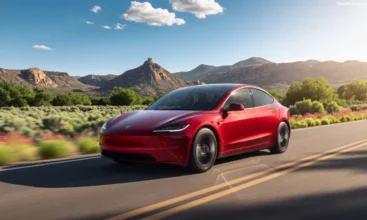
- The 2026 Honda Pilot is EPA-rated at up to 19 MPG city, 27 MPG highway and 22 MPG combined in FWD form.
- Independent testing achieved 27 MPG highway in the Elite trim, while the TrailSport returned 22 MPG.
- Real-world owner data shows average fuel economy ranging from 19.9 to 22.4 MPG in mixed driving conditions.
The 2026 Honda Pilot’s fuel economy story is one of the most important competitive assessments in the three-row midsize SUV segment — not because the Pilot is particularly inefficient for a naturally aspirated V6-powered family hauler, but because the segment has moved substantially toward hybrid and turbocharged four-cylinder alternatives that consistently outperform the Pilot’s naturally aspirated fuel economy in comparable real-world conditions. At 22 MPG combined maximum for front-wheel drive and 21 MPG combined for all-wheel drive, the Pilot remains one of only a few midsize three-row SUVs still using a naturally aspirated V6 without any electrified alternative. Understanding exactly what the Pilot achieves in real-world driving across every trim and every driving environment — not just the EPA estimates — is the practical knowledge that determines whether this fuel economy profile is acceptable or limiting for any specific buyer’s ownership cost calculation.
EPA Estimates: Every Trim and Drivetrain Configuration
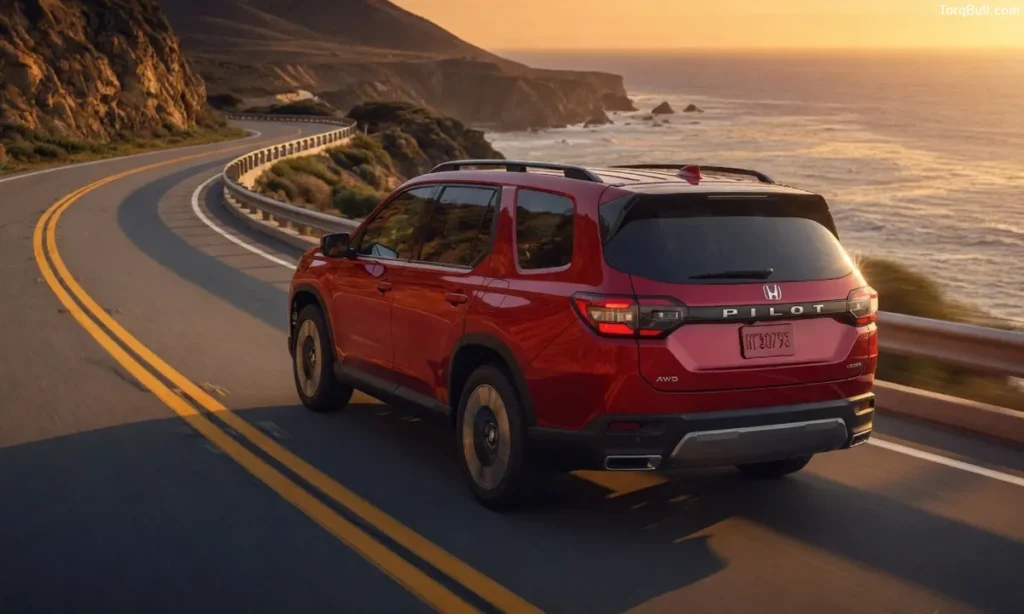
The 2026 Honda Pilot’s EPA fuel economy ratings vary across its trim lineup based on drivetrain configuration and the TrailSport trim’s specific tyre specification — creating meaningful fuel economy differences between the most and least efficient configurations within the same vehicle family.
Front-wheel drive configurations — available on Sport, EX-L and Touring trims — achieve the highest Pilot fuel economy at 19 MPG city, 27 MPG highway and 22 MPG combined. This maximum 22 MPG combined figure is the headline fuel economy number associated with the 2026 Pilot in most comparative contexts.
All-wheel drive configurations across most trims achieve 18 MPG city, 25 MPG highway and 21 MPG combined. The AWD system’s additional drivetrain weight and mechanical losses produce a 1 MPG combined reduction from the FWD configuration — a modest penalty that reflects the AWD system’s relatively low mechanical drag in normal driving conditions, where the rear axle is only engaged under specific traction demands rather than permanently.
The TrailSport trim’s specific fuel economy reflects its off-road-oriented all-terrain tyre specification. The larger diameter, more aggressive tread pattern tyres produce higher rolling resistance than the standard all-season tyres on other configurations — resulting in 18 MPG city, 23 MPG highway and 20 MPG combined. The 5 MPG highway penalty compared to the FWD configuration reflects the specific aerodynamic and rolling resistance properties of the all-terrain rubber rather than any engine or drivetrain difference.
The 2026 Pilot provides a modest improvement over some equivalent 2025 configurations — the FWD models are 1 MPG better in city driving compared to the previous year’s front-wheel drive model, while the combined and highway figures remain unchanged. This improvement reflects refinements to the Pilot’s variable cylinder management system and fuel injection calibration rather than fundamental powertrain changes.
Read: Is the Honda Pilot Expensive to Maintain? Affordable Family SUV or Costly Commitment?
Independent Highway Testing: What Professional Evaluation Routes Produce
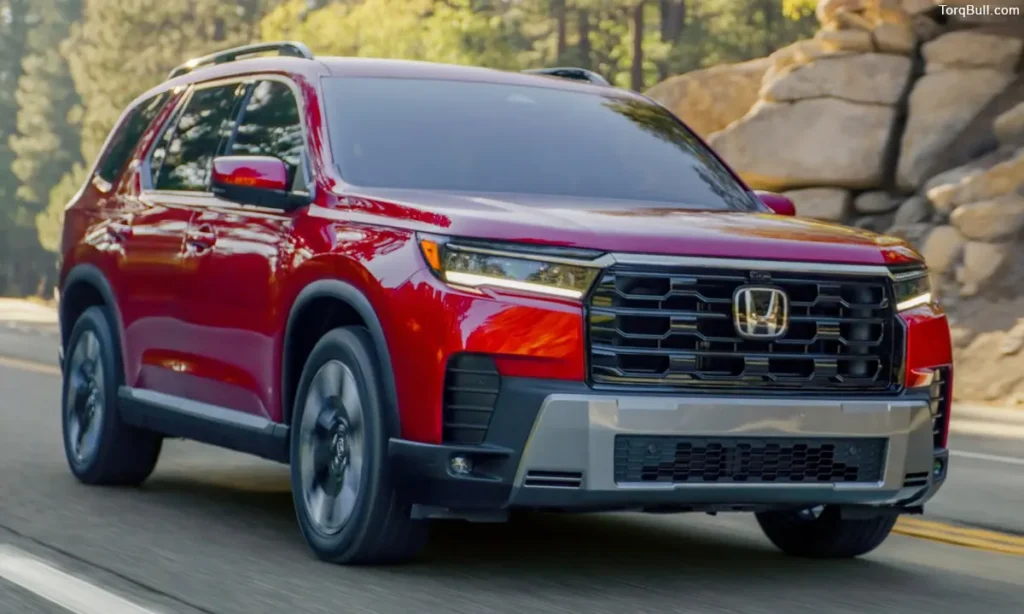
Independent highway testing of the 2026 Honda Pilot across a sustained 75 MPH evaluation route produced specific results that provide the most practically useful real-world efficiency data for highway-dominant buyers.
The Elite AWD trim achieved 27 MPG at 75 MPH in independent highway evaluation — matching the FWD EPA highway figure despite the AWD configuration’s lower 25 MPG highway EPA rating, suggesting that the EPA test cycle’s speed and acceleration profile produces a more conservative result than actual sustained highway cruising conditions generate. This is a meaningful finding for buyers who cover primarily highway miles — the Pilot’s real-world highway efficiency in steady 70 to 75 MPH cruise conditions appears to outperform its EPA highway estimate.
The TrailSport AWD trim achieved 22 MPG under the same highway evaluation conditions — 5 MPG below the Elite trim’s result and attributable entirely to the all-terrain tyre specification’s rolling resistance and aerodynamic drag penalty. For TrailSport buyers who primarily drive on highways, this 5 MPG highway efficiency reduction represents an annual fuel cost increase of approximately $350 at 15,000 annual highway miles and $3.08 per gallon.
Owner Tracked Real World Data: 106.7 Million Miles of Evidence
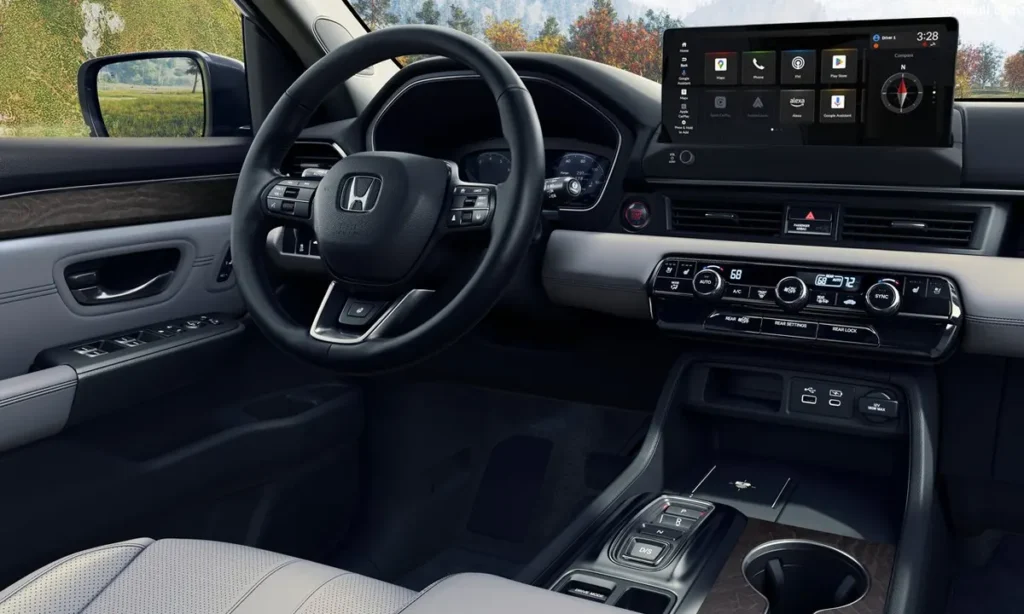

Owner-submitted fuel tracking data from verified fill-up records across thousands of Honda Pilot owners provides the most democratically representative real-world efficiency picture — capturing the full range of driving styles, climates, urban ratios and speed profiles that any population of Pilot owners produces across their typical ownership periods.
Across 106.7 million documented owner miles submitted to verified fuel tracking platforms, Honda Pilot owners across all model years average real-world fuel economy that falls consistently below the EPA combined estimate — a pattern characteristic of full-size V6 family SUVs where real-world driving conditions are typically less favourable than the EPA test cycle assumes.
For the 2025 model year — the most closely comparable generation to the 2026 Pilot with identical powertrains — owner tracking data from 92 individual owners across 770,000 documented miles produces average real-world results in the range of 19.9 to 22.4 MPG depending on the specific driving pattern within each owner’s dataset. Individual tank fill-up records in the tracking database show results ranging from 17.9 MPG for urban-heavy city driving to 24.7 MPG for the most highway-dominant, moderate-speed ownership profiles.
The practical implication for prospective Pilot buyers is straightforward: buyers whose daily driving is primarily urban with frequent stop-and-go conditions should plan around 18 to 20 MPG as the realistic real-world average rather than the 19 MPG EPA city estimate. Buyers whose daily driving is primarily highway should plan around 24 to 27 MPG as the realistic real-world range, with the upper end achievable at moderate highway speeds below 75 MPH and the lower end reflecting higher speed cruise conditions.
Read: Honda Pilot Engine Performance: Smooth V6 Power or Just Average?
City vs Highway: The Naturally Aspirated V6’s Specific Efficiency Profile
The Honda Pilot’s 8 MPG gap between its city and highway EPA figures — 19 MPG city and 27 MPG highway for the FWD configuration — is wider than the equivalent gap in hybrid alternatives and reflects the naturally aspirated V6’s specific operating characteristics in urban versus highway conditions.
In city driving, the 3.5 litre V6 operates at low speeds and moderate loads where its combustion efficiency is lowest and where the absence of regenerative braking means every deceleration event dissipates kinetic energy as brake heat rather than recovering it as usable energy. The variable cylinder management system, which deactivates three cylinders during steady state driving, provides some efficiency improvement in these conditions but cannot fully compensate for the energy waste inherent in conventional gasoline operation during frequent stop-and-go cycles.
At sustained highway speeds, the V6’s operating conditions improve significantly — the engine operates in its highest efficiency range, the cylinder deactivation system contributes most effectively during long steady-state cruise periods and aerodynamic loads are managed by the Pilot’s relatively aerodynamically optimised body compared to more boxy alternatives. This is where the Pilot achieves its best real-world efficiency — and where independent testing confirms it can meet or exceed its EPA highway figure at moderate speeds.
2026 Honda Pilot Fuel Economy — Complete Real World Reference Chart
| Configuration | EPA City | EPA Highway | EPA Combined | Highway Test (75 MPH) | Owner Avg Real World | Annual Cost (15K miles, $3.08/gal) |
| Sport, EX-L, Touring FWD | 19 MPG | 27 MPG | 22 MPG | Approaches 27 MPG | 20 to 22 MPG | approximately $2,100 |
| EX-L, Touring, Elite AWD | 18 MPG | 25 MPG | 21 MPG | 27 MPG (Elite tested) | 19 to 21 MPG | approximately $2,200 |
| TrailSport AWD | 18 MPG | 23 MPG | 20 MPG | 22 MPG (tested) | 18 to 20 MPG | approximately $2,310 |
| Toyota Highlander Gas (comparison) | 21 MPG | 28 MPG | 24 MPG | Above EPA typically | 21 to 23 MPG | approximately $1,925 |
| Toyota Highlander Hybrid (comparison) | 36 MPG | 35 MPG | 35 MPG | Approaches EPA | 32 to 35 MPG | approximately $1,323 |
| Kia Telluride Gas (comparison) | 20 MPG | 26 MPG | 23 MPG | Approaches EPA | 20 to 22 MPG | approximately $2,009 |
Annual fuel cost based on EPA combined figure and $3.08 per gallon at 15,000 annual miles.
Read: Should I Buy the Honda Pilot for Long Term Use? What Owners Say?
The Competitive Context: Where the Pilot Lands Among Rivals
The Pilot’s 22 MPG combined maximum falls notably behind most competing three-row midsize SUVs in 2026 — a competitive position that has widened as rivals have adopted turbocharged four-cylinder and hybrid powertrains while Honda has maintained the naturally aspirated V6 without electrification.
In a head-to-head three-row SUV fuel economy comparison, the Pilot tied for second place in efficiency testing among gasoline-powered three-row SUVs — outperforming the naturally aspirated alternatives while trailing the turbocharged four-cylinder competitors including the Toyota Highlander’s 24 to 25 MPG combined. The Pilot landed more than 10 MPG behind the Toyota Grand Highlander Hybrid’s efficiency in the same comparison — a gap that translates to approximately $775 per year in additional fuel cost for families covering 15,000 annual miles at national average fuel prices.
The fuel economy comparison with hybrid alternatives is the most consequential for buyers evaluating total five-year ownership cost: the Toyota Highlander Hybrid at 35 MPG combined saves approximately $777 per year over the Pilot’s 22 MPG combined FWD, accumulating to approximately $3,885 over five years — a figure that partially offsets the Highlander Hybrid’s higher purchase price while simultaneously providing the same three-row family SUV capability and Toyota’s reliability credentials.
Maximising Real World MPG in the Honda Pilot
For buyers who own the Pilot and want to maximise real-world efficiency, specific driving behaviours produce consistent and measurable improvements from the baseline that urban-heavy driving produces.
Maintaining highway cruise speed at 65 to 70 MPH rather than 75 to 80 MPH produces the most significant real-world efficiency improvement available without changing the vehicle or its mechanical specification — aerodynamic drag increases as the square of speed, meaning the efficiency difference between 65 and 75 MPH cruise is substantially larger than the 10 MPH speed difference alone implies. Tyre pressure maintenance at or slightly above the door jamb specification reduces rolling resistance and improves fuel economy by 1 to 2 percent per PSI above the underinflated baseline that many vehicles develop over weeks without attention. Using Econ mode for urban driving reduces air conditioning compressor duty cycle and dampens throttle response — producing measurable city efficiency improvements for drivers who prioritise fuel economy over immediate throttle response.