The Ultimate Car Accident Legal Checklist for 2026
- The actions you take immediately after a car accident can significantly impact your insurance claim, legal rights and financial recovery.
- Preserving evidence, documenting the scene and seeking appropriate medical attention help protect your position.
- Following a structured post-accident checklist can reduce costly mistakes and strengthen any future insurance or legal claim.
A car accident turns the world on its head in a flash. In the space of seconds, what was a routine commute or ordinary errand becomes a scene of damaged vehicles, potential injuries, insurance considerations and legal obligations that most drivers have never prepared for and have no time to think through clearly. The rush of adrenaline that follows a collision masks pain, distorts time perception and produces the mental state least suited to making the deliberate, methodical decisions that protect your long-term interests. The solution is not to think more clearly in an inherently disorienting moment — it is to know this checklist before the moment arrives, so that the steps execute from memory rather than from in-the-moment reasoning. This is that checklist.
Phase 1: The First Minutes — Safety, Emergency Services and Scene Security
Step 1: Stop, Stay at the Scene and Move to Safety
Never leave the scene of an accident involving injuries, property damage or any vehicle contact. Leaving the scene is a criminal offence in every American state and eliminates your ability to document what occurred from your own perspective. If the vehicles are drivable and creating a traffic hazard, move them to the side of the road or a nearby parking area — but only to a position where they remain accessible for police documentation, not to a position that removes them from the scene entirely.
Activate your hazard lights immediately. If you have emergency supplies — flares, cones or reflective triangles — deploy them to warn approaching traffic before anyone exits the vehicle. The secondary collision risk from approaching traffic is a documented danger at accident scenes, and protecting the scene perimeter protects everyone involved.
Step 2: Check for Injuries and Call Emergency Services
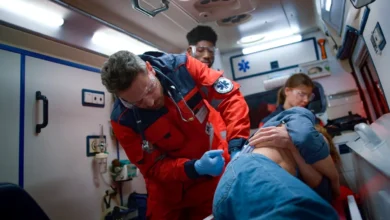
Check yourself, your passengers and the occupants of other involved vehicles for injuries. Call 911 immediately when any of the following are present: any visible injury to any person, any complaint of pain from any occupant, any loss of consciousness however brief, any significant property damage, any vehicle blocking traffic and any accident involving a commercial vehicle, pedestrian or bicycle.
Do not decide independently that injuries are absent and that no police report is needed. The adrenaline masking mechanism specifically suppresses pain signals during and immediately after a traumatic event — meaning that injuries exist before they hurt in many accident scenarios. The presence of law enforcement at the scene creates an official, independent record that is foundational for any subsequent insurance claim or legal proceeding.
Step 3: Do Not Admit Fault or Apologise
Every statement made at an accident scene is potentially recordable by dashcams, police body cameras and bystander smartphones. The phrase I am sorry — regardless of intent — becomes evidence of liability in the subsequent claims process. Determining fault requires investigation of the full facts — vehicle speeds, signal states, visibility conditions, right of way rules and driver behaviours before impact. This investigation has not occurred in the minutes following a collision. No statements about fault, responsibility, distraction or impairment should be made by anyone until this investigation occurs.
Read: Why Car Accident Claims Get Denied And How a Lawyer Can Fix It
Phase 2: The First Hour — Documentation, Information Exchange and Scene Photography

Step 4: Document the Scene Comprehensively Before Anything Is Moved
The accident scene contains perishable evidence whose window of availability closes within minutes — tyre marks, debris fields, fluid spill patterns, vehicle positions and impact scarring disappear as vehicles are moved and road crews clear the scene. Comprehensive scene photography using a smartphone takes approximately 15 minutes and preserves this evidence permanently.
Photograph every involved vehicle from all four sides, showing the full scope of damage. Photograph vehicle positions before any movement occurs — this establishes the collision geometry that reconstruction experts use. Photograph tyre marks on the road surface, traffic signal positions, posted speed limits, road surface conditions, weather conditions and visibility. Photograph any visible injuries to yourself or passengers before medical treatment changes their appearance.
Step 5: Exchange Information With All Involved Parties
Collect from every driver involved in the accident: full legal name, current address, phone number, driver’s licence number and issuing state, vehicle licence plate number and state, vehicle make, model, year and colour, insurance company name and policy number, and the name and contact information of every passenger in their vehicle.
Collect the name and contact information of every independent witness who observed the collision — the name, phone number and brief description of what they observed. Witness memories fade within 24 to 48 hours and witness availability diminishes within days. Immediate collection preserves the corroborating testimony that the claims process specifically values.
Step 6: Get the Police Report Information
When law enforcement responds, obtain the responding officer’s name, badge number and the police report number before leaving the scene. The police report is available for retrieval within 24 to 72 hours in most jurisdictions. Request the report promptly — it establishes the officer’s independent observations, any citations issued and the preliminary fault assessment that insurance adjusters use as a starting reference point.
Phase 3: The First 24 Hours — Medical Evaluation and Immediate Notifications
Step 7: Seek Medical Evaluation Same Day — Even Without Obvious Symptoms
Emergency room or urgent care facility evaluation on the day of the accident is the single most important post-scene action for protecting both health and legal position. The temporal connection between the accident date and the first medical record is the foundational evidence that connects the accident to any subsequent injury claim. Delaying medical evaluation by days or weeks creates the gap that opposing insurance companies specifically exploit — arguing that injuries could not have been serious if the victim did not seek immediate treatment, or that injuries may have occurred after the accident rather than during it.
Step 8: Notify Your Own Insurance Company
Contact your own insurance company within 24 hours of the accident regardless of fault determination. Most policies require prompt notification as a condition of coverage. Provide the factual circumstances of the accident without characterising fault, admitting liability or providing a detailed recorded statement until you have had the opportunity to consult with an attorney if injuries are involved.
Step 9: Do Not Provide a Recorded Statement to the Opposing Insurer
The at-fault driver’s insurance company will contact you within hours or days requesting a recorded statement characterised as a standard part of the claims process. It is neither required nor beneficial. Adjusters are trained to identify casual language that minimises injury and disputes liability — and the recorded statement provides the opportunity to create this language at the moment you are least prepared to manage its implications. Decline recorded statements from opposing insurers until you have consulted with a personal injury attorney.
Read: Do You Really Need a Lawyer After a Minor Car Accident? Here Is the Truth
Phase 4: The First Two Weeks — Claims Process, Documentation and Attorney Consultation
Step 10: Document Everything Financially From Day One
Create a dedicated folder — physical or digital — for every document related to the accident. This folder receives every medical bill from every provider, every prescription receipt, every medical appointment record, every day of work missed with the corresponding pay evidence, every cost associated with transportation to medical appointments and every repair estimate and receipt for vehicle damage.
The economic damages that the settlement calculation begins with are drawn from this documentation — and documentation created contemporaneously is significantly more credible than documentation reconstructed from memory weeks or months after the fact.
Step 11: Monitor for Delayed Injury Symptoms
The 24 to 72 hours following an accident frequently produce injury symptoms that were not present or were masked at the scene. Headaches, neck and back pain, shoulder stiffness, difficulty concentrating, changes in sleep patterns and numbness or tingling in extremities are the most common delayed-onset symptoms that warrant immediate medical follow-up. Documenting these symptoms in writing as they appear — with dated notes in a phone application or written journal — establishes the timeline that connects them to the accident rather than to an alternative cause.
Step 12: Consult a Personal Injury Attorney Before Accepting Any Settlement
Personal injury attorneys handle car accident cases on contingency — no upfront cost and no fee unless compensation is recovered. Consultation costs nothing. The insurance company’s first settlement offer is made before maximum medical improvement — before the full extent of injuries, future treatment needs and total damages is known — because early settlements require signing permanent releases of all future claims. The single most financially protective decision available to any accident victim is consulting an attorney before accepting any settlement or signing any release document.
Read: What Happens If the Other Driver Is Uninsured or Underinsured? Your Legal Options Explained
The Ultimate Car Accident Legal Checklist — Complete Step-by-Step Reference Chart
| Phase | Step | Timing | Critical Action | Common Mistake to Avoid |
| At the Scene | 1: Stop and secure | Immediately | Hazard lights, move to safety, stay at scene | Leaving the scene |
| At the Scene | 2: Emergency services | First 2 minutes | Call 911 for any injury, pain or damage | Deciding no police report needed |
| At the Scene | 3: No fault admission | Ongoing | No I am sorry, no fault discussion | Apologising or explaining cause |
| At the Scene | 4: Scene photography | Before any movement | All angles, all vehicles, all conditions | Waiting until after vehicles are moved |
| At the Scene | 5: Information exchange | Before leaving | All driver, passenger and witness information | Forgetting witnesses or policy numbers |
| At the Scene | 6: Police report number | Before leaving | Officer name, badge number, report number | Not obtaining the report reference |
| Within 24 hours | 7: Medical evaluation | Same day | Emergency room or urgent care evaluation | Waiting to see if symptoms develop |
| Within 24 hours | 8: Own insurer notification | Within 24 hours | Factual notification without recorded statement | Delaying notification |
| Within 24 hours | 9: Decline opposing statement | If contacted | Decline recorded statement | Providing recorded statement |
| Within two weeks | 10: Financial documentation | Ongoing from day one | Every bill, receipt and wage loss document | Reconstructing documentation late |
| Within two weeks | 11: Symptom monitoring | Ongoing | Dated written symptom journal | Failing to document delayed symptoms |
| Before settlement | 12: Attorney consultation | Before any settlement | Free consultation before signing any release | Accepting early settlement offer |