2026 BMW M2 CS Review: 523 HP, Carbon Everywhere and the Most Focused Compact Sports Coupe BMW M Has Ever Produced
523 Horsepower, 97 Pounds Lighter, 3.7-Second 0-60, Carbon Everywhere, Fewer Than 2,000 Units Worldwide and a Rear-Wheel-Drive Purity That No Rival in Its Class Can Touch — The 2026 BMW M2 CS Is the Ultimate Expression of Everything BMW M Has Always Stood For
There is a particular kind of automotive greatness that cannot be manufactured through specification sheets, cannot be communicated through press releases and cannot be fully appreciated until the moment a driver exits a soaking-wet circuit after a session that began in profound scepticism and ended in unqualified, unrestrained, genuinely joyful admiration. The 2026 BMW M2 CS produces this kind of greatness. It is a car that demands nothing from its driver except attention and rewards everything that attention provides — a vehicle whose communication, balance, adjustability and dynamic brilliance are so consistently and so convincingly superior to its competitive alternatives that experienced drivers who have sampled the full breadth of the compact performance coupe market will find it difficult to discuss the M2 CS without resorting to superlatives they might otherwise reserve for considerably more expensive automobiles. Starting at $99,975 including destination and produced in a worldwide allocation of fewer than 2,000 units through July 2026 at BMW’s San Luis Potosí plant in Mexico, the M2 CS is simultaneously the most capable, the most exclusive and the most genuinely thrilling compact M car the brand has ever produced — and it arrives at a moment when the performance car world’s transition away from manual transmissions, away from pure rear-wheel drive and away from the lightweight, driver-focused sports coupe formula has made cars of this character rarer, more valuable and more urgently celebrated than at any previous point in automotive history.
Gallery: 2026 BMW M2 CS
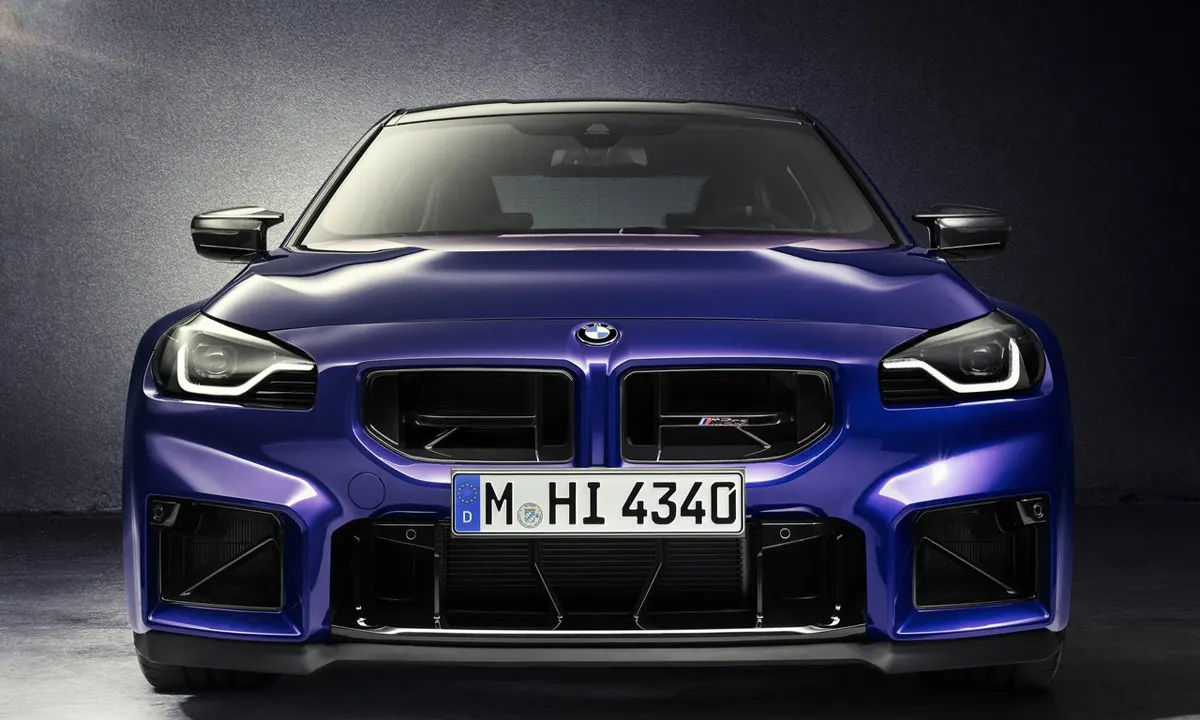
The CS designation — Competition Sport — carries genuine lineage within BMW M’s model hierarchy, dating to the legendary E9 3.0 CS and 3.0 CSL of the early 1970s and present in the modern M lineup through the M3 CS, M4 CS and M5 CS. The formula is consistent across every application: more power extracted from the existing engine architecture, significant weight reduction through the targeted use of carbon fibre composite components and structural lightweighting, a chassis recalibrated specifically for the heightened performance the powertrain upgrade enables and an exclusivity of production that ensures each example carries a significance proportionate to its capabilities. The M2 CS adheres to this formula with precision and completeness — adding 50 horsepower and 36 pound-feet of torque over the standard M2, removing 97 pounds through carbon fibre components, retuning the suspension and steering for sharper dynamic response and limiting production to a number that reflects genuine rarity rather than manufactured scarcity. The result is a car that is, in the words of every significant automotive publication that has driven it at the limit, 95 percent of the capability of the M3 CS and M4 CS at a price meaningfully below either — and with 110 percent of their attitude, their character and their unfiltered driver engagement.
A Design That Communicates Intention Without Requiring Explanation
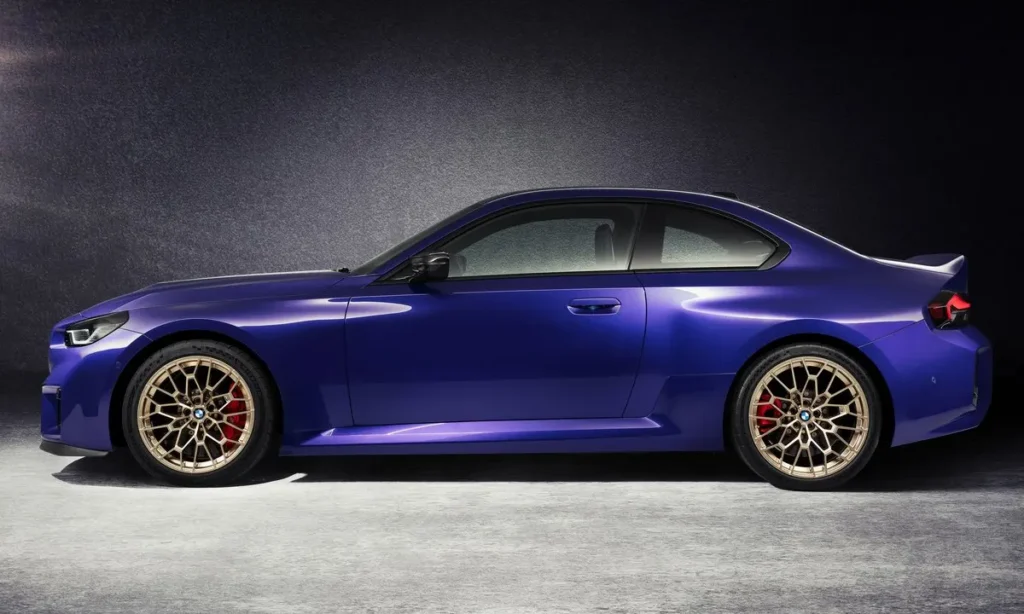
The exterior design of the 2026 BMW M2 CS makes its intentions clear without any of the visual aggression or the decorative excess that lesser performance cars deploy to communicate their capabilities to an audience that may not fully appreciate their engineering. The M2’s fundamental G87 body — compact, wide-hipped, low-roofed and aggressively proportioned with a visual stance that communicates rear-wheel-drive purity through the relationship between its short front overhang and its prominent rear haunches — is the ideal canvas for the CS programme’s targeted visual enhancements, and Bavarian engineers have applied those enhancements with the restraint and the purposefulness that defines the finest performance car design decisions.
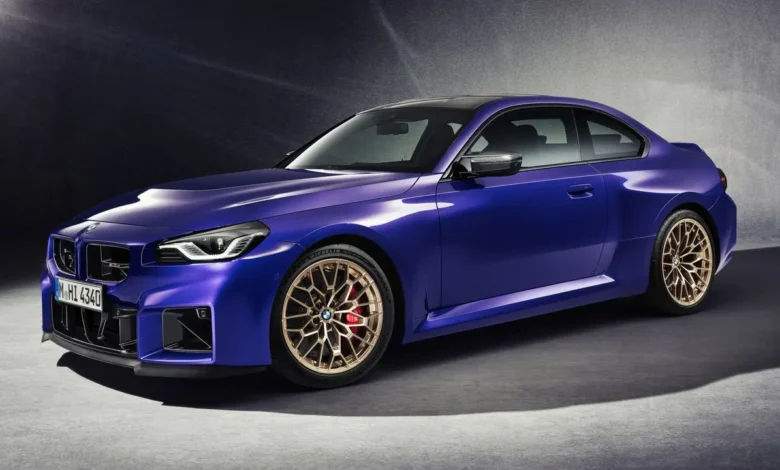
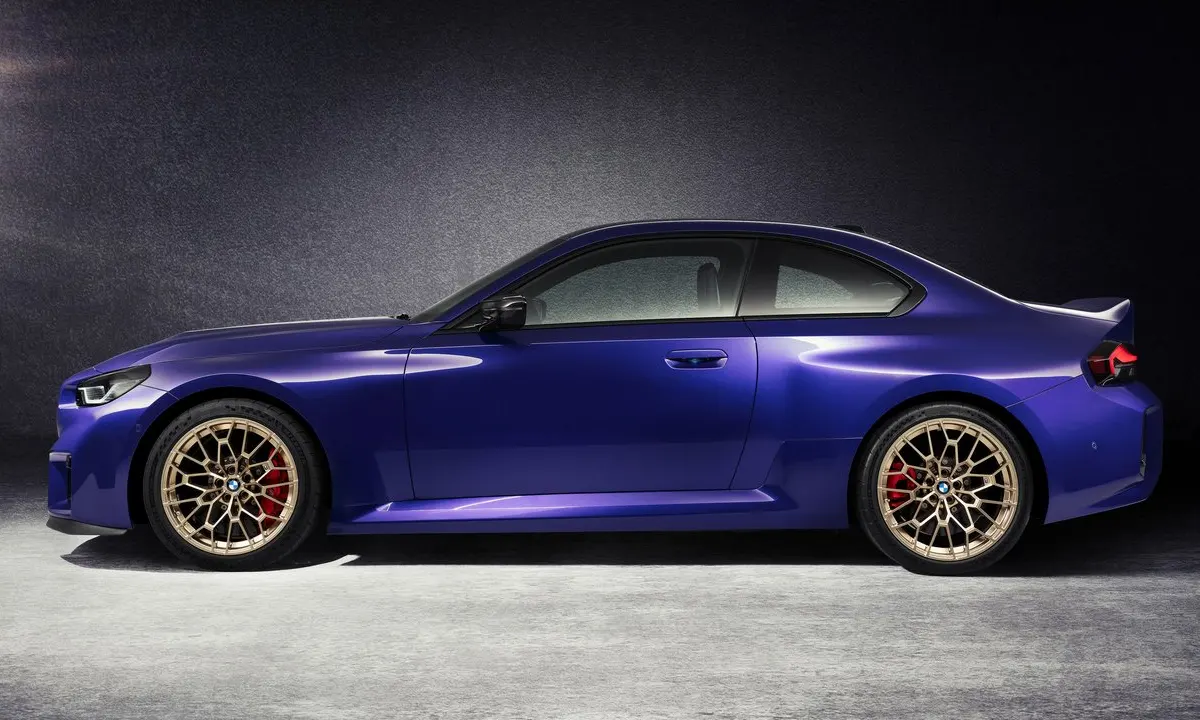
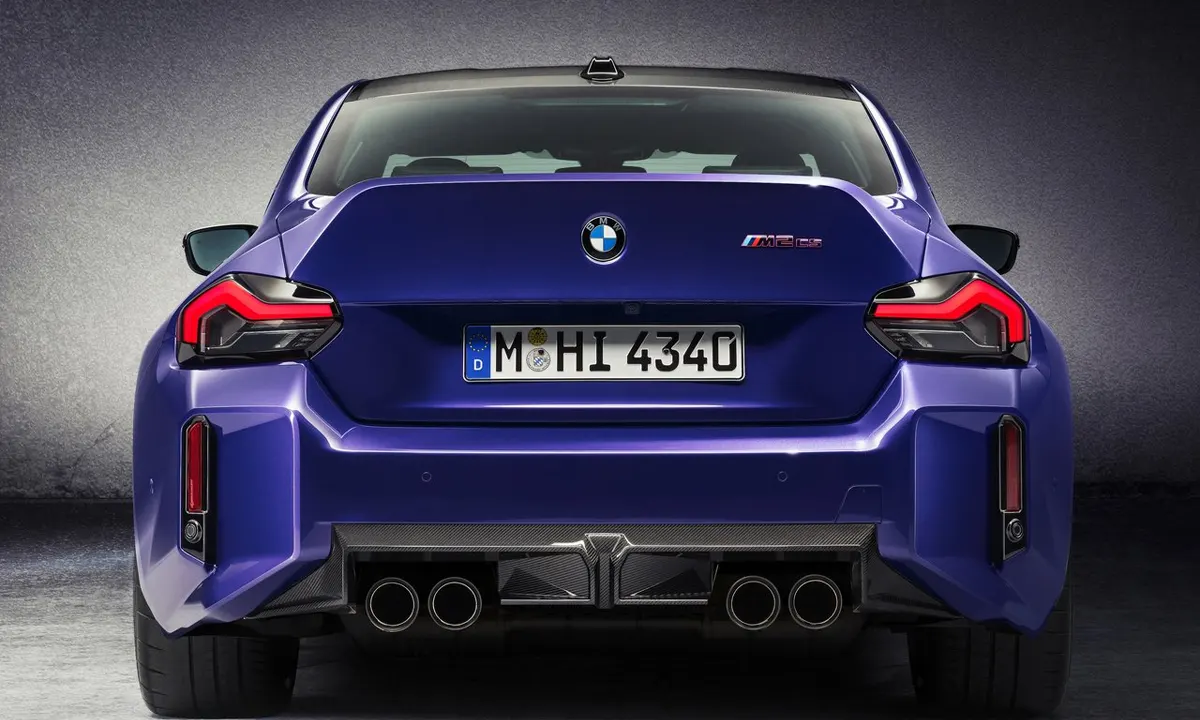
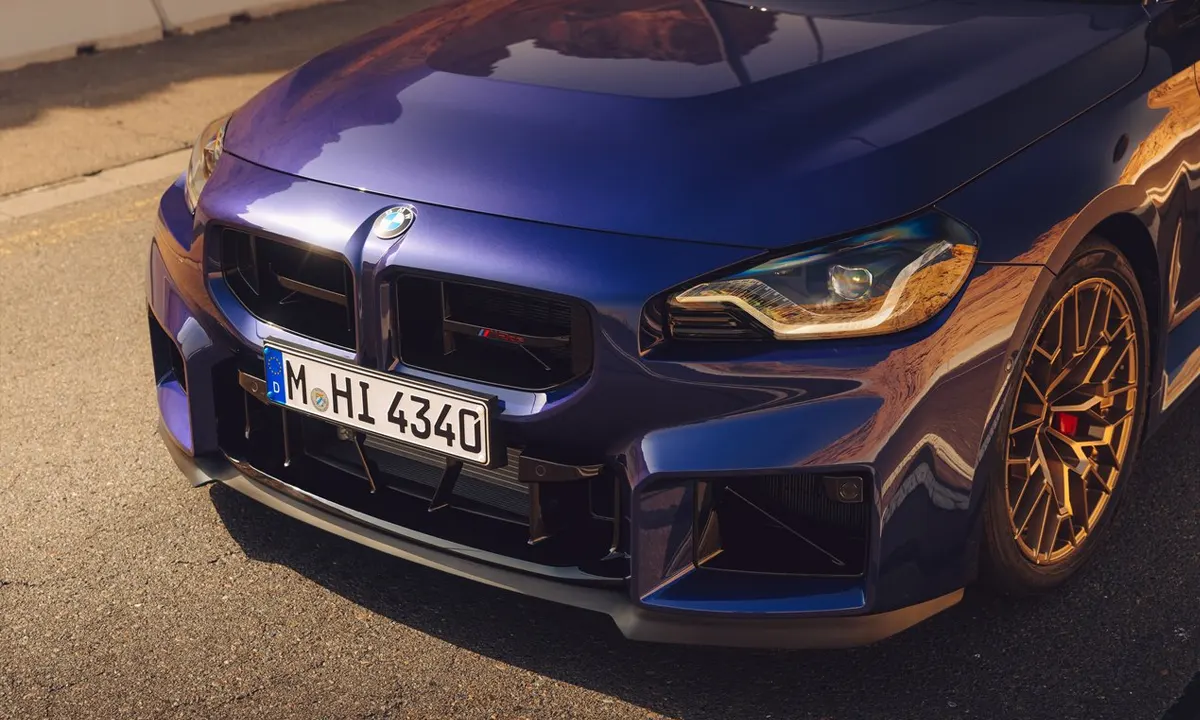
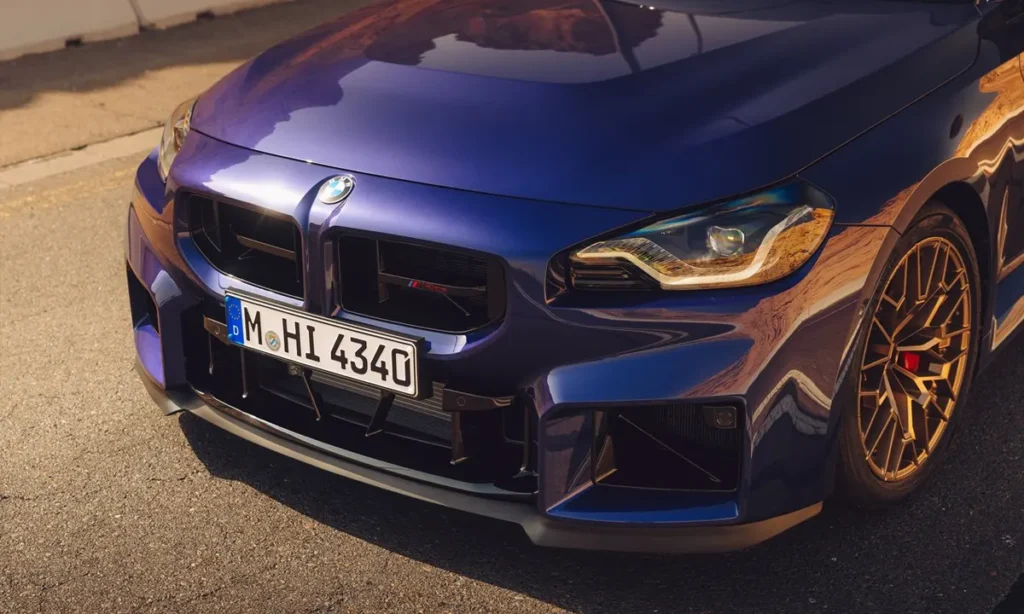
The most immediately visually distinctive element of the M2 CS exterior is the ducktail spoiler — a kickback trunk lid that rises above the standard M2’s lower lip spoiler with a pronounced and aerodynamically meaningful upturn that generates meaningful rear downforce at elevated speeds and that gives the CS a visual signature identifiable from any angle at any distance. This ducktail is not a styling element applied in pursuit of visual drama — it is an aerodynamic component whose function has been validated and whose contribution to rear-end stability at the velocities the CS’s 523-horsepower powertrain enables is measurable and practically significant. The exposed carbon fibre roof — a weight-saving measure that reduces the car’s unsprung mass and lowers its centre of gravity — is complemented by carbon fibre mirror caps and a carbon fibre rear diffuser that frames the quad exhaust outlets with the visual precision of a component designed to be seen and admired. The front fascia receives a revised kidney grille with a single black bar in place of the standard M2’s three-bar arrangement — a detail of extraordinary subtlety that marks the CS to those knowledgeable enough to recognise it, while a new front splitter and extended air intakes improve cooling airflow to the enlarged powertrain’s thermal management system.
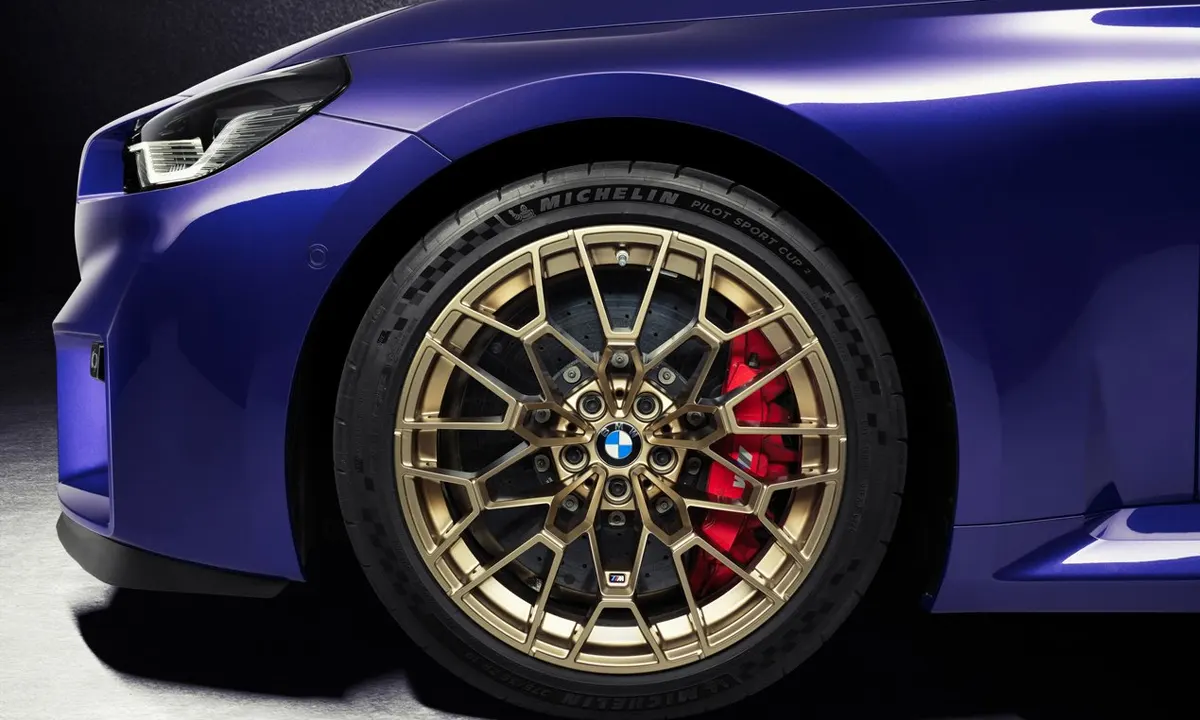
The signature bronze-forged wheels — a detail unique to the CS within the current M2 lineup and one of the most consistently praised elements of the car’s exterior presentation — are available in 19-inch front and 20-inch rear dimensions, shod with Michelin Pilot Sport Cup 2 tyres as standard and the dramatically more capable Pilot Sport Cup 2 R racing rubber that more than half of UK customers are reportedly specifying. Three standard exterior colours are offered — Brooklyn Grey Metallic, Sapphire Black Metallic and Alpine White — alongside a single extra-cost shade that allows a degree of colour expression beyond the restrained palette of the standard options. The overall visual impression is of a car that has been prepared rather than decorated — a distinction that matters deeply in the compact performance coupe market and that the M2 CS communicates with complete conviction.
The S58 Engine: 523 Horsepower of Motorsport-Grade Inline-Six Engineering
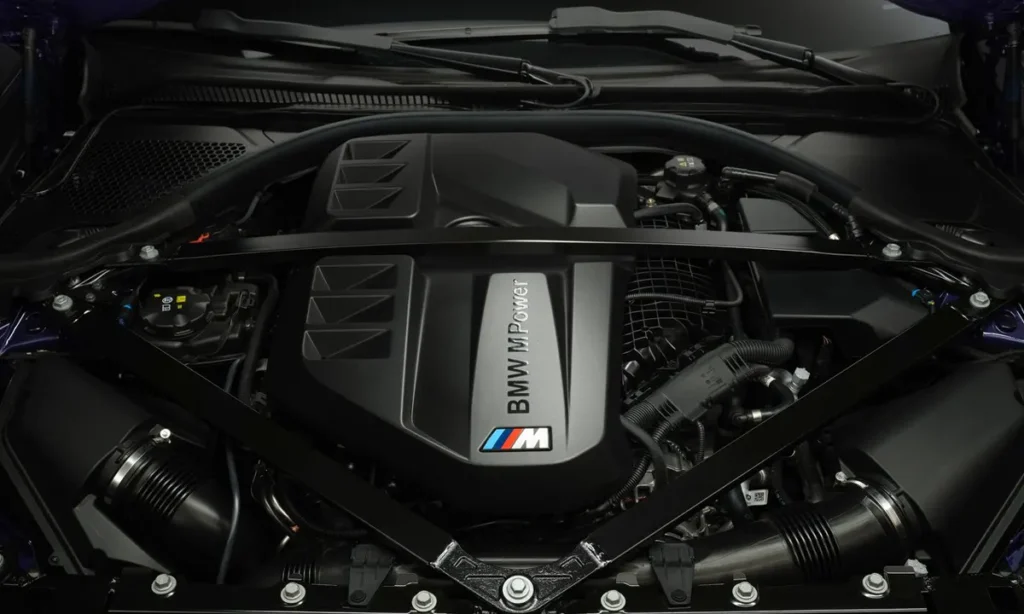
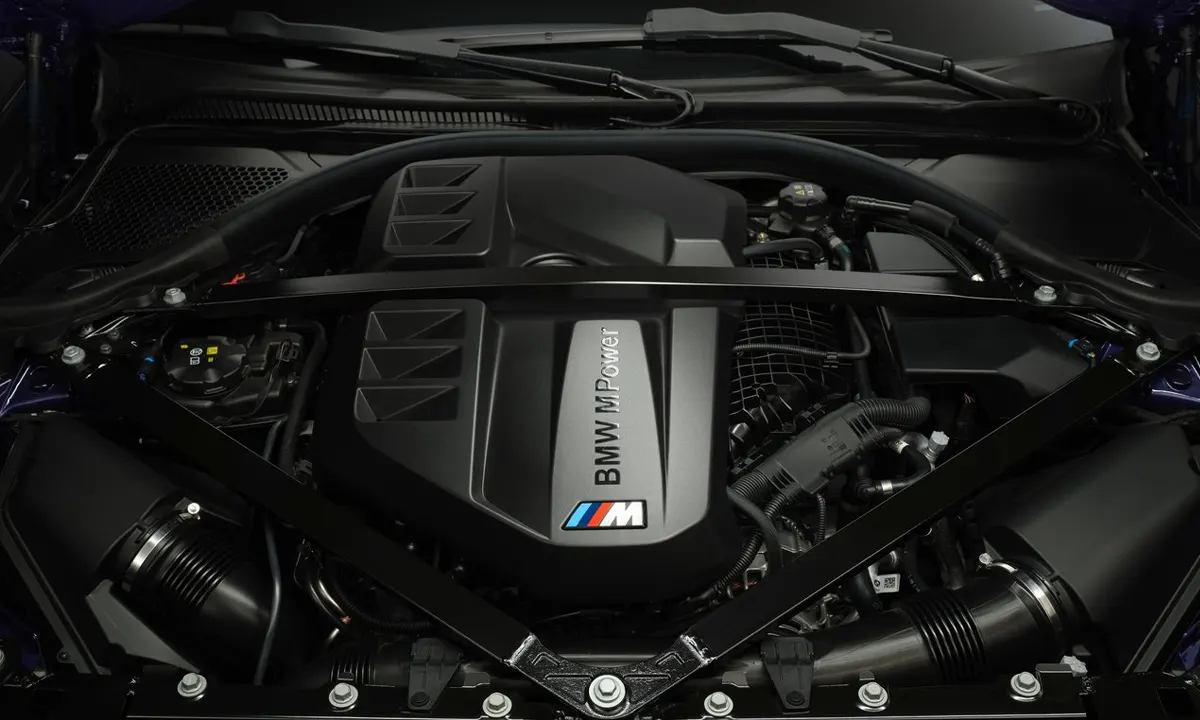
The powertrain at the heart of the 2026 BMW M2 CS is a comprehensively upgraded variant of the S58 3.0-litre twin-turbocharged inline-six — the same engine family that powers the M3, M4, M3 CS and M4 CS, adapted and recalibrated for the M2 CS application with internal modifications of genuine engineering significance that justify the 50-horsepower increase over the standard M2’s already-impressive 473-horsepower output. The S58 in CS specification produces 523 horsepower and 479 pound-feet of torque — matching the M3 CS and M4 CS precisely and positioning the M2 CS within the performance tier of cars whose chassis, tyres and aerodynamics are calibrated for that output level from the ground up rather than managing it as an afterthought.
The engine’s internal architecture reflects its motorsport-derived development philosophy with a directness that is unusual in production road car engineering. A rigid crankcase of exceptional structural stiffness provides the foundation for a forged steel crankshaft whose dimensional precision minimises rotating mass variation across the rev range. Iron-coated cylinder bores — a technique borrowed directly from BMW’s M motorsport programme — provide the wear resistance and thermal management capability required by sustained high-load operation without the dimensional growth that aluminium bores exhibit under thermal stress. These are not components selected for headline specification value — they are engineering choices made by BMW M’s engine development team for the specific purpose of enabling the S58 to produce its full output consistently across the extended high-speed operating cycles that a track-focused road car inevitably encounters in the hands of its most committed owners.
The eight-speed M Steptronic automatic transmission is the sole gearbox option for the M2 CS — a decision that has generated more discussion, more passionate debate and more genuine disappointment within the BMW enthusiast community than any other single specification choice BMW M has made in recent memory. The previous F87-generation M2 CS offered a six-speed manual alongside the DCT option, and that car’s manual variant was celebrated universally as one of the finest driving tools available at any price in the compact performance car market. The current G87 M2 CS offers no equivalent. BMW’s rationale — that the eight-speed automatic’s shift speed, efficiency and integration with the CS’s track-optimised chassis control systems produces objectively faster lap times and more consistent driver-accessible performance than any manual equivalent would allow — is technically valid and commercially understandable. It does not, however, fully address the dimension of driver engagement and pure mechanical connection that the manual transmission’s elimination removes from the M2 CS ownership experience, and buyers who purchased the previous CS specifically for its manual gearbox will find the current model’s automatic a capable but emotionally less complete substitute. For drivers who approach the M2 CS primarily as a performance tool rather than a driver engagement instrument, the automatic’s capabilities — its 3.7-second zero to 60 time, its instantaneous full-throttle upshifts and its seamless integration with the chassis stability systems — are entirely compelling and entirely sufficient. For drivers who approach it as the latter, the six-speed’s absence will be keenly and persistently felt.
Chassis Dynamics: The Art of Rear-Wheel Drive Perfection
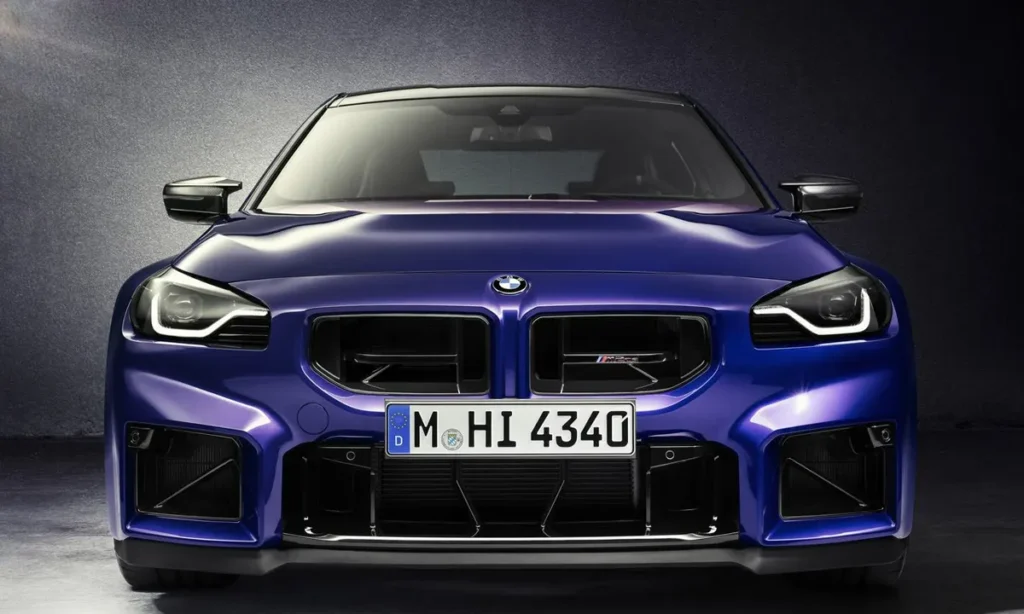
The 2026 BMW M2 CS’s chassis is where every significant engineering decision the programme encompasses — the power increase, the weight reduction, the aerodynamic development and the suspension recalibration — converges to produce a driving experience whose quality has been described by every credible automotive publication that has assessed it at the limit as among the finest available from any compact sports car at any price. BMW M has recalibrated the Adaptive M Suspension with unique spring and damper rates specifically developed for the CS application — firmer than the standard M2’s already-capable setup but calibrated with sufficient real-world progressiveness to avoid the harsh, penalty-free character that over-sprung track-focused cars often exhibit on the deteriorated public road surfaces that most owners will encounter far more frequently than perfectly prepared circuit asphalt. Ride height is reduced by 0.2 inches — a modest reduction whose contribution to the car’s visual stance and centre of gravity is meaningful without introducing the suspension geometry compromises that more aggressive ride height reductions impose.
The rear-wheel drive configuration that is exclusive to the M2 within BMW M’s current lineup — the M3 CS and M4 CS both deploy xDrive all-wheel drive in their most capable specifications — is the M2 CS’s most fundamental and most philosophically important dynamic characteristic. Rear-wheel drive in a 523-horsepower compact car is a discipline that rewards skill and punishes complacency with a consistency and a completeness that all-wheel drive systems inevitably mitigate. In the M2 CS, this dynamic reality manifests as a car whose adjustability at the limit is extraordinary — a car that can be steered with the throttle as effectively as with the steering wheel, whose rear end communicates its loading and its traction status through the seats and the steering with a resolution and a clarity that experienced drivers recognise as genuinely exceptional, and whose balance through the transition between braking and acceleration in a corner can be modified continuously and progressively through throttle and brake inputs with a responsiveness that creates the sensation of genuine dialogue between driver and machine. Top Gear’s assessment — conducted on a wet circuit whose conditions amplified every dynamic communication the car provides — found the M2 CS capable of generating levels of controlled rear-end mobility that were as progressive and as telegraphed as the finest naturally aspirated sports cars of previous generations, a quality whose rarity in the modern era of electronically managed performance is itself a form of praise whose significance experienced drivers will fully appreciate.
The M Sport Differential — BMW’s electronically controlled limited-slip rear differential that distributes torque between the rear wheels with millisecond precision — is standard on the M2 CS and is the component most responsible for the car’s extraordinary ability to exploit its rear-wheel-drive configuration productively rather than chaotically. Under hard acceleration from low speeds, the differential tightens to distribute torque broadly and minimise wheel slip. Under trailing throttle corner entry, it relaxes to allow the differential driver-feedback characteristic of a more open setup. In the mid-corner phase, it modulates continuously in response to steering angle, lateral acceleration and throttle position to maintain the balance and the adjustability that defines the CS driving experience. The integrated braking system — derived from BMW M’s higher-tier models — provides the linear, progressive pedal feel and the consistent stopping power that high-performance circuit driving demands, with optional carbon-ceramic brakes at $8,500 available for buyers whose track usage intensity justifies the investment in fade-free, high-temperature braking performance.
An Interior Built for the Serious Driver Without Excluding the Human Being
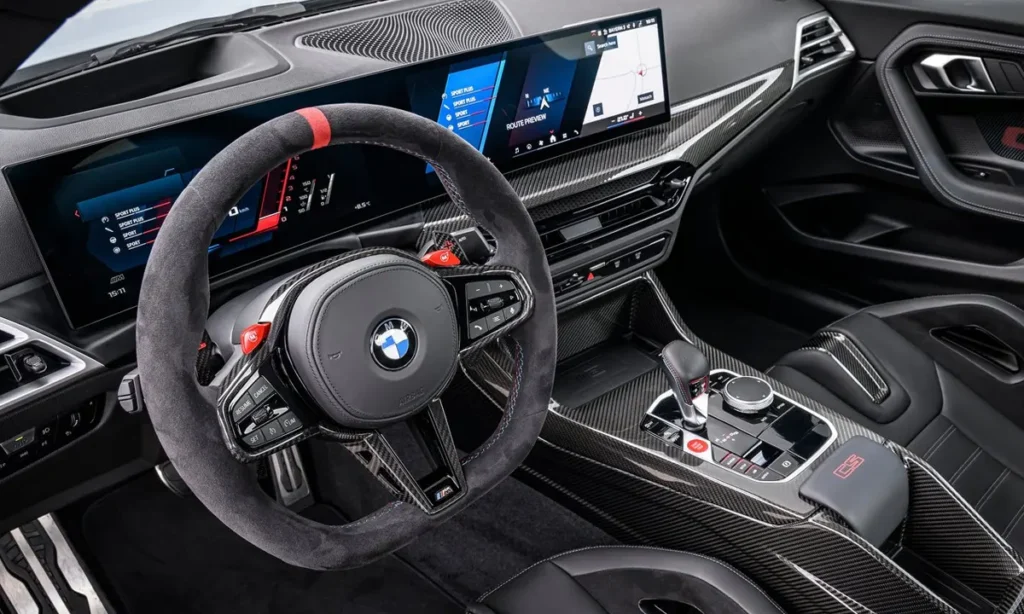
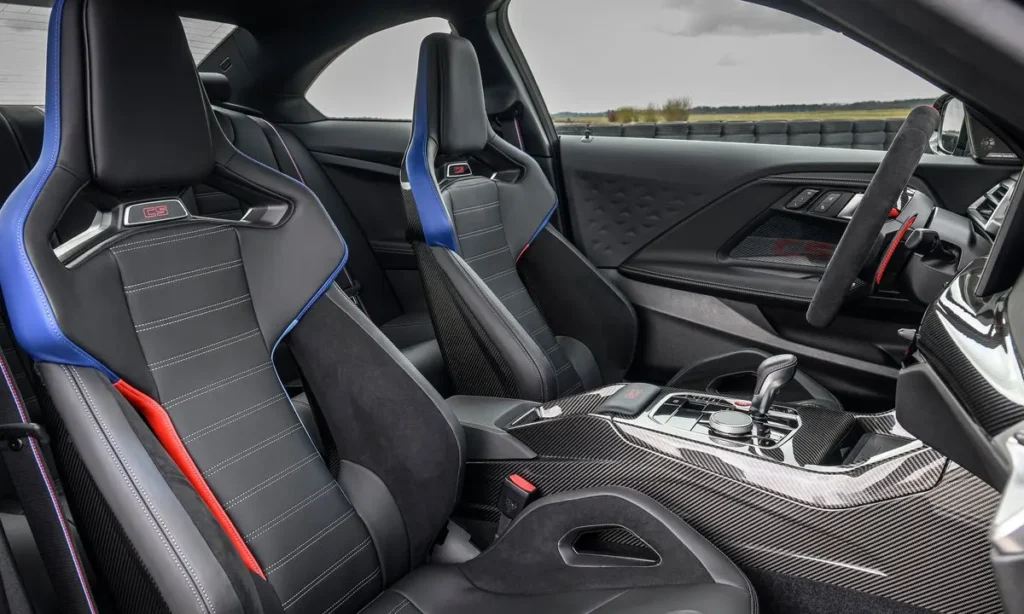
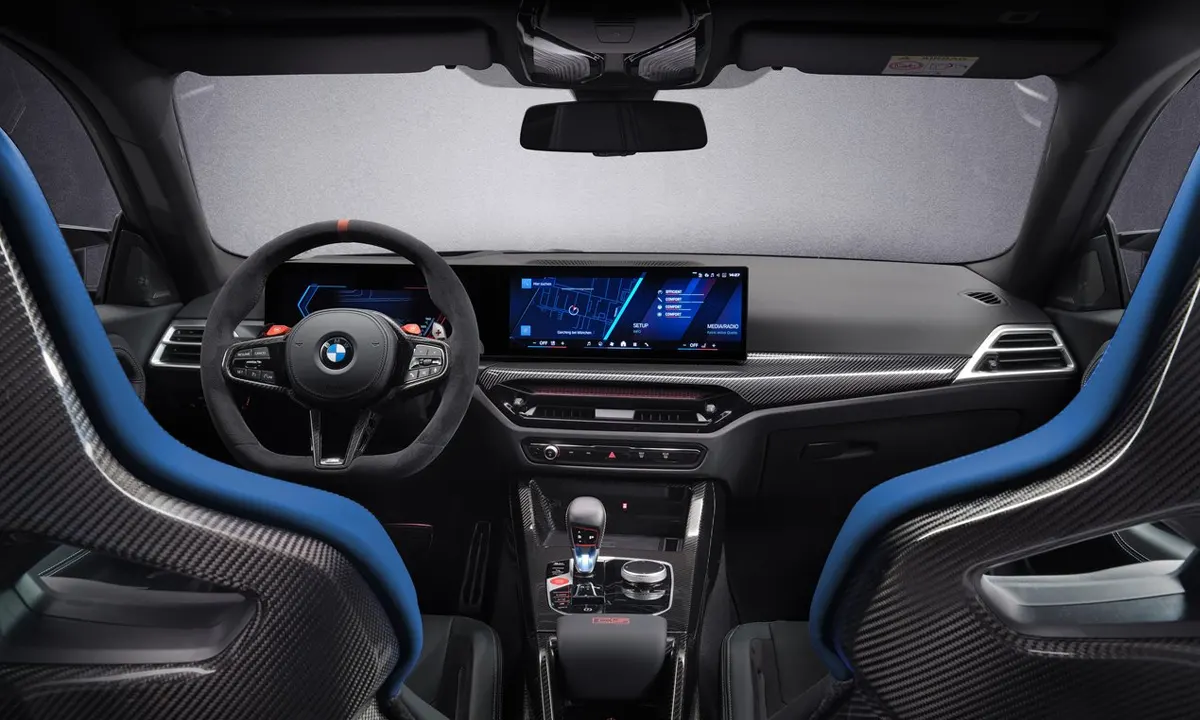
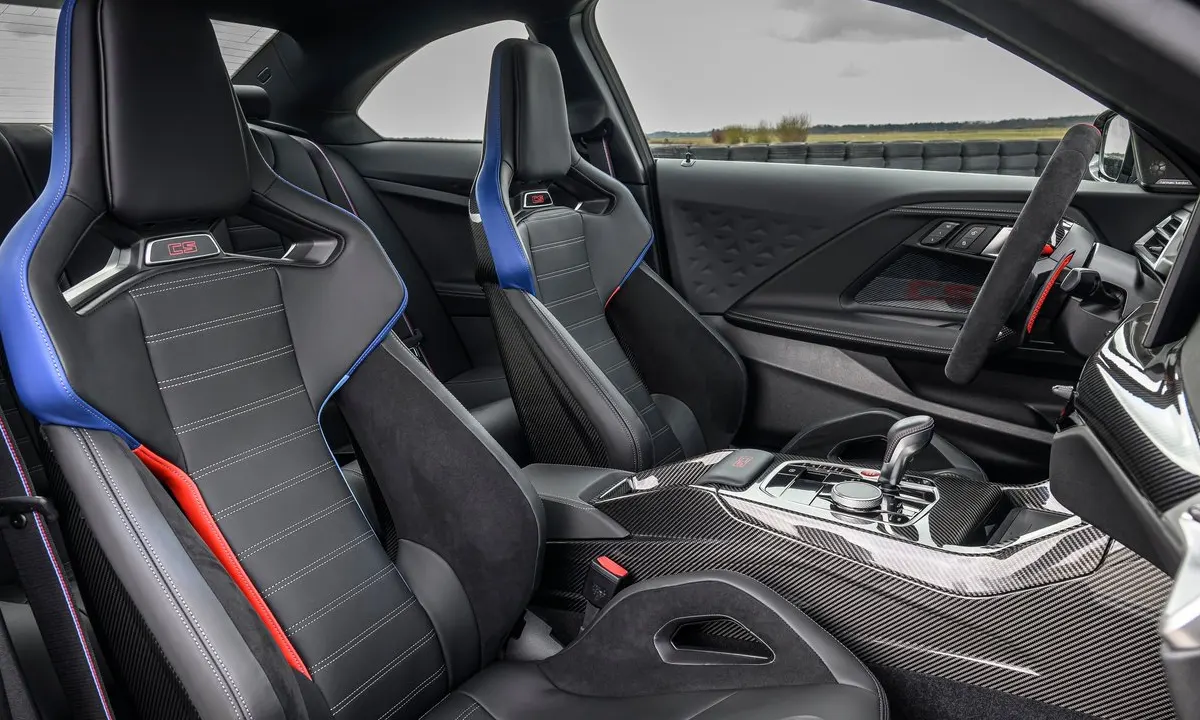
The cabin of the 2026 BMW M2 CS is the most emphatically performance-focused interior currently available in any compact sports car at this price point — a space that communicates the car’s track-day mission through every surface, every material choice and every ergonomic decision without sacrificing the daily usability and the everyday quality that BMW’s brand standards require across the full breadth of the M2 CS’s ownership experience. The M Carbon bucket seats that are standard on every CS are the cabin’s most immediately impactful element — lightweight carbon fibre shell structures upholstered in a combination of Alcantara and Black Merino leather with M colour stitching, incorporating removable head restraints for helmet compatibility during track use and mounting points for multi-point racing harnesses when the car is deployed in competitive or serious track day environments. These seats are meaningfully lighter than the standard M2’s items, contribute directly to the 97-pound overall weight reduction that distinguishes the CS from its standard sibling and provide lateral support of genuine quality during the high-g cornering events that the car’s chassis capability enables.
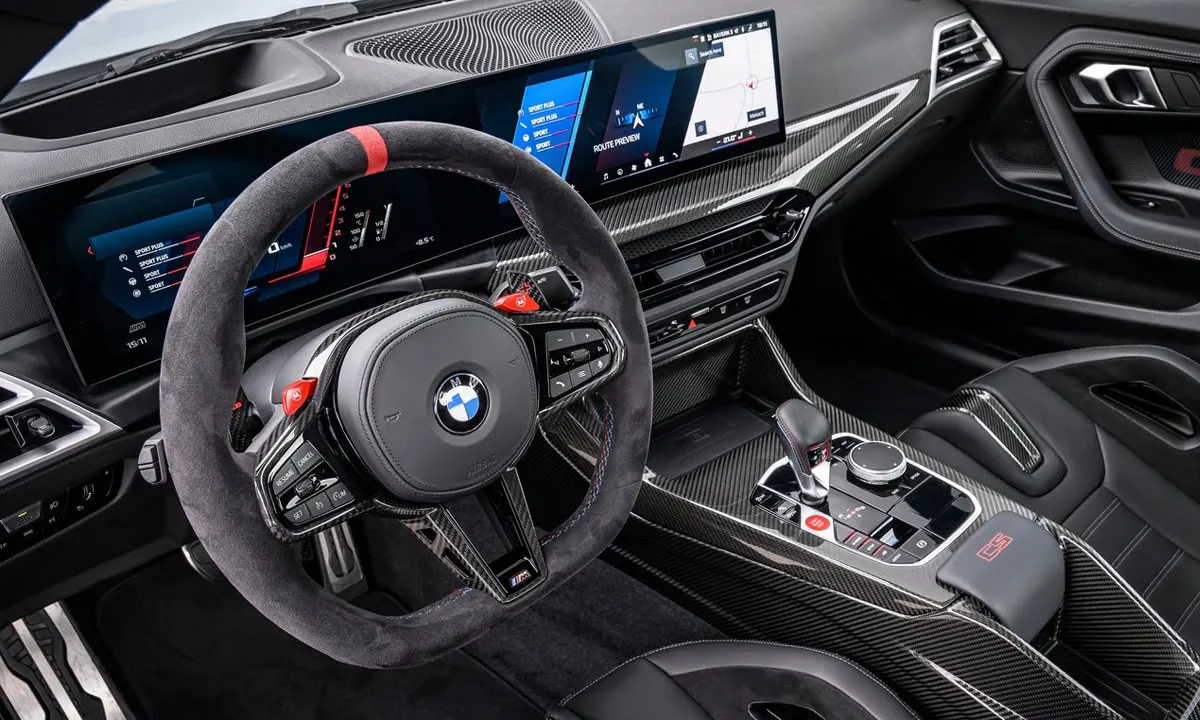
The Alcantara-wrapped flat-bottom M steering wheel — featuring a red 12 o’clock marker, gearshift paddles and two M buttons providing immediate access to pre-configured driving mode profiles — sits perfectly in the driver’s hands and provides the tactile connection between the driver’s inputs and the car’s responses that the M2 CS’s dynamic character demands. Carbon fibre trim runs across the dashboard and throughout the centre console, where a red CS badge provides the interior’s most explicit identification of the car’s specific designation. Door sills with illuminated CS lettering — framed in red — complete the interior’s motorsport identity, while the standard Merino leather and Alcantara combination throughout the cabin maintains a quality of material finish appropriate to a near-$100,000 sports car. The M Anthracite headliner and the ambient door panel lighting — which, when deactivated, reveals the carbon weave beneath — add finishing details of genuine sophistication that reward close inspection with the satisfaction of purposeful design rather than decorative afterthought.
The infotainment system centres on BMW’s iDrive platform, delivering a 12.3-inch digital instrument cluster and a 14.9-inch central touchscreen — the same hardware and software architecture present in the broader BMW lineup and representing a technology standard fully appropriate to a car at this price. Wireless Apple CarPlay and Android Auto are standard, navigation is included and the optional head-up display projects essential driving information onto the windshield with the clarity and the legibility that performance driving conditions demand. The 13.8-cubic-foot boot provides practical cargo capacity that makes the M2 CS genuinely usable as a daily conveyance for buyers who do not require rear passenger accommodation — the rear seat is present but primarily useful for shorter journeys by smaller passengers. The standard safety equipment suite — encompassing adaptive cruise control, automatic emergency braking and lane departure warning — ensures the M2 CS meets the legal and practical requirements of road use without burdening the driver with systems that conflict with the car’s fundamentally performance-focused character.
The Competition: Why Nothing Else at This Price Compares
The 2026 BMW M2 CS enters a compact performance coupe landscape that, despite its ostensible competitiveness, provides no single rival that combines rear-wheel-drive purity, 523-horsepower output and the depth of chassis communication that the CS delivers in a package of comparable dimensions, comparable weight and comparable price. The Porsche 718 Cayman GT4 RS — the most credible dynamic alternative at a similar price point — is a more focused track instrument whose naturally aspirated flat-four is a mechanical masterpiece but whose more extreme setup and open-roof body style give it a narrower usability envelope than the M2 CS for buyers who need a car capable of serving as a daily conveyance between circuit visits. The Mercedes-AMG A45 S offers comparable power in a hot hatchback body but lacks the rear-wheel-drive character and the chassis depth that the M2 CS provides. The Alpine A110 R offers extraordinary lightness and handling finesse but cannot match the M2 CS’s power output or its sensory intensity. The Ford Mustang Dark Horse offers rear-wheel-drive purity and V8 character at a lower price but lacks the refinement and the chassis sophistication that the M2 CS delivers across every dimension of its dynamic performance.
Against each of these alternatives, the M2 CS argues its case through the same qualities — the completeness of its dynamic package, the quality of its chassis communication, the breadth of its usability and the depth of the engagement it provides across every speed range and every road surface it encounters. It is faster than any compact rear-wheel-drive performance car at its price, more communicative than any turbocharged compact coupe currently in production and more balanced between road usability and track capability than any of the dedicated track specials that approach its performance credentials. The $20,000 premium over the standard M2 — which itself represents one of the strongest value propositions in the current performance car market — is, as every serious reviewer who has driven both cars back to back has concluded, entirely and immediately explainable through the quality of the driving experience that the additional engineering investment enables.
A Limited Edition That Demands to Be Driven, Not Preserved
The 2026 BMW M2 CS is a car of extraordinary rarity — fewer than 2,000 examples worldwide, with production concluding in July 2026 and allocations already committed to buyers across every major market. Japan receives just 87 units. Canada is allocated approximately 81. The United States, as BMW M’s largest and most enthusiastic global market for high-performance compact cars, receives the largest single allocation. These numbers ensure that the M2 CS will be a significant and memorable presence in the collector car market in the years following its production conclusion — but buyers who acquire one with preservation in mind will be missing the point of the car entirely and doing a disservice to the engineering achievement it represents. The M2 CS was not built to be stored. It was built to be driven — to be driven at the limit, on wet circuits and on dry ones, on mountain roads and on motorways and on every surface between them — with the full commitment and the full attention that its chassis demands and so richly rewards. It is the finest compact sports coupe BMW M has ever produced, and every one of the fewer than 2,000 examples that exist deserves to be driven with exactly the intensity and exactly the enthusiasm that the engineers in Garching and the factory in San Luis Potosí built into every component, every calibration and every carefully considered design decision that makes the M2 CS the car it unambiguously is.
2026 BMW M2 CS – Specifications & Performance Chart
| Category | Specification |
| Vehicle Type | Compact High-Performance Sports Coupe |
| Generation | G87 (Second Generation M2 CS) |
| Engine | 3.0-Litre Twin-Turbocharged Inline-Six (S58) |
| Horsepower | 523 hp |
| Torque | 479 lb-ft |
| Power Increase vs Standard M2 | +50 hp / +36 lb-ft |
| Engine Internals | Rigid Crankcase / Forged Crankshaft / Iron-Coated Bores |
| Transmission | 8-Speed M Steptronic Automatic (Drivelogic) |
| Manual Option | Not Available |
| Drivetrain | Rear-Wheel Drive (Exclusive) |
| Rear Differential | M Sport Electronic Limited-Slip |
| 0–60 mph | 3.7 Seconds |
| Top Speed | 188 mph (Electronically Limited) |
| Weight Reduction vs M2 | 97 lbs (Approx.) |
| Suspension | Adaptive M Suspension (CS-Specific Spring and Damper Rates) |
| Ride Height Reduction | 0.2 Inches vs Standard M2 |
| Brakes (Standard) | M Sport Compound with Red Calipers |
| Brakes (Optional) | Carbon-Ceramic (+$8,500) |
| Front Wheels | 19-Inch Bronze Forged Alloy |
| Rear Wheels | 20-Inch Bronze Forged Alloy |
| Standard Tyres | Michelin Pilot Sport Cup 2 |
| Optional Tyres | Michelin Pilot Sport Cup 2 R (Racing) |
| Carbon Fibre Components | Roof / Trunk Lid / Mirror Caps / Rear Diffuser |
| Spoiler | Ducktail (CS-Specific) |
| Front Grille | Single Black Bar Kidney (CS-Specific) |
| Seats | M Carbon Bucket Seats (Alcantara / Merino Leather) |
| Steering Wheel | Flat-Bottom Alcantara / Carbon / Red 12 O’Clock Marker |
| Instrument Cluster | 12.3-Inch Digital Display |
| Central Touchscreen | 14.9-Inch iDrive |
| Connectivity | Wireless Apple CarPlay / Android Auto |
| Exterior Colours | Alpine White / Sapphire Black / Brooklyn Grey (+ 1 Extra Cost) |
| Interior CS Details | Red CS Badge / Illuminated Door Sills / Carbon Trim |
| Headliner | M Anthracite |
| Boot Capacity | 13.8 Cubic Feet |
| Length / Width / Height | 180.6 in / 74.3 in / 54.9 in |
| Seating Capacity | 4 Passengers (2+2) |
| Standard Safety | AEB / Adaptive Cruise Control / Lane Departure Warning |
| Starting MSRP (US) | $99,975 (incl. destination) |
| Premium vs Standard M2 | +$20,000 Approx. |
| Global Production Volume | Fewer Than 2,000 Units |
| Production Period | Through July 2026 |
| Japan Allocation | 87 Units (All Sold) |
| Canada Allocation | Approx. 81 Units |
| Warranty | 4-Year / 50,000-Mile Bumper-to-Bumper |
| Assembly | BMW Group Plant, San Luis Potosí, Mexico |