Quietly Brilliant. 5 Reasons the 2026 Mazda3 Hatchback Is Better Than You Think
Kodo Design Language Whose Interior Execution Challenges Vehicles Costing Twice Its Price, a Skyactiv-X Engine Option Whose Compression Ignition Technology Remains Unique in the Mainstream Segment, Zoom-Zoom Driving Dynamics That the Compact Hatchback Segment's Volume Sellers Cannot Approach, a Standard Safety Suite Whose Comprehensiveness Reflects Premium Brand Ambition at Mainstream Pricing and the Persistent Underappreciation of a Vehicle That Automotive Journalists Consistently Rate Exceptional While Mainstream Buyers Consistently Overlook in Favour of More Familiar Names
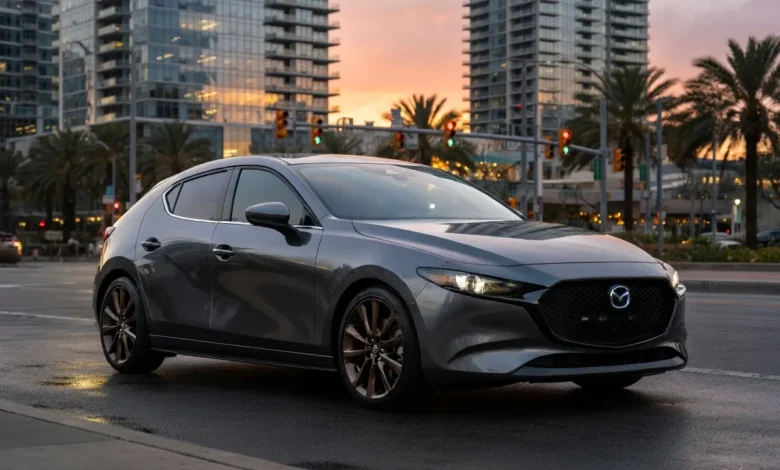
- Premium interior quality
- Fun, engaging driving dynamics
- Stylish standout design
- Strong safety and refinement
- Underrated in its segment
There is a particular category of automotive product whose excellence is an open secret — vehicles that the people who pay close attention to cars regard with consistent admiration and whose mainstream commercial performance nonetheless falls short of what their objective quality warrants. The 2026 Mazda3 Hatchback occupies that category with a consistency that has persisted across multiple model generations and that reflects not any failure of the product but a persistent gap between what the Mazda3 delivers and what the broader compact car buying public believes a Mazda3 is capable of delivering.
The compact hatchback segment is one of the most competitive in the global automotive market — a category where Honda, Toyota, Volkswagen and Hyundai deploy their most refined mainstream engineering and their most considerable marketing resources to maintain the segment dominance that their sales volumes reflect. Against this competition, the Mazda3 Hatchback occupies a position of genuine distinction whose dimensions — interior quality, driving dynamics, design sophistication and technology integration — consistently exceed what its price point and its mainstream positioning would lead a rational buyer to expect. These are the five reasons that distinction is more significant than most buyers currently appreciate.
Reason 1: An Interior That Embarrasses More Expensive Cars
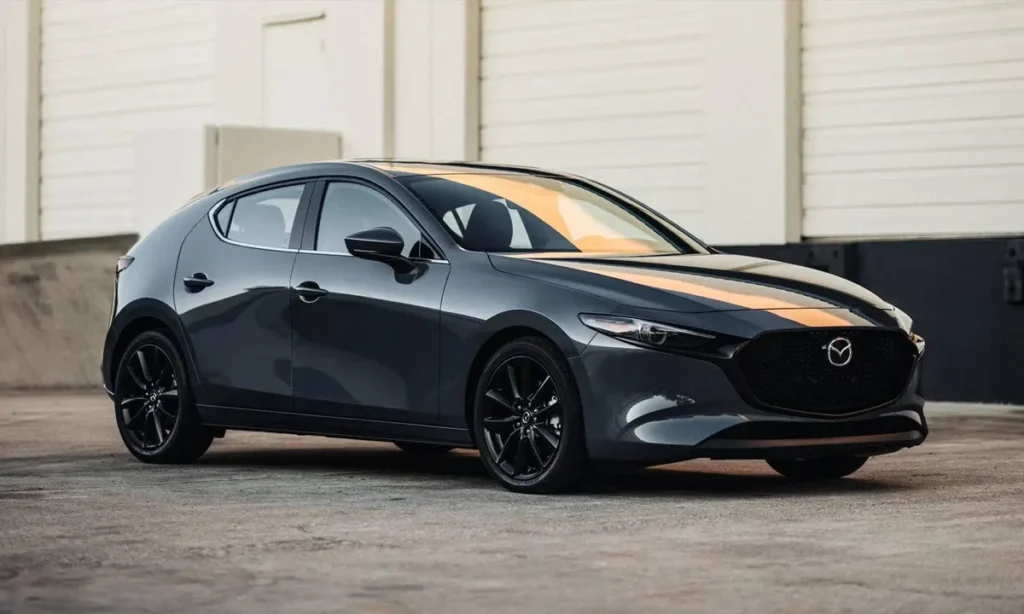
The 2026 Mazda3 Hatchback’s interior is the most immediately apparent and most consistently remarked-upon quality that distinguishes it from every competitor in the compact segment — a cabin whose material quality, design coherence and tactile refinement place it in a category that its price point does not suggest it should occupy. The soft-touch surfaces that cover the dashboard upper section, door panel tops and centre console armrest areas reflect a material investment whose cost Mazda has absorbed as a brand philosophy decision rather than a margin calculation — providing the haptic quality that buyers of vehicles costing $10,000 to $15,000 more than the Mazda3 expect and that the Honda Civic, Toyota Corolla and Volkswagen Golf cannot match at equivalent price points.
The Nappa leather upholstery available on higher Mazda3 trim levels — a material whose presence in the compact segment is essentially unique to Mazda — provides a seating surface quality whose luxury credentials are genuine rather than aspirational. The ambient lighting system, the widescreen infotainment display whose integration into the dashboard architecture reflects deliberate design intent rather than afterthought installation and the rotary controller whose tactile quality exceeds touchscreen alternatives for driving-condition usability combine to produce an interior environment that a buyer stepping from a German premium compact into the Mazda3 would not find inferior.
Reason 2: Driving Dynamics That Redefine Compact Hatchback Expectations
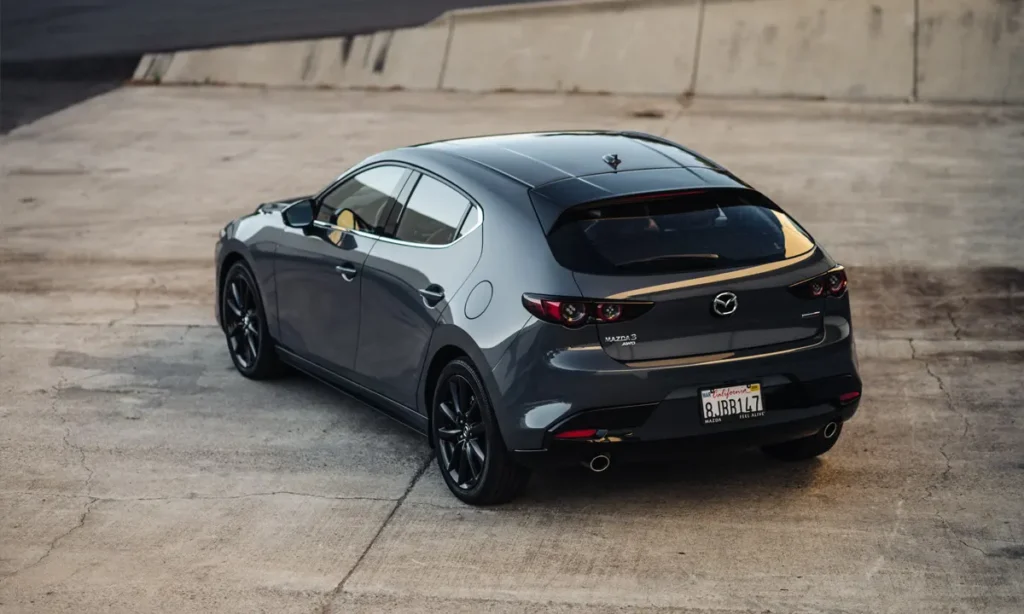
The 2026 Mazda3 Hatchback’s driving dynamics reflect Mazda’s Jinba Ittai philosophy — the Japanese concept of horse and rider as one — whose practical engineering expression is a chassis, steering and suspension calibration whose purpose is to make the driver feel not that they are operating a vehicle but that the vehicle is an extension of their physical intention. The steering — whose weighting, precision and on-centre feel provide more information about road surface and tyre behaviour than any competitor in the segment currently offers — is the most immediate expression of this philosophy and the characteristic that most consistently surprises drivers whose compact car experience has been formed by the numb, effort-free steering that the segment’s volume sellers provide.
The suspension calibration achieves the dual capability that compact car buyers require — sufficiently compliant for daily urban use over imperfect surfaces, sufficiently composed through directional changes to provide the dynamic confidence that enthusiastic driving rewards — through a spring and damper specification whose balance Mazda’s engineers have refined across multiple generations to produce the current car’s particularly successful blend. The body control during cornering, the chassis’s response to mid-corner load changes and the progressive, communicative nature of the grip limit approach combine to make the Mazda3 Hatchback the most genuinely enjoyable compact car to drive in normal road conditions that the segment offers at any price.
Reason 3: Skyactiv-X Technology That No Competitor Has Matched
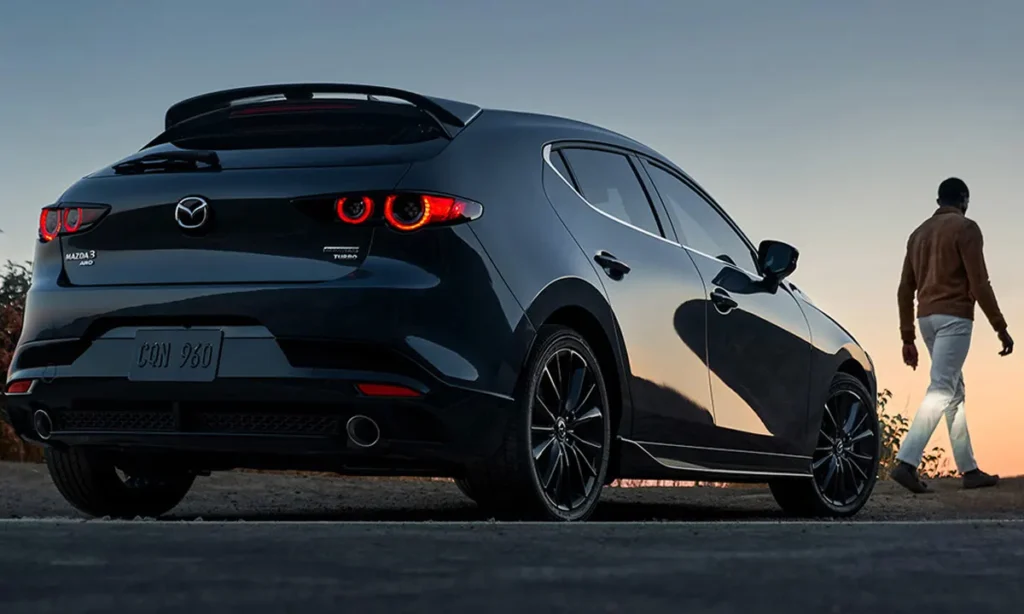
The Mazda3’s Skyactiv-X 2.0-litre engine — whose Spark Controlled Compression Ignition technology enables compression ignition combustion under certain operating conditions in a petrol engine, a technical achievement that no other mainstream manufacturer has replicated in production despite the efficiency benefits whose value the fuel economy data confirms — represents the most technically ambitious mainstream engine in the compact segment and the clearest expression of Mazda’s engineering ambition at a price point where technical conservatism is the default competitive posture.
The Skyactiv-X’s ability to switch between conventional spark ignition and compression ignition combustion in response to engine load and operating conditions produces fuel consumption figures that combine the efficiency of diesel operation with the fuel flexibility and emissions profile of petrol combustion — achieving real-world fuel economy improvements over the standard Skyactiv-G petrol engine while maintaining the performance character and rev behaviour that petrol engine buyers expect. No Honda, Toyota or Volkswagen compact offers engine technology of equivalent sophistication at equivalent pricing — a distinction whose significance is underappreciated by buyers whose engine selection criteria begin and end with horsepower figures and fuel economy ratings rather than the engineering achievement that produces them.
Reason 4: Safety Technology That Sets the Segment Standard
The 2026 Mazda3 Hatchback’s standard safety technology suite — whose comprehensiveness reflects Mazda’s commitment to making advanced safety features standard equipment rather than premium add-ons whose availability is restricted to higher trim levels — provides the compact car buyer with safety technology whose standard fitment rate across the Mazda3 range exceeds what most competitors offer at equivalent pricing.
The i-Activsense suite — encompassing autonomous emergency braking with pedestrian and cyclist detection, adaptive cruise control with stop-and-go capability, lane keeping assistance, blind spot monitoring and rear cross-traffic alert — is standard across the Mazda3 range rather than restricted to premium trim levels. The quality of these systems’ implementation — whose false positive rates, intervention smoothness and detection reliability reflect genuine development investment rather than regulatory compliance minimalism — produces real-world safety performance whose effectiveness the standard fitment rate across the entire Mazda3 lineup makes available to every buyer regardless of budget constraint within the model range.
Reason 5: A Design Whose Depth Rewards Extended Engagement
The 2026 Mazda3 Hatchback’s exterior design — whose Kodo Soul of Motion philosophy produces surface complexity that reveals increasing detail with extended visual engagement — achieves something that most compact car design, whose primary obligation is mainstream inoffensiveness rather than genuine aesthetic ambition, does not attempt and whose success the Mazda3’s design team has achieved with a consistency that the World Car Design of the Year recognition for the Mazda 6e confirms as a genuine brand capability rather than a single-model achievement.
The Mazda3’s body surfaces — whose compound curves catch and release light differently at different viewing angles and in different lighting conditions — produce a visual dynamism that the simpler surfaces of Honda Civic, Toyota Corolla and Hyundai Elantra exteriors cannot replicate. The fastback hatchback roofline whose integration with the rear pillar and the tail creates a silhouette of genuine elegance in a body style whose proportional challenges most manufacturers resolve with competence rather than beauty — provides a daily aesthetic reward whose value compounds across ownership in a way that the more visually neutral alternatives cannot match.
2026 Mazda3 Hatch vs Rivals — Key Comparison
| Category | Mazda3 Hatch | Honda Civic | Toyota Corolla | VW Golf |
| Interior Material Quality | Exceptional | Good | Good | Very Good |
| Steering Feel | Exceptional | Average | Average | Good |
| Unique Engine Tech | Skyactiv-X SPCCI | None | None | None |
| Standard Safety Suite | Comprehensive | Good | Good | Good |
| Nappa Leather Available | Yes | No | No | No |
| Design Awards | Multiple | None Recent | None Recent | None Recent |
| Starting MSRP (US) | ~$23,000 | ~$24,000 | ~$22,000 | ~$28,000 |
| Driving Dynamics Rating | Exceptional | Good | Average | Very Good |
| Infotainment Control | Rotary + Screen | Touchscreen | Touchscreen | Touchscreen |
| Brand Positioning | Near-Premium | Mainstream | Mainstream | Mainstream–Premium |