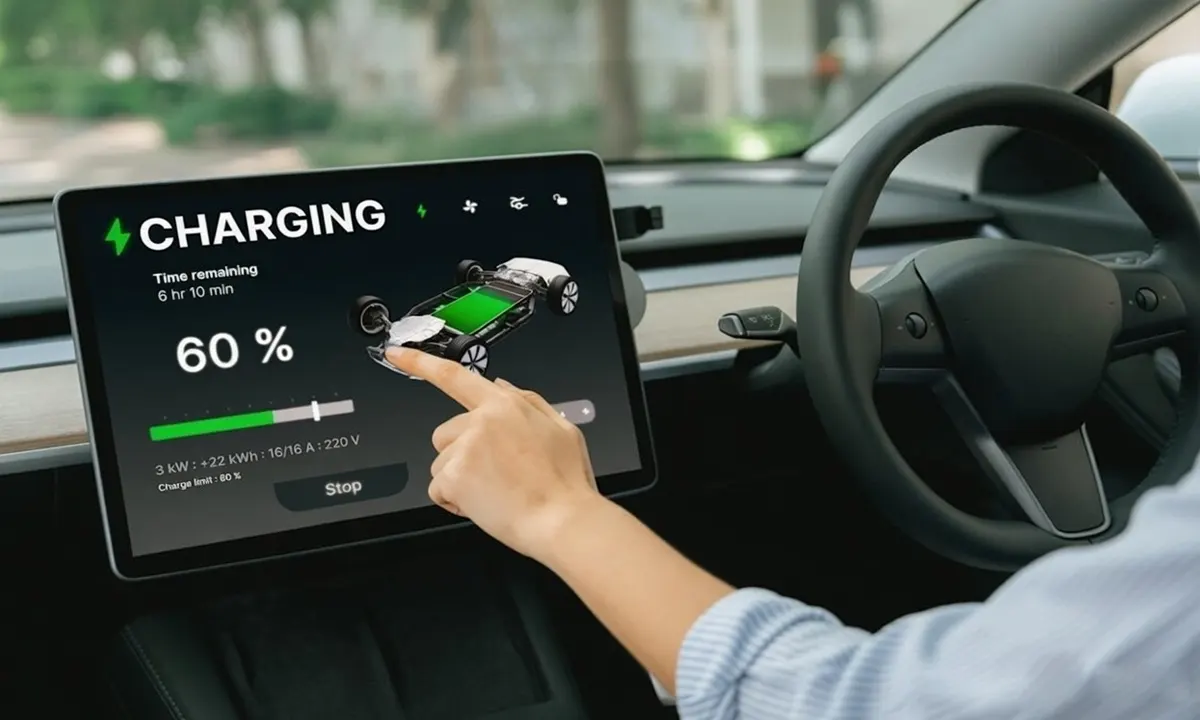
- Wall Connector adds ~30–44 miles per hour
- Full charge in ~6–8 hours for most Model 3s
- NEMA 14-50 takes ~8–12 hours
- Charging speed depends on battery and onboard charger
- Home setup impacts cost and efficiency
Tesla Model 3 Charging Time: For the overwhelming majority of Tesla Model 3 owners in the United States, 240-volt home charging is the primary and most practical charging method — the equivalent of plugging in a smartphone every night and waking up to a full battery every morning. A Model 3 that covers 40 miles of daily commuting needs only 60 to 90 minutes of Level 2 charging to restore that range. A complete top-up from near-empty overnight is fully accomplished before 6 AM in virtually every configuration. Understanding exactly how long each Model 3 variant takes to charge at 240V, what equipment produces the fastest results and what installation choices make the biggest practical difference transforms home charging from a vague concept into a specific, optimised system for daily ownership. This guide provides every number owners need.
The 2026 Model 3 Onboard Charger: Why It Determines Home Charging Speed
Before examining charging times, one specification determines the home charging speed ceiling for every Model 3: the onboard charger. The onboard charger is the component inside the vehicle that converts the AC power supplied by a 240V wall charger into DC power that the battery accepts. Its rated capacity — measured in kilowatts — sets the maximum rate at which any Level 2 home charger can deliver energy to the battery, regardless of how powerful the external charger is.
The 2026 Tesla Model 3 RWD uses a 7.7-kilowatt onboard charger, accepting up to 32 amps at 240 volts. Installing the most powerful Tesla Wall Connector on a 60-amp circuit does not charge this vehicle faster than a 40-amp circuit — because the vehicle’s own charger is the limiting factor at 7.7 kilowatts.
The 2026 Model 3 Premium RWD and all AWD variants — Long Range and Performance — use an 11.5-kilowatt onboard charger, accepting up to 48 amps at 240 volts. These variants genuinely benefit from a Tesla Wall Connector on a 60-amp circuit that can deliver the full 11.5 kilowatts continuously, producing the fastest possible Level 2 home charging speed.
Tesla Wall Connector vs NEMA 14-50: The Two Home Charging Options
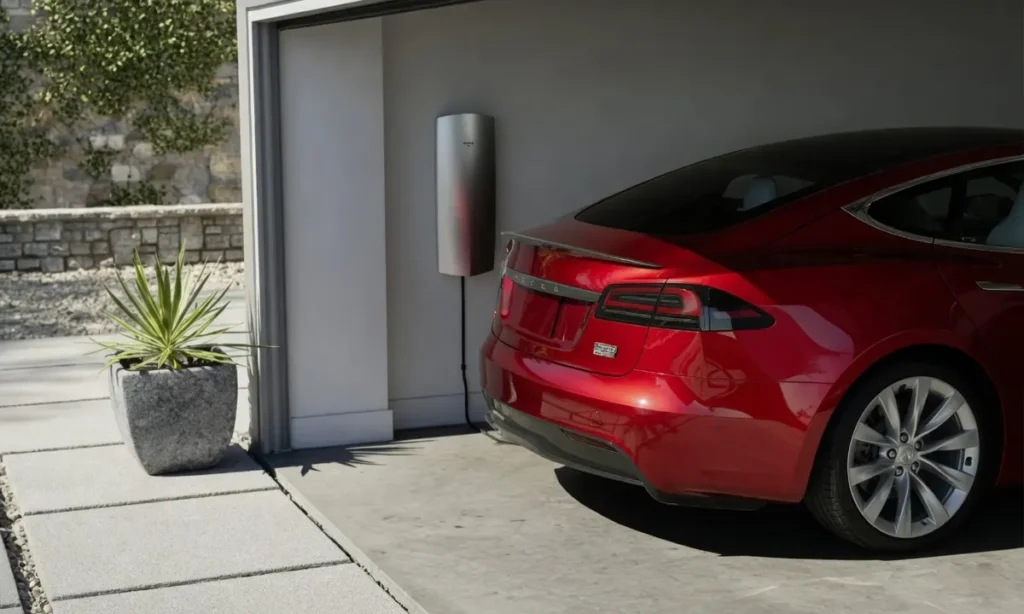
American Model 3 owners have two primary 240V home charging options — the Tesla Universal Wall Connector hardwired to the home’s electrical panel, and a NEMA 14-50 outlet used with the Tesla Mobile Connector or a compatible portable Level 2 charger. Both operate at 240 volts. The meaningful differences are in amperage, maximum power delivery and installation cost.
The Tesla Universal Wall Connector, hardwired by a licensed electrician on a 60-amp dedicated circuit, delivers up to 48 amps continuously — supporting the full 11.5-kilowatt capacity of the Long Range and Performance variants. For Model 3 RWD owners, the Wall Connector on a 40-amp circuit fully utilises the 7.7-kilowatt onboard charger. The Wall Connector adds smart features — app-based scheduling, charging history tracking and load-sharing between multiple units — alongside the native NACS connector that eliminates adapters on all current Model 3 variants.
A NEMA 14-50 outlet — the same 240-volt, 50-amp outlet used by electric dryers and RV hookups — installed on a 50-amp dedicated circuit is a lower-cost installation alternative. At 32 amps continuous draw — 80 percent of the 40-amp practical limit of the circuit — a NEMA 14-50 delivers approximately 7.7 kilowatts, which matches the Model 3 RWD’s onboard charger capacity exactly but falls short of the 11.5-kilowatt maximum for Long Range and Performance variants. The result is moderately slower overnight charging for higher-trim variants but essentially equivalent results for the RWD model.
Tesla Model 3 240V Home Charging Times — Complete Chart
| Model 3 Variant | Onboard Charger | Tesla Wall Connector (48A) | NEMA 14-50 (32A) | Miles Added Per Hour | Full Charge Time (10–100%) |
| Model 3 RWD (LFP) | 7.7 kW | ~8 hours | ~8–9 hours | ~30 miles/hr | ~8–9 hours |
| Model 3 Premium RWD | 11.5 kW | ~7–8 hours | ~9–10 hours | ~30–44 miles/hr | ~7–10 hours |
| Model 3 Long Range AWD | 11.5 kW | ~7–8 hours | ~9–11 hours | ~30–44 miles/hr | ~7–11 hours |
| Model 3 Performance AWD | 11.5 kW | ~7–8 hours | ~9–11 hours | ~30–44 miles/hr | ~7–11 hours |
Times are approximate, assuming mild temperature, 10 to 100 percent charge range and full charger output. Real results vary with temperature, battery condition and electrical supply quality.
Daily Charging Reality: Most Owners Need Only 1 to 3 Hours Per Night
The full-charge times above represent a worst-case scenario — a battery depleted to near-empty that requires a complete overnight restoration. For the average American driver covering 37 miles daily, the 240V charging reality is significantly faster and simpler.
At 30 miles of range added per hour on a NEMA 14-50, a 37-mile daily commute is fully restored in approximately 75 minutes of Level 2 charging. At 44 miles per hour on a Wall Connector running at full 48-amp capacity, that same 37-mile restoration takes approximately 50 minutes. A driver who returns home at 6 PM, plugs in immediately and has a 7 AM departure has 13 hours of charging time available — more than enough to fully restore any Model 3 from any realistic daily depletion level. The overnight charging window is so generous that almost no owner with a 240V home setup experiences range limitations from charging speed alone.
The practical recommendation for the vast majority of Model 3 owners is to plug in every night regardless of state of charge, set the daily charge limit to 80 percent for NCA-equipped Long Range and Performance variants, and allow the Tesla app’s scheduled charging to complete the charge shortly before the departure time. This approach keeps the battery at a moderate state of charge for the majority of each day — reducing heat and calendar aging — while ensuring a fresh, full-to-limit charge is ready at departure time.
Read: Best Level 2 Home Charger for Tesla Model 3 With Solar Panels
Installation Cost and What the Electrical Panel Needs
A 240V home charging setup requires a dedicated circuit installed by a licensed electrician — sharing a circuit with other appliances is not safe for the continuous current draw that EV charging represents. Installation cost varies significantly by home configuration.
A NEMA 14-50 outlet on a 50-amp dedicated circuit costs approximately $200 to $600 in labour and materials when the main electrical panel is close to the garage and has available capacity. A Tesla Wall Connector hardwired on a 60-amp dedicated circuit costs approximately $500 to $1,500 for installation — more if conduit runs are long, the panel requires a subpanel addition or local permitting requirements are complex. The Tesla Wall Connector itself costs approximately $550 before installation.
The federal 30 percent tax credit on residential EV charging equipment and installation — capped at $500 for residential installations and available through 2032 — reduces the effective installation cost meaningfully. Third-party NACS-compatible Level 2 chargers such as the Emporia EV Charger, which qualifies for the full federal credit, provide an alternative to the Tesla Wall Connector at approximately $450 before the credit.
A home with an older electrical panel rated below 150 amps may require a panel upgrade before a dedicated 60-amp EV circuit can be safely added — an additional cost of $1,500 to $3,000 but a home improvement that benefits the entire electrical system, not just EV charging.
Read: Tesla Model 3 Real-World Range at 75 MPH. Road Trip Planning Numbers You Actually Need
Four Practices That Optimise 240V Home Charging for Any Model 3
Set the charge limit correctly for the battery chemistry. The Model 3 RWD with its LFP battery can and should be charged to 100 percent regularly — Tesla specifically recommends this for LFP-equipped vehicles to maintain battery calibration accuracy. The Long Range and Performance variants with NCA chemistry should be set to 80 to 90 percent for daily use, reserving 100 percent charging for road trip departures. Both settings are adjusted in the Tesla app’s Charging menu in seconds and remembered by the vehicle.
Use scheduled charging to align completion with departure time. Rather than starting a charge immediately upon arriving home — which can leave the battery at high state of charge for hours before driving — the Tesla app’s Scheduled Charging or Scheduled Departure feature delays charging to begin at a time that completes the session shortly before the departure time. This keeps the battery at a lower, healthier state of charge for more of the night and, if the owner uses a time-of-use electricity plan, concentrates charging in the lower-cost overnight rate window.
Maintain Wi-Fi connectivity for over-the-air charge management. The Tesla app requires the vehicle to have an active internet connection — through the car’s cellular connection or home Wi-Fi — to send and receive charging commands, monitor session progress and adjust charge limits remotely. Parking within Wi-Fi range of the home router ensures that app-based charging management functions reliably.
Monitor the first charge on a new installation. After installing a new 240V circuit and charger, the first charging session should be monitored to confirm that the circuit breaker does not trip and that the charger reports the expected amperage in the Tesla app. Any unexpected interruption should be investigated by the installing electrician before relying on the setup for daily overnight charging.