Hyundai Elantra Handling and Ride Quality Review. Here’s What We Found
- The 2026 Hyundai Elantra delivers a firm but comfortable ride, though road and engine noise are more noticeable than in some rivals.
- The Elantra Hybrid offers improved ride quality and handling compared with the standard gasoline model.
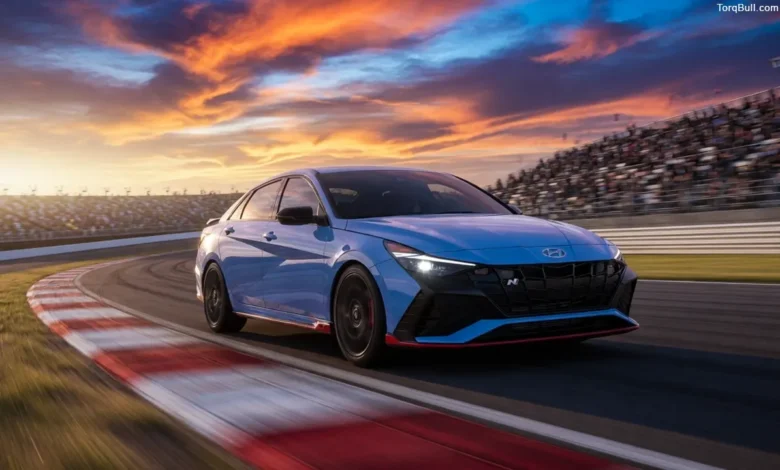
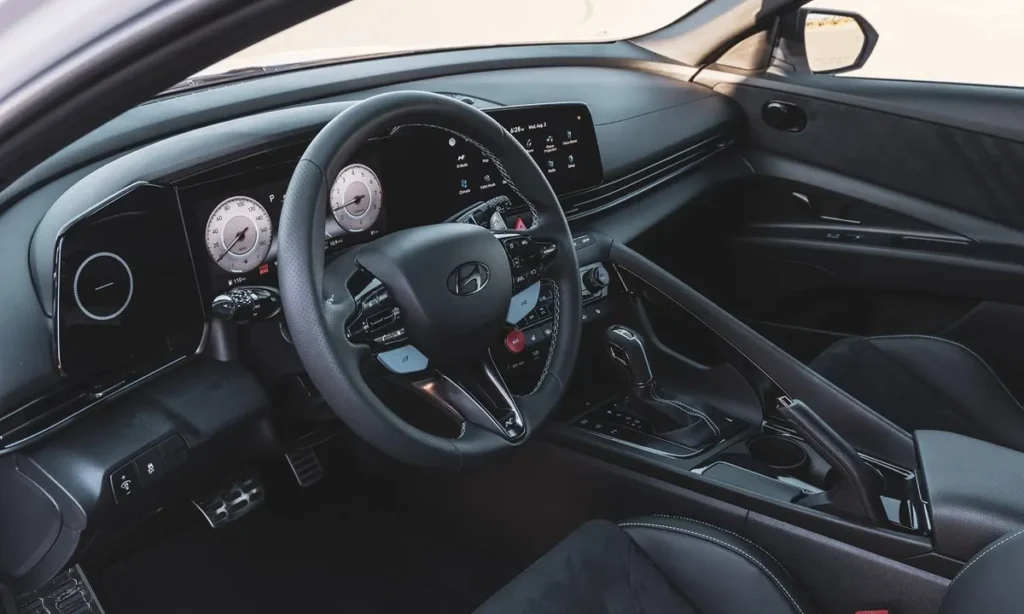
- The high-performance Elantra N stands out with sharp steering and some of the best handling in the front-wheel-drive segment.
Understanding the 2026 Hyundai Elantra’s ride quality and handling is essential context for any buyer choosing between configurations — because the answer changes significantly depending on which powertrain and trim is selected. The base naturally aspirated four-cylinder Elantra and the Hybrid represent two meaningfully different daily experiences. The N Line and full Elantra N represent a further departure into genuine driver’s car territory. All of these vehicles wear the same Elantra badge and share the same fundamental body architecture, but their suspension calibrations, tyre specifications and powertrain integration produce ride and handling characteristics that professional evaluators consistently describe as meaningfully different across the range. This complete review examines every configuration’s specific dynamic character.
The Base Elantra: Firm, Composed and Average for the Class
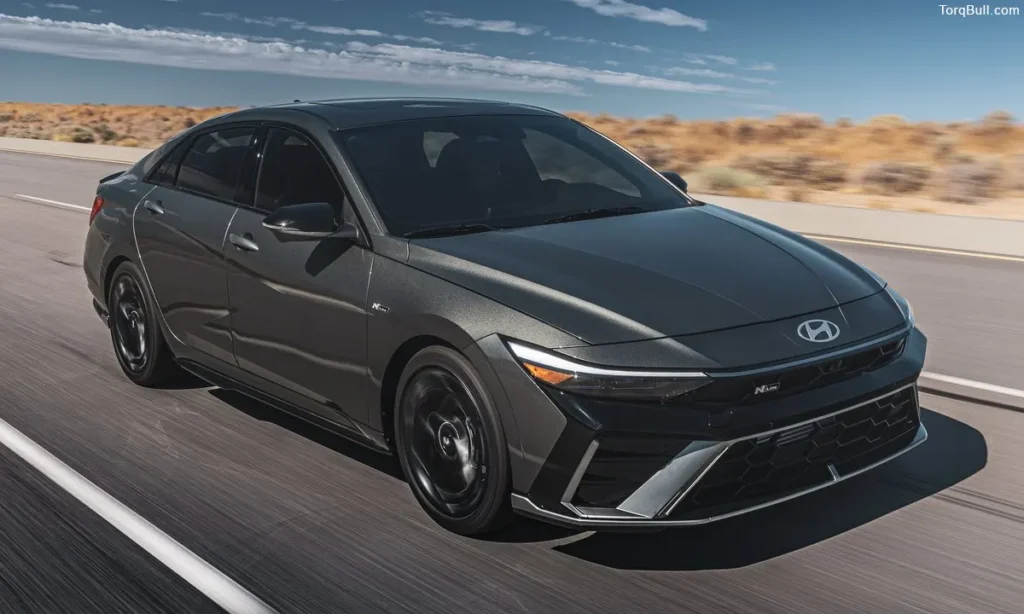
The 2026 Hyundai Elantra SE, SEL Sport, SEL Sport Premium and Limited trims all use the same MacPherson strut front and torsion beam rear suspension architecture with the same spring and damper calibration oriented toward a balance between ride comfort and handling response that Hyundai specifically targets at the mainstream compact car buyer.
Professional road test evaluation of the current generation Elantra describes the ride as about average for the compact sedan class — firm but not harsh. The suspension absorbs moderate road surface variations without transmitting them harshly into the cabin, providing the composed, controlled feel that most daily commuting demands. Where the base Elantra’s suspension falls short of the class leaders is in its handling of the larger, sharper road impacts that expansion joints, potholes and deteriorated road sections produce — where the Subaru Impreza and Toyota Corolla manage these impacts with more compliance and better occupant insulation. The Elantra’s suspension in base trim is tuned more firmly than either of these specific competitors in the bump absorption category.
The practical consequence for daily Elantra ownership is straightforward: urban and suburban roads with moderate surface quality produce a pleasant, composed driving experience where the firm suspension keeps body motion well controlled. Roads with more aggressive surface deterioration — potholed city streets, frost-damaged northern roads and rough freeway surfaces — transmit more cabin intrusion than competing vehicles with softer spring rates.
Cabin noise is the second consistently noted ride quality dimension for the base Elantra. Independent evaluation confirms that the cabin can get loud, with noticeable road noise under typical driving conditions, and that the base 2.0-litre engine sounds boisterous when pushed hard under hard acceleration. This noise profile is specific to the base naturally aspirated engine and base trim acoustic treatment — upper trims benefit from improved acoustic materials and the Hybrid trim’s fundamentally quieter power delivery.
Read: Hyundai Elantra Engine Performance. Is This Sedan Fun to Drive?
The Hybrid Version: Better Ride and Handling Than the Standard Engine
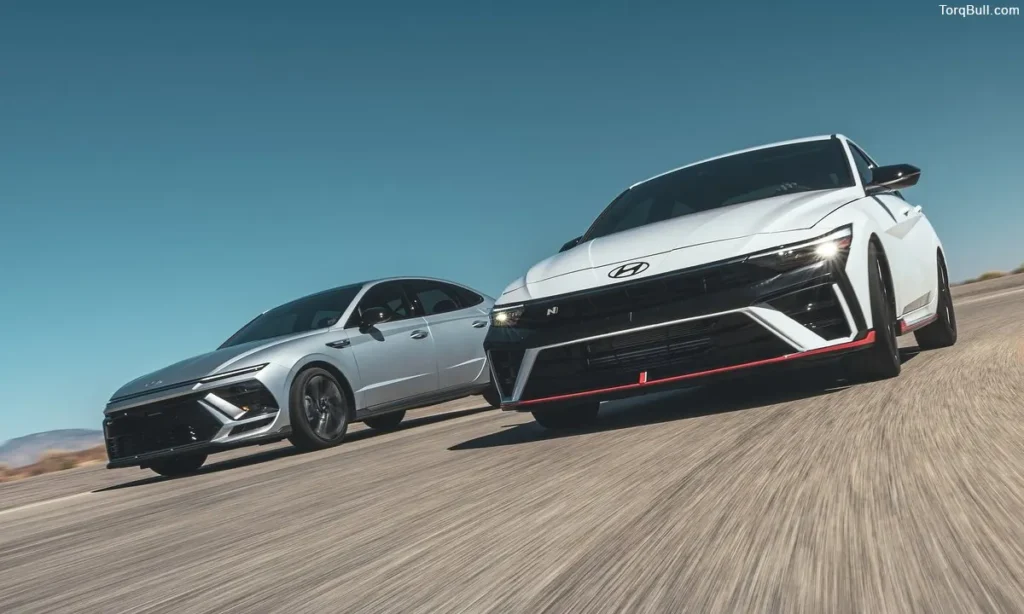
The most important and most consistently cited improvement in the Elantra Hybrid’s driving character over the base four-cylinder — beyond the efficiency difference that its headline fuel economy represents — is the specific improvement in ride quality and handling that the hybrid powertrain produces.
Professional evaluation specifically describes the Hybrid as the best choice not only for its superb fuel economy but for its better ride and handling relative to the base version. This improvement reflects several specific engineering differences between the two configurations. The hybrid battery pack’s placement — specifically calibrated into the Elantra’s floor structure — lowers the vehicle’s centre of gravity compared to the base model’s configuration, improving the dynamic stability and reducing the body lean that base models can exhibit in cornering situations. The hybrid’s electric motor provides instant, smooth torque at low vehicle speeds that eliminates the transition hesitation from the naturally aspirated engine’s power band — producing a more seamless, more linear acceleration character that reduces the abrupt powertrain responses that can feel unsettled in urban stop-and-go driving.
Owner reviews confirm this professional assessment in practical terms. Multiple verified owners describe the Hybrid Blue as providing a smooth drive in everyday conditions, with one repeat buyer who sold a 2022 Hybrid and purchased the 2026 equivalent specifically noting the vehicle’s smooth character as a repurchase motivation alongside the fuel economy. The Hybrid’s electric motor-smoothed power delivery and centre-of-gravity improvement collectively produce a daily driving character that is meaningfully more refined than the base engine’s busier and more mechanical feel.
The N Line: Sport Tuning for Engaged Daily Driving
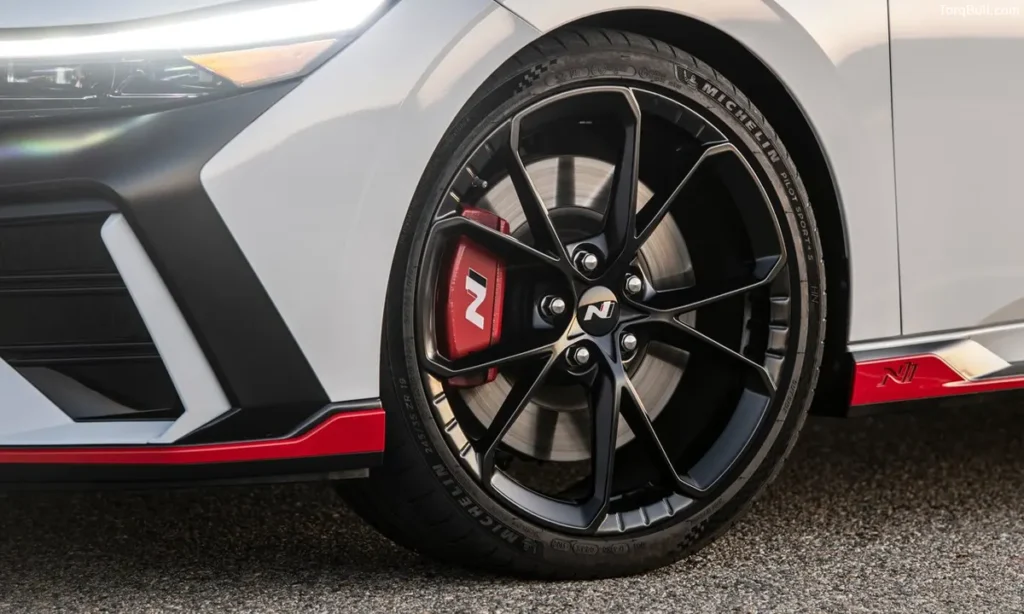
The Elantra N Line’s sport-tuned suspension represents the first meaningful step toward a driving-focused calibration in the Elantra lineup — without reaching the full performance commitment of the dedicated Elantra N.
The N Line’s suspension uses stiffer springs and revised damper tuning compared to the base Elantra, producing a firmer ride over the same road surfaces. The trade in reduced ride compliance is a specific improvement in body control during cornering — the N Line exhibits less body roll through corners than base Elantra configurations, producing a more connected and more responsive feel when the driver inputs steering changes at moderate to higher speeds. The 1.6-litre turbocharged engine’s additional torque — 195 pound feet against the base engine’s 132 — provides more immediate and more satisfying response to throttle inputs, contributing to a livelier daily driving character even at moderate speeds.
The N Line’s sport-tuned suspension produces a perceptibly firmer ride on rough road surfaces compared to the base Elantra’s already firm calibration — buyers who commute on roads with significant surface deterioration will notice the additional firmness. For buyers whose commute routes are on reasonably well-maintained roads, the N Line’s handling improvement produces daily satisfaction that more than offsets the modest comfort trade.
Read: Is Hyundai Elantra Worth Buying in 2026? Still the Best Value Sedan on the Market?
The Elantra N: One of Today’s Best Handling Front Wheel Drive Cars
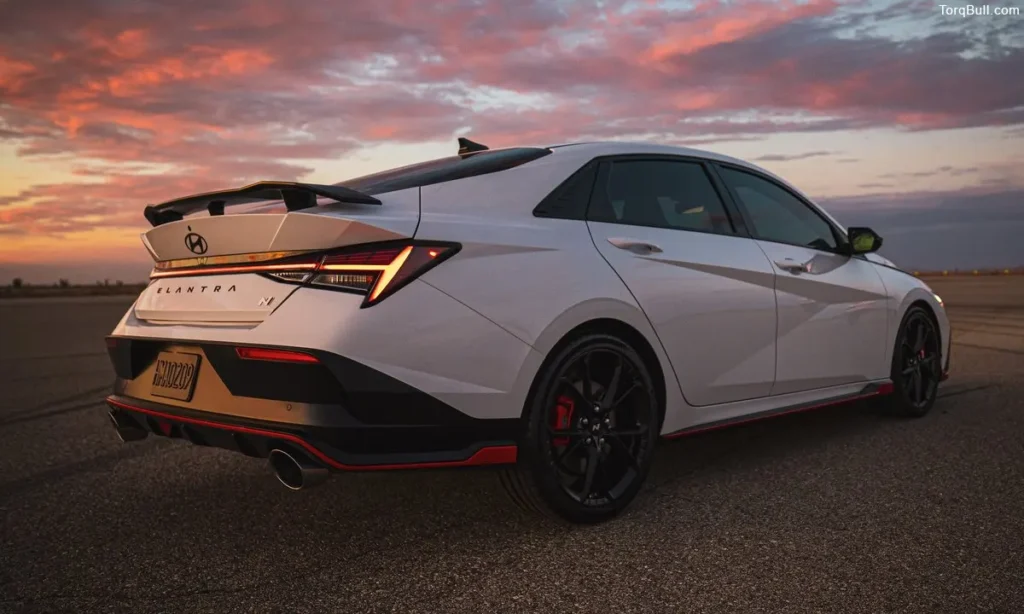
The full Elantra N occupies a different category from the rest of the Elantra lineup — a dedicated performance vehicle whose dynamic credentials professional evaluators consistently compare to purpose-built sports cars rather than to other compact sedans.
Professional evaluation describes the Elantra N as one of today’s best handling front wheel drive cars. The steering is specifically praised as accurate and communicative — providing road surface feedback through the steering wheel that allows the driver to sense tyre contact and adjust inputs accordingly. This steering feel is meaningful in a performance context: the ability to sense grip levels through the wheel is what allows confident corner entry and exit at the speeds where the Elantra N’s 276 horsepower and electronic limited-slip differential are most fully engaged.
The Elantra N absorbs mid-corner bumps with ease and delivers substantial grip through corners — a specific suspension calibration achievement for a vehicle that must also serve as a daily driver rather than a dedicated track tool. The sportier suspension makes for a slightly stiffer ride than the regular Elantra, but on the highway it settles into a pleasant driving experience — confirming that the N’s performance calibration does not make the vehicle uncomfortable for sustained highway driving alongside its track capability. The highway composure finding is specifically important for buyers who plan to use the Elantra N as a primary daily driver and weekend performance vehicle rather than as a dedicated sports car that is uncomfortable over long distances.
Hyundai Elantra Ride and Handling — Complete Configuration Chart
| Configuration | Suspension Tuning | Ride Quality | Handling | Road Noise | Cornering Body Roll | Best For |
| SE, SEL Sport, Limited (base 2.0L) | Standard compact car tuning | About average; firm but not harsh | Predictable and composed | Noticeable at highway speeds | Moderate | Daily commuting; economy priority |
| Hybrid Blue, SEL Hybrid, Limited Hybrid | Hybrid optimised; lower centre of gravity | Better than base; smoother character | Improved stability over base | Reduced vs base | Less than base | Efficiency plus improved daily quality |
| N Line (1.6L Turbo) | Sport tuned; stiffer springs | Firmer than base; confident | Good body control; reduced lean | Similar to base | Reduced vs base | Spirited daily drivers |
| Elantra N (2.0L Turbo, eLSD) | Full performance tuning | Slightly stiffer; highway: pleasant | Class leading FWD handling | Engine and exhaust audible | Minimal | Performance enthusiasts; track capable |
How the Elantra Compares to Direct Competitors on Ride Quality
The base Elantra’s firmness relative to the Toyota Corolla and Subaru Impreza reflects a specific suspension philosophy choice rather than a design shortcoming. Hyundai has tuned the Elantra toward a sportier, more controlled character than either competitor — a calibration that suits drivers who prioritise body control and connected feel over maximum compliance. The Corolla and Impreza specifically accept more body motion and more suspension compliance to achieve a softer, more absorbent ride — trading some dynamic precision for improved comfort over varied surfaces.
For the Honda Civic comparison — the Elantra’s most direct daily competitor — professional evaluations place the Civic’s handling as more engaging and rewarding than the base Elantra’s more predictable and middle-of-the-road character. The Civic’s independent rear suspension produces superior cornering precision and better bump handling in corners than the Elantra’s torsion beam rear configuration, which is a cost and packaging compromise that the Elantra shares with several competing compact sedans.
The Elantra’s advantage over both the Corolla and the Civic in handling competence appears most clearly in the N Line and Elantra N configurations — where the sport-tuned suspension and performance hardware produce a driving dynamic that neither the Corolla GR nor the Civic Sport fully match without stepping into the GR Corolla or Civic Si and Type R performance tiers.
Read: Hyundai Elantra vs Toyota Corolla: Which Compact Sedan Is the Better Buy In 2026?
Owner Feedback: Real World Ride and Handling Experience
Owner reviews across 64 verified 2026 Elantra accounts consistently identify handling as the vehicle’s weakest consumer-rated category — scoring lower than styling, reliability and value in aggregated sentiment. This owner assessment aligns with professional evaluation: the base Elantra’s handling is functional and composed without being engaging or rewarding in a way that enthusiast owners specifically appreciate.
The most positive owner ride and handling accounts come consistently from Hybrid buyers — who describe smooth drive and pleasant character in their daily experience — and from N owners who specifically purchased the vehicle for its performance character and who describe the dynamic rewards they sought as delivered. The disconnect between these two owner communities and the base model’s more middling handling assessment reflects the genuinely different vehicles these configurations represent despite their shared nameplate.