Ford F-150 PowerBoost Hybrid Performance Review. Perfect Blend of Power and Fuel Savings?
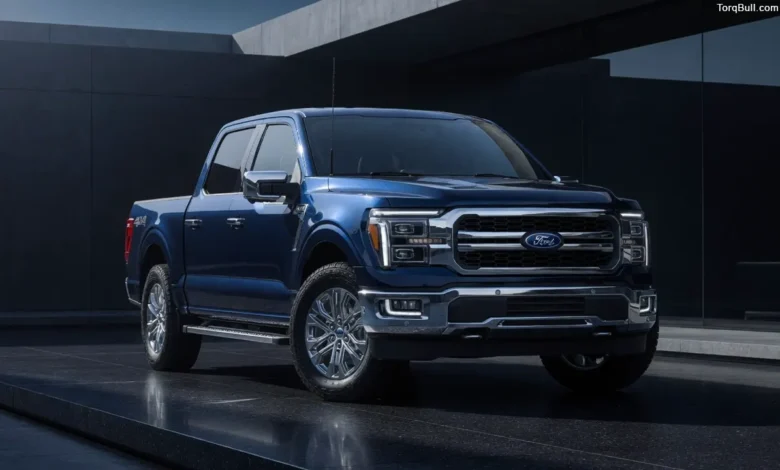
- The 2026 Ford F-150 PowerBoost Hybrid delivers 430 horsepower and 570 pound-feet of torque, the highest torque output in the lineup.
- Independent testing recorded a quick 0–60 MPH time of just 5.8 seconds.
- The available 7.2-kW Pro Power Onboard system can power tools and equipment, making it ideal for worksites and outdoor use.
The Ford F-150 PowerBoost Full Hybrid is the powertrain argument that changes how truck buyers think about what a pickup truck can be. It produces 430 horsepower and 570 pound feet of torque — the most torque of any F-150 engine in the 2026 lineup. It reaches 60 MPH in 5.8 seconds in track testing — fast enough to outpace most performance sedans from a decade ago and quick enough to earn a 2026 Full Size Truck of the Year designation in head-to-head testing against the Ram 1500 Hurricane, Toyota Tundra i-Force MAX and GMC Sierra V8. It achieves 23 MPG combined in EPA testing — the best fuel economy of any non-electric F-150 powertrain. And it includes an optional 7.2 kilowatt generator that turns the truck bed into a mobile power station capable of running job site equipment, powering a travel trailer or providing backup electricity to essential home circuits during a power outage. One professional reviewer who tested the King Ranch PowerBoost for a full week said he would change absolutely nothing and described the truck as a game changer for truck lovers, especially for those who work out of their trucks.
The Powertrain Architecture: How the PowerBoost System Works
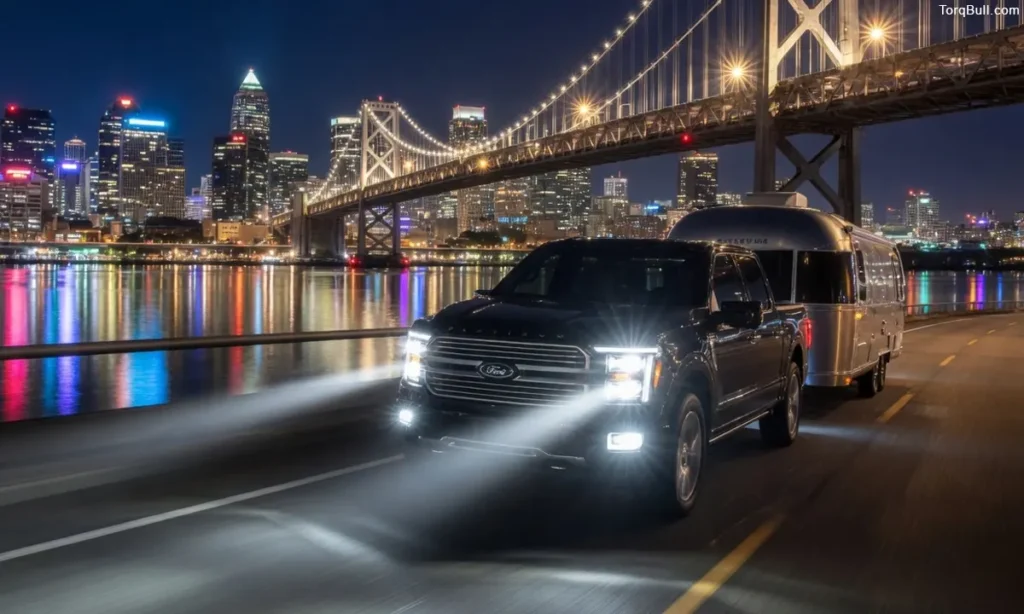
The 2026 Ford F-150 PowerBoost combines a twin-turbocharged 3.5-litre EcoBoost V6 with an integrated 35-kilowatt electric motor producing 47 horsepower, powered by a 1.5 kWh lithium-ion battery, through a 10-speed automatic transmission to all four wheels in 4WD configuration.
The integration of the electric motor within the transmission housing — rather than as a parallel system connected externally — is the specific engineering decision that produces the PowerBoost’s most distinctive performance characteristic. The electric motor fills torque gaps between turbocharged power delivery events, providing continuous torque from the moment of throttle application regardless of turbocharger spool speed. Engineers describe this as torque fill — and its effect on the driving experience is consistently identified by professional reviewers as the single most transformative attribute of the PowerBoost system.
In normal daily driving at moderate throttle inputs, the gas engine and electric motor work together in a seamless combination that the driver experiences as a single smooth power source with no noticeable transition events. Under light throttle and at low speeds, the system operates on electric power alone — contributing to the EPA city fuel economy figure through zero-fuel-consumption urban driving segments that would consume gasoline in any non-hybrid powertrain. Under heavy acceleration, maximum towing and sustained highway pulling, both power sources combine simultaneously to produce the 430-horsepower and 570 pound-feet of torque figure that represents the highest torque output available in any F-150 engine configuration.
The 1.5 kWh battery — smaller than a conventional plug-in hybrid’s pack — is specifically sized for the PowerBoost’s performance augmentation purpose rather than for extended electric-only range. It charges continuously through regenerative braking and engine assistance during light load driving, maintaining the state of charge required for torque fill availability whenever the driver requests acceleration. The system does not require external charging and is managed entirely by the vehicle’s electronics without driver intervention.
Read: Ford F-150 EcoBoost vs V8 Performance: Which Engine Delivers Better Driving Experience?
Acceleration Performance: The 5.8 Second Reality
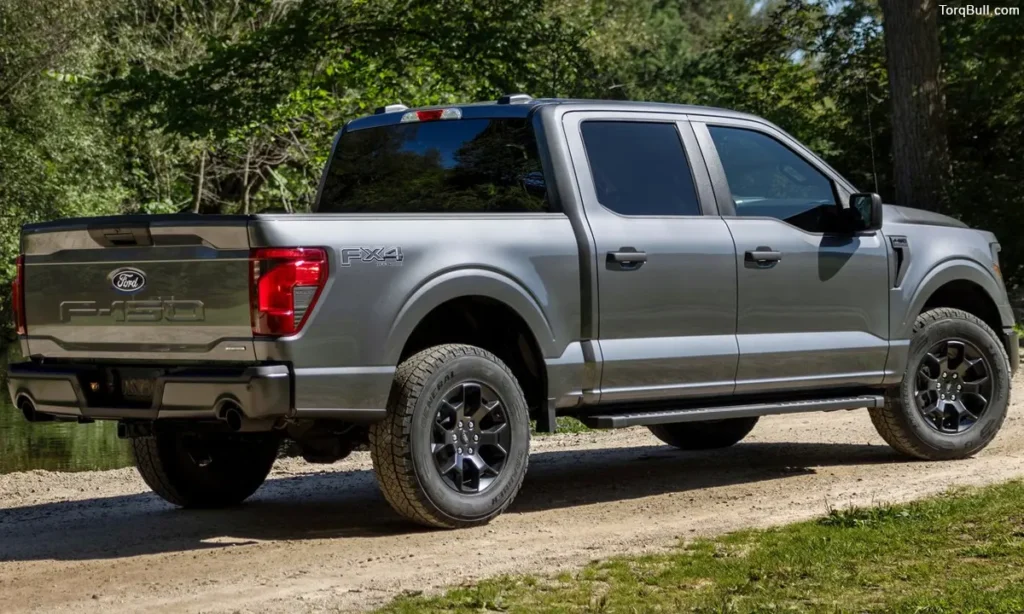
Independent track testing of the 2026 F-150 PowerBoost with AWD recorded a 0-60 MPH time of 5.8 seconds — a result that one professional reviewer described as placing the PowerBoost at the quickest position among all full-size pickup trucks tested in the 2026 head-to-head evaluation. Professional road testing away from the track produced an additional data point: sprint to 60 MPH takes approximately 5.2 to 5.4 seconds in optimal launch conditions, with the real story being the acceleration from 20 to 70 MPH on the highway where the electric motor’s immediate torque fill and the twin turbochargers’ sustained output combine to produce passing performance that is genuinely impressive by any vehicle category standard.
Multiple professional reviewers consistently describe the PowerBoost’s real-world acceleration character in similar terms: genuinely, effortlessly, super fast at any speed. The specific word effortless appears across independent reviews because the electric motor eliminates the brief delay between throttle input and turbocharger response that turbo-only trucks produce — the acceleration begins immediately and builds continuously rather than arriving after a brief pause. For drivers familiar with naturally aspirated V8 trucks or turbo-only alternatives, the PowerBoost’s instant torque fill response produces an acceleration character that feels distinctly different and distinctly more urgent from initial throttle input.
Fuel Economy: EPA Estimates and Real World Reality
The 2026 F-150 PowerBoost achieves EPA ratings of 22 MPG city, 24 MPG highway and 23 MPG combined in 4WD configuration — the best fuel economy figures of any non-electric F-150 powertrain and a meaningful improvement over the 3.5 litre non-hybrid EcoBoost’s 17 city, 25 highway and 20 combined figures in equivalent drivetrain configuration.
Real-world fuel economy from professional testing and extended long-term ownership experience reveals a consistent pattern: the EPA combined estimate is achievable in mixed driving that includes significant low-speed urban content where the electric motor’s city fuel economy advantage is most pronounced, but highway-dominant driving at 75 to 80 MPH with a heavy right foot produces lower real-world results. One professional testing a King Ranch PowerBoost over approximately 300 miles of mixed driving including highway recorded 18.3 MPG — substantially below the EPA estimate, reflecting the specific driving conditions and speed profile of the test rather than a systematic failure of the EPA estimate.
For buyers in urban environments who cover significant city mileage — stop and go commuting where the electric motor contributes most meaningfully to efficiency — the PowerBoost’s city efficiency advantage over the non-hybrid alternatives is most pronounced and most financially meaningful. For highway-dominant drivers who rarely encounter the low-speed conditions where the electric motor operates most effectively, the efficiency advantage narrows toward the 1 to 2 MPG difference that represents the EPA highway comparison between the PowerBoost and non-hybrid alternatives.
The 30.6-gallon fuel tank provides a theoretical range of approximately 700 miles at the EPA combined estimate — one of the largest effective ranges available in any pickup truck at any specification.
Read: Which Ford F-150 Trim Is Best for Families? Here Are the Top Picks for Comfort and Value
Pro Power Onboard: The Feature That Changes the Truck’s Capability Category
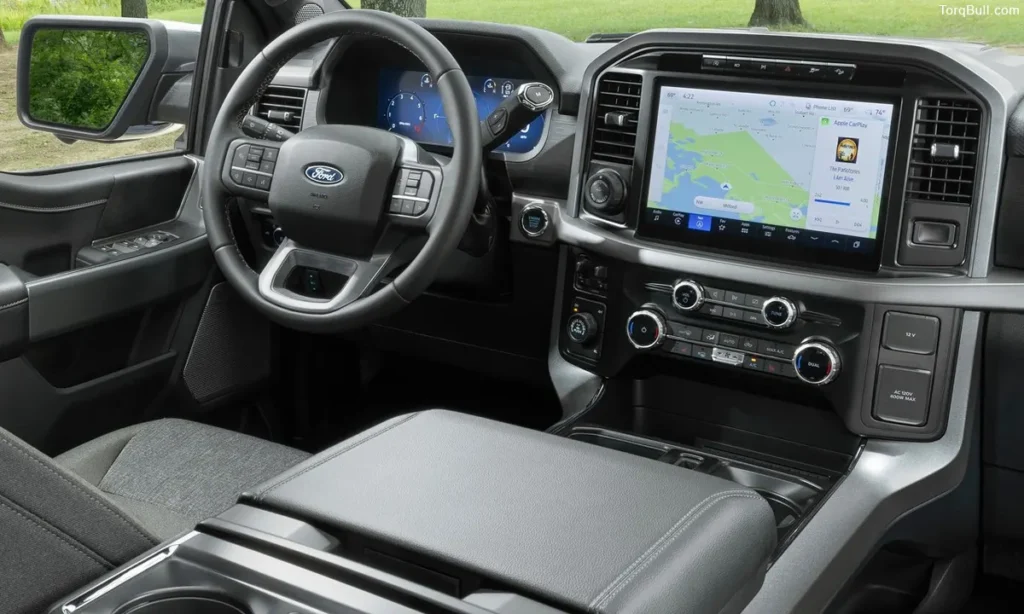
The Pro Power Onboard generator system is the feature that most specifically distinguishes the PowerBoost from every competing full-size truck powertrain — and the one that professional reviewers and long-term owners most consistently identify as changing how they think about what a truck can do.
The system is available in two specifications: a 2.4 kilowatt standard system that provides sufficient power for tailgate entertainment, small power tools and camping appliances, and an optional 7.2 kilowatt system that produces enough power to run an entire job site, a full travel trailer or the essential circuits in a house during a power outage. The 7.2 kW specification is the one that professional reviewers specifically highlight as transformative — not impressive as a feature but genuinely, practically useful in ways that no competing truck can replicate.
120-volt and 240-volt outlets are available through the system at various locations in the truck bed and cab. The 7.2 kW output is equivalent to a quality portable generator costing approximately $2,000 to $4,000 as a separate purchase — making the option’s cost partially offset against the generator it eliminates from the buyer’s equipment budget.
For the contractor who drives a truck to job sites that require power tool operation, the PowerBoost with 7.2 kW Pro Power Onboard eliminates the need to transport a separate generator. For the overlander whose travel takes them beyond grid power access, the system provides appliance and device charging capability that transforms the truck into a self-sufficient mobile camp. For the homeowner in a region prone to power outages, the system provides backup power that runs essential household circuits during outages.
Towing Performance: Smooth and Confident Below Maximum
The PowerBoost’s towing capacity in 4WD configuration is rated at approximately 10,800 to 11,200 pounds depending on the specific axle ratio and equipment configuration — below the non-hybrid 3.5 litre EcoBoost’s maximum 13,500 pound rating, reflecting the hybrid battery system’s additional weight reducing the available Gross Combined Weight Rating for trailer tongue weight.
Within its rated towing envelope, the PowerBoost’s towing character is specifically praised across professional reviews for the smoothness that the electric motor’s low-speed torque fill produces during trailer launch from a standstill. The scenario where conventional trucks feel most stressed — pulling a loaded trailer from a stop up a grade — is where the electric motor’s instant torque availability most clearly improves the experience relative to non-hybrid alternatives. The electric motor provides continuous torque during the brief turbocharged lag period at low engine speed, producing a launch feel that is dramatically smoother and more confident than the same trailer weight produces from non-hybrid turbo alternatives.
2026 Ford F-150 PowerBoost Hybrid — Complete Performance Specification Chart
| Specification | Detail |
| Engine | 3.5L Twin Turbo EcoBoost V6 + 35 kW electric motor |
| Combined Output | 430 horsepower |
| Combined Torque | 570 lb ft (highest of any F-150 engine) |
| Electric Motor | 35 kW (47 hp) integrated in transmission |
| Battery Capacity | 1.5 kWh lithium-ion |
| Transmission | 10 speed automatic |
| 0-60 MPH (track tested) | 5.8 seconds (4WD configuration) |
| 0-60 MPH (road test) | 5.2 to 5.4 seconds (performance conditions) |
| EPA City | 22 MPG |
| EPA Highway | 24 MPG |
| EPA Combined | 23 MPG |
| Real World (mixed) | 18.3 to 21 MPG depending on driving style |
| Fuel Tank | 30.6 gallons |
| Max Towing (4WD) | 10,800 to 11,200 lbs (configuration dependent) |
| Pro Power Onboard (standard) | 2.4 kW |
| Pro Power Onboard (optional) | 7.2 kW |
| 2026 Truck of the Year | Yes (independent head-to-head testing) |
| Starting Price (Lariat) | Approximately $63,000 |
| Hybrid Premium vs V8 | Approximately $1,900 |
The Verdict: Who the PowerBoost Serves Best
The F-150 PowerBoost’s 430-horsepower output, 570 pound-feet of torque, 5.8-second 0-60 performance and the optional 7.2 kW Pro Power Onboard system collectively produce a truck that professional testing awarded the 2026 Full Size Truck of the Year designation specifically because it is the most well-rounded — not the most powerful, not the most fuel-efficient and not the highest payload capacity, but the most comprehensively capable across every dimension simultaneously.
The PowerBoost is the right choice for buyers who want the maximum performance available in any F-150 powertrain alongside the best fuel economy of any non-electric F-150 engine, and who specifically value the Pro Power Onboard generator capability that transforms the truck from transportation into infrastructure. The approximately $1,900 premium over the 5.0-litre V8 buys 30 additional horsepower, 160 additional pound-feet of torque, approximately 4 MPG better combined fuel economy and the entire Pro Power Onboard system — one of the most straightforward value calculations in the F-150 powertrain comparison.