- Consumer Reports: Bronco better daily driver than Wrangler
- 93% of KBB owners recommend it
- Long braking distance (~146 ft) noted in testing
- Real-world fuel economy around ~18 MPG
- Wind noise noticeable above 50 MPH
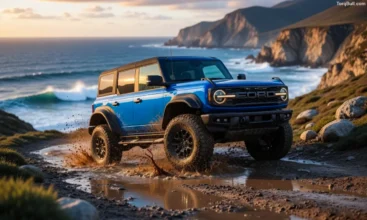
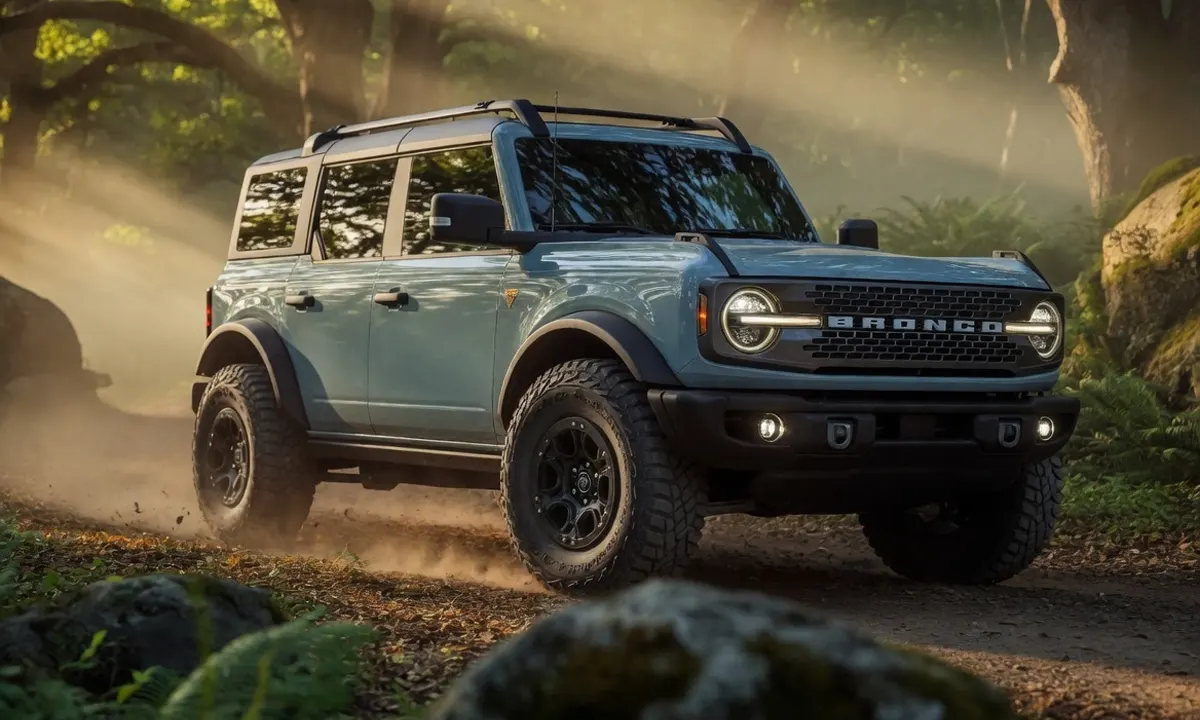
The Ford Bronco is one of the most emotionally compelling vehicles in the American market in 2026 — a truck-based, body-on-frame SUV with removable doors and roof, genuine off-road capability rivalling dedicated trail vehicles and styling that generates consistent attention from the moment it leaves a dealership lot. Whether it makes sense as a daily driver depends entirely on which version of “daily driving” the buyer is describing. For a weekend adventurer whose daily commute is 15 miles each way on suburban roads and who wants the same vehicle to reach a campsite trailhead on Friday afternoon, the Bronco is a genuinely functional and deeply satisfying daily driver. For a buyer whose daily routine involves 40 miles of stop-and-go highway traffic, parallel parking in a city garage and regular passengers in the back seat, the Bronco’s specific limitations will be felt every single day. This guide provides the honest, complete answer for each scenario.
What the Bronco Is — and What It Is Not
Before addressing daily driving suitability, establishing what the Ford Bronco is at a fundamental engineering level eliminates the most common source of buyer disappointment. The Bronco is a body-on-frame truck-based SUV — the same architectural approach used by the Jeep Wrangler, Toyota 4Runner and Land Rover Defender. This architecture is specifically chosen for off-road capability: the separate frame and body allow greater suspension travel, the high ground clearance enables obstacle navigation that monocoque unibody SUVs cannot achieve, and the solid rear axle provides articulation on uneven terrain that independent rear suspensions cannot match.
The consequence of this architecture for daily driving is equally specific. Body-on-frame construction is inherently less refined than unibody construction for on-road use — the ride is firmer and bouncier over road irregularities, body roll in corners is greater, emergency stopping distances are longer because the high centre of gravity affects weight transfer under hard braking, and wind noise from the boxy body shape is more pronounced at highway speeds. These are not design failures — they are the direct trade-offs for the off-road capability that the Bronco’s architecture provides.
Edmunds’ 2026 Bronco review captures this balance accurately: while Edmunds editors love the Bronco, they also acknowledge that its standardised ratings format emphasises the many practical detriments that result from the truck architecture that makes the off-road experience exceptional. The question for any daily driver is not whether these limitations exist — they do — but whether they are limitations the buyer will encounter frequently enough to matter in their specific daily routine.
Read: Toyota Tacoma vs Ford Ranger Reliability Comparison. The Complete Head-to-Head Analysis
Daily Driving Pros: What the Bronco Gets Genuinely Right for Everyday Use
Comfortable Enough for Most Commuters
Consumer Reports’ road test assessment directly addresses the daily driver question: the boxy Bronco is a superior daily driver to the Jeep Wrangler in many ways, with better handling and a more comfortable ride. This is a meaningful benchmark — the Wrangler is the Bronco’s most direct competitor and the vehicle against which buyers most commonly compare it. KBB owner reviews for the 2026 model confirm this characterisation: one owner who purchased the Badlands 2.7-litre describes the truck as riding well, being quiet and handling as expected, with absolutely no regrets. Another describes adaptive cruise control as making the freeway easy to navigate, seats as comfortable for long road trips and the truck as feeling secure and planted in Northeast Ohio winter snow.
Edmunds specifically notes that the Bronco’s independent front suspension — unlike the Wrangler’s solid front axle — allows the steering wheel to relay confidence and stability to its driver at freeway speeds. The 10-speed automatic transmission upshifts smoothly and handles both highway cruising and urban traffic without the hunting and jolt that some competing truck-based SUVs produce. The 2026 model’s improved sound dampening — specifically upgraded to reduce road and wind noise for the 2026 model year — makes the cabin measurably more comfortable than earlier Bronco generations on a daily commute.
Technology That Makes Commuting Pleasant
The 2026 Ford Bronco’s standard 12-inch SYNC 5 touchscreen with wireless Apple CarPlay and Android Auto, combined with over-the-air update capability, represents a meaningful upgrade from the SYNC 4 system of earlier generations. U.S. News specifically praises the adaptive cruise control with lane keeping as working well during their test on I-94. G.O.A.T. mode (Goes Over Any Type of Terrain) offers seven terrain management settings that include a Normal mode optimised for everyday road driving — providing traction management appropriate for commuting without requiring the off-road settings that define the Bronco’s weekend capability.
All-Weather Capability That Eliminates Winter Anxiety
Every Ford Bronco includes four-wheel drive as standard — not as an optional addition but as a fundamental feature of the vehicle’s architecture. For daily drivers in northern states who experience snow, ice and winter road conditions, the Bronco’s 4WD capability provides winter driving confidence that front-wheel drive crossovers and even some all-wheel drive unibody SUVs cannot match. One KBB owner specifically notes that the Bronco feels secure and planted in Northeast Ohio winter snow — a direct validation of the daily driver all-weather argument that body-on-frame 4WD provides.
Read: Cheapest Hybrid SUVs In USA 2026. The Complete Affordable Hybrid SUV Comparison
Daily Driving Cons: Where the Bronco Genuinely Falls Short
Stopping Distances That Are Genuinely Concerning
The most significant safety-related daily driving limitation of the Ford Bronco is its emergency stopping distance — a metric that Edmunds specifically flags and that Consumer Reports describes as among the longest they have seen from any vehicle in years. Edmunds’ testing recorded a 60-to-0 MPH emergency stopping distance of 146 feet — a figure comparable to heavy-duty trucks and substantially longer than mainstream midsize SUVs. Consumer Reports’ testing confirmed similarly long stopping distances. The distances are partially attributable to all-terrain tyre specifications on off-road-oriented trims, but other Bronco configurations with less aggressive rubber produced only marginally better results.
For a daily driver in urban environments where emergency stops at intersections, pedestrian crossings and school zones are routine occurrences, a 146-foot stopping distance is a genuine safety consideration rather than a track-day statistic. Buyers who choose the Bronco as a daily driver should factor this limitation into their following distance management — maintaining substantially larger gaps from the vehicle ahead than a conventional crossover SUV would require.
Fuel Economy That Adds Up Annually
Consumer Reports achieved only 18 MPG overall in their testing of a V6-equipped Bronco. U.S. News specifically identifies poor gas mileage as one of the 2026 Bronco’s key weaknesses. KBB owner reviews reflect the same range: one owner reports a minimum of 16 MPG in city driving, with 20-plus MPG achievable on the highway if driven conservatively. The EPA combined ratings of 20 to 21 MPG for most four-door automatic configurations confirm the modesty of the Bronco’s fuel economy.
At 15,000 annual miles and $3.08 per gallon, 18 MPG real-world consumption costs approximately $2,567 per year in fuel — approximately $640 more than a 30 MPG crossover SUV would cost annually, and $1,230 more than a Toyota Highlander Hybrid at 33 MPG. Over five years, this fuel cost premium accumulates to $3,200 to $6,150 above crossover alternatives — a meaningful total cost of ownership disadvantage that daily drivers who cover high annual mileage will feel most acutely.
Wind Noise at Highway Speed
Both Consumer Reports and U.S. News specifically identify wind noise above 50 MPH as a pronounced Bronco characteristic — one that the 2026 model’s improved sound dampening reduces relative to earlier generations but does not eliminate. The boxy body shape generates turbulent airflow around the A-pillars, door edges and roof that more aerodynamically efficient crossovers manage with sculpted body geometry. For daily drivers whose commute includes sustained highway speeds above 55 MPH, wind noise is an ever-present companion rather than an occasional intrusion.
The 2026 model’s improved sound dampening makes this materially better than pre-2026 Broncos — a genuine improvement that the 2026 updates specifically targeted — but buyers who are accustomed to the quiet highway cabins of a Toyota Highlander, Honda Pilot or even a Toyota 4Runner should conduct a highway test drive before committing.
Large Cargo Door in Tight Parking
U.S. News specifically flags the large rear cargo door as challenging in tight spaces — a real daily driving inconvenience for urban and suburban buyers who regularly use multi-storey car parks, tight grocery store loading zones or narrow street-side parking. The rear-mounted spare tyre — essential for off-road reliability — adds to the door’s length and requires additional clearance behind the vehicle to open fully. For buyers whose daily parking environments are consistently spacious, this is an irrelevant consideration. For urban daily drivers, it is a genuine friction point that warrants testing in their typical parking environment before purchase.
Read: Built Beyond The Road. 5 Reasons The Ford Ranger Raptor Beats Every Other Pickup Truck
Ford Bronco Daily Driving Assessment — Complete Chart
| Category | Rating | Specific Finding |
| Ride comfort (urban) | Good | Better than Wrangler; firm but liveable |
| Ride comfort (highway) | Moderate | Firmer than crossover SUVs |
| Wind noise (highway) | Below average | Pronounced above 50 MPH; improved in 2026 |
| Emergency stopping distance | Poor | 146 feet from 60 MPH; among longest tested |
| City fuel economy | Below average | 16–18 MPG city (owner and CR data) |
| Highway fuel economy | Average | 20–22 MPG at 65–70 MPH |
| All-weather capability | Excellent | 4WD standard; superior winter traction |
| Driver assistance technology | Good | Adaptive cruise and lane-keeping well-calibrated |
| Rear seat comfort | Moderate | Four-door adequate; cramped for tall adults |
| Cargo space | Good | 83 cu ft with seats folded |
| Parking (tight spaces) | Below average | Large rear door; rear-mounted spare |
| Removable roof and doors | Strong Pro | Open-air capability unique in class |
| Styling appeal | Exceptional | 93% KBB owner recommendation rate |
| Off-road dual-use capability | Exceptional | Class-leading; best weekend vehicle |
Which Buyer Profile Should Choose the Bronco for Daily Driving
The Ford Bronco is an excellent daily driver for a specific and identifiable buyer profile — and a less appropriate choice for an equally identifiable alternative.
The Bronco is the right daily driver for buyers whose commute is primarily suburban or rural, whose daily driving rarely requires sustained 70-plus MPH highway cruising, who regularly access unpaved roads, campsite approaches or dirt trails as part of their lifestyle, who live in a snow-belt state where 4WD capability provides meaningful daily winter security and who genuinely value the open-air experience of removable doors and roof on appropriate days. For this buyer, the Bronco’s limitations in fuel economy, stopping distance and wind noise are accepted trade-offs for capabilities they use regularly — and the 93 percent KBB recommendation rate reflects the satisfaction of owners whose lifestyle matches what the Bronco provides.
The Bronco is a questionable daily driver for buyers whose commute involves 30-plus miles of sustained highway driving at 70-plus MPH — where wind noise and fuel cost are daily companions. It is a poor choice for urban buyers who parallel park regularly in tight spaces, who need the minimum stopping distances available from modern crossover safety systems and whose daily driving never approaches the off-road terrain that justifies the truck architecture’s daily compromises.
Consumer Reports’ daily driver recommendation for four-door Outer Banks trim with the optional hardtop is the most practical Bronco configuration for committed daily drivers — the Outer Banks’ more road-friendly orientation relative to the TRD off-road trims reduces the severity of several daily driving limitations while retaining the Bronco’s core character and capability.