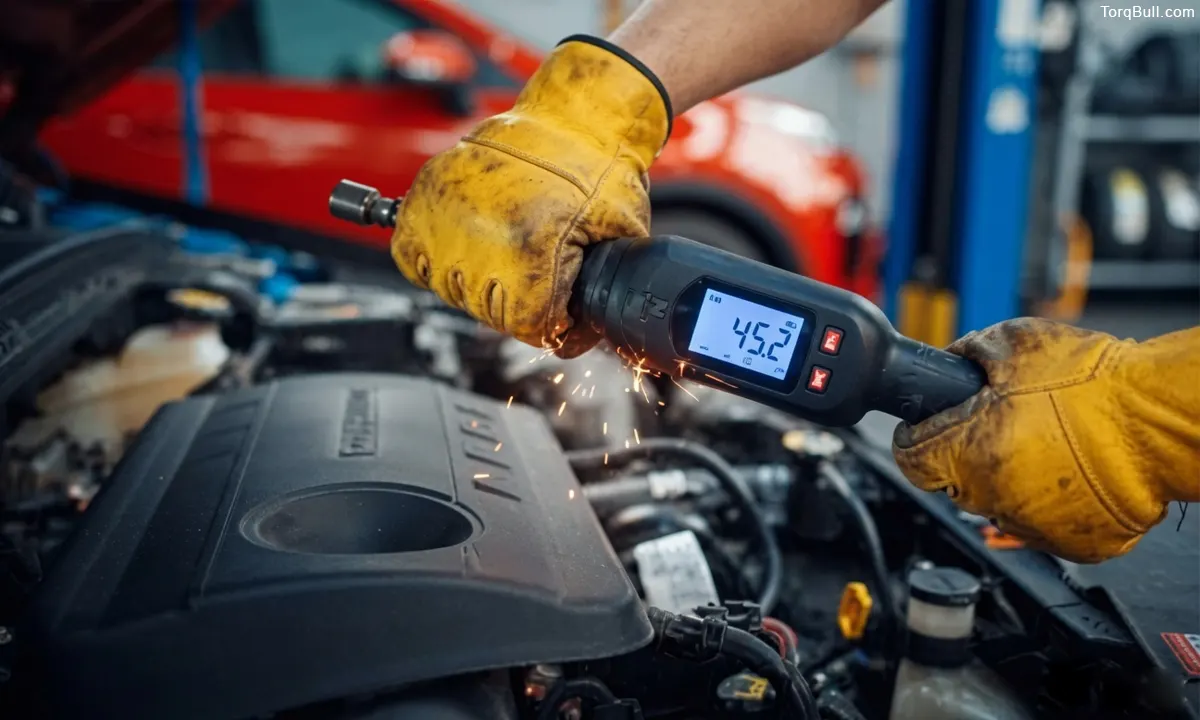
We’ve all had that moment. A weird knock. A light on the dash that wasn’t there yesterday. A puddle under the car. Your stomach drops, your brain jumps straight to “how many thousands is this going to cost,” and you do the thing almost everyone does: you cross your fingers and keep driving, hoping it goes away.
Here’s my honest, slightly tough-love opinion after years of this stuff: that hope-it-away instinct is exactly what turns a $150 problem into a $5,000 disaster. Most engine issues start small and fixable, a bit of rough idling, a warning light, a strange smell, and left unchecked they snowball into serious damage. The nightmare is usually optional.
And in 2026, getting this right matters more than ever, because repair costs jumped a staggering 33 percent in the last year, averaging $554, with labor up 51 percent. So knowing the exact fix, and when to act, is worth real money. Let me walk you through the common problems, the precise solutions, and the single most valuable skill you can have. Quick note, costs are national averages that vary by vehicle and region.
The Golden Rule: Know When to Stop Driving
Before we touch a single specific problem, learn this, because it’s the difference between a repair and a replacement. The most valuable skill isn’t wrenching, it’s triage: knowing which symptoms mean “stop the car right now” versus “book an appointment this week.”
Here’s the line, and it’s not fuzzy. Never drive with any of these: an oil pressure warning, an overheating or red temperature gauge, a flashing check engine light, metallic knocking, or white exhaust smoke. Those signal active engine destruction happening in real time, and continued operation often transforms a repairable problem into a complete engine replacement. When you see them, stop and get it towed. A $200 tow is nothing next to a $10,000-plus engine.
You’ve got more leeway with these: a steady, non-flashing check engine light, minor performance hiccups, or a small coolant drip. You can usually drive carefully to a shop, but fix it fast and monitor constantly. And remember, modern engines are far less forgiving than the old iron blocks, so today’s precision engines suffer catastrophic damage from brief overheating or oil starvation that older cars might have shrugged off. When in doubt, stop. Now, the specific nightmares and their fixes.
The Check Engine Light: Your Starting Point
That amber light is the most common warning drivers face, and it’s not a death omen, it’s your car asking for help. A steady check engine light usually means something needs attention but isn’t a roadside emergency, and it could be anything from a surprisingly frequent culprit, a loose gas cap, all the way to a failing catalytic converter.
The exact first move, every time: scan the code. Auto parts stores often do it free, a shop charges $50 to $100, or you can buy your own OBD-II reader for around $25. That code tells you where to look before you spend a dime on guesswork. My strong opinion? A code reader is the best cheap insurance in your glovebox. Buy one. If that light is flashing, though, that’s a serious misfire actively cooking your catalytic converter, so reduce driving and get it seen immediately.
Rough Idle and Misfires: The Cheap Fix First
Symptoms: your car shakes at a stop, hesitates or jerks when you hit the gas, feels sluggish, drinks more fuel, and maybe pops or sputters. This one’s common and usually cheap, which is why I love catching it early.
The cause is most often worn spark plugs or ignition coils. The exact fix is to replace the spark plugs and coils, running $200 to $800, and the smart diagnostic approach is to start with plugs and coils because they’re the cheapest fixes, and only dig deeper if the misfire continues. Spark plugs should be changed every 30,000 to 100,000 miles depending on your car. Handle this early and it’s a minor bill. Ignore it, and a chronic misfire can destroy that expensive catalytic converter, turning a $300 job into a $1,500 one.
Overheating: Stop the Car, Seriously
Symptoms: the temperature gauge climbs into the red, steam rolls from the hood, the heater blows cold, you lose power, or you catch a sweet smell. I’ll be blunt here because it matters: this is the one that kills engines fastest.
The causes are low coolant or a leak, a bad thermostat, a failing water pump, a clogged radiator, a split hose, or a dead cooling fan. The exact fix ranges from topping off coolant for $20 to cooling system repairs of $300 to $2,000. But the critical action comes first: stop driving immediately and have it towed, because continuing to drive an overheating engine warps components and blows head gaskets, and that catastrophic repair runs $2,000 to $5,000, if the engine survives at all. One more tip, if you’ve hit 100,000 miles or five years and never flushed your coolant, that dirty fluid is clogging your radiator right now. Flush it every two to three years.
Oil Leaks and Oil Burning: Watch the Level
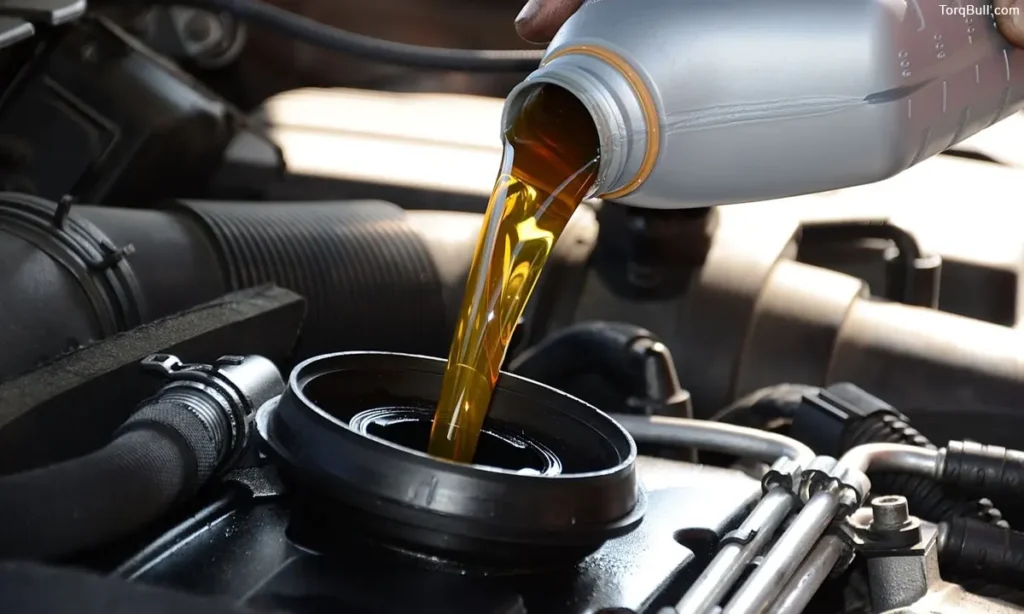
Symptoms: dark spots or puddles under the car, a low oil level, a burning oil smell, or blue smoke from the exhaust. Oil problems are sneaky because they often start as spots on the driveway you barely notice.
For leaks, the cause is usually a worn valve cover gasket, oil pan gasket, or seal, and the exact fix spans from tightening a drain plug for almost nothing to replacing a gasket or a rear main seal, which can hit $1,000. The priority rule: small drips can usually wait, but large puddles need immediate attention. For oil burning, worn rings or valve seals are the culprit, and the stopgap is checking your oil weekly and topping off. But if you ever see an oil pressure warning light, treat it like overheating, add oil immediately and do not drive, because oil starvation seizes an engine in minutes.
Engine Knocking: Listen Carefully
Symptoms: a metallic knocking or pinging, especially when accelerating or at startup. This one requires a careful ear, because not all knocks are equal.
Light ticking that fades as the engine warms up is often normal. A persistent pinging under acceleration usually points to a bad air-fuel mixture, often a failing oxygen sensor, or low-octane fuel, and the exact fix is trying higher-octane fuel plus an engine service running $500 to $2,500. But heavy knocking that gets worse is your cue to stop driving immediately, because that can be rod knock, meaning failing bearings, and that’s the big one. Don’t gamble with a worsening metallic knock.
The No-Start: Usually the Cheapest Nightmare
Symptoms: you turn the key and get a click, or dead silence, maybe with dim lights. Good news, this is often the least expensive problem on the list.
The most common cause is simply a dead battery, and the exact fix is a jump start, which is free, followed by a replacement battery at $75 to $200. Test your battery every six months, especially before winter. If a jump doesn’t hold, the culprit is likely the alternator or starter, which is a bigger but still manageable repair.
Read: Why Modern Luxury Cars Don’t Need Heavy Soundproofing Anymore
Common Problems and Their Exact Fixes
Here’s your at-a-glance cheat sheet.
| Problem | Exact Fix | Rough Cost | Can You Drive? |
| Steady check engine light | Scan code, then targeted repair | $50 to $3,000 | Yes, fix soon |
| Loose gas cap | Tighten or replace | $0 to $28 | Yes |
| Misfire / rough idle | Replace spark plugs and coils | $200 to $800 | Yes, fix soon |
| Overheating | Cooling system repair | $300 to $2,000 | NO, tow it |
| Oil leak | Replace gasket or seal | $200 to $1,500 | Small drips only |
| Oil pressure warning | Add oil, investigate | $20 to $1,500 | NO, stop now |
| Engine knocking (heavy) | Engine service or major repair | $500 to $2,500+ | NO, stop now |
| Catalytic converter | Replace, fix root cause first | $1,348 avg | Limited |
| Dead battery | Jump, then replace | $75 to $200 | After jump |
| Blown head gasket | Professional repair | $2,000 to $5,000 | NO |
How Not to Get Ripped Off in 2026
With repair costs this high, being an informed owner is worth serious cash, so here’s my playbook. First, always scan the code yourself before you go, so you walk in knowing something. Second, demand an itemized diagnosis, because “engine repair, $3,500” isn’t good enough, and you want specific parts and labor hours. A legitimate diagnosis includes a code read, visual inspection, and a compression or leak-down test, so a shop guessing purely from symptoms isn’t doing real work. Third, for anything over $1,500, get two or three estimates, since a $100 to $200 diagnostic fee saves you from unnecessary repairs.
And know when to walk away entirely. If the repair costs more than the car is worth, or the shop says “we won’t know the full damage until we open it up,” reconsider, because engine repairs don’t add dollar-for-dollar resale value, and sometimes selling as-is beats gambling thousands on an old car.
Verdict: The Nightmare Is Usually Optional
So here’s where I land after all this. The phrase “engine nightmare” is doing a lot of dramatic work, because the honest truth is that most engine problems only become nightmares when we let them. That knock, that light, that puddle, they nearly always start as a whisper, a $30 to $500 fix, and only escalate into a $5,000 catastrophe because somebody kept driving and hoped it away.
The single most valuable thing you can take from this isn’t how to swap a spark plug. It’s the triage. Burn this into your brain: oil pressure warning, overheating, flashing check engine light, metallic knocking, or white smoke means stop the car and tow it, no exceptions. A steady light or a minor hiccup means fix it this week and monitor. That one distinction will save more engines and more money than any wrench ever could.
Beyond that, be the informed owner. Keep a cheap code reader in the glovebox, address the small stuff before it snowballs, insist on itemized quotes, and get multiple estimates on big jobs, especially now that 2026’s repair costs have climbed so steeply. Modern engines punish procrastination harder than the old ones ever did, so the reward for acting early has never been bigger.
Your car is almost always trying to tell you something before it fails. The strange noise, the new light, the odd smell, that’s the early warning, not the emergency, if you listen. Catch it there, apply the exact fix, and know when to stop driving, and you’ll skip the nightmare entirely. Ignore it, and you’ll fund your mechanic’s vacation. The choice, genuinely, is usually yours. Now go buy that code reader.