Here’s a claim that gets thrown around every car forum and every gearhead cookout: manual transmission cars are more reliable than automatics. The automatic crowd rolls their eyes and calls it romantic nonsense from people who just like rowing their own gears. The manual faithful insist it’s simple physics.
So who’s right? I dug into the actual data, the repair costs, the longevity numbers, and the mechanical realities, and I’ll tell you up front: the manual crowd has a genuinely strong case. Not a perfect one, but a strong one, rooted in real engineering rather than pure sentiment. There’s just one important catch that determines whether it’s true for you specifically.
Let me lay out exactly why the humble stick shift earns its bulletproof reputation, and then give you the honest caveat that keeps this from being a slam dunk.
The Core Reason: Beautiful, Boring Simplicity

Everything about manual reliability flows from one idea: fewer parts means fewer things to break. And the gap in complexity between a manual and an automatic is genuinely enormous.
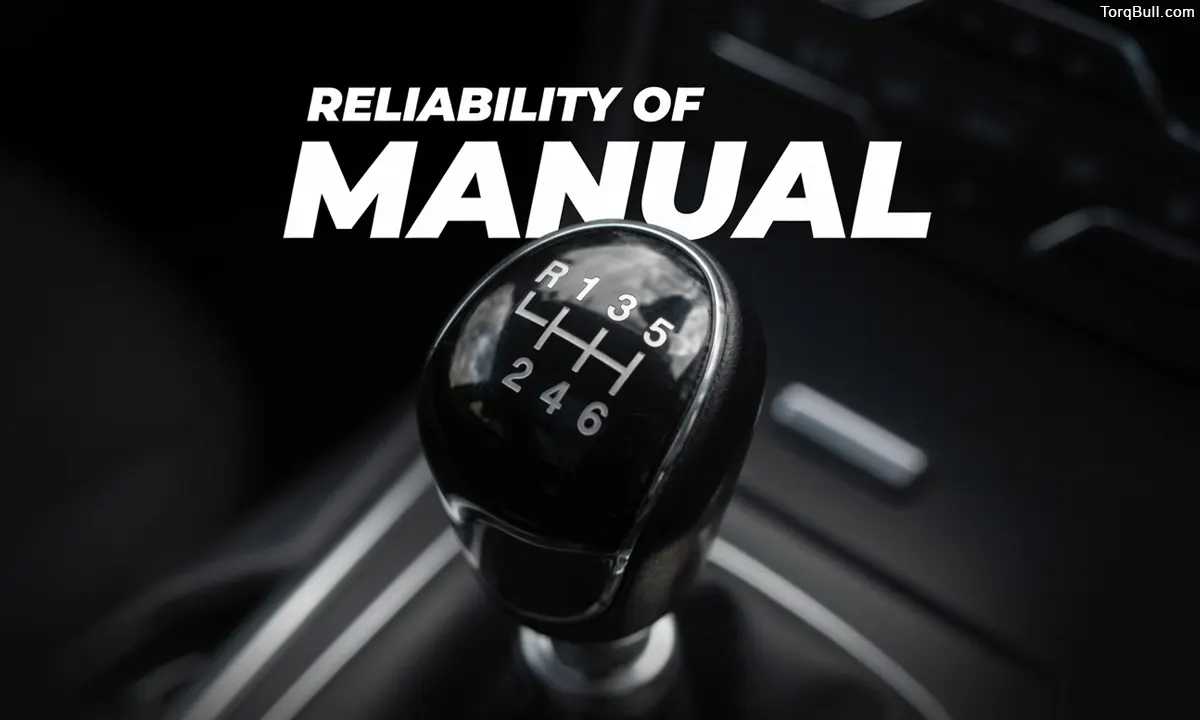
A manual transmission is mostly mechanical gears that rely on the driver to engage the clutch and shift when needed. That’s it. You are the computer. You are the hydraulic controller. Contrast that with an automatic, which has hundreds of mechanical, hydraulic, and electronic helpers that all have to work in harmony to shift gears smoothly for you. Torque converters, valve bodies, solenoids, clutch packs, sensors, and software, all bathed in complex fluid and generating serious heat.
Every one of those helpers is a potential point of failure. The reason a manual is often considered more reliable comes down to the sheer level of simplicity when you compare the mechanics of one to the other. Fewer components, fewer failure modes, fewer expensive surprises. It’s the same principle that makes a bicycle more reliable than a motorcycle. Complexity is the enemy of reliability, and the manual is gloriously, wonderfully simple.
The Repair-Bill Knockout Punch
Here’s where the manual argument goes from “interesting theory” to “check your wallet.” Even when a manual does need work, it costs dramatically less to fix, and the numbers aren’t close.
Start with the worst case for each. Manual transmissions have the lowest repair costs because of their simple design, with the main job being a clutch replacement running roughly $800 to $2,000. Automatic transmissions get pricey fast, with valve body or solenoid failures costing $2,000 to $4,500. And if you’ve got a continuously variable transmission, brace yourself, because CVT belt and pulley failures run between $4,000 and $7,000.
Full replacement tells the same story. Manual transmissions typically cost $1,500 to $3,000 for non-luxury vehicles, while automatics run roughly $2,000 to $4,000 for a re-manufactured unit, a difference of $500 to $1,000 in the manual’s favor on mainstream cars. Even routine maintenance is cheaper, since manual gear oil changes cost about half what automatic transmission fluid service does and need doing less often. Cheaper to maintain, cheaper to repair, cheaper to replace. That’s a clean sweep for the stick.
They Genuinely Last Longer
Beyond cost, manuals tend to go the distance, and the longevity data backs up the barbershop wisdom. Manual transmissions typically last 150,000 to 200,000 miles with proper maintenance, and plenty go much further. Honda Accords and Mazda Miatas with manual gearboxes often sail well past 200,000 miles, with many owners reporting cars running strong well beyond that on nothing but basic maintenance.
Push into heavy-duty territory and the numbers get wild. Fleet vehicle studies show manual transmissions achieving 300,000-plus mile lifespans in demanding applications, while automatics typically require major service between 150,000 and 250,000 miles. Now, an important honest note: the clutch is a wear item that needs replacing every 60,000 to 100,000 miles. But here’s the beauty of that, the clutch is a cheap, known, replaceable consumable, like brake pads, while the actual gearbox behind it soldiers on for the life of the car. You service the wear part and keep driving.
Bonus: When It Fails, It Warns You
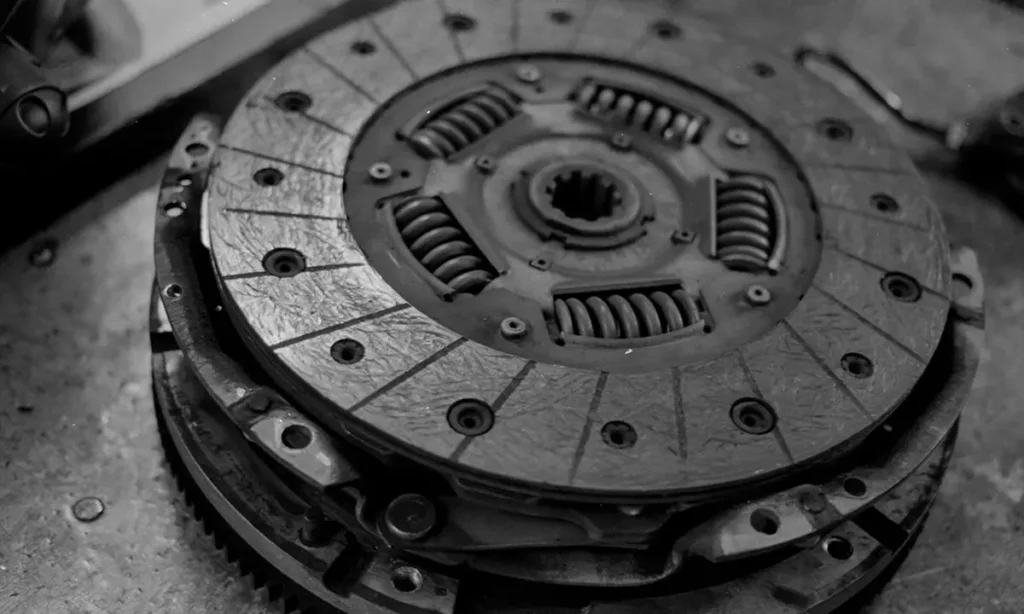
Here’s an underrated reliability perk that doesn’t show up in the cost tables. Manual failures are usually gradual and predictable, while automatic failures can be sudden and catastrophic.
When a clutch wears out, it tells you. It starts slipping during acceleration, the bite point changes, you smell it on a hard hill. You get weeks or months of warning to budget for the repair. Compare that to an automatic’s valve body or solenoid deciding to quit, which can strand you with little notice and a four-figure bill. The manual’s simplicity means its one main failure point announces itself politely instead of ambushing you. That predictability is its own kind of reliability, the kind that keeps you off the shoulder of the highway.
Read: Manual vs. Automatic: Is the Stick Shift Actually Dead?
How the Transmission Types Stack Up
Here’s the reliability and cost picture across the board.
| Transmission | Typical Lifespan | Major Repair Cost | Complexity |
| Manual | 150,000 to 300,000 mi | $800 to $2,000 (clutch) | Lowest |
| Conventional automatic | 150,000 to 250,000 mi | $2,000 to $4,500 | High |
| Dual-clutch (DCT) | 120,000 to 200,000 mi | High, complex | Very high |
| CVT | Varies, often shortest | $4,000 to $7,000 | High, fragile |
Notice something important in that table: the manual isn’t just beating the conventional automatic, it’s beating the more exotic CVTs and dual-clutch units by an even wider margin. Those modern “convenience” gearboxes are the genuinely fragile, expensive ones. The stick shift sits at the top of the reliability pile precisely because it refuses to be clever.
Now, the Honest Catch You Need to Hear
I’ve made the manual’s case enthusiastically because the data supports it. But I promised you the asterisk, and it’s a big one: the manual’s reliability depends heavily on the driver. That’s the whole ballgame.
An automatic is less susceptible to wear caused by individual driving styles, because the car manages the shifts. A manual hands that responsibility to you, and if you ride the clutch, fumble your shifts, or launch aggressively, you’ll grind that clutch to dust in a fraction of its potential life. In the hands of a mechanically sympathetic driver, a clutch lasts 150,000 miles. In the hands of a careless one, it might not see 40,000. The manual is more reliable in good hands and genuinely less forgiving in bad ones.
There are other honest counterpoints, too. Modern conventional automatics have become extremely reliable, with lock-up torque converters and adaptive shift logic, and a well-maintained one driven normally can absolutely outlast an abused manual. The experts are careful here, noting that when you factor in model-specific reliability, climate, software, and driving environment, reliability alone can’t crown a clear universal winner. And as manuals get rarer, finding qualified mechanics, parts, and future buyers can get harder in some markets.
Here’s my read, though. None of those caveats erase the core truth. The simplicity, the lower repair costs, and the longer gearbox life are real, structural advantages that don’t go away. The caveat isn’t “manuals aren’t more reliable,” it’s “manuals reward a competent driver and punish a careless one.” For anyone willing to learn to drive a stick properly, the reliability edge is genuine and yours to keep.
Verdict: Largely True, and One More Reason to Love the Stick
So, are manual transmission cars actually more reliable than automatics? My honest answer, as someone who adores three pedals, is yes, with a condition attached, and the condition is fair.
The mechanical case is rock solid. A manual has a fraction of the parts, a fraction of the failure points, and a fraction of the repair cost of an automatic, especially compared to the fragile CVTs and dual-clutch units flooding modern showrooms. Its gearbox routinely outlasts the car, its one wear item is a cheap and predictable consumable, and when trouble does come, it warns you politely instead of stranding you. On simplicity, longevity, and cost of ownership, the stick shift wins, and it wins clearly. Your wallet will feel the difference every single time the car needs transmission work.
But be honest with yourself about the catch. That reliability is conditional on you not abusing the clutch, and a great modern automatic driven with care is no slouch either. The gap between a well-driven manual and a well-maintained conventional automatic has narrowed a lot, even if it hasn’t closed. If you’re going to ride the clutch at every stoplight, buy the automatic and save your money.
Here’s where I land. For the driver who treats a clutch with respect and plans to keep a car for the long haul, the manual is the more reliable, cheaper, longer-lasting choice, and that’s a genuinely good reason to buy one while you still can. In a world racing toward complex, expensive, computer-controlled gearboxes, the stick shift stands there being stubbornly, beautifully simple, and simple is what lasts. I love manuals for how they make me feel behind the wheel. It turns out they also make a hard-nosed financial and mechanical argument for themselves. That’s not nostalgia. That’s just good engineering, and it’s one more reason to save the manuals. Drive it well, and it’ll return the favor for 200,000 miles.