Let me paint you a picture of where the car world is heading. Silent EVs. Whisper quiet hybrids. Synthesized engine noises piped through speakers because the actual motor makes the sound of a refrigerator. The combustion engine, that glorious, explosive, theatrical thing, is being quietly ushered toward the exit.
And then there is Ferrari, standing in the doorway, refusing to leave, holding a naturally aspirated middle finger to the future. Well, twin-turbocharged, technically. But you get the spirit.
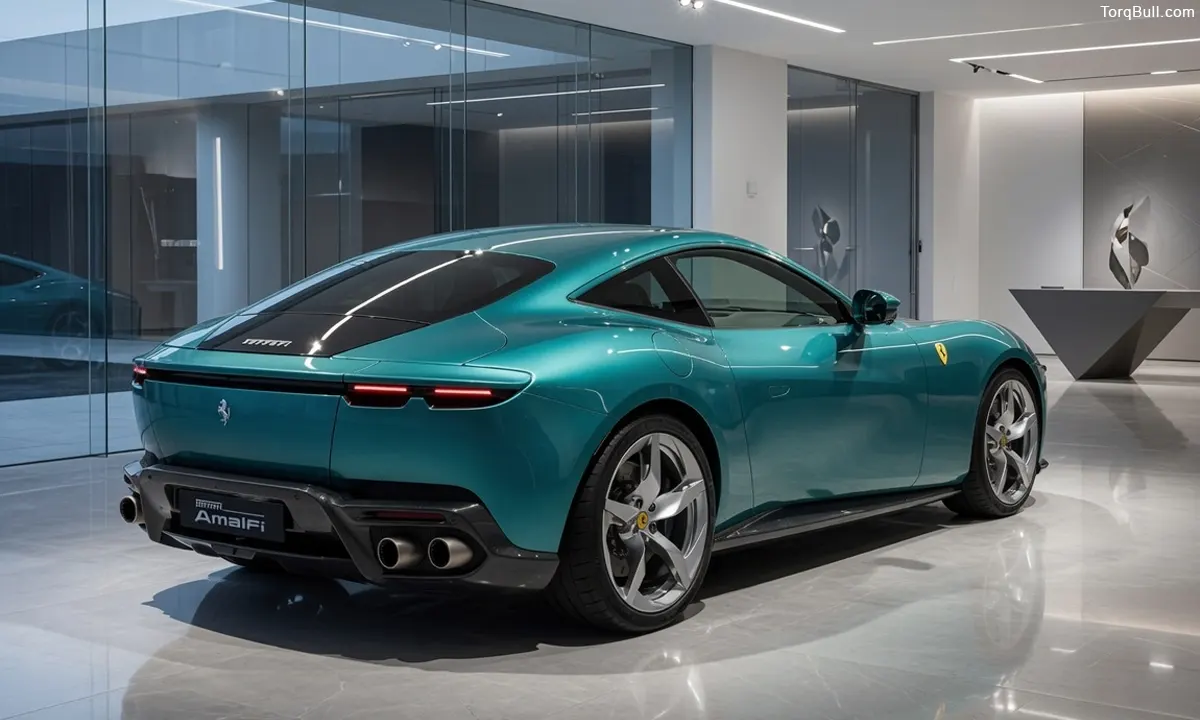
The Amalfi is Ferrari’s entry level car, the one that replaces the Roma, and the headline is gloriously defiant. Its beating heart is a twin-turbo V8, rigorously thermal without any electrification that weighs and is not needed. No hybrid assist. No battery pack. Just a 3.9 liter flat-plane V8 that revs to the heavens and makes a noise that, at full chat, sounds like the apocalypse arriving early. Let me tell you why this engine matters so much, and be honest with you about what it does and does not do.
The Numbers Behind the Noise
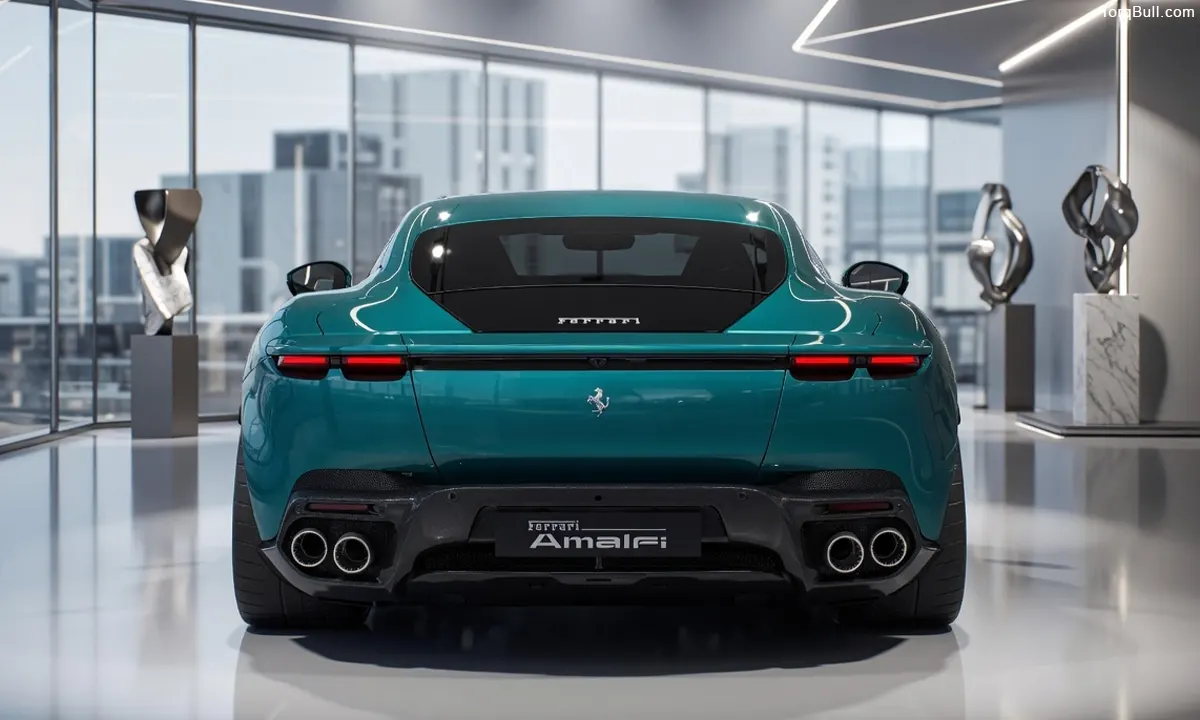
Before we get to the soundtrack, let’s talk about what is making it. This is no carryover lump. Ferrari went through it with a fine tooth comb.
Under the elongated hood lies Ferrari’s updated 3.9 liter twin turbocharged V8, now tuned to produce 631 horsepower and 560 pound feet of torque, an increase of 20 hp over the Roma, achieved through upgraded turbochargers, new pressure sensors, a redesigned engine block, lightweight camshafts, and a raised redline of 7,600 rpm. That higher redline is the key to the drama. Power peaks at 7,500 rpm with a specific power of 166 cv per liter, allowing full exploitation of its continuously increasing power curve.
The turbos are the unsung heroes. More accurate boost control means the two twin scroll turbochargers can safely spin 6,000 rpm faster, all the way to 171,000 rpm. Read that number again. The turbines inside this engine spin nearly three thousand times per second. That is the kind of insane engineering that produces both the savage throttle response and the noise. And it moves. The result is a 0 to 62 mph sprint in just 3.3 seconds and a top speed of 199 mph.
The Sound: Theatrical Violence, by Design
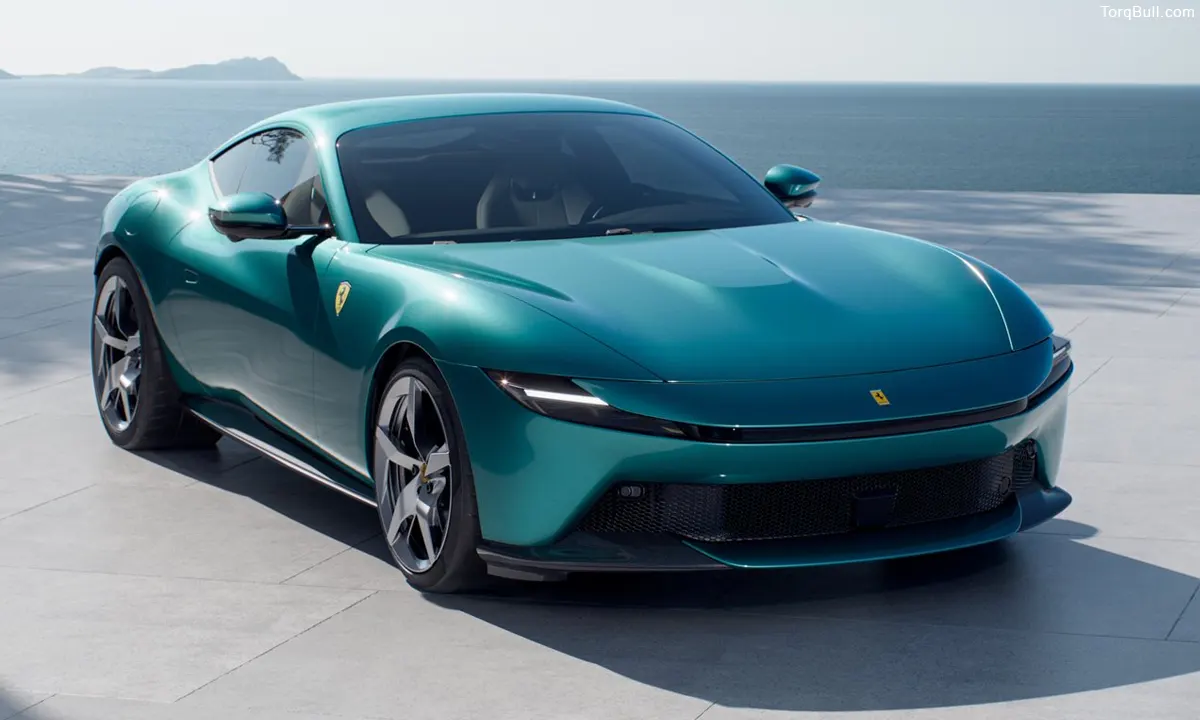
Okay, the main event. The noise. And here is where I have to be both enthusiastic and honest, because the truth is more interesting than pure hype.
It starts with a bang. Literally. Press the newly reinstated start button and the engine kicks into life with a theatrical boom, despite the changes to appease the regulators. That cold start drama sets the tone. This is an engine that announces itself, that demands you notice it, that treats firing up as an event rather than a chore.
The character comes from the architecture. The flat-plane crankshaft and equal length exhaust headers contribute to a distinctive firing sequence. A flat-plane V8 has a harder, rawer, more frantic bark than the burbly cross plane V8s in American muscle, and the Amalfi uses that to genuinely violent effect when you wring it out. At the very top end of the rev range, as the blue shift lights blaze on the steering wheel, the V8 briefly howls with a faintly 458 Italia like tone before you smash head first into the redline. That 458 howl is the holy grail of modern Ferrari noises, and the Amalfi finds it right at the top.
Ferrari even gave you control over the aggression. The sound is managed by a new bypass valve proportionally controlled by dedicated maps, which adapt the sound in real time according to driving style. Cruise gently and it behaves. Bury your foot and it bares its teeth.
Now Let Me Be Honest About the Catch
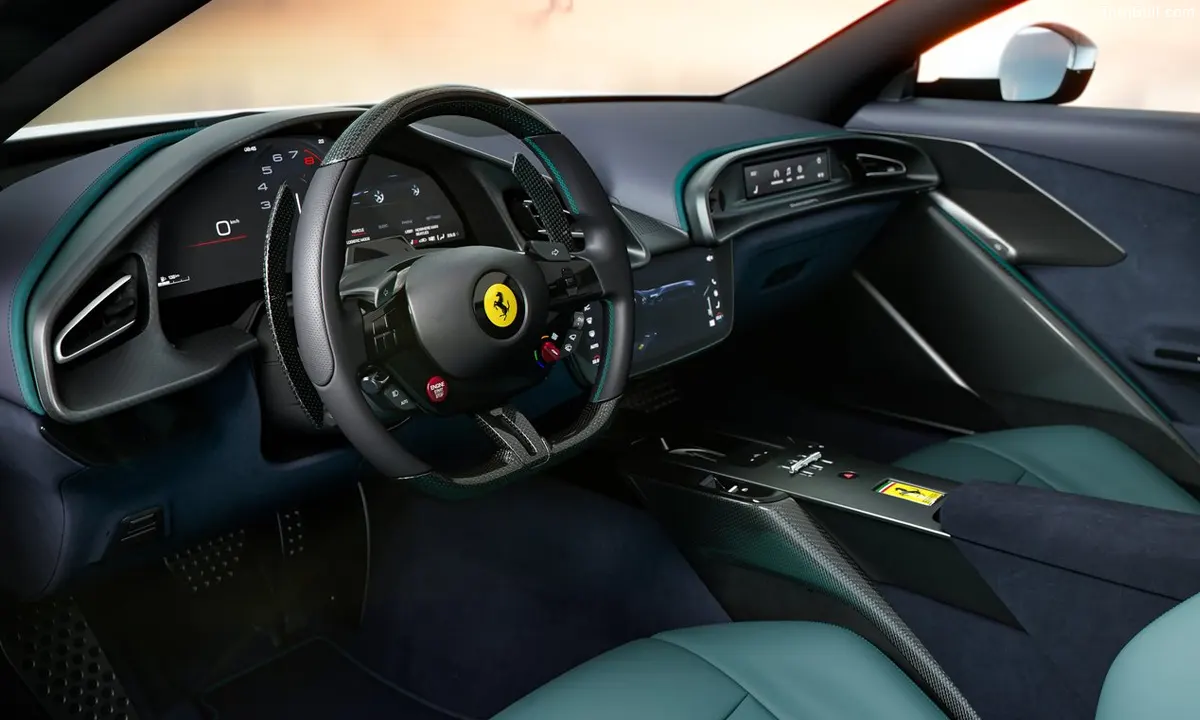
Here is where I keep it real, because I respect you too much to oversell it. The Amalfi is not the loudest, most unhinged Ferrari ever made, and the regulations have taken a small bite.
The idle has been civilized. Partly down to ever more stringent noise limits, the Amalfi has banished the Roma’s low rev engine drone, resulting in a car that is simply more pleasant to mooch about in. That is genuinely a good thing, since the old Roma could drone annoyingly, but it does mean this is not a car that shakes windows at every stoplight. And not every critic is fully sold on the timbre. One review summed it up as sensational to look at, sit in, and drive, but added that it could do with a nicer engine sound.
There is also a deliberate ceiling. It sounds and feels like it could and should rev higher, like there is more to give, but then it would be too close for comfort to Ferrari’s pricier aristocracy. Ferrari intentionally holds the entry car back so it does not embarrass the expensive stuff.
Here is my read, though. So the title is a touch hyperbolic, who cares. The violence is real where it counts, at the top of the tachometer and at startup, and in an era when the default is silence, an unelectrified flat-plane V8 that howls toward 7,600 rpm is a genuine act of rebellion. I will take theatrical, building ferocity over a synthesized speaker drone every single day.
Read: Ford Mustang Removed The Back Seats and Added 795 Horsepower. Meet The Dark Horse SC
How It Stacks Up
Here is where the Amalfi’s powertrain lands among its rivals and stablemates.
| Car | Engine | Power | 0 to 62 | Electrified? |
| Ferrari Amalfi | 3.9L twin-turbo V8 | 631 hp | 3.3 sec | No |
| Ferrari Roma (predecessor) | 3.9L twin-turbo V8 | 612 hp | 3.4 sec | No |
| Aston Martin Vantage | 4.0L twin-turbo V8 | Around 656 hp | Around 3.4 sec | No |
| Porsche 911 Turbo S | Flat-six hybrid | Around 700 hp | Around 2.5 sec | Yes |
The Amalfi’s pitch is purity. The engineers call it their back to basics car, pure V8, rear wheel drive, and an inherently friendly balance, with none of the rear wheel steering or instant electric boost Ferrari deploys elsewhere. In a world chasing complexity, the Amalfi is refreshingly, defiantly analog at heart. It expects to land in the US somewhere around $280,000, keeping its spot as the entry point to the Prancing Horse.
The Cabin Finally Listened Too
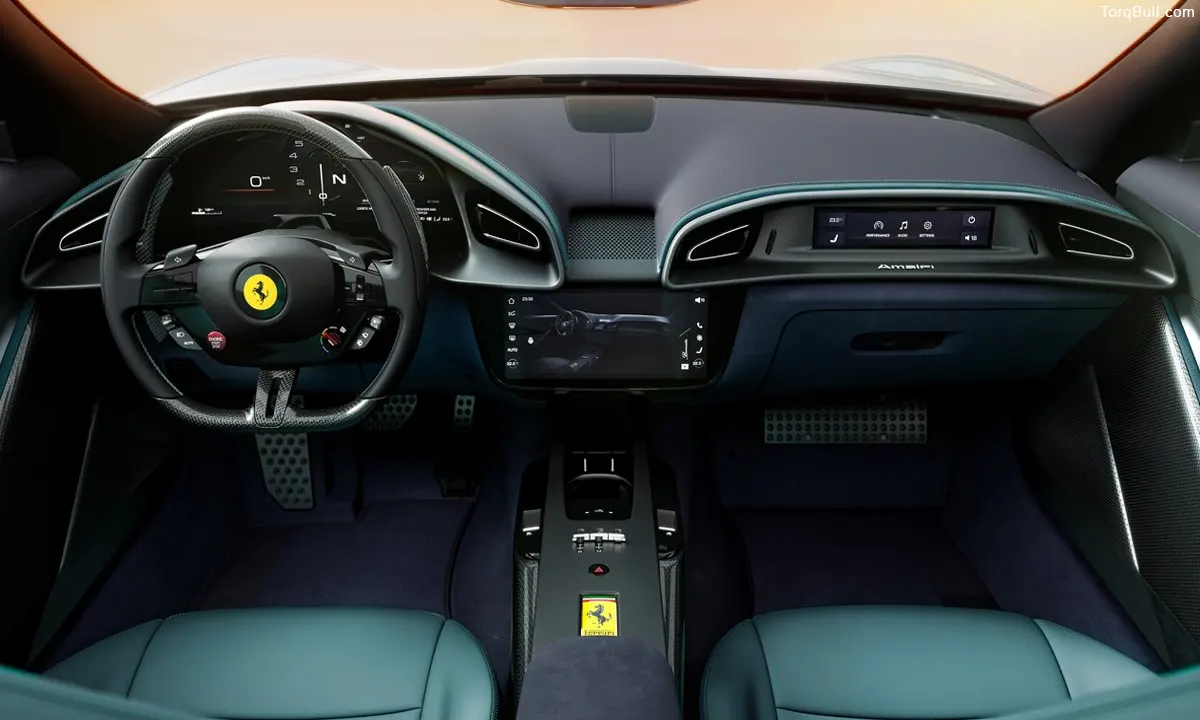
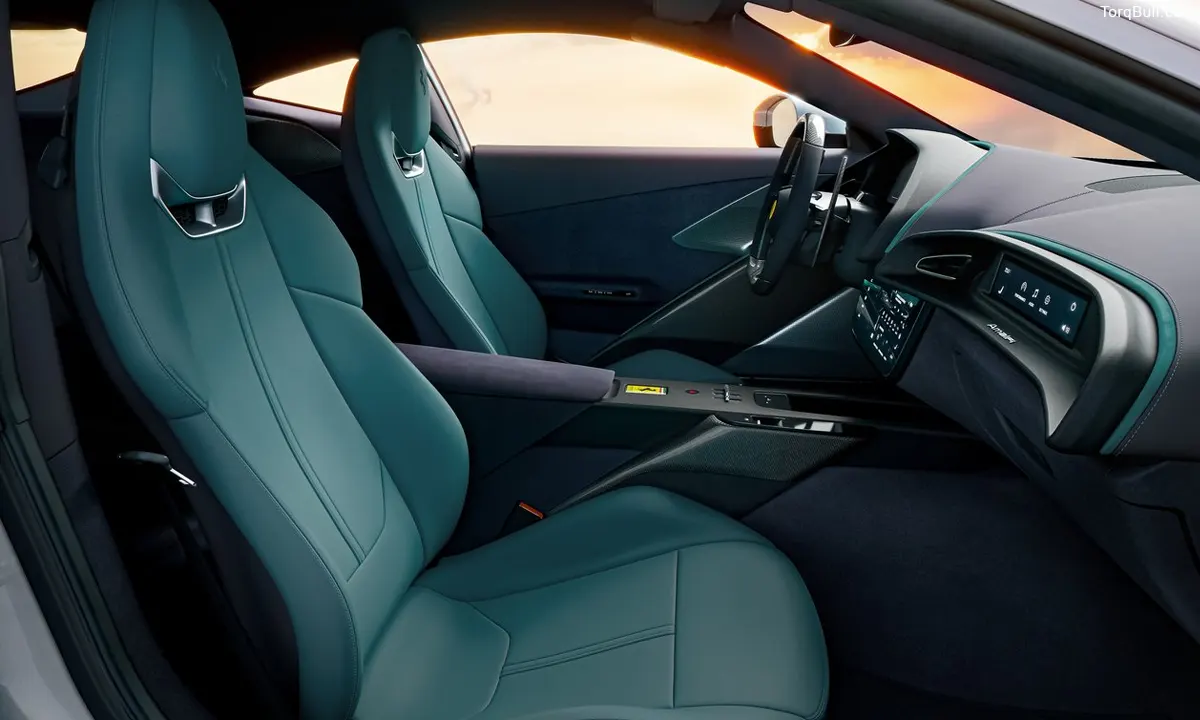
A quick word on the rest, because Ferrari fixed another sore spot. The interior brings back the tactile controls enthusiasts begged for. A revised steering wheel brings back physical switchgear, including a metallic engine start button, while the center console is milled from anodized aluminum and features a retro inspired gear selector gate. The hated touch buttons are gone. The glorious red start button is back. That alone tells you Ferrari is listening to the faithful.
It is properly usable too. Seats are ventilated, massage equipped, and offered in three sizes, with an optional 14 speaker Burmester system delivering 1,200 watts. So when you tire of the V8 symphony, you have a concert hall to fall back on. Though let’s be honest, you will not tire of the V8.
Verdict: A Defiant, Glorious Holdout
So where do I land on the Ferrari Amalfi’s engine? Genuinely thrilled, with my eyes open.
Is it the most violent, ear shattering Ferrari ever built? No. The regulations have softened its idle, and Ferrari deliberately caps its fury to protect the pricier models above it. If you want raw, uncivilized noise at every moment, this is not quite that car. I will not pretend otherwise.
But here is what it is, and why it matters. It is a pure, unelectrified, hand engineered flat-plane V8 that revs to 7,600 rpm, fires up with a theatrical boom, and howls with a 458 flavored snarl at the top of its range, in a year when most of the industry is racing toward silence. That is something to celebrate, not nitpick. Ferrari’s engineers developed a new silencer layout that complies with the most restrictive regulations but does not compromise on the unmistakable timbre of the V8. They threaded the needle. They kept the soul alive under rules designed to kill it.
The Amalfi is the entry Ferrari, the accessible one, the one you could theoretically use every day. And Ferrari could have hybridized it, muffled it, made it sensible. Instead it built a defiant, naturally breathing, top-end screaming V8 holdout and dared the future to come take it. For that act of beautiful stubbornness alone, the Amalfi earns my respect. Does it sound like absolute violence? At full throttle, with the bypass valve wide open and the needle swinging toward that 7,600 rpm redline, close enough. And in 2026, close enough to violence is a miracle worth cheering. Long live the combustion engine. This one is going down singing.