Will Lexus Make a Fully Electric RX Soon? The Question Every Lexus Fan Is Asking
Electrification Roadmaps, the RZ 450e's Market Lessons, Toyota Group's Solid-State Battery Timeline, Growing Competitive Pressure From German and Korean Electric SUV Rivals and the Strategic Reality Behind Whether Lexus's Most Important Model Will Go Fully Electric — and When
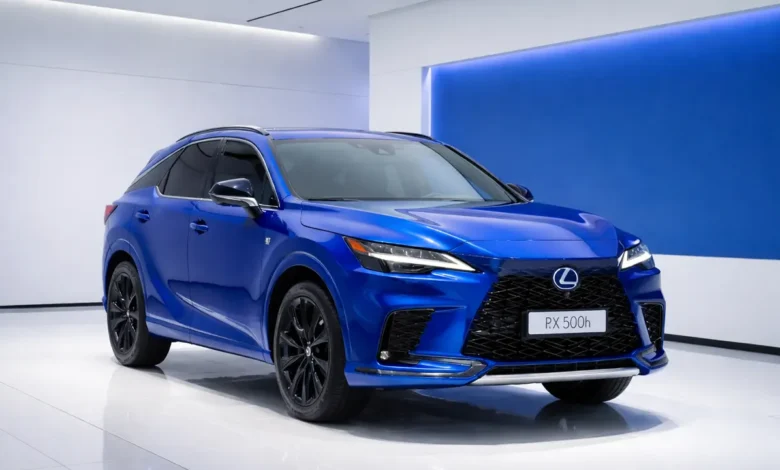
There are questions in the automotive world that carry commercial weight far beyond their apparent simplicity — questions whose answer determines not merely a single product’s specification but a manufacturer’s entire strategic trajectory in the most consequential market transition the industry has experienced in a century. Whether Lexus will produce a fully electric RX is one of those questions. The RX is not simply Lexus’s most popular model. It is the vehicle that built the luxury SUV segment as it exists today, the nameplate that introduced an entire generation of American buyers to the idea that a Japanese manufacturer could compete with German premium brands on quality, refinement and desirability, and the product whose sales volume funds the engineering ambition that Lexus’s broader lineup requires. What happens to the RX in the electric era is, in a very real sense, what happens to Lexus.
Where Lexus Currently Stands on Full Electrification
Understanding the likelihood and timing of a fully electric RX requires an honest assessment of where Lexus currently stands in its electrification journey — and that assessment reveals a manufacturer navigating the transition with considerably more caution than its German and Korean competitors have adopted, for reasons that are strategically considered rather than technologically constrained.
Lexus currently offers the RZ 450e as its fully electric production SUV — a vehicle built on the Toyota Group’s e-TNGA platform that provides a genuine battery-electric ownership experience with dual-motor all-wheel drive, 308 horsepower and an EPA-rated range of 220 miles. The RZ 450e is a competent, well-built and characteristically Lexus-refined electric vehicle whose commercial reception has been more modest than Lexus’s leadership had anticipated — reflecting both the genuine range limitation that 220 miles imposes relative to Korean and American competitors and the pricing that positions the RZ 450e against the Tesla Model Y, Hyundai Ioniq 5 and BMW iX3 in a competitive environment where those alternatives offer stronger range figures, more established charging infrastructure integration or more aggressive pricing.
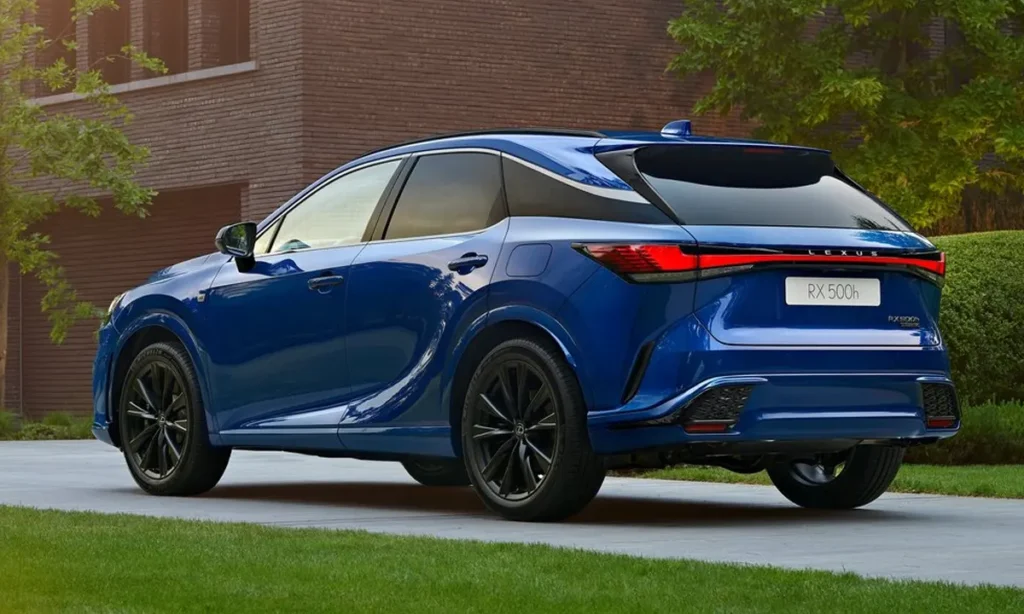
The RX, meanwhile, continues in its fifth-generation form with a hybrid powertrain lineup — the RX 350h and RX 500h — whose sales volumes dwarf the RZ 450e’s commercial performance and whose customer satisfaction scores reflect the maturity and refinement that Toyota Group’s hybrid engineering has accumulated across nearly three decades of development. The hybrid RX’s popularity is not merely a legacy preference — it is a genuine product merit argument whose real-world fuel economy, all-weather capability and ownership cost profile the battery-electric alternatives at its price point have not yet comprehensively defeated in the daily-use reality of American luxury SUV ownership.
What Toyota Group’s Electrification Strategy Reveals About the RX’s Future
The clearest signal of the fully electric RX’s development timeline comes not from Lexus’s own product announcements but from Toyota Group’s broader electrification strategy — specifically from the solid-state battery development programme whose commercial introduction timeline Lexus’s most ambitious electric vehicle products are explicitly connected to.
Toyota has committed to introducing solid-state battery technology into production vehicles before the end of the decade — a timeline whose 2027 to 2028 production introduction target, if achieved, would provide the energy density improvement required to deliver a fully electric RX with the range, charging speed and real-world winter performance that the model’s current hybrid buyer base would demand as conditions for transitioning to a battery-electric alternative. A solid-state battery-equipped electric RX with 400 to 450 kilometres of genuine real-world range, 800-volt architecture enabling rapid charging and the thermal management performance that solid-state chemistry’s reduced liquid electrolyte dependency enables would be a fundamentally more compelling product than a conventional lithium-ion electric RX whose specifications would lag behind the Korean and German competition that will have had an additional two to three years of platform development by the time any Lexus response arrives.
The Competitive Pressure That Makes Inaction Increasingly Costly
The strategic patience that Toyota Group’s approach reflects carries a cost that increases with each year that passes without a fully electric RX in the market. The BMW iX — whose specification, refinement and brand positioning most directly compete with the luxury electric SUV that the RX’s customer base would consider — has accumulated three years of real-world ownership data, software maturity and charging infrastructure integration that a new entrant must address credibly to attract buyers whose electric vehicle consideration has progressed from curiosity to genuine purchase intent.
The Cadillac Lyriq and Genesis GV70 Electrified provide American and Korean market alternatives that target the same buyer demographic as the RX with increasing sophistication and improving real-world ownership evidence. Each year without a fully electric RX is a year in which Lexus’s most loyal customers — whose consideration of an electric alternative is advancing with their general EV market awareness — evaluate competitive alternatives whose availability is immediate rather than anticipated.
Read: 2026 Lexus ES Is Fully Electrified, Dramatically Redesigned and the Best ES Ever Built
Will Lexus Build a Fully Electric RX — The Most Honest Answer
The evidence available in 2026 supports a conclusion that a fully electric Lexus RX is a near certainty rather than a speculative possibility — but that its arrival will reflect Toyota Group’s characteristic deliberateness rather than the urgency that competitive pressure might suggest is warranted. The combination of Toyota’s solid-state battery timeline, Lexus’s stated commitment to full electrification across its lineup by 2035, the RX’s commercial importance as the nameplate whose electric transition must succeed to validate Lexus’s broader EV strategy and the competitive reality of a luxury electric SUV market that will not pause its development to await Lexus’s readiness all point toward a fully electric RX introduction in the 2027 to 2029 window.
Whether that introduction arrives with the solid-state battery technology that would make it genuinely class-leading or with conventional lithium-ion architecture that would make it class-competitive depends on Toyota’s battery development execution — the single variable whose uncertainty makes any more precise prediction intellectually dishonest. What is certain is that the fully electric RX will arrive, that it will reflect the refinement and quality standards that the nameplate’s reputation demands and that Lexus’s engineering resources will ensure it is not an incremental product but a genuine statement of what the brand’s electric future means.
Read: 2026 Lexus LC 500: The Last of the Great Naturally Aspirated Grand Tourers
The fully electric RX is coming. The question is not whether — it is how soon and how extraordinary.
Lexus Electric RX — What to Expect
| Category | Expected Specification |
| Powertrain | Dual Motor All-Wheel Drive (Confirmed Direction) |
| Battery Technology | Solid-State (Target) / Advanced Lithium-Ion (Fallback) |
| Estimated Range | 400–450 km Real-World |
| Charging Architecture | 800-Volt (Expected) |
| Estimated Power | 400–500 hp Combined |
| Platform | Next-Generation Toyota BEV Architecture |
| Anticipated Launch Window | 2027–2029 |
| Primary Competitors | BMW iX / Cadillac Lyriq / Genesis GV80e |
| Starting Price Estimate | $65,000–$80,000 (US Market) |
| Current EV Equivalent | Lexus RZ 450e (e-TNGA Platform) |