Miles Without Anxiety! Best EVs for Long-Distance Driving in the USA
- Real-world highway range exceeding 300 miles
- Charging network access enabling long-distance travel
- Fast-charging speeds (10–80%) shaping stop times
- EVs ranked for real-world road trip capability
- Electric travel vs combustion for long-distance driving
Best EVs for Long-Distance Driving: Long-distance driving in the United States presents electric vehicle ownership with its most demanding real-world test — a test whose parameters are defined not by the EPA rating that determines the purchase decision but by the highway cruising speeds that American interstate travel involves, the ambient temperature variations across the continent’s geographic diversity and the charging network infrastructure whose geographic coverage determines whether the range figure’s theoretical capability translates into genuine cross-country confidence. The 75 miles per hour that American highway driving sustains reduces every electric vehicle’s EPA-rated range by 15 to 25 percent relative to the mixed-cycle figure — a reduction whose practical consequence separates the EVs whose highway range provides genuine long-distance confidence from those whose impressive EPA numbers conceal highway-speed efficiency limitations that road trip planning must accommodate with additional charging stops.
The EV that earns the title of best for long-distance American driving must satisfy five criteria simultaneously — real-world highway range exceeding 280 miles at 75 mph cruise, peak DC fast charging above 200 kilowatts, charging network coverage whose station density prevents anxiety across the interstate system’s less populous sections, a 10-to-80 percent charging time below 25 minutes and the cabin comfort whose quality makes the charging stops feel like planned breaks rather than imposed interruptions. These are the vehicles that satisfy all five.
1. Tesla Model S Long Range: The Undisputed Long-Distance Champion
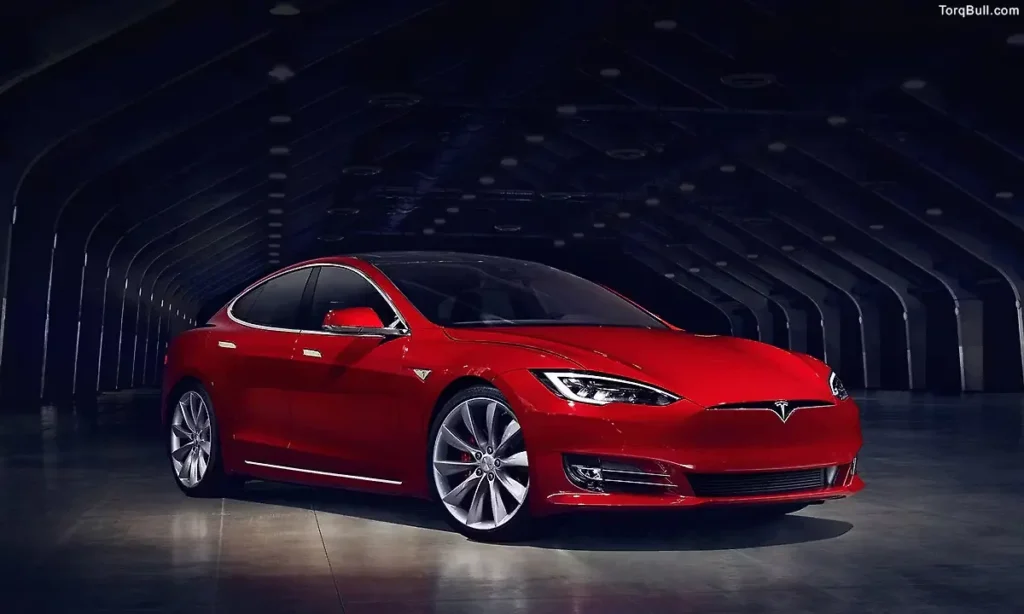
The Tesla Model S Long Range’s combination of real-world highway range exceeding 350 miles at 75 mph cruise — the highest highway-speed real-world range figure of any production electric vehicle in the American market — with native Supercharger V3 access whose 250-kilowatt peak charging rate and geographic coverage across 45,000-plus Supercharger stalls in the United States transforms the cross-country calculation most completely.
The Model S’s real-world highway advantage reflects the large-format 100-kilowatt-hour battery pack’s energy reserve depth, the dual motor powertrain’s efficiency optimisation at sustained highway loads and the aerodynamic coefficient of 0.208 Cd — the lowest of any production sedan — whose drag reduction contributes directly to highway efficiency retention at the speeds where aerodynamic drag’s quadratic relationship with velocity makes the drag coefficient’s value most consequential. At 75 mph, the aerodynamic force that a 0.208 Cd vehicle must overcome is measurably and meaningfully lower than the 0.23 to 0.25 Cd alternatives face — a difference whose cumulative effect over a 400-mile highway journey translates into the range advantage that the Model S consistently demonstrates in independent long-distance testing.
The Supercharger network’s journey planning integration — whose Tesla navigation system automatically calculates optimal charging stops, adjusts arrival state-of-charge targets and pre-conditions the battery for maximum charging rate before the station arrival — eliminates the manual planning requirement that non-Tesla charging network users manage independently, providing the seamless long-distance experience whose quality the charging infrastructure’s technical performance alone cannot fully deliver without the navigation system’s intelligent management.
2. Rivian R1T Long Range Max: Adventure Range for American Roads
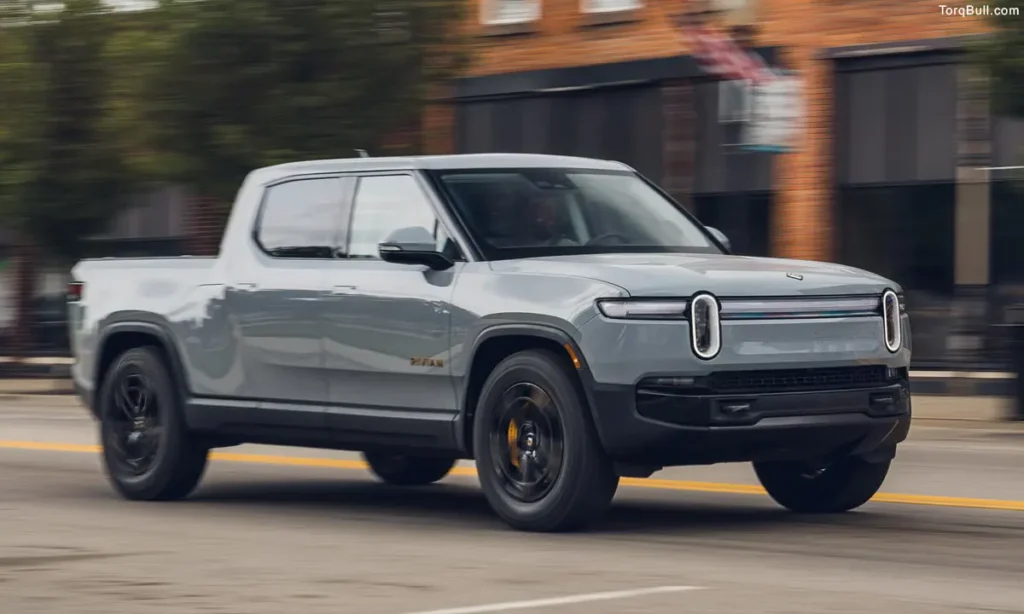
The Rivian R1T Long Range Max — whose quad-motor configuration and 135-kilowatt-hour battery pack provide an EPA-rated range of 410 miles whose highway-speed real-world translation consistently returns figures above 330 miles at 75 mph cruise — offers the long-distance range capability in a truck format that the American road trip’s cargo, outdoor adventure and practical hauling requirements demand from a vehicle whose ownership serves purposes beyond the passenger sedan’s scope.
The R1T’s Rivian Adventure Network access — whose DC fast charging stations at 220 kilowatt peak output are positioned across the American interstate system and at adventure destinations including national park access points whose coverage addresses the specific long-distance use case that the truck buyer’s road trip profile involves — provides the charging infrastructure context that the R1T’s range capability requires to function as a genuine long-distance travel tool rather than a local range motorcycle whose cross-country aspiration the infrastructure cannot support.
The 10-to-80 percent charging time of approximately 25 minutes reflects the 135-kilowatt-hour pack’s thermal management system’s ability to sustain high charging rates across the full state-of-charge range — providing the charging stop efficiency that long-distance travel’s time economy demands and that larger batteries whose thermal management cannot sustain high rates across the charging window deliver in extended charging times that the time figure alone does not capture.
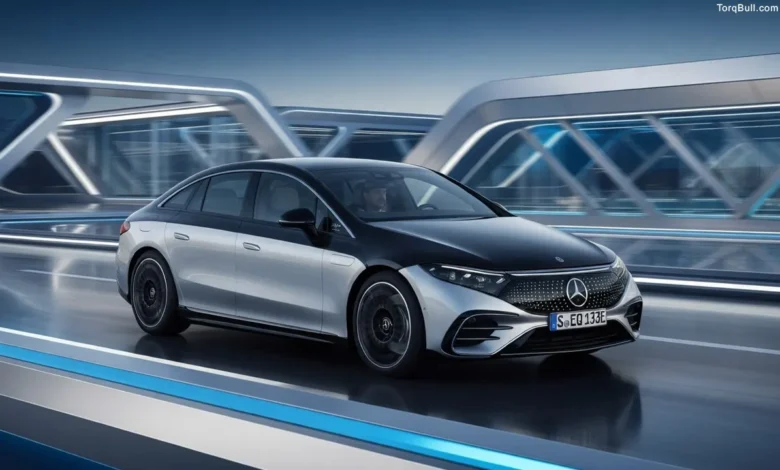
3. Mercedes-Benz EQS 450+: Luxury Long-Distance Redefined
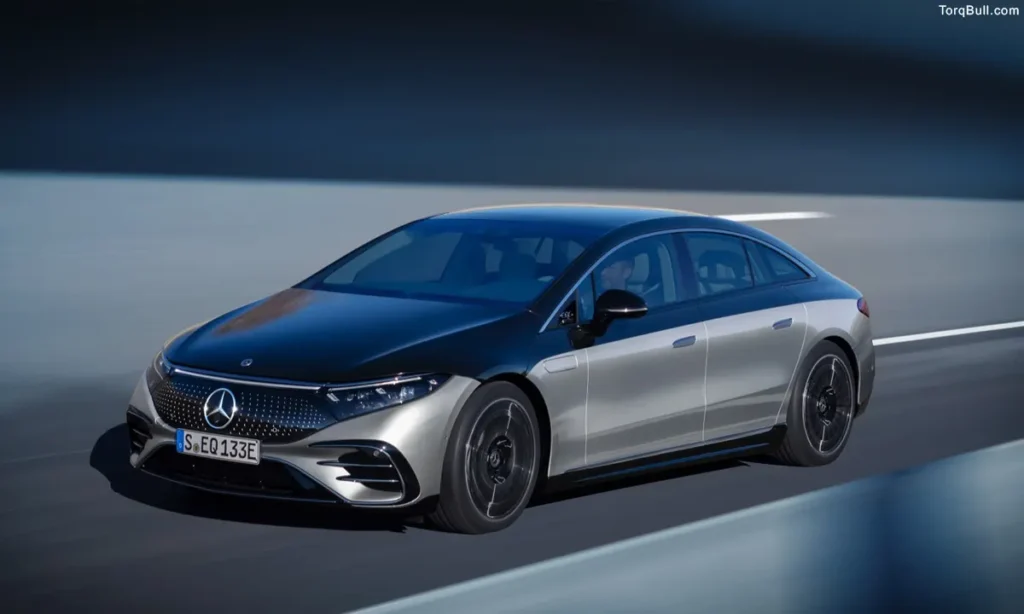
The Mercedes-Benz EQS 450+’s 350-mile EPA-rated range — supported by a 107.8-kilowatt-hour battery pack whose thermal management system maintains charging rates at the 200-kilowatt peak level across a broader state-of-charge window than many competitors achieve — delivers the luxury long-distance electric vehicle experience whose cabin quality, noise isolation and comfort standard makes the charging stops whose inevitability long-distance EV travel accepts feel like the spa visit rather than the inconvenience that less refined alternatives’ interior environments reinforce.
The EQS’s hyperscreen — whose 56-inch curved display spanning the dashboard provides the infotainment and vehicle management interface depth that long-distance journeys’ entertainment, navigation and ambient management requirements demand — and the Burmester 3D surround sound system whose acoustic performance fills the acoustic isolation that the 0.20 Cd body provides with listening quality whose hour-by-hour engagement sustains the journey’s experiential quality between charging stops. For the long-distance buyer whose vehicle is a sanctuary as much as a transportation tool, the EQS’s cabin quality transforms the electric road trip experience most completely.
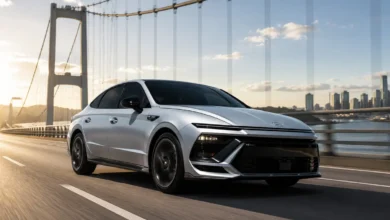
4. Hyundai Ioniq 6 Long Range: Efficiency Champion
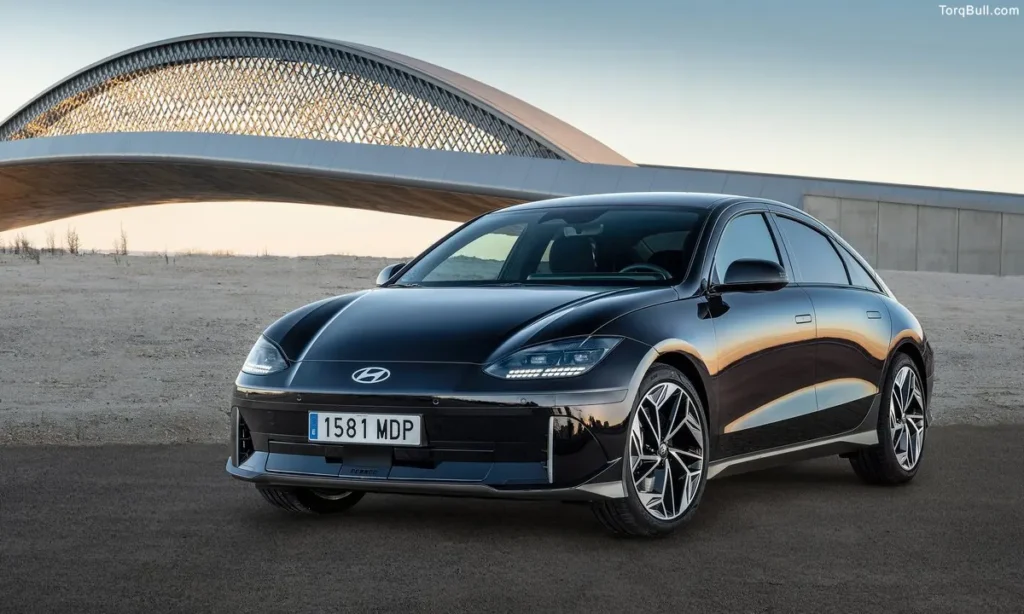
The Hyundai Ioniq 6 Long Range rear-wheel-drive — whose 361-mile EPA rating is supported by a 77.4-kilowatt-hour battery whose energy density the 0.21 Cd aerodynamic body’s efficiency maximises to a degree that larger-battery competitors cannot approach in range-per-kilowatt-hour terms — delivers the most energy-efficient long-distance electric vehicle experience available to the American buyer whose environmental priority includes the energy consumption per mile metric alongside the range figure.
The 800-volt charging architecture’s 350-kilowatt peak acceptance rate — the highest of any vehicle on this list — delivers the 10-to-80 percent charge in approximately 18 minutes under optimal station and thermal conditions, providing the fastest charging stop of any long-distance EV in the American market. The practical consequence for the long-distance driver is a charging stop whose duration approaches the petrol station visit more closely than any competitor achieves — approaching the psychological threshold at which the charging stop’s distinction from the fuel stop dissolves from a meaningful inconvenience into a planned break whose duration serves the coffee, restroom and stretching requirement that the driving safety guidelines recommend regardless of powertrain type.
Read: The Dark Side of BYD Cars Nobody Is Talking About: What the Hype Leaves Out
5. Ford F-150 Lightning Extended Range: Long-Distance Truck Reality
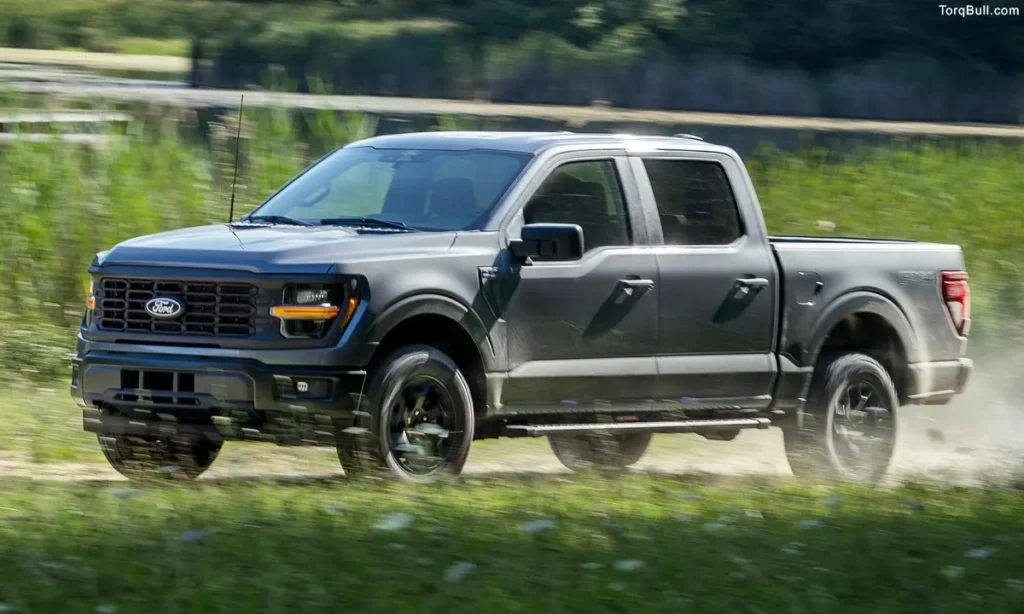
The Ford F-150 Lightning Extended Range’s 320-mile EPA-rated range — whose highway-speed real-world translation to approximately 260 miles at 75 mph cruise reflects the full-size truck’s frontal area and aerodynamic profile’s efficiency limitation relative to sedan alternatives — provides the long-distance truck capability that the American road trip’s most cargo and towing-intensive profiles demand from a vehicle whose bed capacity, towing rating and payload practical utility no sedan alternative provides.
The Lightning’s access to the Tesla Supercharger network through NACS connector adoption — providing the 250-kilowatt peak charging rate and geographic coverage density whose combination the Ford Blue Oval Charge Network alone cannot match — transforms the Lightning’s long-distance capability by eliminating the charging infrastructure gap that restricted the vehicle’s cross-country utility before the NACS adoption’s network access improvement. The 10-to-80 percent charging time of approximately 41 minutes reflects the battery pack’s thermal management characteristics and the truck’s higher capacity — a longer stop than the sedan alternatives require but one whose frequency the 260-mile highway range makes manageable across the daily distances that truck-based road trip planning typically encompasses.
Read: How Smart Is the Changan Deepal S05 Compared to Tesla and BYD?
Best EVs for Long-Distance Driving USA 2026 Comparison Chart
| Model | EPA Range | Highway Range (75 mph) | Peak Charge Rate | 10–80% Time | Charging Network | Starting Price |
| Tesla Model S LR | 405 miles | ~350 miles | 250 kW | ~20 min | Supercharger (Native) | ~$74,990 |
| Rivian R1T LR Max | 410 miles | ~330 miles | 220 kW | ~25 min | Rivian + Supercharger | ~$73,000 |
| Mercedes EQS 450+ | 350 miles | ~295 miles | 200 kW | ~31 min | CCS + Supercharger | ~$104,400 |
| Hyundai Ioniq 6 LR | 361 miles | ~305 miles | 350 kW | ~18 min | CCS + Supercharger | ~$38,615 |
| Ford F-150 Lightning ER | 320 miles | ~260 miles | 150 kW | ~41 min | Supercharger (NACS) | ~$59,974 |