Average Lifespan of Honda CR-V Battery in Hot Climates. What Every Owner Should Know About

- Typical battery life is 3–5 years
- Heat can reduce lifespan to 2–3 years
- High temperatures accelerate chemical degradation
- Warning signs include slow starts and dim lights
- Proper maintenance can extend battery life
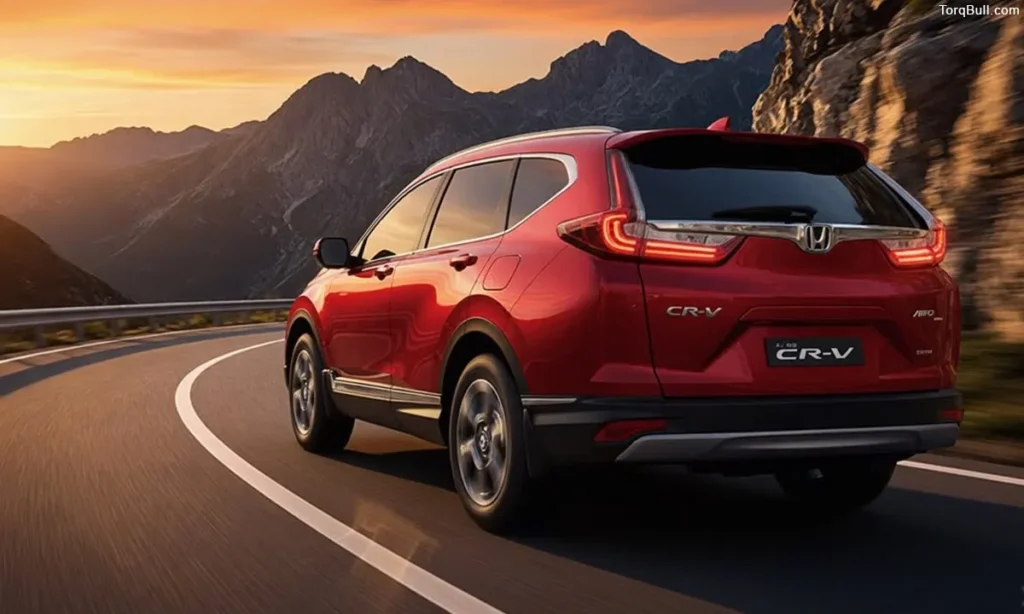
Average Lifespan of Honda CR-V Battery in Hot Climates: The Honda CR-V is one of the most consistently reliable compact SUVs ever built, with well-maintained examples routinely reaching 250,000 to 300,000 miles without major powertrain failures. The one component that does not always share this longevity record — particularly for owners in the Sun Belt states of Florida, Texas, Arizona, Louisiana and Georgia — is the 12-volt lead-acid starter battery. Understanding why hot climates dramatically reduce battery lifespan, what the actual numbers look like based on real owner experience, and what can be done to extend service life before the battery fails without warning are the three most practically useful things any CR-V owner in a warm climate can know.
Standard Honda CR-V Battery Lifespan: The Baseline Numbers
Under normal driving conditions in temperate climates, a Honda CR-V’s 12-volt lead-acid battery lasts between three and five years on average. This figure is consistent across multiple Honda dealerships, owner community data and independent automotive research, and represents the performance envelope that Honda’s battery specifications target at the time of manufacture. Owners in the Mid-Atlantic states, the Pacific Northwest and the Upper Midwest generally report battery lifespans toward the middle to upper end of this range — four to five years is a common experience in states where summer temperatures remain moderate.
The Honda CR-V Hybrid carries two distinct battery systems that require separate discussion. The 12-volt auxiliary battery — which starts the vehicle, powers accessories and supports the hybrid system’s electronics — follows the same heat-sensitive lifespan profile as the standard CR-V’s battery. The high-voltage lithium-ion traction battery that powers the hybrid drivetrain is a fundamentally different component with a much longer expected service life of 10 to 15 years or 120,000 to 150,000 miles under normal conditions, backed by Honda’s 8-year, 100,000-mile federal minimum warranty and Honda’s own 10-year, 150,000-mile target for most states.
Read: Honda CR-V Real World Range. How Far It Actually Goes Per Tank vs EPA Estimates
How Hot Climates Destroy Batteries Faster: The Chemistry of Heat Damage
The dramatic reduction in battery lifespan that CR-V owners in hot climates experience is not random — it is the direct and predictable result of well-understood electrochemical processes that heat accelerates at every stage of battery operation and storage.
A lead-acid battery operates through a reversible chemical reaction between lead plates and sulphuric acid electrolyte. This reaction produces electrical current during discharge and is reversed during charging. Temperature governs the rate of every chemical reaction within the battery — and in ways that are uniformly damaging when the temperature is consistently high.
The most immediate damage mechanism in hot climates is electrolyte evaporation. The sulphuric acid electrolyte solution — which must completely cover the lead plates for the battery to function and charge correctly — evaporates faster at high temperatures. In a vehicle parked in a Florida or Arizona summer, engine compartment temperatures regularly exceed 140 to 160 degrees Fahrenheit, even when the ambient outdoor temperature is only 90 to 100 degrees. At these temperatures, electrolyte evaporation is significantly accelerated. When the electrolyte level drops below the tops of the lead plates, the exposed plate sections sulfate — a process in which lead sulphate crystals form on the plate surface, permanently reducing the plate’s active area and the battery’s capacity. Sulfation caused by low electrolyte is irreversible and the primary cause of premature battery failure in hot climates.
The second mechanism is accelerated corrosion of the internal lead grids that support the active plate material. Heat accelerates the corrosion rate of the lead-antimony alloys used in battery grid construction, weakening the structural integrity of the plates and increasing internal resistance over time. Batteries in consistently hot climates corrode their internal structures measurably faster than identical batteries in cooler environments, producing capacity reduction and eventual failure earlier in their service life.
The third mechanism is overcharging damage. On hot days, a running vehicle’s charging system delivers voltage that can push an already-warm battery into an overcharging condition — accelerating electrolyte breakdown, producing hydrogen and oxygen gas within the battery and causing additional plate damage.
Read: 5 SUVs That Last Longer Than You Think and Are Worth the Money
Real-World Lifespan Data: What Honda CR-V Owners in Hot Climates Report
Owner experience data from Honda CR-V forums and community discussions provides the most specific available picture of actual battery lifespan in hot-climate states:
Florida owners consistently report the shortest battery lifespans, with a frequently cited range of two to three years before replacement. Multiple Florida owners report first failures within two years of purchase, with subsequent replacement batteries also failing faster than the national average. One owner community member noted going through four batteries in a 2018 CR-V while living in Florida, with garage parking providing only partial mitigation. The combination of Florida’s year-round heat, high humidity — which accelerates terminal corrosion — and the state’s flat topography that produces frequent stop-and-go city driving rather than the sustained highway driving that fully recharges batteries creates one of the most challenging battery environments in the United States.
Texas and Arizona owners report somewhat better outcomes than Florida — typically two and a half to four years — possibly reflecting the lower ambient humidity that reduces terminal and case corrosion relative to Florida’s coastal environment. Virginia and mid-Atlantic owners report lifespans of approximately five years and beyond, consistent with the national average, demonstrating how directly geography correlates with battery service life.
The Honda CR-V’s specific battery placement — under the hood in the engine compartment rather than in a trunk or interior location — exposes it to the full range of underhood temperatures. Honda does apply a foam thermal sleeve to the battery casing, which provides meaningful insulation against extreme cold but offers more limited protection against sustained heat saturation during long drives in hot weather.
Warning Signs That Your CR-V Battery Is Failing in Hot Weather
Hot climate battery failures frequently occur without the gradual warning signs that owners in cooler climates typically experience — because heat can accelerate battery deterioration rapidly and non-linearly. However, several warning indicators appear before complete failure in most cases:
Slow engine cranking — a noticeably slower than normal starter motor engagement, particularly on cold morning starts — indicates reduced battery capacity even when the battery started the vehicle normally the previous day. Dimming headlights when the engine is idling, electrical accessories behaving erratically, the battery warning light illuminating on the dashboard, and visible corrosion on battery terminals are all reliable early indicators that warrant professional testing. Any CR-V battery that approaches three years of age in Florida or four years in other hot-climate states should be tested proactively, regardless of whether starting problems have occurred.
Read: 2026 Toyota RAV4 vs 2026 Honda CR-V Reliability Test. Which Compact SUV Will Last Longer?
Honda CR-V Battery Lifespan by Climate — Comparison Chart
| Climate Region | Typical States | Average CR-V Battery Lifespan | Key Damage Factor |
| Extreme Hot / Humid | Florida, coastal Louisiana | 2–3 years | Electrolyte evaporation + humidity corrosion |
| Hot / Semi-Arid | Arizona, Nevada, inland Texas | 2.5–4 years | Electrolyte evaporation + heat cycling |
| Hot / Moderate Humidity | Georgia, Alabama, S. Carolina | 3–4 years | Summer heat + moderate humidity |
| Temperate | Virginia, Mid-Atlantic, Pacific NW | 4–5.5 years | Seasonal variation, mild summers |
| Cold Climate | Minnesota, Michigan, Montana | 3–5 years (cold start stress) | Cold-start strain + winter cycling |
| Industry Standard Average | National | 3–5 years | Mixed conditions |
Proven Strategies to Extend CR-V Battery Life in Hot Climates
Several practical maintenance steps can meaningfully extend battery service life in hot-climate states, addressing the specific mechanisms through which heat causes premature failure.
Check electrolyte levels regularly. In accessible (non-sealed) lead-acid batteries, checking electrolyte levels monthly in hot climates and topping up with distilled water — not tap water — keeps the lead plates covered and prevents sulfation. Multiple experienced CR-V owners recommend this as the single highest-impact maintenance step in hot climates, noting that new batteries frequently arrive with electrolyte levels below the optimal fill line.
Park in the shade or a garage whenever possible. Reducing the peak under-hood temperature that the battery experiences has a direct and compounding effect on heat damage accumulation. A battery that consistently sees 130-degree peak temperatures rather than 160-degree peaks will experience meaningfully slower electrolyte evaporation and corrosion regardless of ambient outdoor temperature.
Keep battery terminals clean and corrosion-free. Terminal corrosion — accelerated by high humidity in coastal hot-climate states — increases the electrical resistance of the connection between the battery and the vehicle’s electrical system, causing the charging system to work harder and potentially delivering unstable charging voltage to the battery. Cleaning terminals annually with a baking soda solution and applying anti-corrosion terminal spray prevents this accumulation.
Take longer drives regularly. Short trips — common in urban stop-and-go environments — do not give the alternator sufficient time to fully recharge the battery after the energy expended on starting. A battery that is chronically undercharged develops sulphation even without electrolyte evaporation as the primary cause. Regular longer highway drives allow full recharge cycles that maintain battery health between service intervals.
Test the battery annually after year two in hot climates. Most automotive retailers offer free battery load testing. A load test measures the battery’s actual capacity under operating conditions — a far more accurate assessment of battery health than a simple voltage reading — and provides advance warning of capacity degradation before the battery reaches complete failure.
Choose the right replacement battery. When replacement is necessary, an OEM Honda battery or a high-quality aftermarket equivalent with a Cold Cranking Ampere rating at or above the original specification provides the most reliable service. Some Honda CR-V owners in hot climates have found value in Absorbed Glass Mat batteries — AGM type — which are sealed against electrolyte evaporation and offer improved heat resistance compared to standard flooded lead-acid designs, though at a higher upfront cost.