How Long Do Car Engines Last? What Determines Engine Lifespan and How To Get The Most From Yours
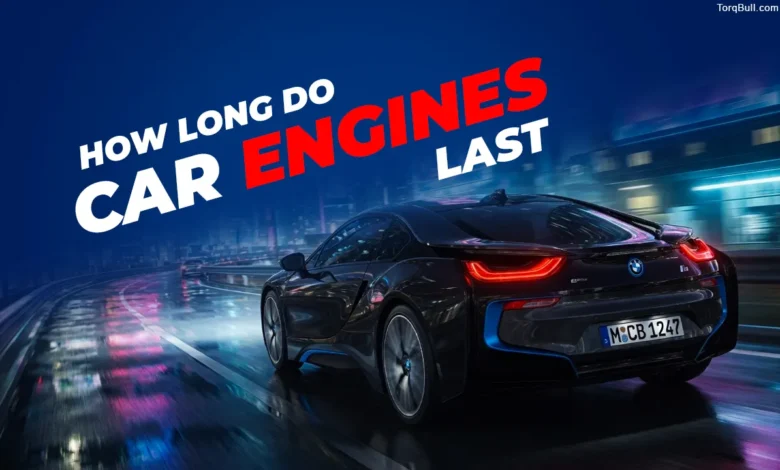
- Modern engines can last 150,000–300,000 miles
- Maintenance determines lifespan more than brand
- Regular oil changes are critical
- Coolant condition and thermal management matter
- Driving habits significantly impact engine longevity
How Long Do Car Engines Last: The question of how long a car engine lasts is one of the most commonly asked in automotive ownership — and one of the most frequently answered imprecisely. Vague answers like “it depends on how you take care of it” are technically accurate but practically useless to a buyer evaluating a used vehicle, a driver planning a maintenance schedule or an owner deciding whether to repair or replace an ageing engine. The precise answer — backed by manufacturer data, independent reliability research and decades of real-world ownership experience across millions of vehicles — is this: a modern car engine is designed and tested to last between 150,000 and 300,000 miles under conditions of regular maintenance and normal use. Whether any specific engine reaches the lower or upper end of that range, or fails to reach either, is determined by five specific variables that every owner can understand and every buyer can evaluate. This guide explains those variables completely.
What Modern Engine Engineering Is Actually Designed to Achieve
Contemporary automotive engineering has advanced engine durability to a level that would have been extraordinary by the standards of even twenty years ago. Engine components are manufactured to tolerances measured in microns. Synthetic lubricants provide film strength at operating temperatures that mineral oils cannot sustain. Variable valve timing systems reduce mechanical stress at different load points. Roller-follower valvetrain designs reduce friction by 40 to 60 percent compared to sliding-contact predecessors. Modern cylinder coatings and piston ring designs maintain bore geometry across temperature cycles that cast iron blocks of previous decades could not manage as precisely.
The result is that most engines sold in the American market in 2026 are genuinely designed to last the vehicle’s expected lifecycle — typically 150,000 to 200,000 miles for mainstream vehicles and extending to 250,000 to 300,000-plus miles for engines in trucks, SUVs and vehicles whose manufacturers have prioritised powertrain durability above other attributes. This is not marketing language. It is reflected in extended powertrain warranties — the 10-year, 100,000-mile coverage offered by Kia and Hyundai, and the 5-year, 60,000-mile coverage provided by Toyota and Honda — whose financial terms only make commercial sense if the manufacturer is confident the powertrain will not require significant warranty claims at those mileage points.
The important qualification is that these design lifespans assume maintenance performed as specified by the manufacturer. An engine designed to last 200,000 miles with specified maintenance can fail at 60,000 miles without it. The design life is achievable, not automatic.
The Five Variables That Determine How Long Your Engine Actually Lasts
Variable 1: Oil Change Frequency and Oil Quality — The Single Most Important Factor
Engine oil is the most critical consumable in powertrain longevity and the maintenance item most directly under the owner’s control. Fresh engine oil performs three simultaneous functions: it lubricates moving parts with a hydrodynamic film that prevents metal-to-metal contact; it carries heat away from combustion chamber components; and it suspends contaminants — combustion byproducts, metal particles and moisture — in suspension until the filter removes them or the oil is drained.
Over time and mileage, oil degrades through thermal cycling — the repeated heating and cooling that breaks down both the base oil molecules and the additive package. Detergents that suspend contaminants become depleted. Viscosity index improvers that maintain film strength at operating temperature break down under shear stress. As the oil degrades, its ability to maintain adequate film thickness between moving bearing surfaces — crankshaft journals, camshaft lobes, connecting rod bearings — diminishes. The consequence of inadequate lubrication film at these surfaces is bearing wear, the most common cause of premature engine failure in otherwise mechanically sound engines.
The difference between following the manufacturer’s specified oil change interval — typically every 5,000 to 10,000 miles for full synthetic oil in modern engines — and extending that interval by 50 percent is not, at any individual oil change, catastrophic. Compounded across 150,000 miles of ownership, the difference in accumulated bearing wear is statistically and mechanically significant. The engines that regularly appear in 200,000-mile and 300,000-mile ownership reports are almost universally maintained with consistent, interval-adherent oil changes.
The quality of oil used matters equivalently to the interval. Modern engines — particularly turbocharged units, high-compression naturally aspirated engines and direct injection engines — are designed around full synthetic oil of the manufacturer’s specified viscosity grade. Using conventional oil in an engine specified for full synthetic reduces the oil’s thermal stability, its ability to flow adequately at cold start and its sustained film strength under operating temperature. Toyota specifically requires a 0W-20 or 0W-16 full synthetic in current Camry and Corolla engines. BMW requires a 0W-40 or 5W-30 with specific European specification approval. Using a non-approved oil grade in these applications does not immediately damage the engine — but it accelerates the rate of wear relative to the design assumption.
Variable 2: Coolant Condition and Cooling System Maintenance
An engine operating at design temperature — typically between 195 and 220 degrees Fahrenheit — performs optimally for combustion efficiency, oil viscosity and emissions management. An engine that consistently operates above design temperature due to degraded coolant, a faulty thermostat, a blocked radiator or a failing water pump accelerates wear on every internal component at a rate that compounds with each degree of excess temperature. Head gasket failure, the most expensive common engine repair at $1,500 to $4,000 in labour and parts, is in the majority of cases caused by sustained overheating rather than a manufacturing defect.
Coolant — ethylene glycol in water solution — degrades over time. Its pH shifts from alkaline toward acidic as inhibitor packages are depleted, and as it becomes more acidic, it actively corrodes the aluminium engine components and aluminium radiator surfaces it contacts. Modern OAT and HOAT coolant types have extended service lives — typically 5 years or 100,000 miles — but only if the cooling system is not contaminated with incompatible coolant types or bypass water. The consequence of failing to service the cooling system on schedule is not typically immediate overheating but gradual internal corrosion of aluminium components whose integrity is essential to maintaining combustion chamber sealing and coolant passage integrity.
Variable 3: Driving Pattern — Short Trips Are Engines’ Longest-Term Enemy
The driving pattern in which an engine spends the majority of its operational life has a larger effect on long-term engine health than most drivers recognise. Short trips — journeys of less than ten miles that do not allow the engine to fully warm to operating temperature — cause disproportionate engine wear for two distinct reasons.
First, engine oil requires approximately five to eight minutes of operation at normal operating temperature to fully circulate through all oil passages and galleries, reach the upper valve train and provide complete lubrication to all friction surfaces. During cold start and warm-up, bearing clearances are not at design specification — they are slightly wider because metal components have not yet expanded to their operating dimensions — and oil viscosity is higher than at operating temperature, reducing flow rates into tight clearances. More wear occurs per mile during cold start than at any other operational point.
Second, short trips that never reach full operating temperature allow condensation — moisture produced as a combustion byproduct — to accumulate in the oil rather than evaporating as it does in a fully warmed engine. This moisture contamination promotes oil acidification, accelerates bearing corrosion and creates sludge accumulation that restricts oil passages. Owners who drive exclusively short urban trips in cold climates should change their oil more frequently than the mileage interval alone suggests — potentially every 3,000 to 4,000 miles rather than 5,000 to 7,500 — because their oil degrades faster than its mileage accumulation reflects.
Engines that spend most of their operational life in sustained highway driving at stable temperatures, by contrast, operate under the most mechanically benign conditions — constant temperature, consistent lubrication film, minimal thermal cycling and no condensation accumulation — and consistently reach the upper end of their design mileage potential.
Variable 4: Turbocharger Management — The Specific Challenge of Boosted Engines
The majority of new vehicles sold in the American market in 2026 use turbocharged engines — the 1.5-litre and 2.0-litre turbocharged four-cylinders that power the Honda CR-V, Toyota RAV4, Ford F-150 EcoBoost, Chevy Equinox and virtually every other mainstream vehicle across all segments. Turbochargers introduce specific longevity considerations that naturally aspirated engines do not share.
A turbocharger’s turbine shaft rotates at 150,000 to 300,000 RPM and is lubricated exclusively by pressurised engine oil flowing through its journal bearings. When the engine is shut down, oil pressure drops immediately and the turbine shaft — which continues spinning from thermal inertia for 30 to 60 seconds after shutdown — is momentarily without lubrication. If the engine was working hard before shutdown — accelerating aggressively, pulling a load, sustained high-speed driving — the turbocharger is at its highest temperature and its oil flow drops precisely when cooling oil flow is most needed.
The simple practice of allowing a turbocharged engine to idle for 60 to 90 seconds before shutdown after sustained hard driving — permitting oil to continue cooling the turbocharger bearings before the pump stops — directly extends turbocharger life. A failed turbocharger on a modern engine costs $1,500 to $4,000 to replace and, if the failure involves oil contamination of the engine, can cause downstream bearing damage. Using the manufacturer’s specified full synthetic oil, changed on schedule, additionally provides the thermal stability that turbocharger bearing cooling requires.
Variable 5: Manufacturer, Engine Design and Model-Specific Reliability
The fifth variable is largely outside the owner’s control at the point of purchase — the inherent design quality and reliability of the specific engine in question. Not all engines are created equally durable. Some achieve multiple verified 300,000-mile instances in independent ownership surveys. Others have documented design weaknesses that produce premature failures regardless of maintenance diligence.
The engines with the most consistently documented long-term mileage performance include Toyota’s 2AR-FE 2.5-litre naturally aspirated four-cylinder as used in the Camry and RAV4 generations, Honda’s K24 2.4-litre engine used in CR-V and Accord applications, the GM 6.2-litre LS engine family used in trucks and SUVs, and the Cummins 6.7-litre diesel used in Ram heavy-duty pickup trucks — which routinely documents 500,000-mile commercial operator mileage under maintained conditions. iSeeCars long-running studies of 200,000-mile vehicles consistently identify Toyota, Honda, GMC and Chevrolet trucks as the most represented brands in high-mileage inventories.
Read: Common Car Engine Problems and How to Fix Them. A Complete Diagnostic Guide for Every Driver
Engine Lifespan by Vehicle Category and Brand — Reference Chart
| Vehicle Category | Typical Engine Life (Maintained) | Miles for Best Performers | Engines Known for Longevity |
| Economy Sedan / Compact | 150,000–200,000 miles | 250,000+ | Toyota Corolla 1ZR/2ZR, Honda Civic K20 |
| Midsize Sedan | 200,000–250,000 miles | 300,000+ | Toyota Camry 2AR-FE, Honda Accord K24 |
| Compact SUV | 150,000–200,000 miles | 250,000+ | Toyota RAV4 2.5L, Honda CR-V 2.4L |
| Full-Size Truck (Gas) | 200,000–250,000 miles | 300,000+ | GM 5.3/6.2L LS, Toyota Tundra 5.7L |
| Full-Size Truck (Diesel) | 300,000–400,000 miles | 500,000+ | Cummins 6.7L, Duramax 6.6L |
| Luxury Sedan | 150,000–200,000 miles | 200,000+ | BMW B58 I6, Mercedes M256 I6 |
| Performance / Sports | 100,000–150,000 miles | 200,000+ | Porsche flat-six, BMW S58 (with servicing) |
| Hybrid Powertrain | 200,000–250,000 miles | 300,000+ | Toyota THS hybrid, Honda Atkinson cycle |
The Warning Signs That an Engine Is Approaching Failure
Understanding engine longevity also means recognising the symptoms that indicate an engine is deteriorating — because addressing early warnings prevents catastrophic failure and the associated cost of complete engine replacement.
Blue exhaust smoke on startup or under acceleration indicates oil burning — oil entering the combustion chamber through worn piston rings, worn valve stem seals or both. This is not immediately catastrophic, but it is progressive and indicates accelerating internal wear. White exhaust smoke that does not dissipate after warm-up indicates coolant burning — typically head gasket failure — which will worsen rapidly and cause complete engine failure if not addressed. Knocking or tapping sounds from the engine at idle — particularly metallic, rhythmic knocking that increases with engine speed — indicate bearing wear, the most serious symptom and the one that most commonly precedes complete engine failure if oil changes have been neglected.
Persistent oil consumption — requiring more than one quart per 3,000 miles — beyond the first 50,000 miles of engine life indicates internal wear that maintenance cannot reverse. Excessive crankcase pressure causing oil leaks from multiple sealing points simultaneously indicates a PCV system failure or advanced ring wear. Each of these symptoms, diagnosed early and addressed appropriately, can extend engine life by tens of thousands of miles compared to the alternative of continuing to operate the engine without intervention.
Read: Engine Overheating Causes and Solutions. Here Is Exactly What Is Wrong and How to Fix It
What 300,000-Mile Engines Have in Common
Independent studies examining vehicles that reach 200,000, 300,000 and beyond share a consistent pattern of maintenance practices that collectively explain their longevity: oil changed at or before the manufacturer’s specified interval throughout the vehicle’s life, using oil of the specified grade and specification; cooling system serviced on schedule with the correct coolant type; a predominantly highway driving pattern; no sustained operation at elevated temperatures; and no prolonged oil pressure warning light events driven through rather than stopped and investigated.
The engine that reaches 300,000 miles is not a lottery winner. It is a machine maintained with the discipline that its design assumed when the manufacturer established its durability target — and it demonstrates, consistently and across millions of data points, that the gap between an engine that achieves its design life and one that fails prematurely is almost always maintenance rather than manufacturing.