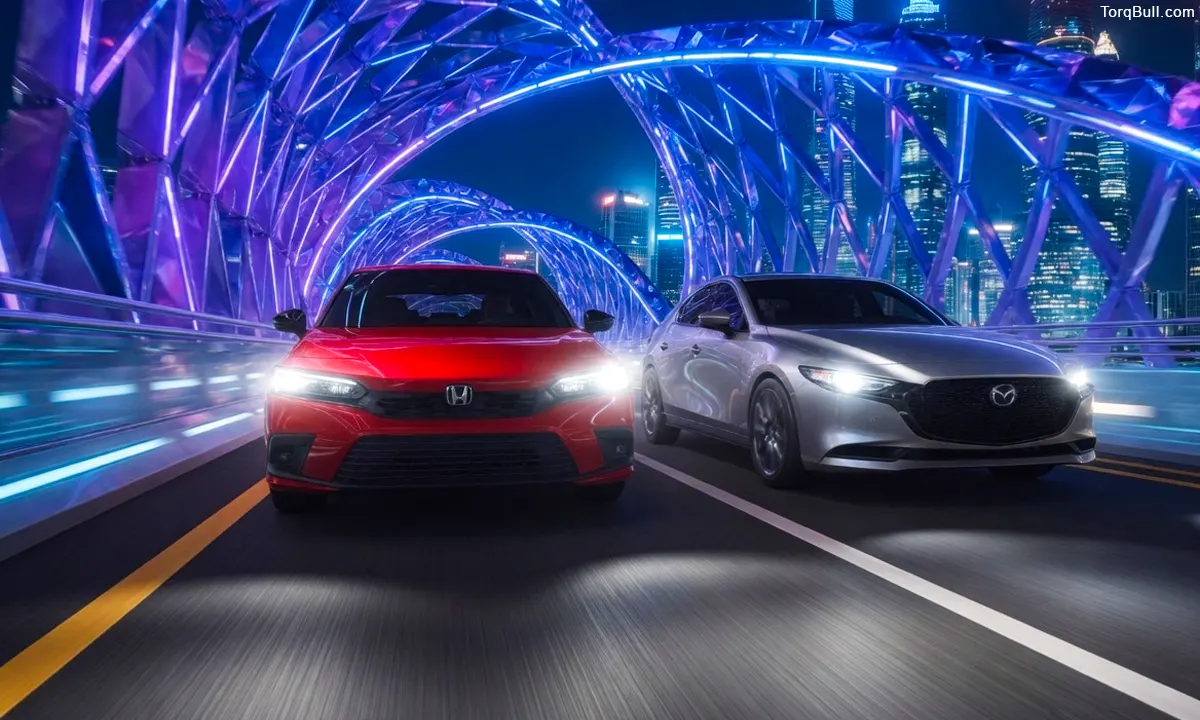
- 2026 Honda Civic leads in efficiency and reliability with a hybrid option (~49 MPG) and strong ownership ratings
- 2026 Mazda 3 stands out with premium interior quality, a 10.3-inch display, and a 250 hp turbo AWD option
- Verdict: Civic is the smarter, efficient daily driver, while Mazda 3 appeals to buyers seeking performance and upscale feel
Honda Civic vs Mazda 3 Comparison: The Honda Civic and Mazda 3 represent the two most philosophically distinct approaches to the compact sedan and hatchback category — two Japanese vehicles at nearly identical starting prices that prioritise entirely different ownership values. The Civic is the efficiency, reliability and interior space argument: better fuel economy at every configuration, higher reliability ratings, more rear-seat legroom, a larger cargo area and a touchscreen interface that most drivers find immediately intuitive. The Mazda 3 is the refinement, driving dynamics and premium interior argument: more precise steering, a more engaging chassis, interior materials that feel more expensive than the price suggests and a Bose premium audio option that belongs in a vehicle costing significantly more. Understanding which philosophy matches any specific buyer’s daily ownership experience is more useful than comparing specification sheets alone. This guide provides both.
Price and Trim Structure: Nearly Identical Entry, Wide Range Above
The price comparison between the 2026 Civic and Mazda 3 is one of the closest in the compact segment — separated by just $45 at the base level.
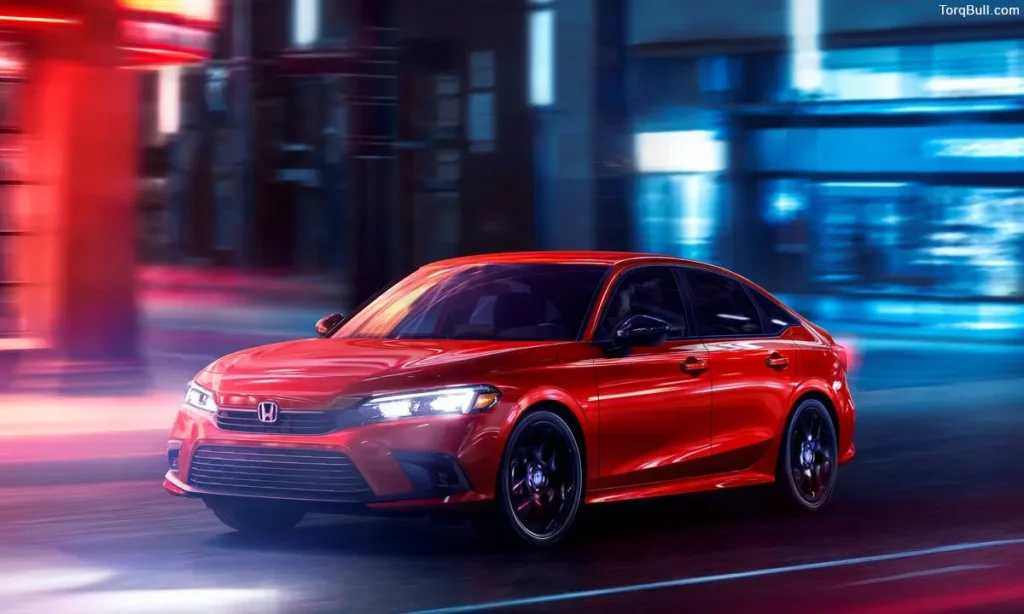
The 2026 Honda Civic sedan starts at $24,595 for the LX trim, with the lineup extending through Sport, Sport Hybrid, EX and Sport Touring Hybrid. The Sport Touring Hybrid reaches approximately $32,295 — the top of the mainstream Civic sedan range before the Si and Type R performance variants. The 2026 Mazda 3 sedan base model — the 2.5 S — starts at $24,550, with the lineup extending through Select Sport, Premium, Turbo Premium and Turbo Premium Plus reaching approximately $36,740 for the most expensive sedan configuration. The Mazda 3’s price ceiling is meaningfully higher than the Civic’s mainstream sedan range, and the turbocharged top-trim Mazda 3 with AWD at this price competes with entry luxury sedans rather than the Civic’s family-commuter positioning.
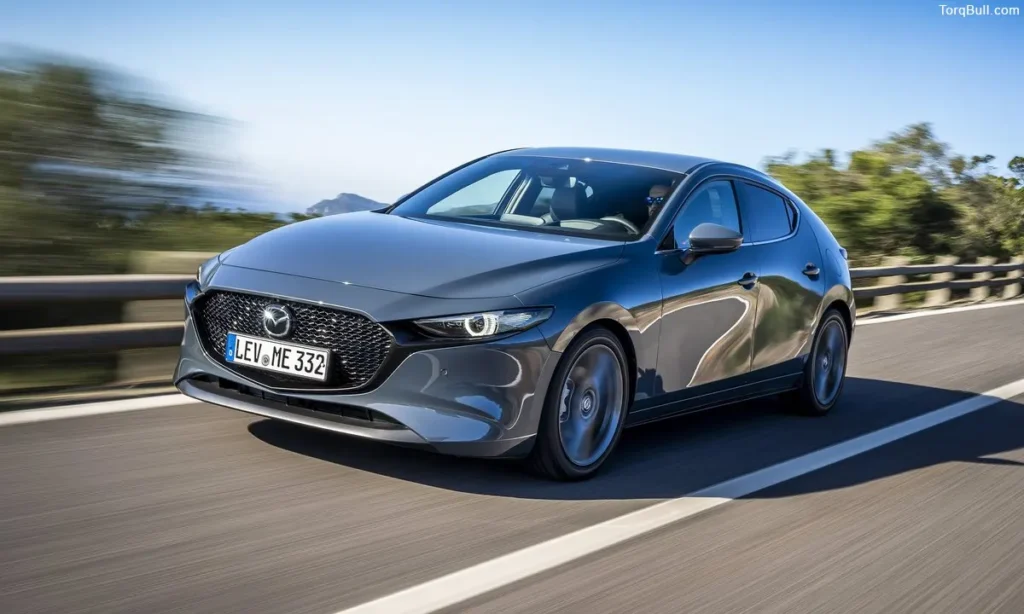
For hatchback buyers specifically, Autoblog’s 2026 head-to-head identifies approximately $2,200 difference between base hatchback configurations — the Civic Hatchback Sport at a lower entry point than the Mazda 3 Hatchback. Mazda offers six hatchback trim levels compared to the Civic’s three, providing more configuration granularity for buyers who want specific feature combinations.
Read: Honda Civic vs Hyundai Elantra: Which Compact Sedan Is Actually Better in 2026?
Engine and Performance: Mazda Wins Engagement, Honda Wins Efficiency
The engine and performance comparison between these vehicles is the one that most clearly reveals their opposing design priorities — because both are optimised for entirely different outcomes with their powertrain configurations.
The 2026 Honda Civic’s base 2.0-litre naturally aspirated engine produces 150 horsepower — adequate for daily commuting but not seeking performance leadership. The real performance story for the Civic is its hybrid system: the Sport Hybrid and Sport Touring Hybrid produce 200 combined horsepower while achieving EPA-estimated 49 MPG combined — the highest fuel economy in the compact segment without entering plug-in hybrid territory. For buyers whose primary powertrain criterion is fuel economy, the Civic Hybrid represents an achievement that the Mazda 3 cannot approach. The standard Civic LX achieves 32 MPG city, 41 MPG highway and 36 MPG combined — leading the non-hybrid class.
The 2026 Mazda 3 base engine is a 2.5-litre naturally aspirated four-cylinder producing 186 horsepower — 36 more horsepower than the Civic base at a comparable price point, and an engine that delivers a more engaging character even in everyday driving. The turbocharged Mazda 3 Turbo produces 250 horsepower and 320 pound-feet of torque, available with all-wheel drive — a configuration the Civic offers in no form. The Mazda 3 Turbo AWD sedan reaches 60 MPH in 5.6 seconds — compared to approximately 6.2 seconds for the Civic Hybrid. For buyers who value driving engagement as a daily experience, the Mazda 3’s engine and chassis tune is the more involving choice by a meaningful margin. The trade-off is fuel economy: the Mazda 3’s FWD sedan achieves 27 city and 36 highway MPG, trailing the base Civic by approximately 5 MPG in both environments.
Interior Quality and Space: Civic Wins Space, Mazda Wins Refinement
Interior comparisons between the Civic and Mazda 3 consistently produce a split verdict that reflects each manufacturer’s priorities — the Civic offering more space, the Mazda 3 offering more perceived quality.
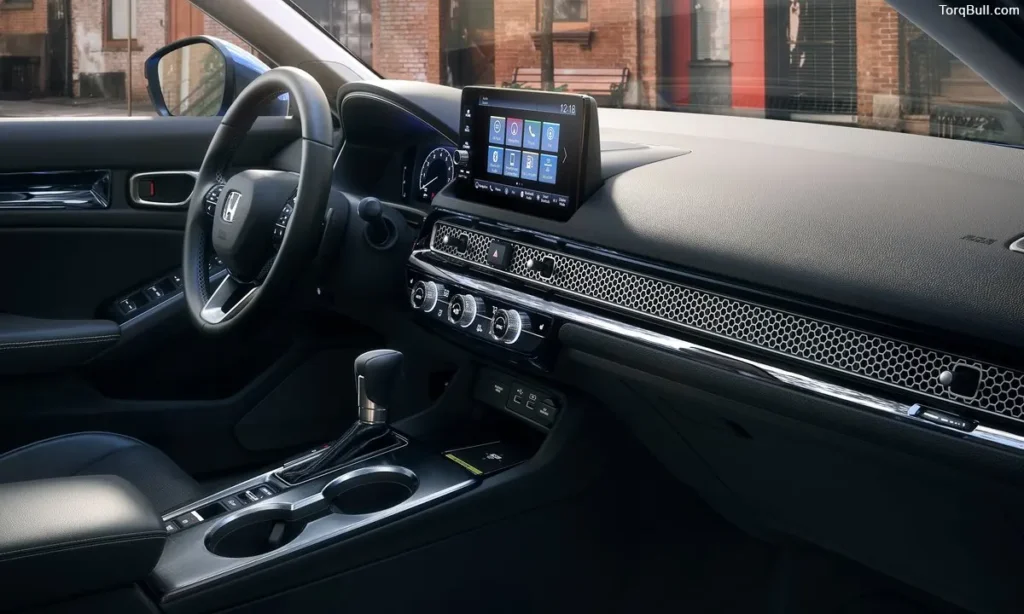
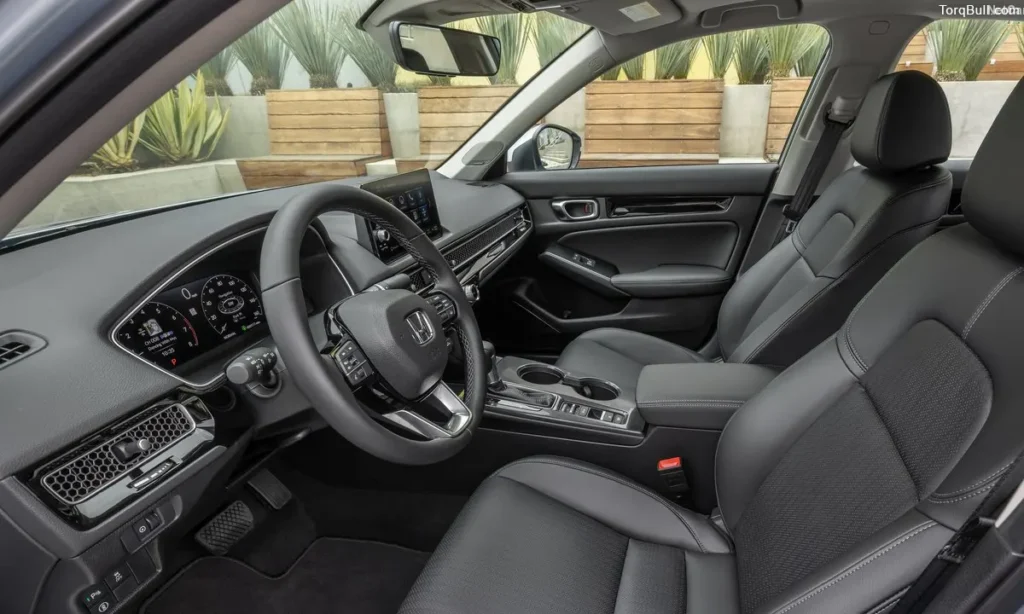
The Honda Civic’s interior provides more rear-seat legroom than the Mazda 3 — a direct function of the Civic’s slightly longer wheelbase and longer overall body length. The Civic sedan carries 14.8 cubic feet of cargo — compared to the Mazda 3 sedan’s 13.2 cubic feet. In hatchback form, the Civic provides meaningfully more passenger and cargo volume than the Mazda 3 Hatchback’s 20.1 cubic feet. For families, carpoolers and buyers who regularly transport rear-seat passengers, the Civic’s space advantage is a daily functional benefit.
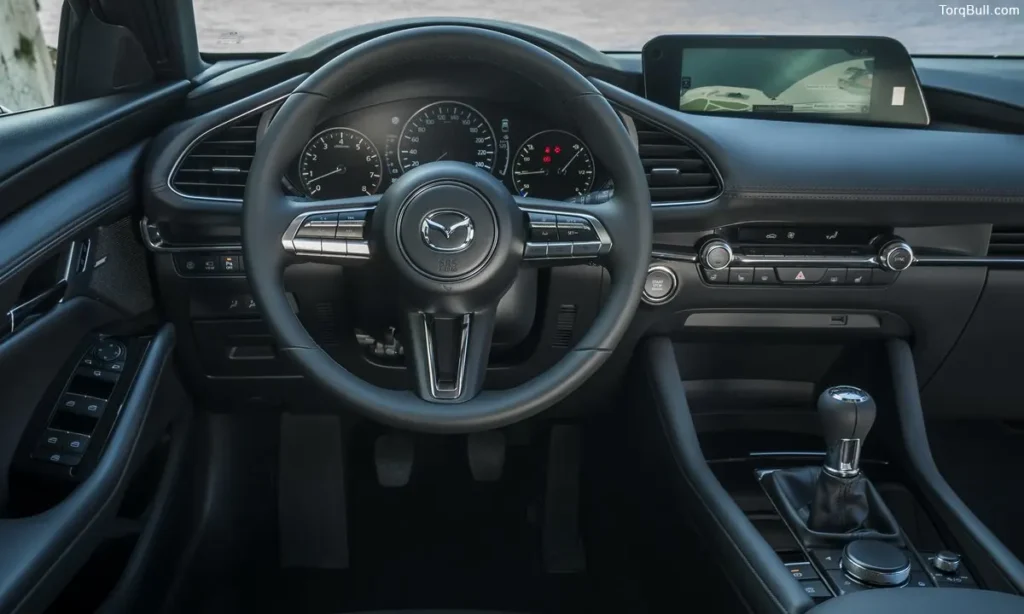
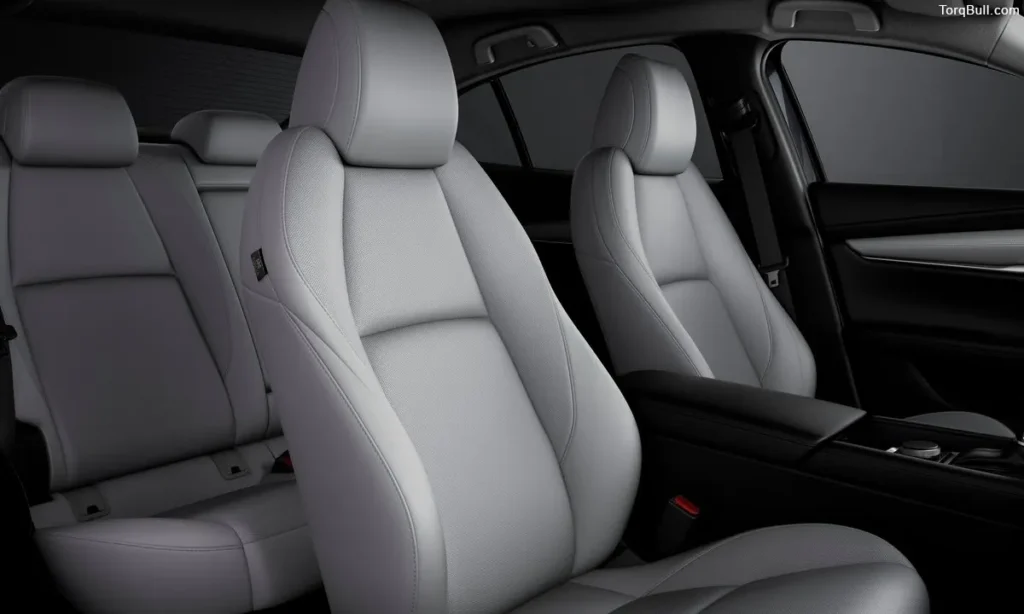
The Mazda 3’s interior quality impresses most reviewers in a category where the vehicle’s price does not prepare buyers for what they find. Multiple professional comparisons describe the Mazda 3’s cabin as feeling like a vehicle from a higher price class — with softer materials in more prominent positions, more sophisticated ambient design and a level of interior craftsmanship that reflects Mazda’s consistent aspiration to position its vehicles above the mainstream compact category. The Civic’s interior is comfortable and well-organised, but its materials — particularly in lower trims — are more straightforwardly functional than the Mazda 3’s more premium approach.
Read: Is the Honda Civic Good for Long-Term Ownership? What It Costs and What The Risks Are In 2026
Technology and Infotainment: Two Different Philosophies
Technology is the category where these vehicles most clearly illustrate their philosophical differences — and where buyer preference rather than objective scoring should determine the decision.
The 2026 Honda Civic provides a 7-inch touchscreen on base trims and a 9-inch unit on upper trims with wireless Apple CarPlay and Android Auto, a digital instrument cluster and Google built-in services integration. The interface is described across multiple reviews as immediately intuitive — familiar touchscreen operation that requires no adaptation period and that most buyers find natural from the first interaction. Honda Sensing safety technology — adaptive cruise control, lane keeping assist, automatic emergency braking and traffic sign recognition — is standard on every Civic trim, including the base LX.
The 2026 Mazda 3 counters with a 10.3-inch centre display that is slightly recessed to minimise glare — a thoughtful ergonomic detail. The interface is primarily controlled through Mazda’s rotary dial rather than direct touch input — a design decision that Mazda specifically chose to reduce touchscreen interaction while driving. Multiple reviews describe the Mazda 3’s infotainment as feeling like a luxury European vehicle — the rotary controller and recessed display create a more deliberate, driver-focused interaction model. An available Bose 12-speaker premium audio system is offered on upper Mazda 3 trims — an audio package that stands well above the class standard. The Mazda i-Activsense safety suite provides comparable coverage to Honda Sensing, with advanced lighting and traffic jam assist available on upper trims.
Honda Civic vs Mazda 3: Complete Features Comparison Chart
| Feature | Honda Civic (2026) | Mazda 3 (2026) | Winner |
| Starting Price (sedan) | $24,595 | $24,550 | Mazda 3 (barely) |
| Base Engine | 2.0L NA, 150 hp | 2.5L NA, 186 hp | Mazda 3 |
| Turbo Option | No (Si has turbo at higher price) | Yes (250 hp, available AWD) | Mazda 3 |
| Hybrid Option | Yes (49 MPG combined) | No | Civic |
| AWD Available | No | Yes (turbo trims) | Mazda 3 |
| Base Fuel Economy | 32/41/36 MPG | 27/36/30 MPG | Civic |
| 0-60 MPH (base/fast) | ~8.0 sec / ~6.2 sec (Hybrid) | ~7.5 sec / ~5.6 sec (Turbo AWD) | Mazda 3 |
| Rear Legroom (sedan) | More | Less | Civic |
| Cargo Space (sedan) | 14.8 cu ft | 13.2 cu ft | Civic |
| Infotainment Screen | 7-inch (9-inch upgrade) | 10.3-inch recessed | Mazda 3 |
| Interface Style | Touchscreen | Rotary dial primary | Depends on preference |
| Wireless CarPlay/Android Auto | Standard (upper trims) | Standard | Tie |
| Premium Audio | Not available | Bose 12-speaker (upper trims) | Mazda 3 |
| Standard Safety Suite | Honda Sensing (all trims) | i-Activsense (all trims) | Tie |
| IIHS Safety Rating | Top Safety Pick (sedan) / TSP+ (hatch) | Top Safety Pick+ (both bodies) | Mazda 3 |
| RepairPal Reliability | 4.5/5, 3rd of 36 compact cars | 4.0/5, 9th of 36 compact cars | Civic |
| Annual Repair Cost | ~$368 | ~$433 | Civic |
| Interior Material Quality | Good | Very Good | Mazda 3 |
Safety: Both Excel, Mazda 3 Earns the Higher Rating
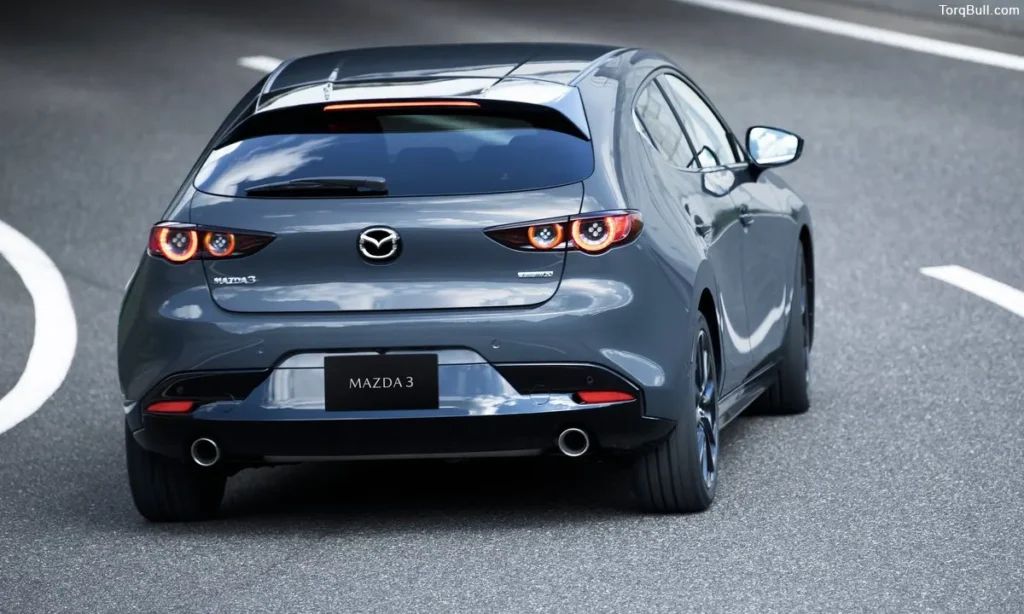
Both vehicles carry strong safety credentials, but the Mazda 3 edges out the Civic in formal IIHS testing. The 2025 Mazda 3 Hatchback and sedan both earned IIHS Top Safety Pick+ designation — the Institute’s highest honour — alongside five-star NHTSA overall ratings. The 2025 Honda Civic Hatchback also earned IIHS Top Safety Pick+, while the sedan earned the slightly lower Top Safety Pick designation.
Both vehicles provide comprehensive standard safety suites — Honda Sensing and Mazda i-Activsense respectively — that include automatic emergency braking, adaptive cruise control and lane-keeping assistance on every trim. The Civic’s advantage is that Honda Sensing is standard even on the entry-level LX, while the Mazda 3’s most advanced safety features require upper-trim selection. For budget-conscious safety-prioritised buyers, the Civic’s standard Honda Sensing at base trim pricing represents an important value advantage.
Reliability: Civic’s Most Consistent Competitive Advantage
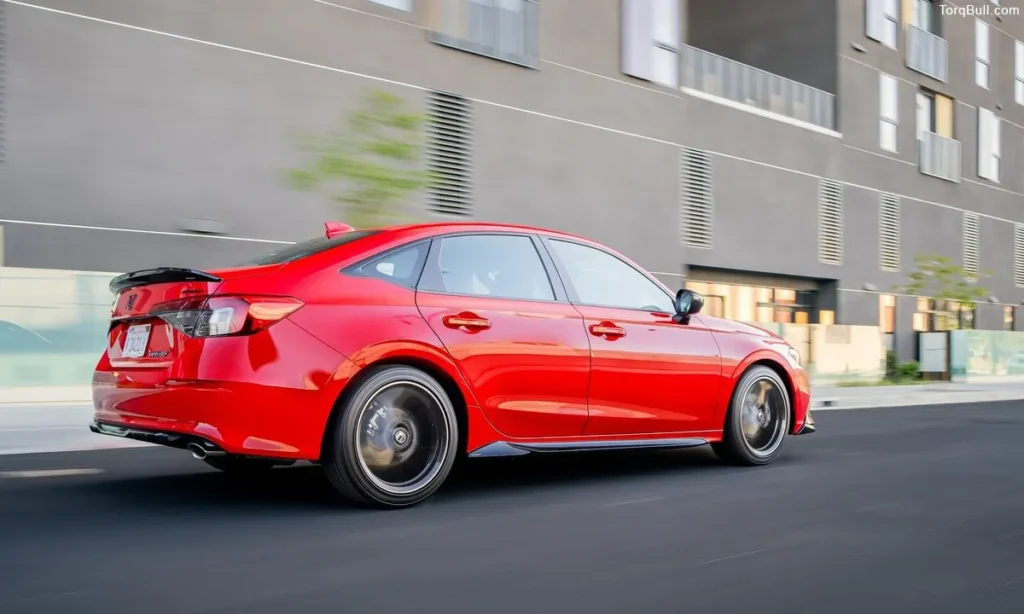
RepairPal’s reliability comparison between these vehicles is unambiguous and meaningful for buyers planning multi-year ownership. The Honda Civic earns a 4.5 out of 5 rating and ranks third out of 36 compact cars with an average annual repair cost of approximately $368. The Mazda 3 earns a 4.0 out of 5 rating and ranks ninth out of 36 compact cars with an average annual repair cost of approximately $433.
The Civic’s lower annual repair cost — approximately $65 less per year — is modest in isolation but accumulates to approximately $325 over five years. More significantly, the Civic’s higher reliability ranking reflects a longer track record of consistent durability that provides stronger statistical confidence for buyers planning seven to ten-year ownership.
The Honest Verdict: Which Buyer Should Choose Which Car
The Honda Civic is the right choice for buyers who prioritise maximum fuel economy — particularly the Hybrid’s 49 MPG — higher reliability ratings, more interior space for rear passengers and cargo and the most immediately intuitive technology interface. It is the definitive choice for practical commuters, high-mileage drivers and buyers for whom long-term dependability is the primary purchase criterion.
The Mazda 3 is the right choice for buyers who value a more premium interior experience relative to the price paid, a more engaging and precise driving character especially with the turbo and AWD, a larger infotainment display with an aesthetically distinctive interface and the available Bose audio system that elevates the in-cabin experience well above the compact segment norm. It is the definitive choice for buyers who view the driving experience itself as central to their ownership satisfaction — buyers who want to feel connected to the vehicle rather than simply transported by it.
Both are genuinely excellent compact cars in 2026. The decision between them is not about which is better — it is about which philosophy better matches the specific buyer’s daily life.