- The Toyota Corolla starts at $23,195 with 169 hp, available AWD, up to 53 city MPG in hybrid form, and standard Toyota Safety Sense 3.0.
- The Hyundai Elantra starts at $23,870 with 147 hp, an available 10.3-inch display, 99.4 cubic feet of passenger space, and a 10-year powertrain warranty.
- Expert says both sedans are affordable, well-equipped, fuel-efficient, and strongly rated for safety, but each targets buyers with different priorities.
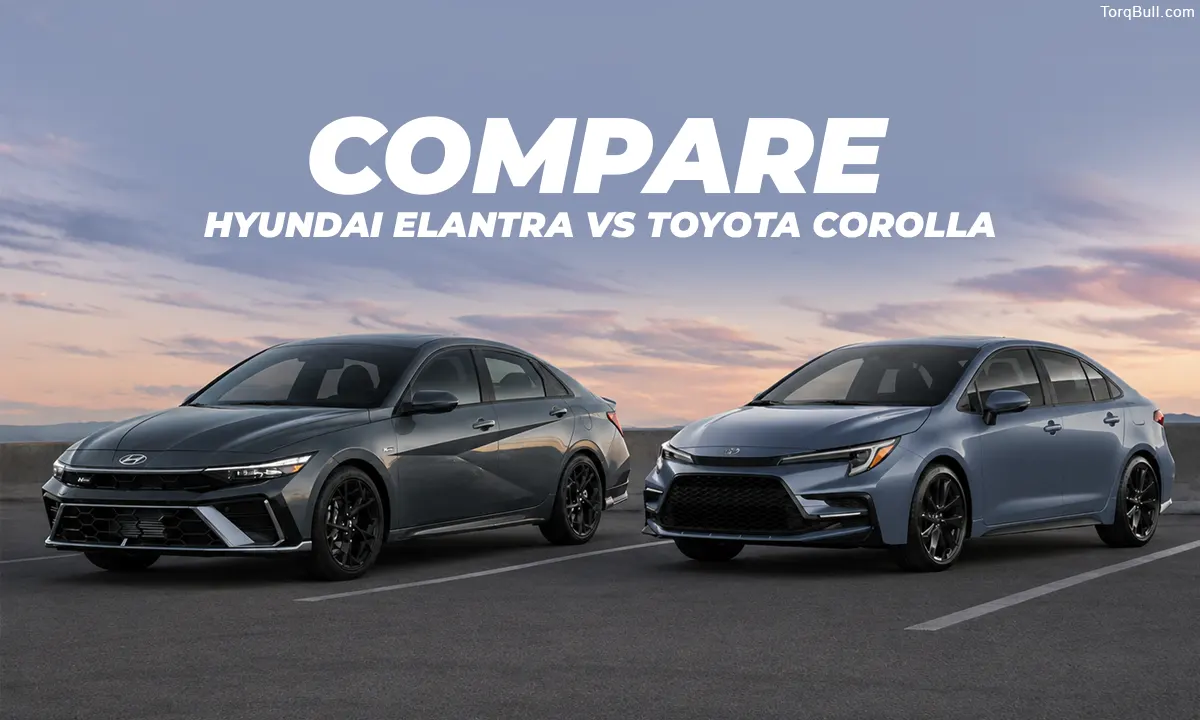
The Hyundai Elantra and Toyota Corolla are the two most closely contested compact sedans in the American market — rivals who compete for the same buyer with nearly identical starting prices, comparable safety ratings and broadly similar feature content, yet whose differences in powertrain philosophy, interior space, warranty coverage and technology packaging create a meaningful decision framework for buyers who engage with the specifics rather than the headlines. Autoblog’s 2026 head-to-head characterises both accurately: both models are affordable, well-equipped and emphasise safety with advanced standard features. The choice between them is not a choice between a good car and a better car — it is a choice between two specifically different expressions of what a well-engineered compact sedan should prioritise, and the buyer who understands those differences makes a better purchase.
Price: An $675 Gap That Reverses at Upper Trims
The 2026 pricing comparison begins with a modest initial advantage for the Corolla. The 2026 Toyota Corolla starts at $23,195 — approximately $675 less than the Hyundai Elantra’s $23,870 base. This entry-level gap is genuinely small and frequently overcome by incentives and dealer pricing in actual transactions — TrueCar confirms the Elantra as the less expensive vehicle at $23,870 against the similarly equipped Corolla’s $24,320, suggesting real transaction prices may further complicate the headline comparison.
The price relationship evolves as both lineups are equipped upward. Both vehicles cover similar price ranges from their bases through their respective top conventional trims, with the Elantra’s N Line performance variant at approximately $28,000 and the Elantra N at approximately $34,000 creating specific price points that the Corolla’s standard lineup cannot match. The Corolla’s GR Corolla — its dedicated performance hatchback — starts well above $30,000 and competes in a different market context from the Elantra N Line’s mainstream sporty sedan positioning.
Read: Hyundai Elantra Pros and Cons In 2026: 37% Real Owner Saying About Their Daily Frustrations
Engine and Performance: Corolla Wins Base Horsepower, Elantra Wins Breadth
The base engine comparison between these two vehicles produces the single clearest objective advantage for the Corolla — an advantage that becomes more nuanced when the full powertrain lineups are considered.
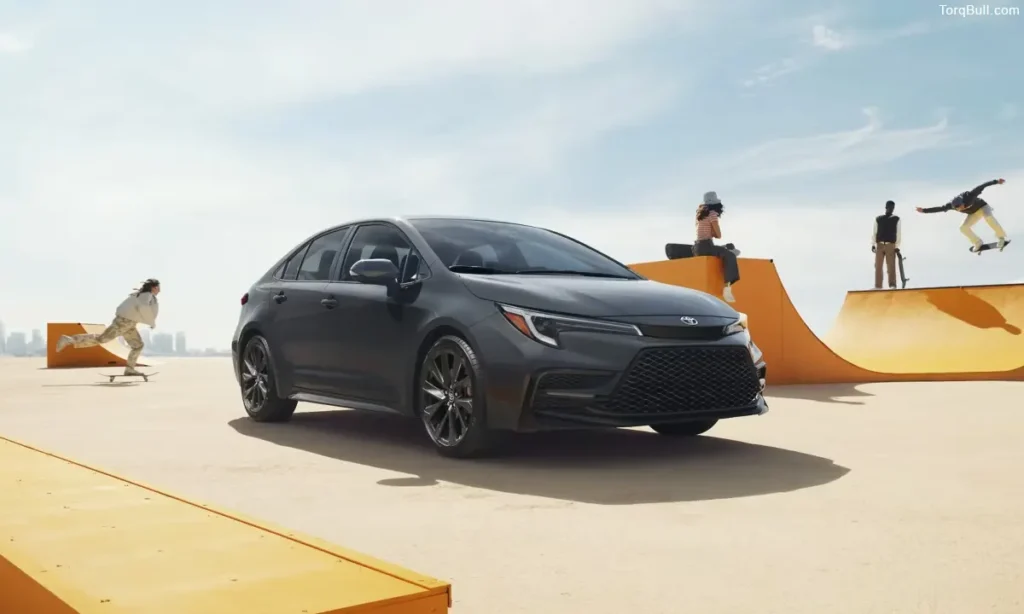
The 2026 Toyota Corolla’s base 2.0-litre four-cylinder produces 169 horsepower and 151 pound-feet of torque — 22 horsepower more than the Elantra’s base 2.0-litre naturally aspirated unit’s 147 horsepower and 132 pound-feet. Both produce comparable 0-60 MPH times of approximately 8.2 to 8.4 seconds in base configuration — the performance difference is not dramatic in daily use, but the Corolla’s greater displacement and output are observable in situations requiring quick acceleration. The Corolla also offers an available AWD system with its hybrid powertrain — a genuine competitive advantage the Elantra cannot match in any configuration, making the Corolla specifically preferable for buyers in northern states who require AWD traction.
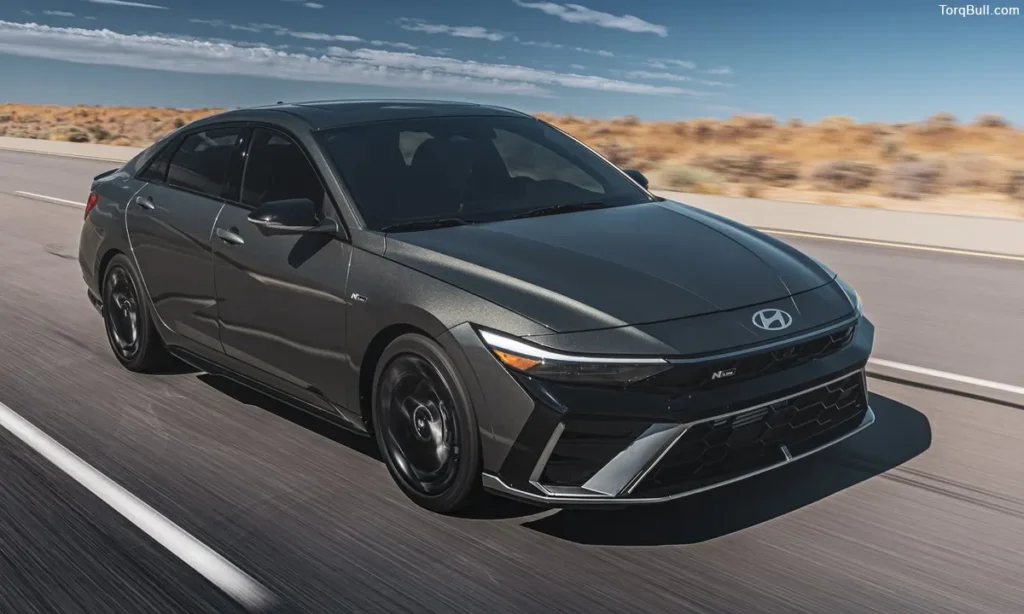
The Elantra’s powertrain advantage is breadth rather than base-level power. The 201-horsepower N Line turbocharged variant creates a performance tier that the standard Corolla cannot access — producing quicker 0-60 times near 6.5 to 7 seconds and a distinctly more engaging driving character than either vehicle’s naturally aspirated alternative. The full Elantra N’s 276 horsepower extends this advantage into sports car territory. For buyers whose selection criteria includes the option of genuine performance — rather than merely functional transportation — the Elantra’s powertrain menu provides choices the Corolla simply does not offer.
The Corolla Hybrid is the fuel economy champion in the base-engine comparison. It achieves 53 MPG city and 46 MPG highway — substantially better than the Elantra Hybrid’s competitive but less extreme figures. For high-mileage urban commuters whose primary criterion is gasoline cost minimisation, the Corolla Hybrid’s efficiency advantage is meaningful and persistent across the ownership period.
Interior Space: Elantra’s Clearest Win
Interior space is the category where the Elantra holds its most comprehensive and most consistent advantage — and where the Corolla is most clearly at a competitive disadvantage relative to the segment’s standard.
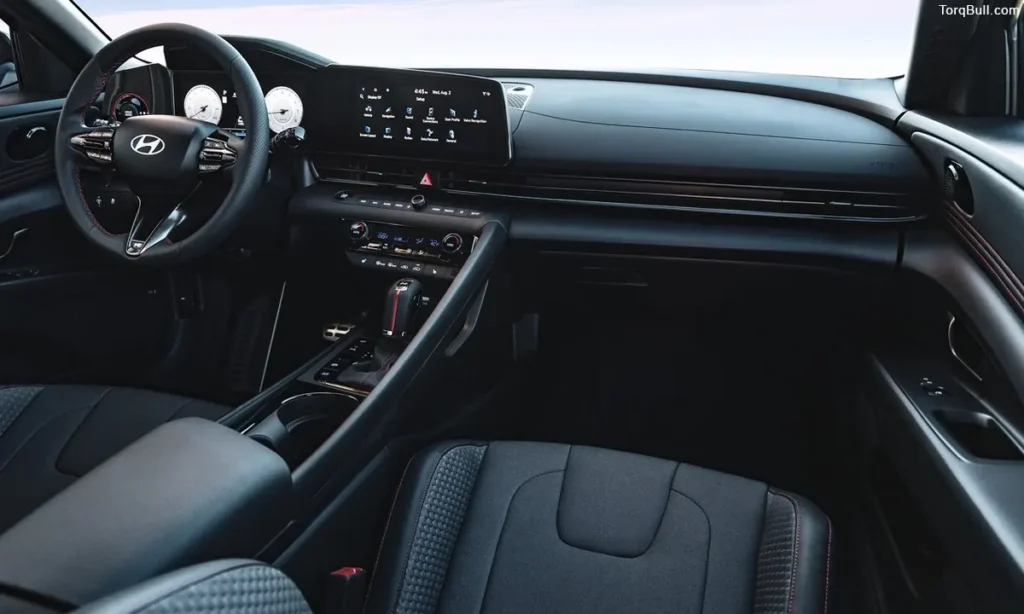
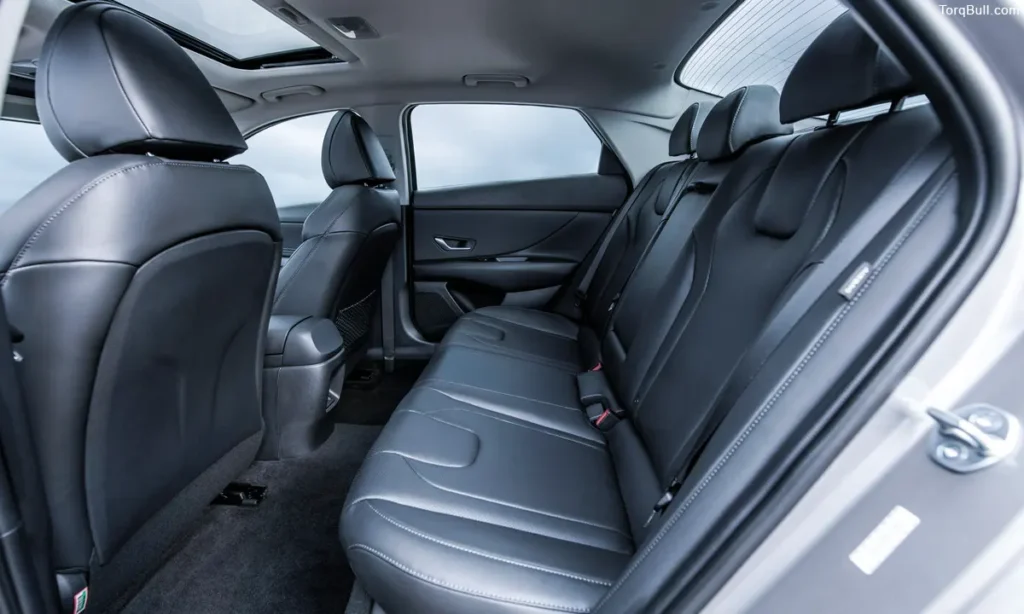
The Hyundai Elantra provides 99.4 cubic feet of total passenger volume. The Toyota Corolla provides 88.6 cubic feet — a difference of 10.8 cubic feet that is not a marginal specification gap but a meaningfully different interior experience. This difference is most acutely felt in rear-seat accommodation, where the Elantra provides 38 inches of rear legroom against the Corolla’s 34.8 inches — 3.2 additional inches that determine whether a six-foot adult in the rear seat is comfortable or cramped. For buyers who regularly carry adult rear passengers — on commutes, road trips or family travel — the Elantra’s interior advantage translates to genuine daily ownership comfort.
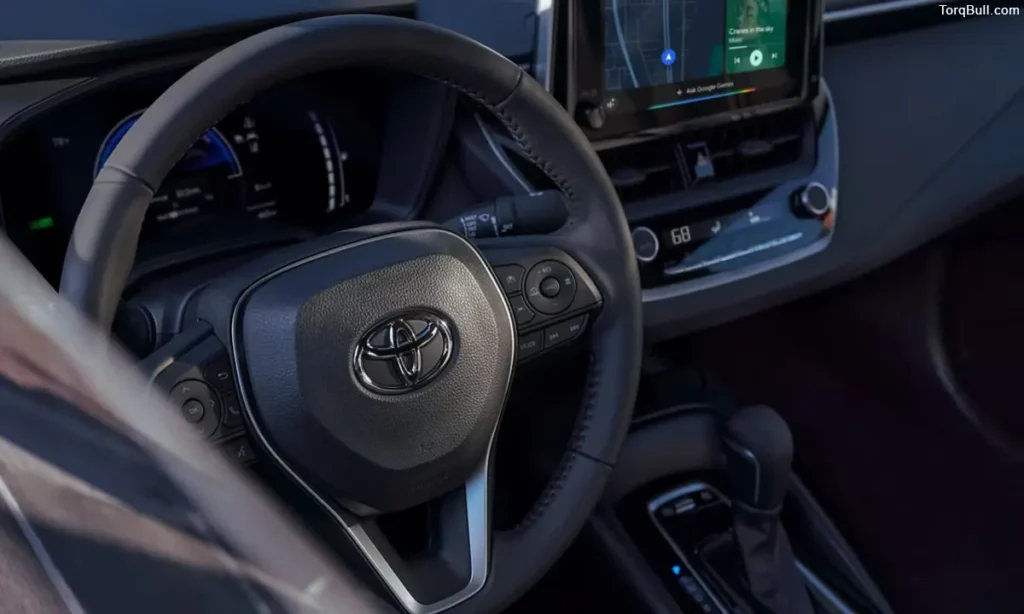
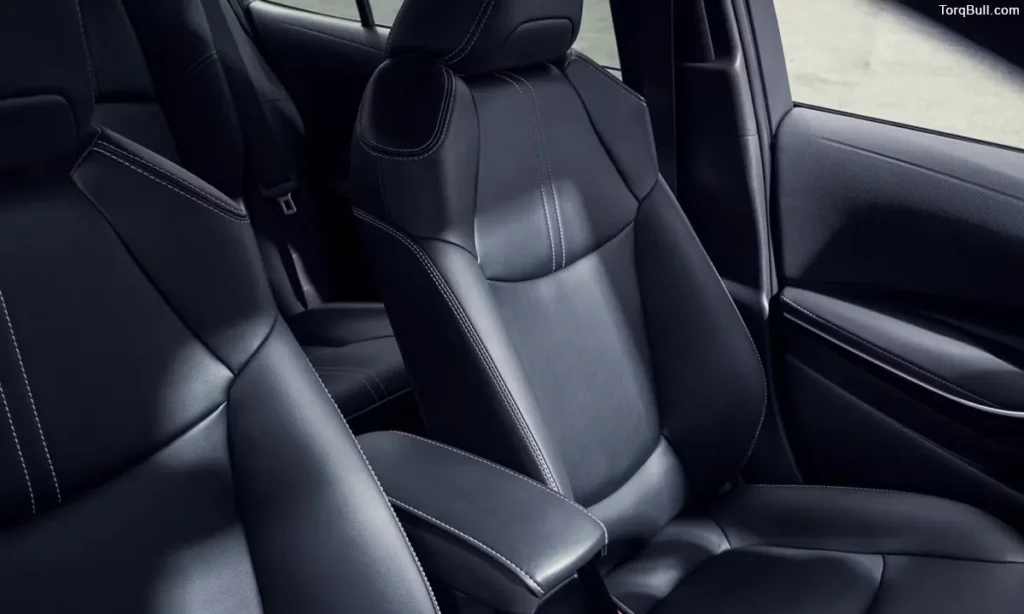
Cargo space follows the same pattern: the Elantra delivers 14.2 cubic feet of trunk volume against the Corolla’s 13.1 cubic feet — a smaller relative difference but consistent with the Elantra’s broader interior packaging advantage. The Elantra’s rear passenger volume advantage is particularly significant because the Corolla does not compensate for it with any specific interior quality or material advantage — the Corolla’s interior is described across multiple professional reviews as using fewer soft materials, with rear passenger space somewhat tighter.
Read: Honda Civic vs Hyundai Elantra: Which Compact Sedan Is Actually Better in 2026?
Fuel Economy: Near-Tie on Gas, Corolla Hybrid Wins on Electrification
The fuel economy comparison between these vehicles divides cleanly between the base gasoline engines — where the result is essentially equal — and the hybrid variants, where the Corolla’s more mature hybrid system produces a larger efficiency advantage.
TrueCar data confirms the non-hybrid base comparison: Toyota Corolla at 32 MPG city and 41 MPG highway versus the Hyundai Elantra at 31 MPG city and 40 MPG highway. This 1 MPG difference in each environment is negligible in annual fuel cost terms — at 15,000 annual miles and $3.08 per gallon, the difference between 35 MPG combined and 36 MPG combined is approximately $36 per year. Multiple sources confirm both vehicles as competitive on base fuel economy with essentially no meaningful real-world distinction.
The Corolla Hybrid’s 53 MPG city EPA rating produces a dramatically different fuel cost profile than any gasoline Elantra alternative — saving approximately $800 to $1,000 annually compared to a base gasoline Corolla at equivalent mileage, and more against less efficient gasoline alternatives. The Elantra Hybrid provides excellent efficiency of approximately 50 MPG combined but does not match the Corolla Hybrid’s city figure. For commuters who accumulate the majority of their mileage in urban stop-and-go driving, the Corolla Hybrid’s city efficiency advantage is its most financially significant competitive feature.
Technology: Elantra Leads on Screen Size and Standard Content
The technology comparison between these vehicles produces a consistent Elantra advantage at equivalent trim levels — particularly in standard screen size and the breadth of features included without requiring upper-trim selection.
The 2026 Elantra provides an 8-inch touchscreen on base trims and a 10.3-inch display on upper trims, with wireless Apple CarPlay and Android Auto. Autoblog’s 2026 comparison confirms the Elantra’s N Line and sport variants include a 10.3-inch screen as standard alongside additional performance-oriented digital displays. The available Bose 8-speaker audio system on the Limited trim adds genuine audio quality at a price point where competitors typically offer adequate but unremarkable standard speakers.
The 2026 Toyota Corolla provides a 7-inch touchscreen on base trims — updated for 2026 with a digital gauge display on lower trims — and a 12.3-inch screen on upper trims. Autoblog confirms that lower Corolla trims now get a seven-inch digital gauge display and that several advanced safety systems now come standard across the range — a meaningful 2026 update. Wireless connectivity is available but less standardised across lower trim levels than in the Elantra lineup.
Read: Hyundai Elantra IVT vs Manual Transmission Performance Comparison
Hyundai Elantra vs Toyota Corolla 2026: Complete Comparison Chart
| Category | Hyundai Elantra (2026) | Toyota Corolla (2026) | Winner |
| Starting Price | $23,870 | $23,195 | Corolla |
| Base Engine Power | 147 hp, 132 lb-ft | 169 hp, 151 lb-ft | Corolla |
| Performance Variants | N Line 201 hp; N 276 hp | GR Corolla (separate model) | Elantra (accessible range) |
| AWD Availability | No | Yes (Hybrid AWD) | Corolla |
| Base Fuel Economy | 31 city / 40 hwy | 32 city / 41 hwy | Corolla (1 MPG) |
| Hybrid Fuel Economy | ~50 MPG combined | 53 city / 46 hwy | Corolla |
| Total Passenger Volume | 99.4 cu ft | 88.6 cu ft | Elantra |
| Rear Legroom | 38.0 inches | 34.8 inches | Elantra |
| Cargo Space (trunk) | 14.2 cu ft | 13.1 cu ft | Elantra |
| Standard Screen (base) | 8-inch | 7-inch (2026 update) | Elantra |
| Available Screen (upper) | 10.3-inch | 12.3-inch | Corolla |
| Powertrain Warranty | 10 yr / 100,000 mi | 5 yr / 60,000 mi | Elantra |
| Basic Warranty | 5 yr / 60,000 mi | 3 yr / 36,000 mi | Elantra |
| Complimentary Maintenance | 3 yr / 36,000 mi | 2 yr / 25,000 mi | Elantra |
| NHTSA Safety Rating | 5-star overall | 5-star overall | Tie |
| Standard Safety Suite | Hyundai SmartSense | Toyota Safety Sense 3.0 | Tie |
| TrueCar Owner Rating | 4.82 / 5 | 4.73 / 5 | Elantra |
| Long-term Reliability | Good | Exceptional (decades of data) | Corolla |
| Resale Value | Average | Top of segment | Corolla |
Reliability and Warranty: Toyota Wins History, Hyundai Wins Coverage
Reliability is the category where the Toyota Corolla holds its most defensible and most historically validated competitive advantage — backed by the most extensive documented long-term reliability dataset of any compact car in American automotive history, including Consumer Reports multi-decade scoring and RepairPal rankings that consistently place the Corolla at or near the segment’s top for durability.
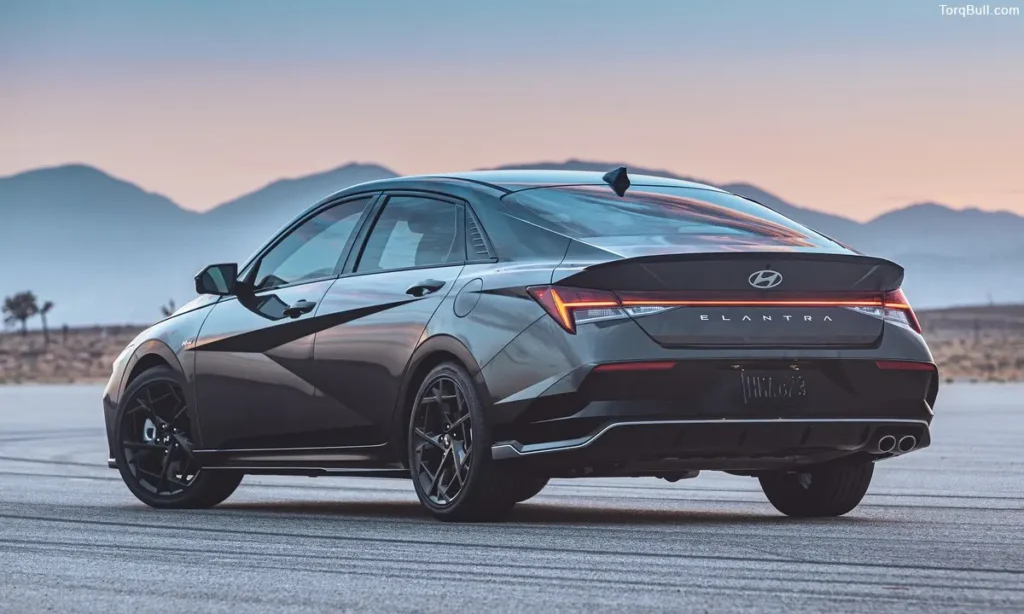
The Hyundai Elantra’s approach to this competitive gap is notable: rather than competing on established reliability track record — where the Corolla’s 50 million-unit global production history provides decades of real-world durability data — Hyundai offers the industry’s most generous warranty coverage as a financial substitute for that track record. The 10-year, 100,000-mile powertrain warranty and 5-year, 60,000-mile basic warranty — compared to the Corolla’s 5-year, 60,000-mile powertrain and 3-year, 36,000-mile basic coverage — provide measurably greater financial protection for any specific powertrain failure within the warranty period, regardless of which vehicle is actually more likely to require that claim.
The resale value comparison follows the reliability verdict: the Toyota Corolla consistently retains more of its original value after five years than the Hyundai Elantra, reflecting sustained used-market demand driven by the brand’s documented long-term durability reputation. For buyers who plan to sell within five years, the Corolla’s resale advantage represents a real financial return that partially offsets its lack of Hyundai’s warranty superiority.
The Honest Verdict: Who Should Buy Which Vehicle
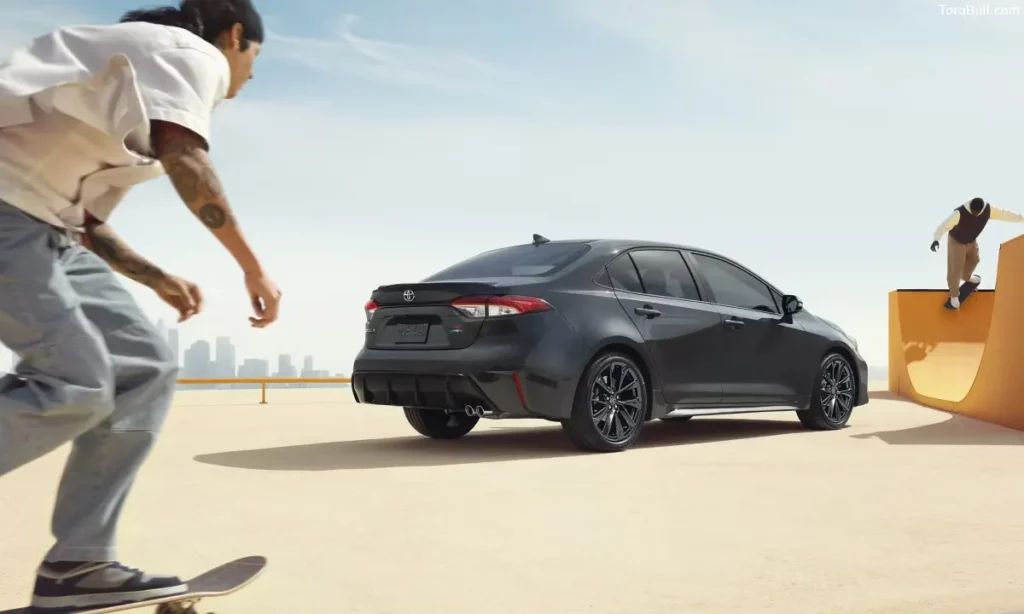
The Toyota Corolla is the better choice for buyers who prioritise the segment’s most proven reliability track record, the most efficient hybrid in the compact segment at 53 MPG city, available AWD for winter traction and the superior resale value that Toyota’s brand and durability reputation consistently deliver. For high-mileage urban commuters who want the lowest possible fuel cost from a non-plug-in vehicle, the Corolla Hybrid is specifically and decisively the better choice in this comparison.
The Hyundai Elantra is the better choice for buyers who need more rear-seat space and passenger volume for adult rear passengers — the 10.8 cubic foot interior advantage and 3.2-inch rear legroom edge are daily functional differences rather than specification footnotes. It is also the better choice for buyers who want the security of Hyundai’s 10-year powertrain warranty, who value the technology content included at lower trim prices and who want access to genuine performance through the N Line or Elantra N without purchasing a separate performance hatchback. TrueCar’s 4.82 owner rating versus 4.73 for the Corolla reflects the Elantra’s stronger average owner satisfaction across its full production range.
Both vehicles are genuinely excellent compact sedans in 2026. The decision between them is not about quality — it is about which vehicle’s specific advantages align with the buyer’s specific daily life.