Small, Smart and Sensationally Affordable — The 2027 Renault Twingo E-Tech Is Urban Mobility Perfected
A 27.5 kWh LFP Battery, 163-Mile WLTP Range, V2L Bidirectional Charging, Sliding Rear Seats, Google-Powered OpenR Link Technology and Sub-£20,000 Pricing Make the Fourth-Generation Twingo E-Tech the Most Important and Most Accessible Electric City Car of Its Era
There are very few automobiles in the history of the European car market that carry the cultural weight, the generational affection and the design legacy of the original Renault Twingo. Launched in 1992 with a one-box silhouette that was unlike anything else on sale at the time, the first Twingo democratised clever, cheerful, space-efficient personal mobility for an entire continent of city dwellers who needed a small car that felt genuinely special rather than merely adequate. It was bold without being aggressive, practical without being utilitarian and affordable without feeling cheap — a combination that the automotive industry has always found remarkably difficult to achieve simultaneously and that Renault managed with an assurance and a confidence that made the original Twingo one of the most celebrated small car designs of the twentieth century. Thirty-three years after that original appeared on European roads, the fourth-generation Renault Twingo E-Tech arrives as an all-electric reimagining of that legacy — and it does so with the same spirit of democratic accessibility, the same cheerful design confidence and the same commitment to making genuinely good personal mobility available to the broadest possible range of buyers that made its ancestor so enduringly beloved.
Gallery: 2027 Renault Twingo E-Tech
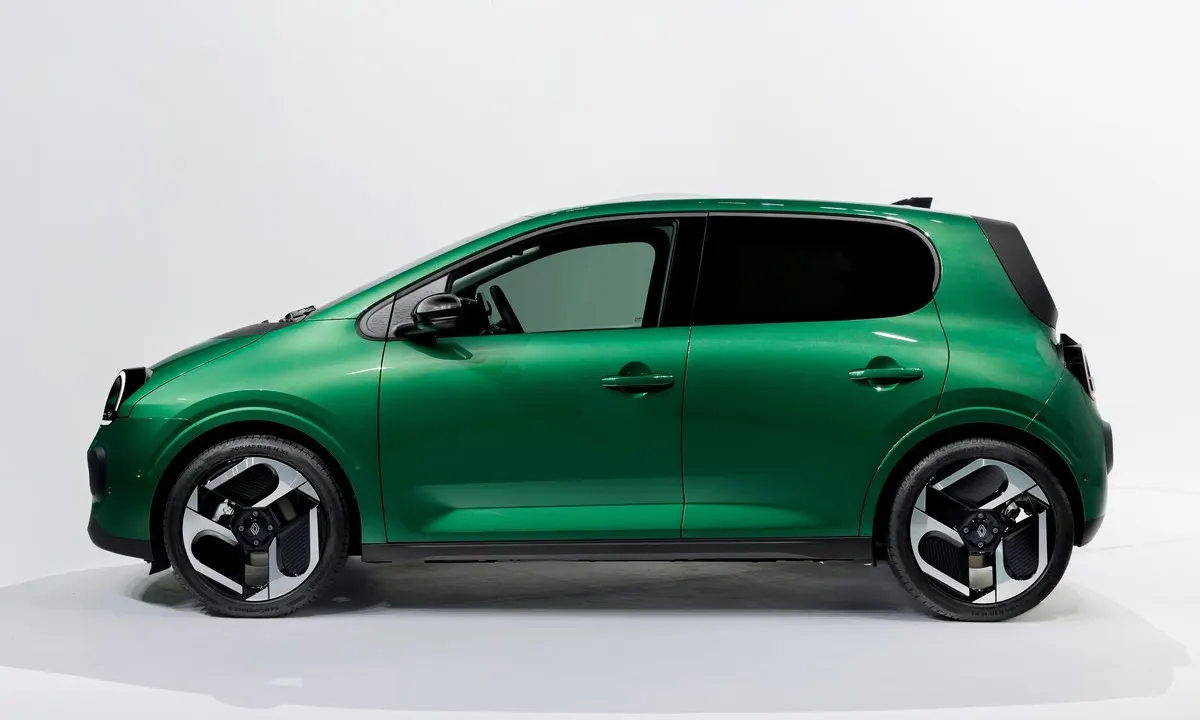
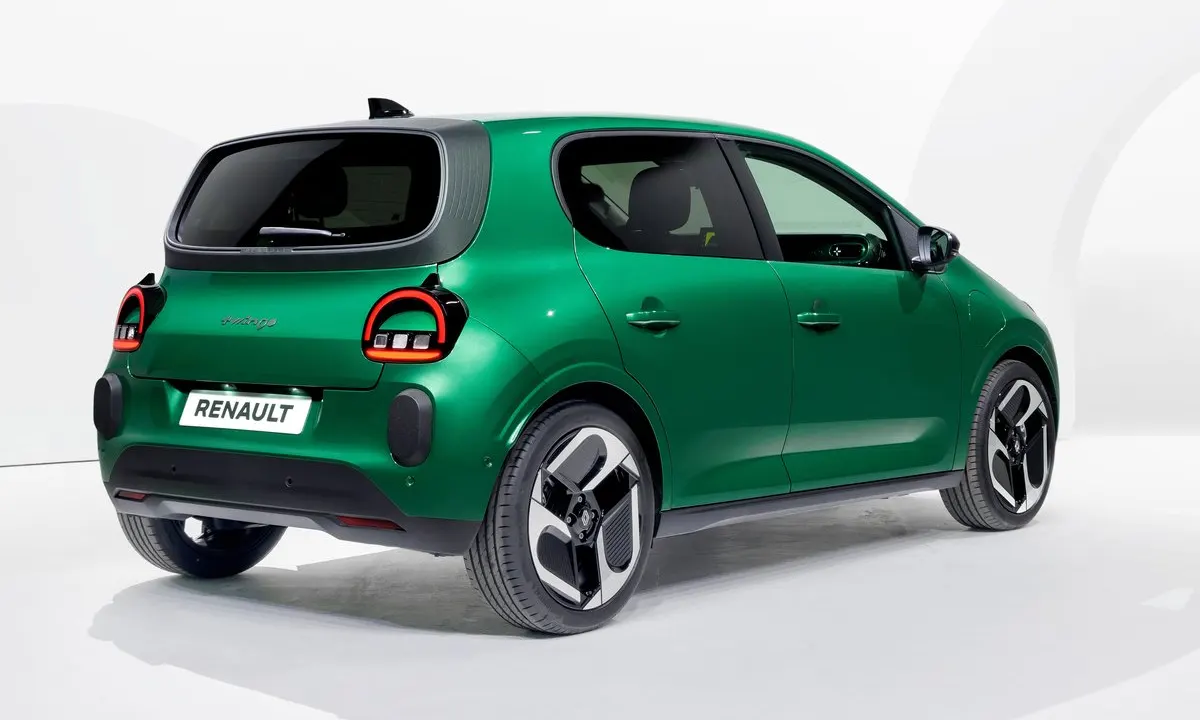
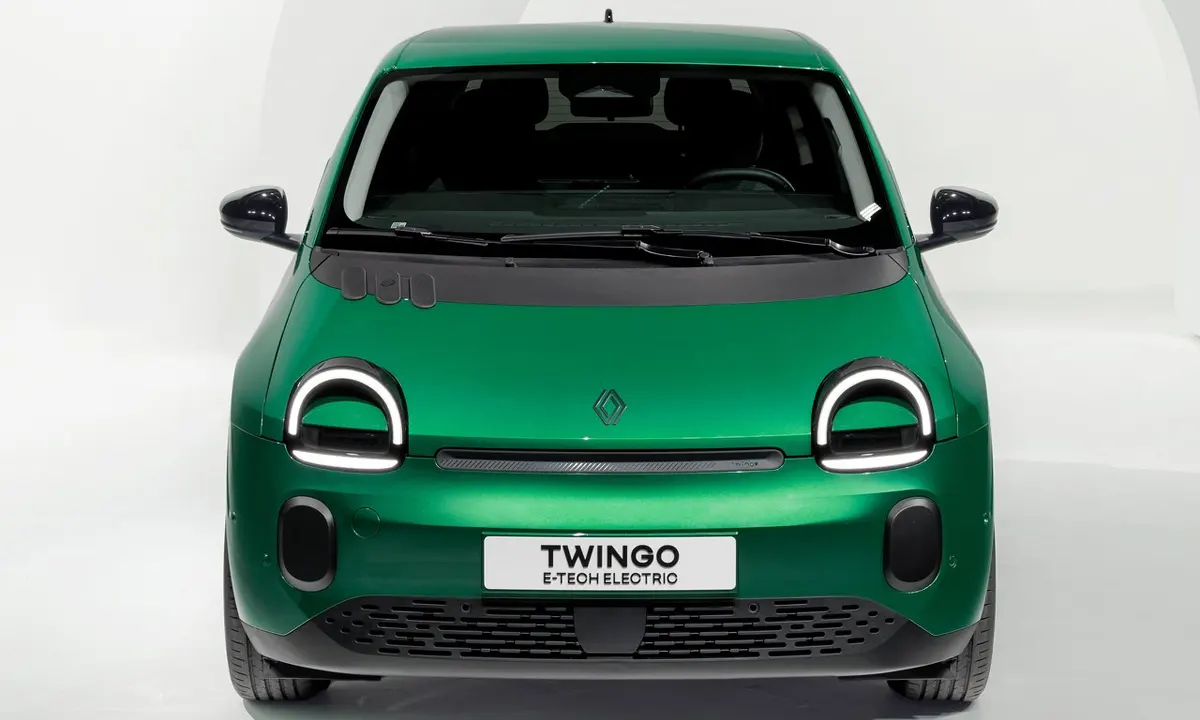
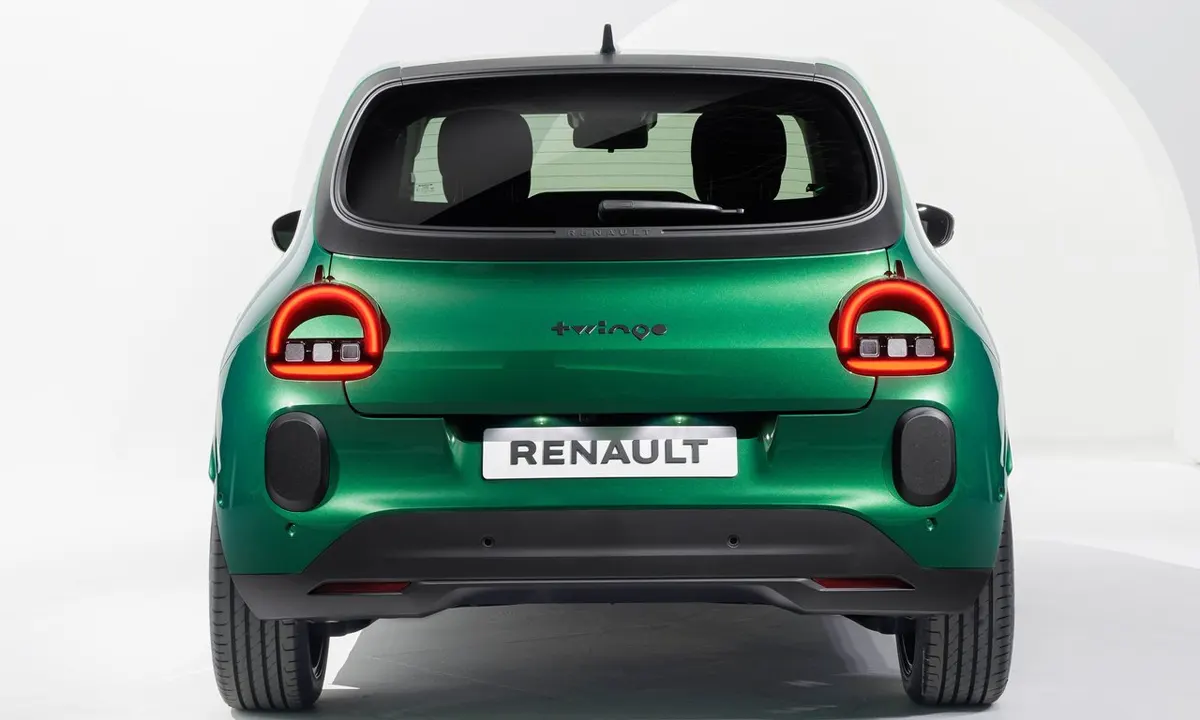
The 2027 Renault Twingo E-Tech is the third and most ambitious chapter in Renault’s ongoing reinvention of its classic nameplates as electric vehicles — following the Renault 5 E-Tech and the Renault 4 E-Tech with a model that is smaller, more affordable and more city-focused than either of its stablemates. Built on the AmpR Small dedicated electric platform, developed through Renault’s remarkable Leap 100 programme that compressed the entire process from project approval to production sign-off into just 100 weeks, and assembled at the Novo Mesto factory in Slovenia, the Twingo E-Tech arrives with a starting price below €19,500 in European markets and below £20,000 in the United Kingdom — a pricing achievement that positions it as the most affordable genuinely capable electric city car available from a mainstream European manufacturer and one that qualifies for government purchase incentives in multiple markets, bringing its effective price to an even more accessible level for qualifying buyers. This is a car conceived with a single and entirely admirable ambition — to make electric driving affordable, practical and genuinely enjoyable for the urban majority who have so far found the electric vehicle transition financially out of reach.
A Design That Honours Its Heritage With Intelligence and Charm
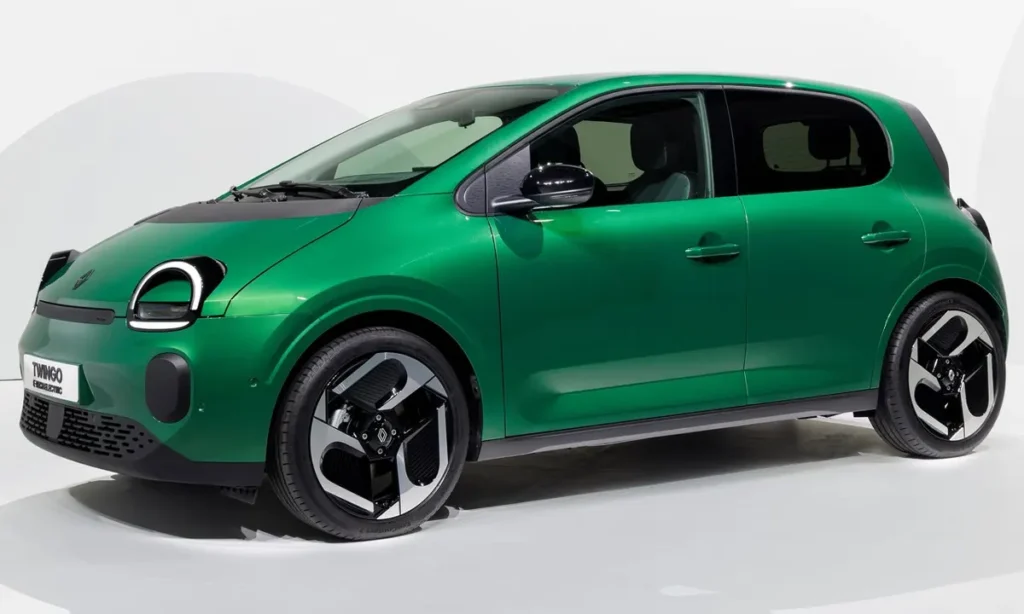
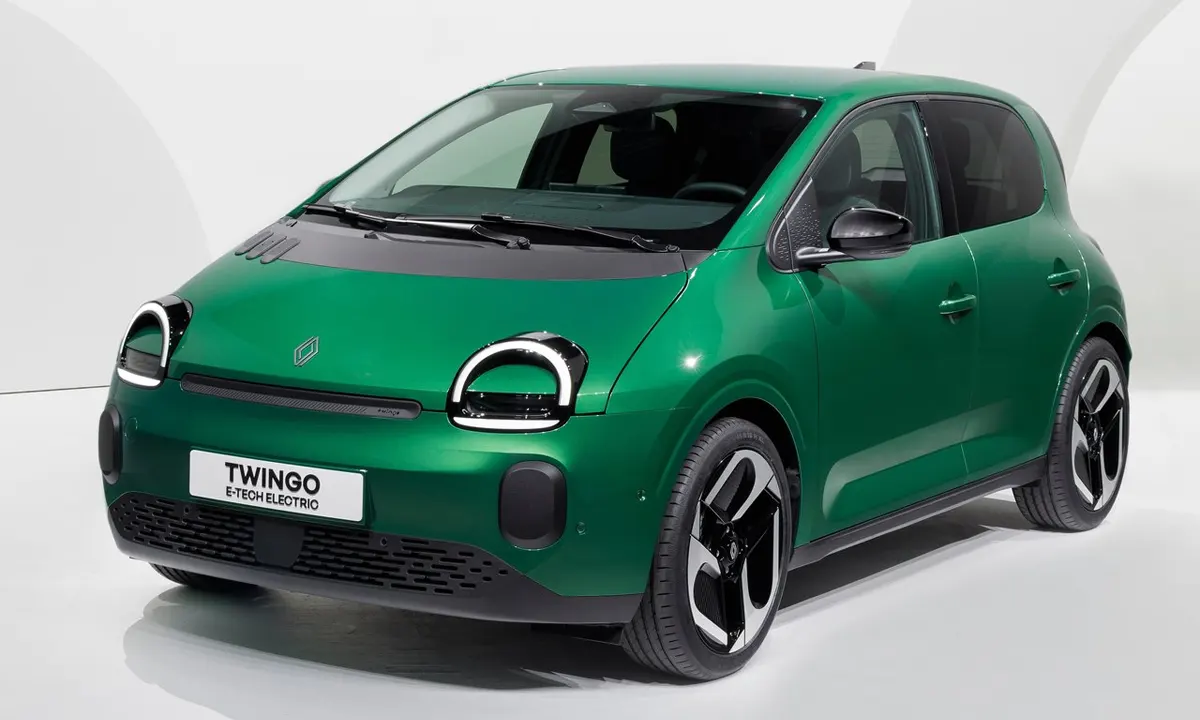
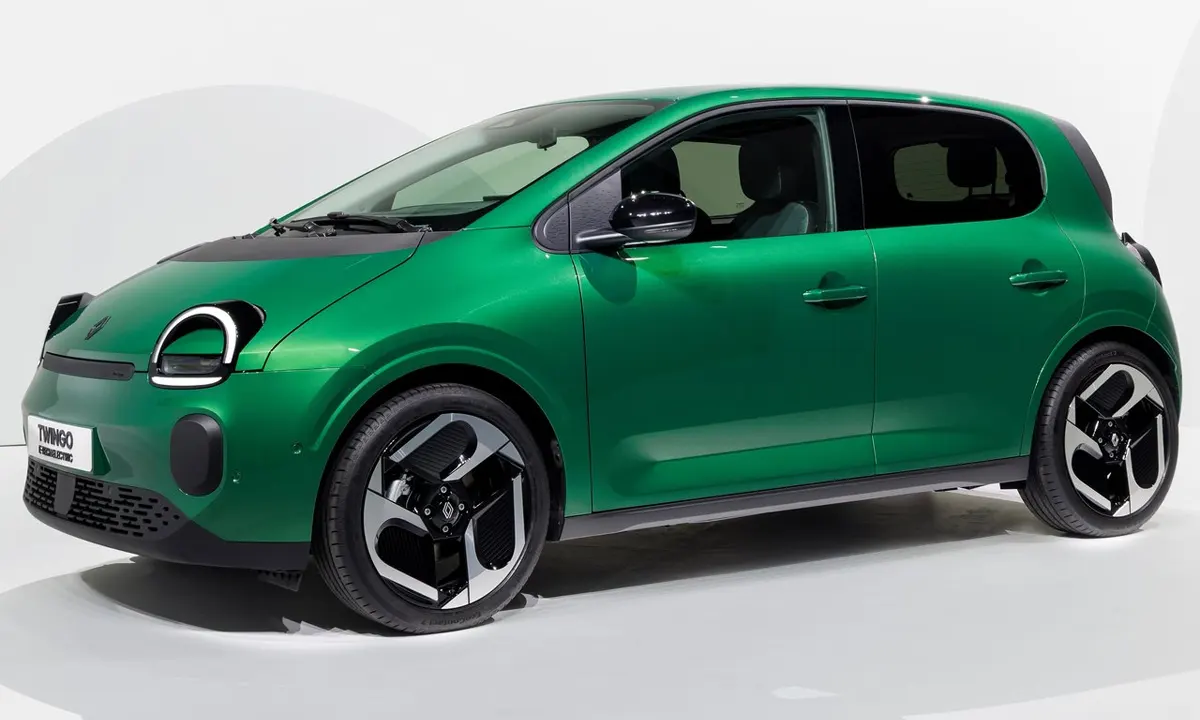
The exterior design of the 2027 Renault Twingo E-Tech is the most faithfully heritage-referencing of the three Renault electric nameplate revivals, taking the original Twingo’s essential design DNA — its one-box silhouette, its rounded greenhouse, its short overhangs and its fundamentally cheerful visual character — and reinterpreting it in a thoroughly contemporary, thoroughly electric form that feels simultaneously nostalgic and genuinely fresh. Where the Renault 5 E-Tech drew its aesthetic inspiration from the 1970s original with some degree of creative licence and the Renault 4 E-Tech adapted its predecessor’s utilitarian character into a modern crossover interpretation, the new Twingo E-Tech is unmistakably, immediately and delightfully the direct contemporary descendant of the 1992 original — recognisable at a glance to anyone who remembers the original and appealing to an entirely new generation of buyers encountering the name for the first time.
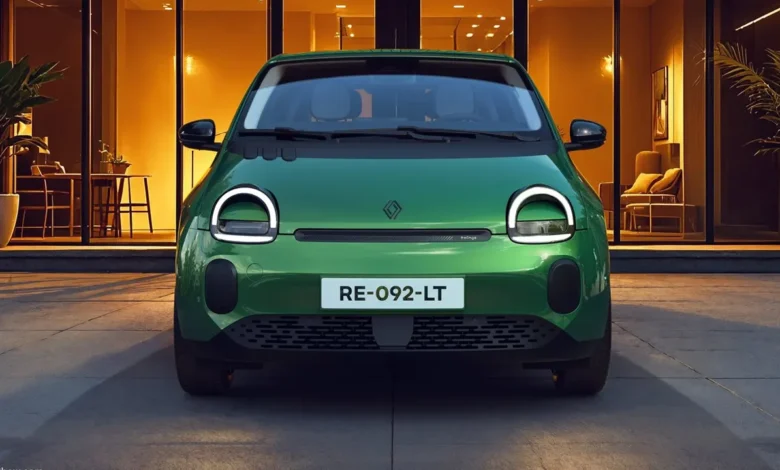
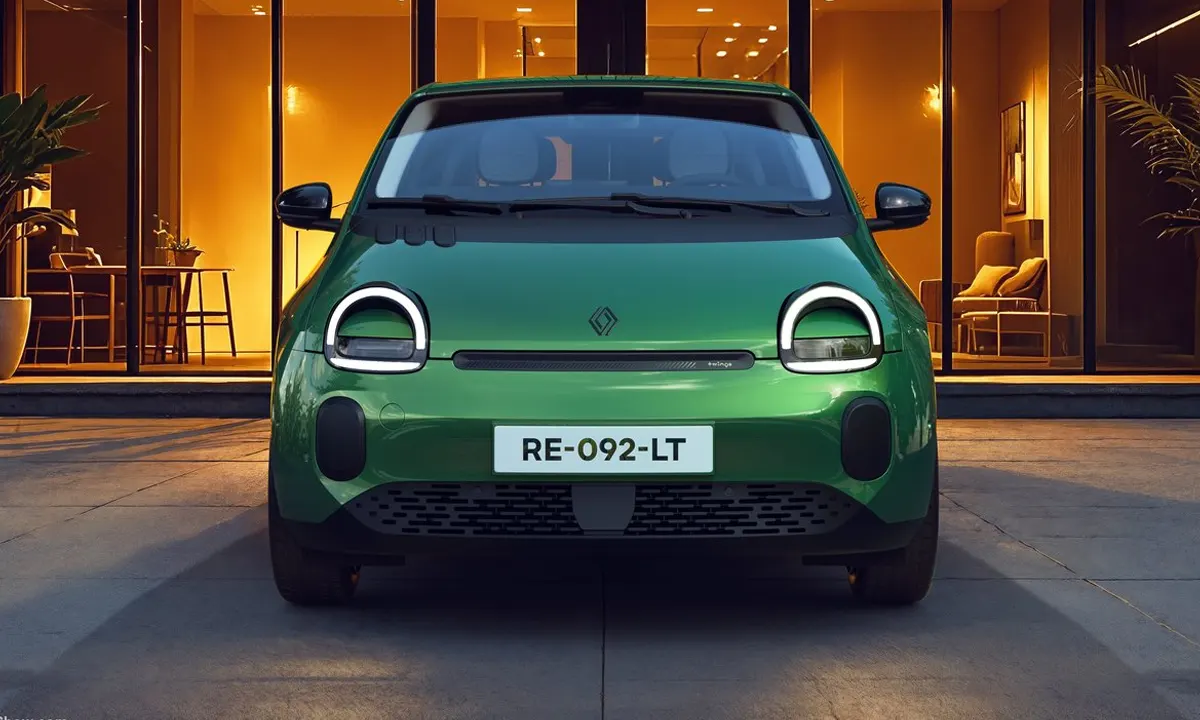
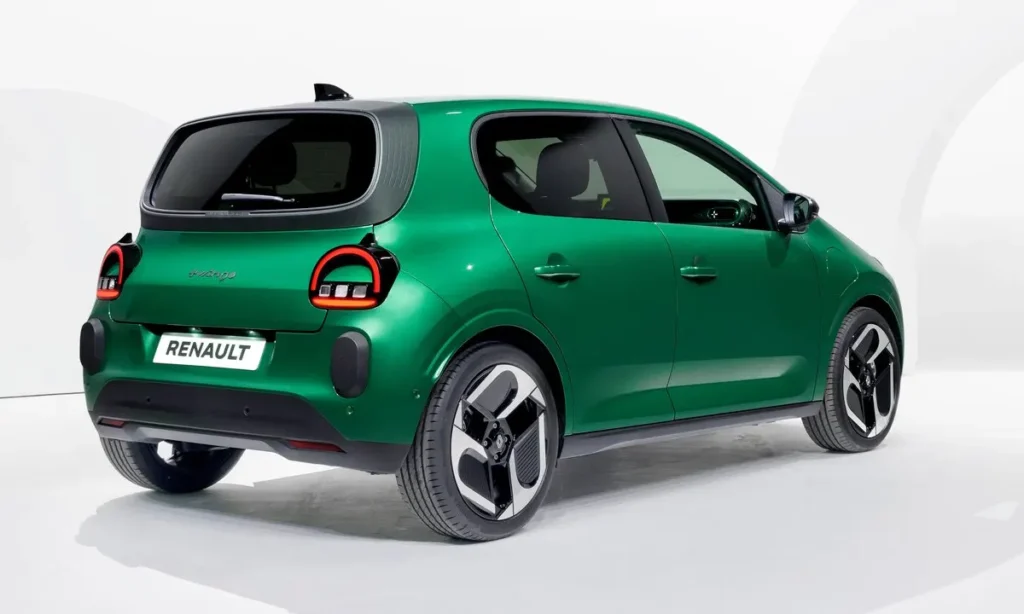
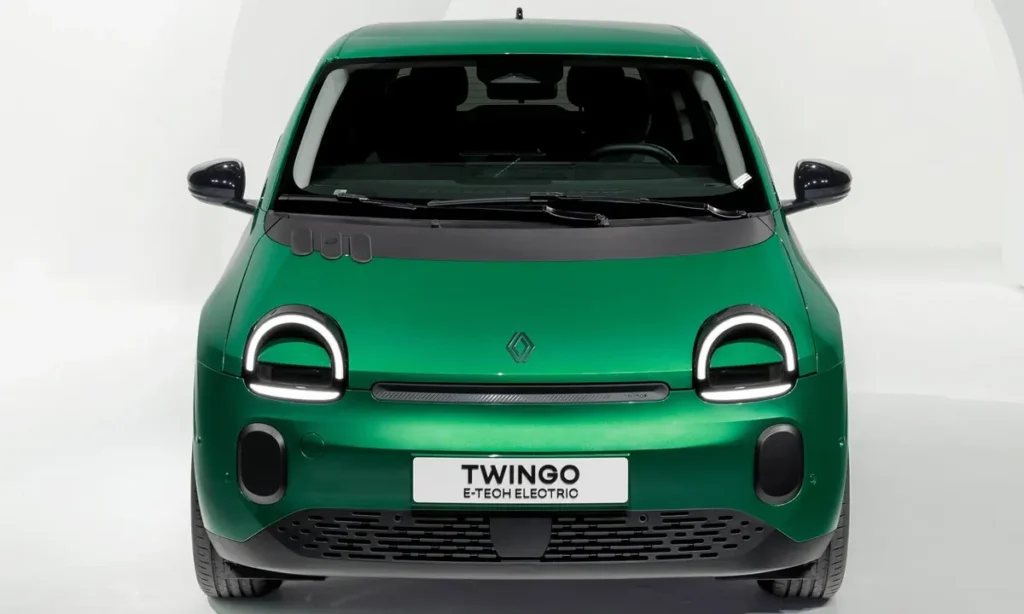
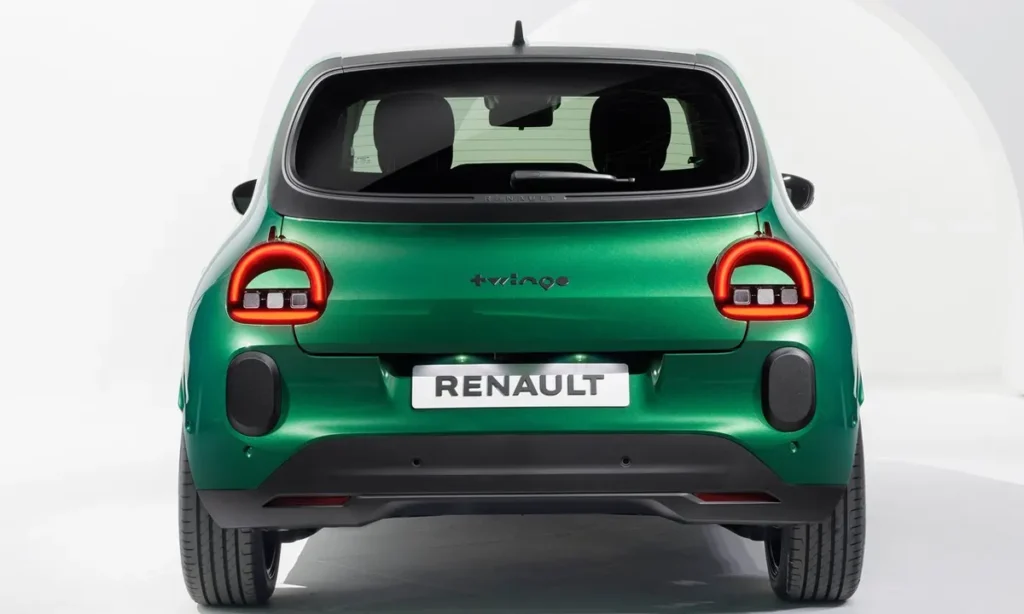
The front fascia is built around a closed grille panel — the Twingo E-Tech produces no exhaust emissions and requires no traditional grille opening for combustion engine cooling — framed by rounded LED headlight clusters featuring pronounced semi-circular daytime running light elements that Renault’s designers describe as giving the car its distinctively cheerful and expressive personality. These half-moon light signatures create an immediate and recognisable face that translates effortlessly to the car’s exterior character at any time of day or night, and they establish a visual continuity with the rounded forms of the original that is both aesthetically satisfying and commercially astute. The body surfaces are smooth and cleanly resolved, with a tautness of surface tension that contributes meaningfully to the car’s aerodynamic efficiency and gives it a more sophisticated quality than its accessible price point might initially suggest. Semi-circular rear lamp clusters echo the front headlight language with the same half-moon form, and small aerodynamic fins at the top of each rear lamp unit serve the dual purpose of reducing drag at speed and adding a technically purposeful detail to the rear design’s otherwise rounded character.
At 3.79 metres in overall length — longer than traditional city car rivals such as the Hyundai i10 and Kia Picanto, yet shorter than the Renault 5 E-Tech and mainstream superminis — the Twingo E-Tech occupies a dimensional sweet spot that gives it a more usable interior than its compact exterior suggests while maintaining the parking and manoeuvring ease that urban drivers require and value above almost any other practical consideration. Four body colours are offered at launch — Absolute Green, Absolute Red, Mango Yellow and Starry Black — a deliberate simplification of the colour palette that reflects Renault’s Leap 100 programme’s emphasis on production efficiency and that ensures each colour available has been chosen to complement the car’s rounded, expressive design language with maximum effectiveness. Eighteen-inch alloy wheels are available on the Techno variant — a size that is genuinely impressive for a vehicle in this segment and one that gives the higher-specification Twingo a road presence disproportionate to its compact dimensions.
The AmpR Small Platform: Purpose-Built Electric Engineering at the Most Accessible Price
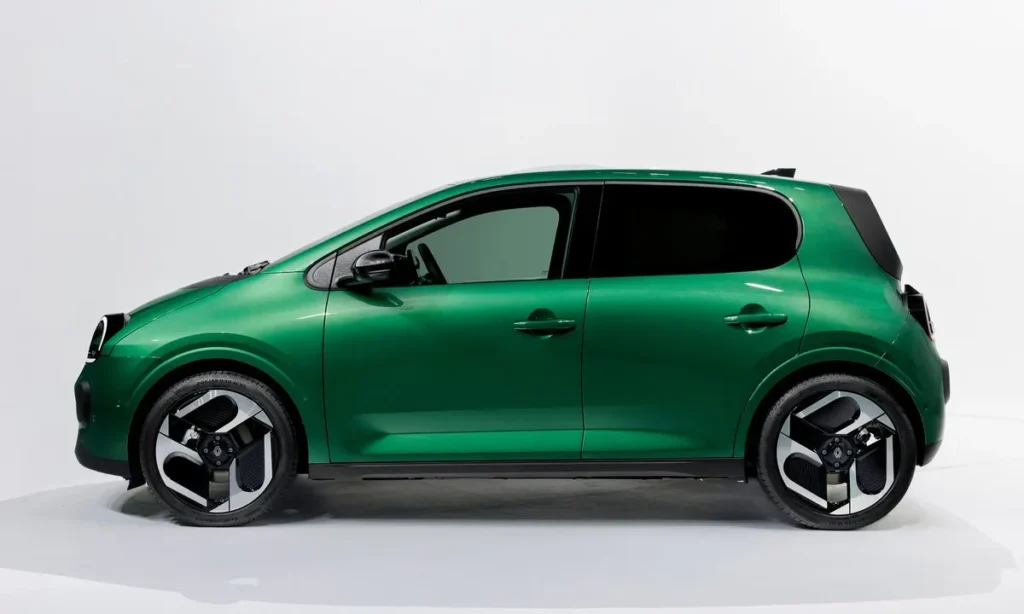
The engineering foundation of the 2027 Renault Twingo E-Tech is the AmpR Small electric platform — the same dedicated electric architecture that underpins the Renault 5 E-Tech and the Renault 4 E-Tech, adapted for the Twingo’s smaller footprint and lower-cost positioning through targeted engineering optimisation. The front axle is carried over directly from the Renault 5 and Renault 4 E-Tech applications, a component sharing strategy that reduces development cost and enables the price point that makes the Twingo E-Tech’s commercial proposition viable, while the rear axle adopts a flexible beam design based on the Renault Captur — a simpler and less expensive arrangement than the multi-link rear axle of its platform siblings that is entirely appropriate to the Twingo’s city-focused character and speed envelope. The electric motor produces 60 kilowatts — equivalent to 82 horsepower — driving the front wheels through a single-speed reduction gear with a directness and immediacy that is characteristic of electric motors at any power level and that makes the Twingo feel considerably more responsive in urban traffic than its modest output figure might imply to buyers accustomed to assessing performance through the lens of combustion engine specifications.
The complete vehicle weight of 1,200 kilograms is one of the most significant engineering achievements of the Twingo E-Tech programme and one of its most practically important. In an automotive era where electric vehicles have consistently and often dramatically gained weight relative to their combustion equivalents — as batteries, electric motors and associated power electronics add mass that chassis and suspension components must then manage — the Twingo E-Tech’s 1,200-kilogram kerb weight makes it one of the lightest production electric vehicles currently available in any segment. This lightness is not achieved through material compromise or the omission of necessary equipment — the Twingo E-Tech’s safety and technology specification is genuinely competitive with its class rivals — but through the disciplined engineering efficiency that the Leap 100 programme’s 100-week development timeline demanded. The practical dividend of this lightweight achievement is significant — the car’s urban agility, its energy efficiency and the responsiveness of its modest electric motor are all materially enhanced by the absence of unnecessary mass, and the Twingo’s claimed 0 to 31 miles per hour acceleration time of 3.85 seconds gives an indication of how effectively its 82 horsepower propels 1,200 kilograms in the speed range that urban driving most frequently occupies.
LFP Battery Technology and Real-World Range: Honest Numbers for Honest Needs
The 2027 Renault Twingo E-Tech is equipped with a 27.5-kilowatt-hour lithium iron phosphate battery — the first application of LFP chemistry in a Renault electric vehicle produced for the European market, and a choice whose implications for long-term ownership extend well beyond the headline capacity figure. Lithium iron phosphate chemistry offers several meaningful advantages over the nickel-manganese-cobalt chemistry that has dominated electric vehicle battery production for the past decade. LFP cells demonstrate superior thermal stability across a wider operating temperature range — maintaining their capacity and charging performance in cold weather conditions more consistently than NMC alternatives and exhibiting a lower risk of thermal runaway under extreme conditions. They also demonstrate significantly greater cycle life — the ability to withstand more charge and discharge cycles before capacity degradation becomes significant — a quality that directly translates into longer-term battery health and lower long-term ownership costs for buyers who plan to keep their Twingo for five, seven or ten years. The absence of cobalt and nickel from the cell chemistry also reduces the ethical and supply chain concerns associated with sourcing these materials, aligning with Renault’s broader environmental and sustainability commitments for the Twingo E-Tech programme.
The WLTP-cycle range of 263 kilometres — equivalent to 163 miles — on the standard 16-inch wheel specification is a number that requires honest contextualisation rather than either defensive apology or promotional inflation. It is, straightforwardly, a range appropriate to the car’s intended purpose and its intended buyer. Renault’s own analysis of Twingo buyer behaviour indicates that the typical owner covers approximately 22 miles per day — a figure that the 163-mile WLTP range exceeds by a factor of more than seven, meaning that the majority of Twingo E-Tech owners will be able to drive for an entire week on a single charge under typical urban usage patterns. Real-world range in everyday conditions — accounting for temperature variation, driving style and the inevitable gap between official test cycle results and typical ownership experience — is expected to fall between 110 and 140 miles in independent assessments, a range that remains entirely adequate for the urban and suburban daily driving that represents the overwhelming majority of Twingo ownership usage. The Techno variant’s 18-inch wheels reduce the official range marginally to approximately 250 kilometres WLTP — a modest sacrifice for the improved visual drama and road presence that the larger alloys provide.
Charging Capability and V2L Technology: Innovation at an Accessible Price
The 2027 Renault Twingo E-Tech’s charging architecture delivers a level of technical sophistication that is genuinely remarkable in the context of a vehicle priced below £20,000 — and one element of that sophistication, the standard bidirectional charging capability of the Techno variant, represents a technology that many more expensive electric vehicles have yet to offer their buyers. The standard 6.6-kilowatt AC onboard charger fitted across both Evolution and Techno trim levels enables a complete charge from 10 to 100 percent in approximately four hours and fifteen minutes on a home wallbox or public AC charging point — a duration short enough to complete comfortably during an overnight charging session or a working day at a destination charger. The optional Advanced Charge Pack — available at an additional cost of approximately £490 in the United Kingdom — upgrades the onboard AC charger to an 11-kilowatt unit and adds compatibility with DC fast charging at rates up to 50 kilowatts, reducing the AC charging time to approximately two hours and thirty-five minutes and enabling a 10 to 80 percent DC fast charge in approximately 30 minutes at a compatible rapid charging point. This 30-minute DC charging capability provides sufficient range recovery during a typical motorway service stop to complete most extended journey requirements and meaningfully reduces the practical limitation that the Twingo’s 163-mile range might otherwise impose on occasional longer-distance travel.
The 11-kilowatt AC charger included in the Advanced Charge Pack supports bidirectional charging — a technology that allows the Twingo E-Tech’s battery to function not only as an energy storage device for vehicle propulsion but as a portable power source for external electrical equipment through Vehicle-to-Load functionality delivering up to 3,700 watts. This V2L capability enables the Twingo E-Tech to power camping equipment, electric bicycles, power tools, laptop computers and other domestic and recreational electrical appliances directly from the car’s battery — a practical versatility that extends the vehicle’s utility well beyond transportation and that has proved a genuinely valued feature in owner surveys of vehicles where it has been offered. Vehicle-to-Grid capability, which enables the Twingo E-Tech to contribute stored energy back to the domestic electricity grid during peak demand periods through compatible Mobilize hardware, is additionally available in selected markets — a future-facing energy management capability that positions the Twingo as a participant in the broader smart energy ecosystem rather than merely a personal transportation device.
An Interior Designed Around Urban Intelligence and Practical Generosity
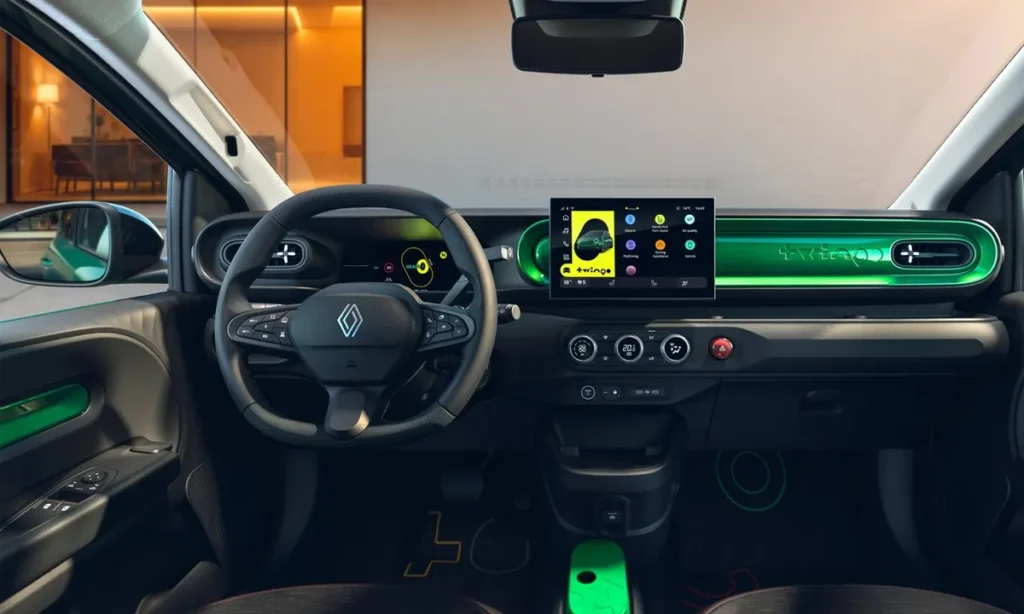
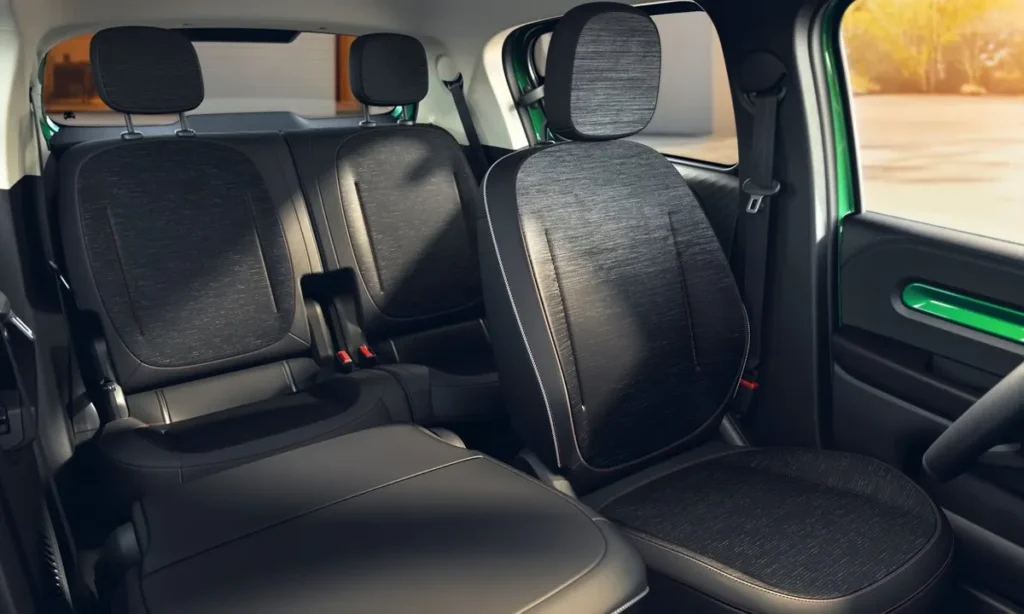
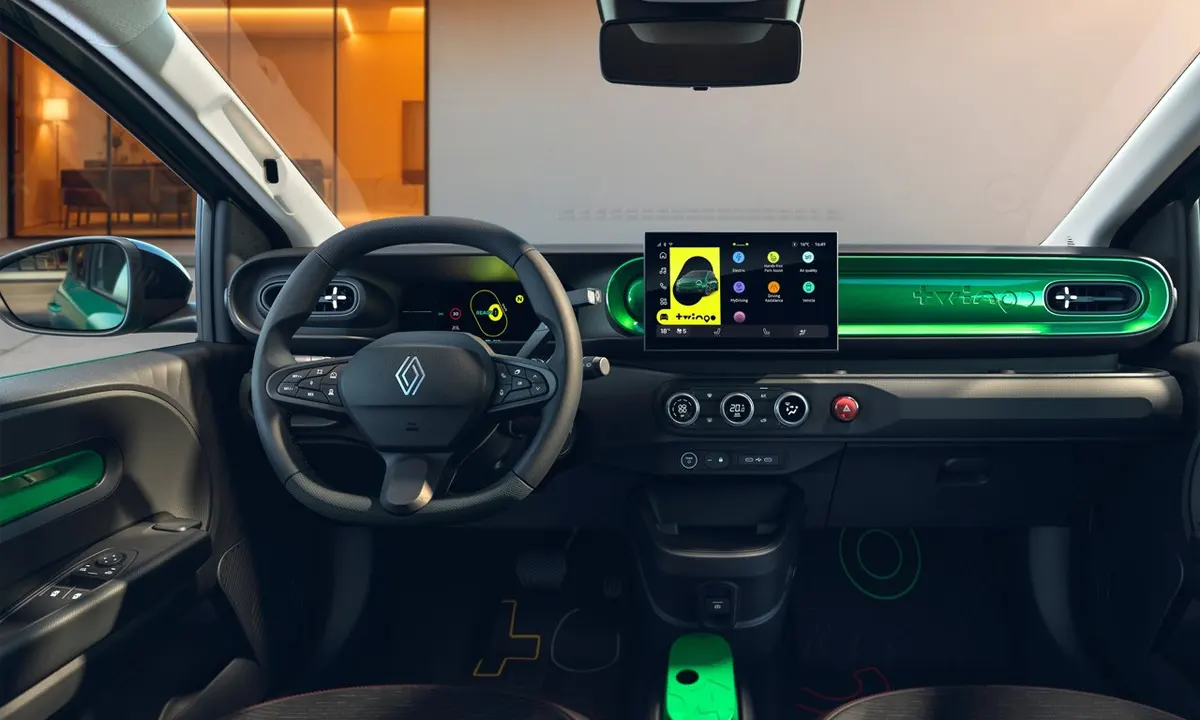
The cabin of the 2027 Renault Twingo E-Tech is one of the most pleasant and most practically intelligent interiors available in the city car segment — a space that delivers significantly more usable volume, more thoughtfully considered storage and more genuine occupant comfort than the car’s exterior dimensions would lead a prospective buyer to reasonably expect. The fifth-generation Twingo adopts a five-door body structure for the first time in the nameplate’s history — an overdue and commercially astute decision that dramatically improves rear occupant accessibility and family usability without meaningfully compromising the car’s compact urban dimensions. The dashboard architecture centres on a deliberately clean and contemporary design philosophy described by Renault as cylindrical in its fundamental geometry — a rounded, unified form that houses a seven-inch driver display and a ten-inch central touchscreen alongside physical rotary controls for the air conditioning system in a layout that prioritises intuitive everyday interaction over the visual drama of larger display configurations.
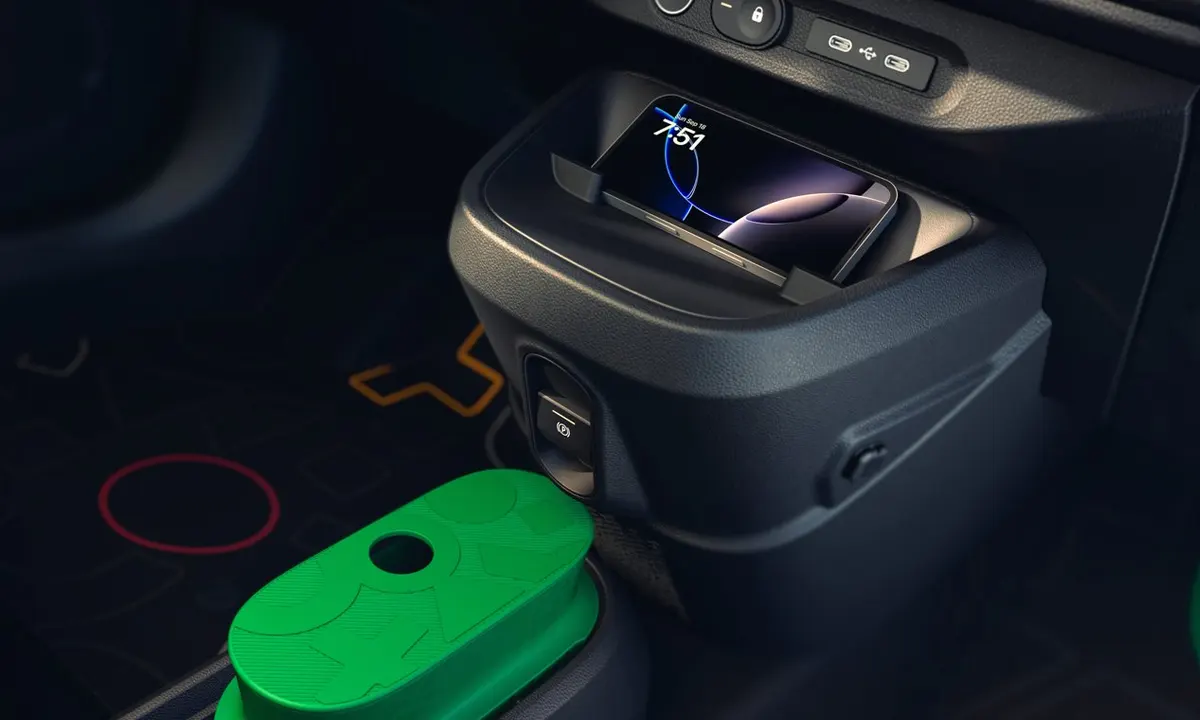
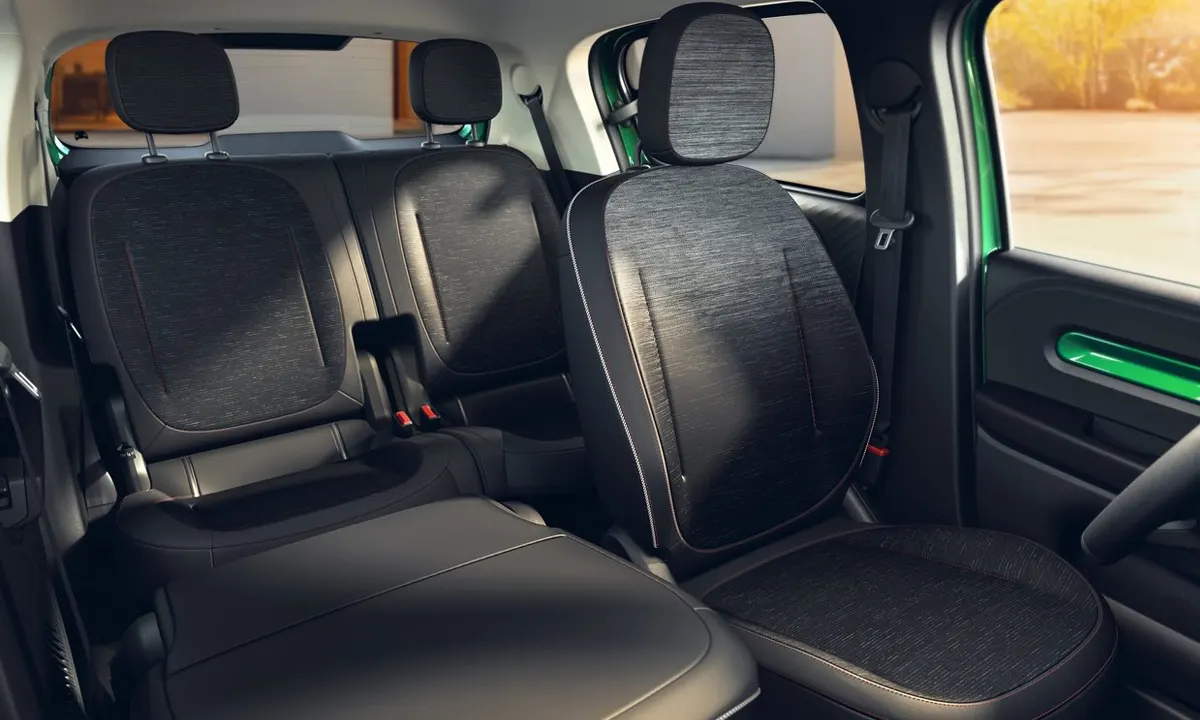
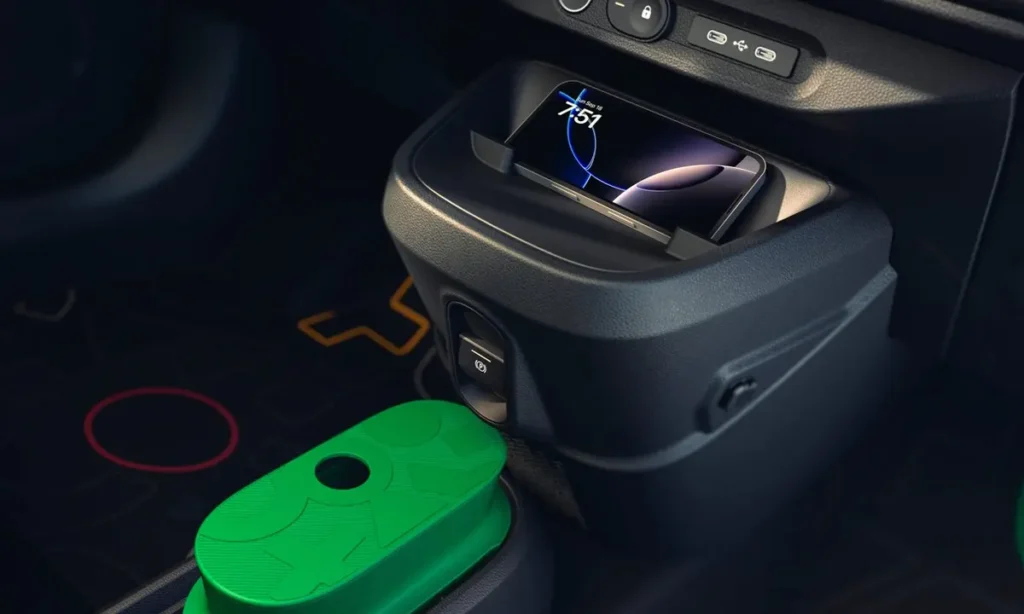
The most practically innovative interior feature of the Twingo E-Tech is the independently sliding rear seat arrangement — a system that allows each of the two rear seats to slide 170 millimetres fore and aft along its own independent track, enabling occupants to choose between maximising rear legroom when the rear seat is occupied and maximising boot capacity when rear passenger space is not required. With the rear seats pushed fully forward, the boot capacity reaches 360 litres — a figure that is competitive with vehicles of a substantially larger exterior footprint and that provides meaningful cargo carrying capability for urban shopping, leisure equipment and the practical demands of family ownership. Folding the rear seatbacks flat extends the available cargo volume beyond 1,000 litres — a transformation of interior space that the Twingo’s predecessors could never have managed and that reflects the AmpR Small platform’s inherent packaging efficiency. A 50-litre underfloor storage compartment beneath the boot floor provides a dedicated space for charging cables — keeping them accessible without consuming the main cargo area — while approximately 19 litres of additional cabin storage across deep door pockets, a large central console and numerous smaller receptacles provides meaningful everyday practicality.
Rear passenger accommodation delivers a genuinely surprising amount of space for a vehicle of the Twingo’s exterior dimensions. Adults of modest stature can be accommodated in the rear with reasonable comfort, and the sliding seat functionality allows legroom to be maximised when the front seat occupant is willing to compromise slightly on their own position. Headroom in the rear is the more constrained dimension — taller passengers approaching six feet will find the roofline limiting on longer journeys — but for the urban short-trip usage that represents the overwhelming majority of Twingo ownership, rear accommodation is entirely adequate and materially better than the city car segment average. Charming design details throughout the cabin — including the original Twingo slogan printed on the seat belt straps and the innovative YouClip accessory attachment system at the front and rear of the cabin that accommodates 3D-printed organisers, bag hooks and LED lights — add the character and personalisation appeal that a car with the Twingo’s heritage and personality ambitions requires.
Technology: Google-Powered Intelligence as Standard in a Sub-£20,000 Car
The technology specification of the 2027 Renault Twingo E-Tech is one of the most compelling aspects of its overall value proposition, delivering a level of connected infotainment capability — including the full OpenR Link multimedia system with Google built-in on the Techno variant — that has no precedent in the A-segment city car class and that directly challenges the technology standards of vehicles costing substantially more. The OpenR Link system, powered by the Android Automotive operating system with native Google integration, provides access to Google Maps, Google Assistant and the Google Play Store directly through the car’s 10-inch central touchscreen — enabling the full capability of Google’s mapping, voice control and application ecosystem without requiring a smartphone connection. This represents a first for any vehicle in the A-segment and positions the Twingo E-Tech as a genuinely technology-forward choice for digitally engaged urban buyers who expect connected services of this quality as a baseline rather than a premium option.
The standard Evolution trim provides wireless Apple CarPlay and Android Auto connectivity across its 10-inch touchscreen — ensuring that even the entry-level Twingo delivers the smartphone integration that the overwhelming majority of buyers regard as a prerequisite in any new vehicle purchase. Standard driver assistance equipment across both trim levels includes automatic emergency braking with pedestrian and cyclist detection, lane departure warning and traffic sign recognition — a safety technology baseline that meets and in several respects exceeds the requirements of the Euro NCAP evaluation programme. The Techno variant adds adaptive cruise control, a rear-view camera and the One Pedal driving function with four adjustable regenerative braking intensity levels selectable through steering wheel paddles — a feature suite that enables the most efficient and most convenient urban driving experience the Twingo E-Tech is capable of delivering. A built-in battery pre-conditioning system prepares the LFP battery to its optimal temperature before a planned charging session — a practically important feature for cold climate owners whose range and charging speed are most vulnerable to low ambient temperatures and that helps the Twingo maximise its real-world charging performance across all seasons.
The Twingo E-Tech in Context: Democratising Electric Mobility With Genuine Conviction
The 2027 Renault Twingo E-Tech occupies a market position that is both strategically important and genuinely underserved by the current generation of affordable electric vehicles. Its natural rivals — the Fiat 500e, the Citroën e-C3, the Dacia Spring and the BYD Dolphin Surf — each offer a partial answer to the question of affordable urban electric mobility, but none of them combines the Twingo’s heritage appeal, its five-door practicality, its innovative sliding rear seat system, its bidirectional charging capability and its Google-powered technology in a package below £20,000 with the same completeness and the same confidence of execution. The Fiat 500e offers comparable range and a comparably charming design at a similar price but lacks five-door practicality and the Twingo’s practical interior innovations. The Citroën e-C3’s larger battery and greater range are offset by a higher price and a less heritage-connected design identity. The Dacia Spring offers a lower entry price but concedes substantially in technology and interior quality. The BYD Dolphin Surf provides strong technology at a competitive price but carries the lesser brand recognition and dealer network familiarity that many European buyers still regard as practically important.
Against each of these alternatives, the Twingo E-Tech argues its case with the combined force of an iconic name, a genuinely delightful design, a practical and intelligently designed interior and a technology specification that exceeds the expectations its price creates. The Leap 100 programme’s efficiency — compressing a development cycle that typically spans four to five years into just 100 weeks — demonstrates that Renault’s engineering culture is capable of genuine innovation under commercially disciplined constraints, and the result of that programme is a vehicle whose quality, specification and character represent one of the strongest value propositions in the current electric vehicle market at any price. For urban buyers who have been waiting for an affordable, practical and genuinely appealing electric city car that makes the transition from combustion motoring feel like a gain rather than a compromise, the 2027 Renault Twingo E-Tech is the most complete and most convincing answer the market has yet provided.
The Original Spirit Lives On — Electrified, Evolved and More Relevant Than Ever
The 2027 Renault Twingo E-Tech honours the legacy of the original 1992 Twingo not through sentimental reproduction but through the most sincere form of tribute available to an automotive manufacturer — by applying the same fundamental values of democratic accessibility, cheerful character and genuine practical intelligence to the requirements and the technologies of its own era. It is a car that does not pretend to be something it is not — it makes no claim to long-range touring capability it cannot deliver, no promise of supercar performance it cannot achieve and no assertion of luxury that its price point cannot support. What it does promise — affordable, practical, characterful, technology-rich urban electric mobility for the urban majority — it delivers with a completeness and a conviction that the city car segment has rarely seen and that the electric vehicle industry urgently needed someone to provide. The Twingo is back. It has always belonged on city streets. And now, running in complete silence on a battery charged by a home wallbox overnight, it belongs there more than ever.
Read: Polestar 3 Redefines Electric Luxury SUVs with Scandinavian Design
2027 Renault Twingo E-Tech – Specifications & Performance Chart
| Category | Specification |
| Vehicle Type | All-Electric A-Segment City Car (BEV) |
| Generation | Fourth Generation (2027) |
| Platform | AmpR Small (Dedicated Electric Architecture) |
| Body Style | Five-Door Hatchback |
| Electric Motor | 60 kW (82 hp) Front-Mounted |
| Drivetrain | Front-Wheel Drive |
| 0–31 mph (0–50 km/h) | 3.85 Seconds |
| 0–62 mph | 12.1 Seconds |
| Top Speed | 81 mph (130 km/h) |
| Battery Chemistry | LFP (Lithium Iron Phosphate) – CATL Supplied |
| Battery Capacity | 27.5 kWh (Cell-to-Pack Design) |
| WLTP Range (16-in Wheels) | 263 km / 163 Miles |
| WLTP Range (18-in Wheels) | Approx. 250 km / 155 Miles |
| Real-World Range (Estimated) | 110–140 Miles |
| Standard AC Charger | 6.6 kW |
| Optional AC Charger (Adv. Pack) | 11 kW (Bidirectional) |
| Max DC Fast Charge Rate | 50 kW (Optional Advanced Charge Pack) |
| DC Charge Time (10–80%) | Approx. 30 Minutes |
| AC Charge Time (10–100%, 6.6 kW) | Approx. 4 Hours 15 Minutes |
| AC Charge Time (10–100%, 11 kW) | Approx. 2 Hours 35 Minutes |
| V2L Capability | Up to 3,700 W (Techno with Adv. Charge Pack) |
| V2G Capability | Available via Mobilize Hardware (Select Markets) |
| Kerb Weight | 1,200 kg |
| Length / Wheelbase | 3,789 mm / 2,493 mm |
| Wheel Sizes | 16-Inch (Evolution) / 18-Inch (Techno) |
| Rear Seat Sliding Travel | 170 mm (Independent per Seat) |
| Boot Capacity (Seats Forward) | 360 Litres |
| Boot Capacity (Seats Folded) | 1,000+ Litres |
| Underfloor Storage | 50 Litres (Cable Storage) |
| Cabin Storage | 19 Litres (Total) |
| Driver Display | 7-Inch Digital Cluster |
| Central Touchscreen | 10-Inch |
| Standard Infotainment | Wireless Apple CarPlay / Android Auto |
| Premium Infotainment (Techno) | OpenR Link with Google Built-In |
| Standard Safety | AEB, Lane Departure Warning, Traffic Sign Recognition |
| Techno Safety Additions | Adaptive Cruise Control, Rear Camera, One Pedal Drive |
| Battery Pre-Conditioning | Standard (All Variants) |
| YouClip Accessory System | Standard |
| Available Trims | Evolution / Techno |
| Starting Price (Europe) | From €19,500 (Evolution) |
| Starting Price (UK) | Under £20,000 |
| Techno Price (Europe) | Approx. €21,100 |
| Advanced Charge Pack Price | Approx. €490 / £490 |
| UK Market Launch | 2027 |
| European Market Launch | Early 2026 |
| Assembly | Novo Mesto, Slovenia |