
- ~90% battery capacity at 50,000 miles
- Degradation slows after initial drop
- Strong motor and battery reliability
- Common issues: suspension wear and software bugs
- Build quality concerns reported by some owners
Tesla Model 3 Reliability: The 50,000-mile mark is the most practically significant reliability checkpoint for any Tesla Model 3 owner or used buyer — because it is where the initial warranty-period experience gives way to a more revealing picture of how the vehicle ages, where wear begins to accumulate on consumable components, and whether the battery’s initial front-loaded capacity decline has stabilised into the flatter long-term degradation curve that Tesla’s data predicts. The evidence from Tesla’s own published fleet data, independent reliability studies, European TÜV inspection reports and thousands of owner accounts across the Tesla Motors Club community is consistent and specific: the Model 3’s battery and electric motors remain genuinely durable at 50,000 miles, but suspension components, brake systems, software reliability and build quality produce a more variable experience that depends heavily on model year, charging habits and regional climate. This guide synthesises all of that evidence into the complete reliability picture at 50,000 miles.
Battery and Motor Health at 50,000 Miles: The Good News
The most financially significant reliability question at 50,000 miles concerns the battery — because battery replacement is the most expensive out-of-pocket repair scenario for any EV owner, and because battery health directly determines range, daily usability and resale value. The evidence at 50,000 miles is broadly reassuring.
Tesla’s 2023 Impact Report includes a comprehensive dataset of battery degradation across the Model 3 and Model Y fleet, showing a graph that drops to an average of approximately 90 percent retained capacity at 50,000 miles before levelling into a long, gradual fade that maintains comfortably above 80 percent at 200,000 miles. Top Gear’s long-term 50,000-mile Model 3 test specifically cross-referenced trip computer data with actual charging records and calculated approximately 11 percent capacity loss on their 2021 Long Range AWD test vehicle — noting that this figure sits within one standard deviation of the mean in Tesla’s published dataset and consistent with the expected degradation curve.
Recharged’s 2026 fleet data analysis places average State of Health for well-maintained Model 3s at approximately 94 to 96 percent at around 50,000 miles — meaning most owners at this mileage retain more than 90 percent of their original range. Independent EV battery health datasets consistently show the average 3-year, approximately 45,000-mile Model 3 retaining roughly 90 to 94 percent of original battery capacity. The practical implication for a Long Range RWD originally rated at 358 miles is a real-world range of approximately 322 to 337 miles at the 50,000-mile mark — a reduction that the majority of drivers find imperceptible in daily use.
The electric motor’s reliability track record at 50,000 miles is similarly strong. High-mileage owner reports from the Tesla Motors Club community routinely describe 150,000 to 200,000 miles with no motor repairs, and catastrophic motor failures remain statistically rare across the fleet. Recharged’s 2026 reliability analysis confirms that complete battery pack failures remain well under 1 percent of Model 3 vehicles, with most handled under the standard 8-year battery and drive unit warranty.
Read: Tesla Model 3 Battery Degradation After 100,000 Miles. What Separates The Best From The Worst Cases
Suspension and Brake Wear: Where 50,000 Miles Tells a Different Story
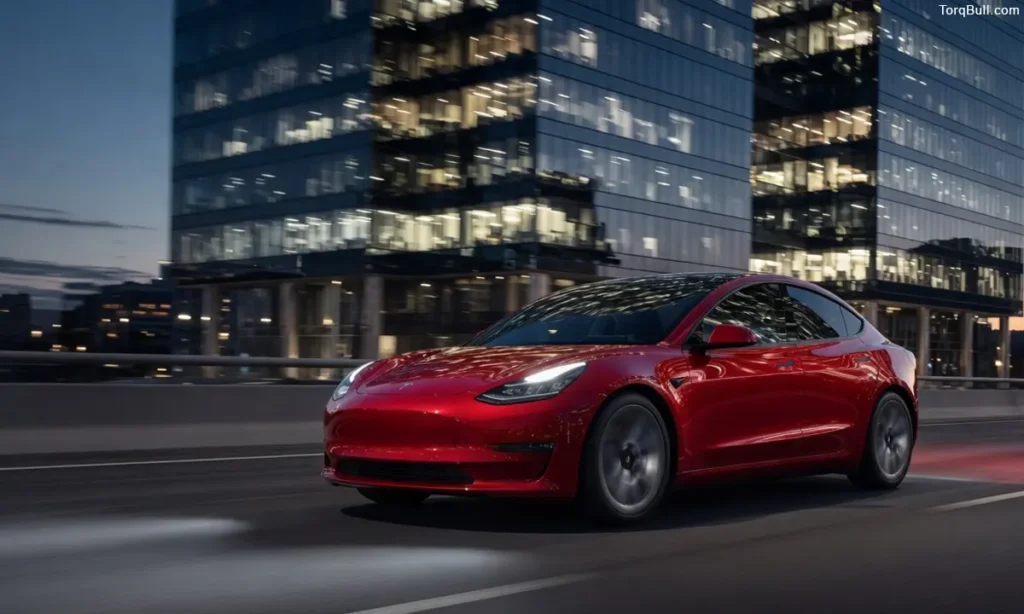
While the powertrain at 50,000 miles is a reliability strength, the suspension and brake system components present a more variable and sometimes costly reliability picture — one that is specifically amplified by the Model 3’s weight, instant torque delivery and regenerative braking system.
Germany’s TÜV 2025 inspection report — the most rigorous population-level reliability audit available for Model 3 vehicles — places the Model 3 near the bottom of its class for 2 to 5-year-old vehicles, with brakes, suspension components and headlamps identified as the primary defect categories. The 14.2 percent defect rate for 2 to 3-year-old Model 3s — more than double the overall inspection average — is particularly notable because it reflects vehicles in the 30,000 to 60,000-mile range, directly overlapping with the 50,000-mile reliability assessment window.
The mechanical explanation is straightforward. The Model 3 weighs approximately 400 to 600 pounds more than a comparable gasoline sedan due to battery pack mass, placing higher sustained loads on control arms, bushings and wheel bearings during normal cornering and road surface management. The electric motor delivers instant maximum torque — a characteristic that produces the vehicle’s outstanding acceleration but also subjects front suspension components to load cycles that accumulate more rapidly than the gradual torque buildup of a gasoline engine allows.
Recharged’s 2026 inspection guidance specifically advises buyers examining 50,000-mile Model 3s to pay close attention to suspension components, tyres and any uneven wear. A slight clunk or creak from the front end may indicate a simple bushing beginning to fail — or the beginning of a more expensive control arm replacement. Suspension arms and control modules are among the higher-cost repair items on a Model 3, with parts pricing closer to German luxury brands than mainstream sedans, according to Recharged’s long-term reliability analysis.
Brake component condition at 50,000 miles is an area that surprises many Model 3 owners. The regenerative braking system dramatically reduces how frequently the friction brake pads contact the rotors during normal driving — extending pad life significantly beyond what a gasoline vehicle achieves at equivalent mileage. However, this same reduced frequency of braking means brake caliper pistons sit in their retracted positions for longer periods without the cleaning action that regular braking provides. In salt-belt northern states, brake caliper corrosion at 50,000 miles is a documented and common finding that Recharged specifically flags as an inspection priority for vehicles with winter road exposure. Annual brake caliper cleaning and lubrication — costing approximately $100 to $200 at a service shop — is a preventative maintenance investment that pays for itself by avoiding more expensive corrosion-related brake system repairs.
Read: Is Tesla Model 3 Good For First-Time EV Buyers? The Complete Buyer Profile Guide 2026
Software Reliability and Electronic Systems at 50,000 Miles
Software-related issues are among the most consistently reported problems in the 50,000-mile Model 3 ownership experience — and the category where the Model 3’s technology-forward architecture creates both its greatest advantage and its most unique reliability vulnerability.
The advantage is over-the-air updates that resolve known software bugs, address safety recalls and deliver new features without requiring a service centre visit. Consumer Reports notes that several Model 3 recalls affecting the 50,000-mile vintage of vehicles — including rearview camera visibility issues and TPMS warning light behaviour — were resolved through over-the-air software updates rather than physical repair appointments. This capability is genuinely valuable and keeps older hardware feeling current in ways that no other vehicle category consistently achieves.
The vulnerability is that the Model 3’s near-total reliance on a single touchscreen for every vehicle function — climate, navigation, camera display, gear selection and entertainment — means any malfunction in the central computing system temporarily removes access to multiple functions simultaneously. Recharged’s reliability analysis for the 2026 market notes that owners at the 50,000-mile point report touchscreen freezes, camera glitches and driver assistance quirks more often than on simpler vehicles. These issues are typically resolved by a software reboot — pressing both scroll wheel buttons simultaneously — but their frequency is higher than most owners expect in a vehicle positioned as a premium product.
Owners with 50,000-mile Model 3 vehicles should confirm that all open recalls have been applied to their specific VIN. NHTSA’s public database lists all Model 3 recalls by model year, and the vehicle’s Software screen shows the installed software version that can be cross-referenced against known recall resolution versions.
Build Quality: What 50,000 Miles Reveals About Panel Gaps, Seals and Interior Rattles
At 50,000 miles — typically 3 to 4 years of ownership — the build quality characteristics present at delivery have had time to either stabilise or develop into more noticeable problems. Panel gap and door seal alignment issues that were minor at delivery can produce wind noise and occasional water ingress by the 50,000-mile mark if the underlying seal geometry was imprecise. Interior rattles from headliners, door panels and trim pieces that appeared intermittently in early ownership tend to become more consistent at 50,000 miles as adhesives age and plastics settle.
Top Gear’s 50,000-mile long-term test of a 2021 Model 3 Long Range noted that panel gaps and interior trim mismatches present from delivery had not worsened over the ownership period — the issues were static rather than progressive. This is the typical pattern: Model 3 build quality problems are primarily manufacturing-origin issues rather than progressive structural failures, meaning the 50,000-mile car generally looks and feels much as it did at delivery in terms of panel alignment. The interior, by contrast, tends to develop more audible rattles as the vehicle ages — the frameless door glass fretting against seals in humid conditions being a specifically documented example from Top Gear’s extended evaluation.
Tesla Model 3 Reliability at 50,000 Miles — Complete Assessment Chart
| Component / System | Reliability at 50,000 Miles | Typical Condition | Maintenance Action Required |
| Battery pack (capacity) | Excellent | ~90–96% SoH retained | Monitor via app; verify with diagnostic if below 85% |
| Electric motors | Excellent | No wear-related failures typical | None required |
| Software / touchscreen | Average | Occasional freezes, glitches | Keep updated; reboot resolves most issues |
| Front suspension bushings | Fair | Beginning to wear on high-use vehicles | Inspect; replace if clunking present |
| Brake calipers | Fair (northern states) | Corrosion risk in salt-belt states | Annual cleaning and lubrication recommended |
| Brake pads / rotors | Good | Extended life due to regen braking | Inspect at 50K; typically 30–50% life remaining |
| Tyres | Fair | Faster wear than gasoline sedans | Likely replaced once; due again around 70–80K |
| Build quality / seals | Varies by build date | Panel gaps static; occasional rattles | Service if water ingress; DIY rattles if tolerable |
| Autopilot / driver assists | Average | Occasional phantom braking; software-dependent | Keep updated; use as assist not autonomous |
| 12-volt auxiliary battery | Watch | 2017–2019 vehicles approaching replacement window | Replace proactively if showing symptoms |
The 12-Volt Battery: The Underappreciated 50,000-Mile Concern
One reliability item that consistently surprises 50,000-mile Model 3 owners — particularly those with 2018 to 2021 vehicles — is the 12-volt auxiliary battery. Unlike the main traction battery pack, the 12-volt battery is a conventional lead-acid unit that powers all accessory functions, maintains key fob connectivity and keeps the main computer systems alive when the vehicle is parked. It has a typical replacement life of approximately 3 to 5 years.
A failing 12-volt battery on a Model 3 produces some of the most alarming-looking symptoms in the ownership experience — unexpected alerts, warning messages flooding the touchscreen, inability to unlock or start the vehicle remotely and, in severe cases, complete inability to power on. These symptoms are resolved by 12-volt battery replacement, which costs approximately $150 to $250 at a Tesla Service Center or independent shop. Any Model 3 approaching or past the 50,000-mile mark on original 12-volt battery should budget for proactive replacement — particularly if the vehicle shows any unexplained warning messages or App connectivity issues.
What 50,000 Miles Means for Buyers of Used Model 3s
For used buyers evaluating a 50,000-mile Model 3, the reliability picture at this mileage creates a specific due diligence framework. The battery should be the primary focus — a State of Health above 90 percent is normal and expected. A reading below 85 percent at 50,000 miles warrants investigation into charging history and thermal management. The suspension should receive a physical inspection by a Tesla-familiar technician, specifically checking front control arm bushings, ball joints and wheel bearings for early wear signs.
Recharged’s 2026 used-buyer guidance for this mileage bracket is specifically practical: a 50,000-mile Model 3 in good condition represents one of the strongest value positions in the used EV market — recent enough to have modern features and software support, distant enough from new that the steepest depreciation has already been absorbed by the first owner, and early enough in the mechanical wear cycle that the major consumable components still have meaningful life remaining. The key is distinguishing a well-maintained example from a hard-used one — and at this mileage, that distinction is primarily written in the battery health report and the suspension inspection, not on the odometer.