The Engineering Philosophy Behind the Corvette Grand Sport Badge. America’s Most Defiant Performance Statement
From Five Secret Race Cars Built Against General Motors' Own Corporate Mandate to the C8 Generation's Mid-Engine Interpretation — The Grand Sport Badge Has Never Simply Described a Trim Level. It Has Always Demanded an Engineering Standard That Every Car Wearing It Must Earn Through Genuine Performance Conviction
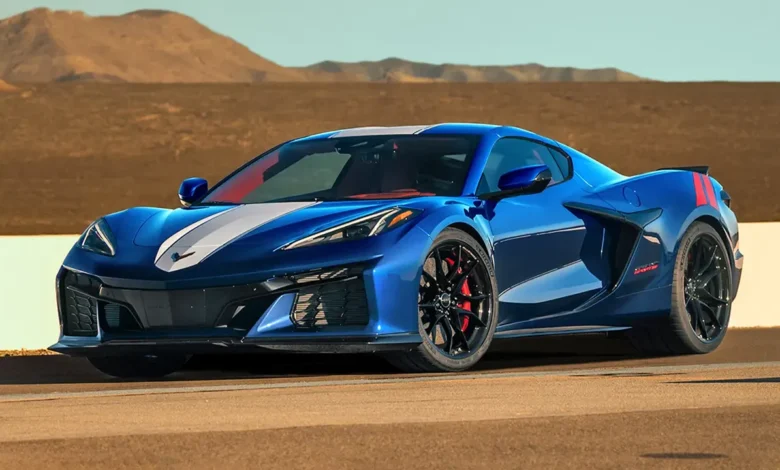
There are automotive badges that exist for marketing purposes — names applied to trim packages and special editions whose primary function is to command a price premium or generate showroom traffic rather than to describe any meaningful engineering distinction. The Corvette Grand Sport badge is emphatically not one of them. It is a designation with a documented history of engineering defiance, mechanical courage and performance ambition whose original application — five cars built in secret, against General Motors’ own corporate policies, by an engineer willing to risk his career for the conviction that an American sports car deserved to compete with and defeat the finest performance machinery that Europe and Carroll Shelby could produce — remains one of the most compelling acts of engineering principle in the entire history of the American automobile. Every car that has subsequently worn the Grand Sport name has carried the weight of that original act and has been required, by the unwritten but deeply understood rules of the nameplate’s heritage, to justify its use through genuine performance engineering rather than decorative distinction.
The Birth of the Badge: Zora Arkus-Duntov and the Five Forbidden Corvettes
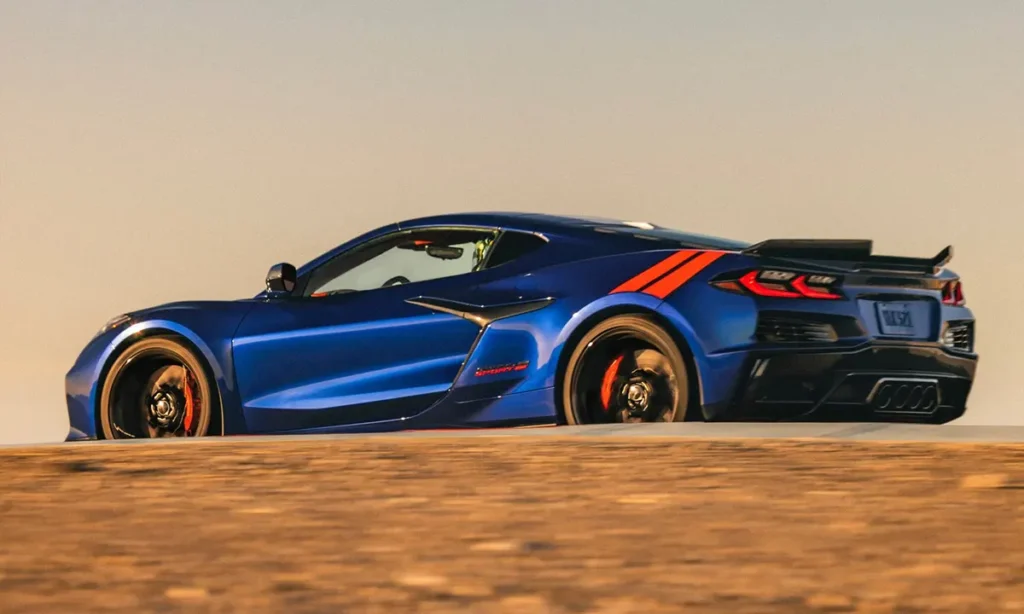
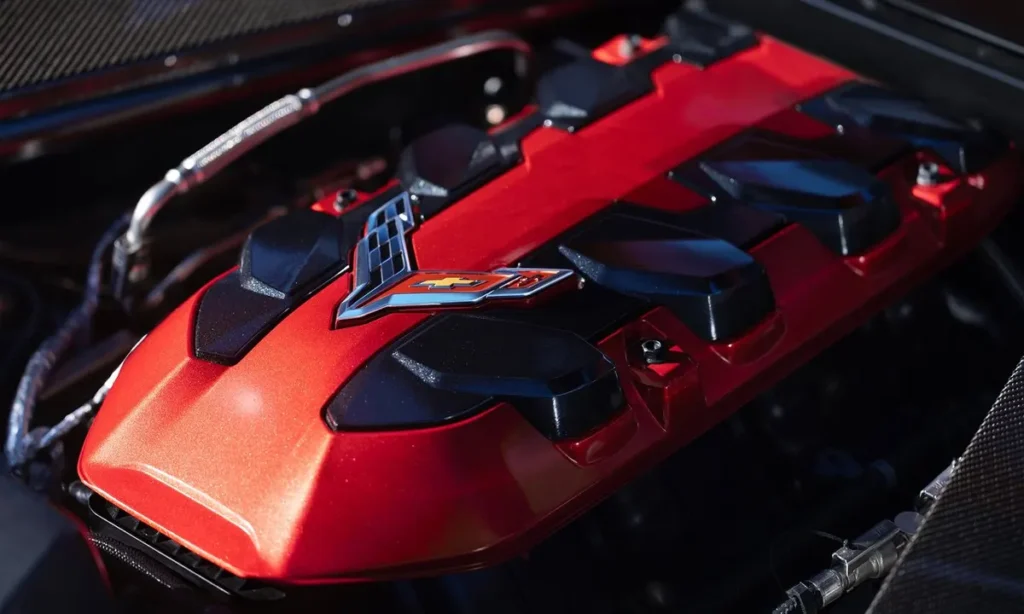
To understand the engineering philosophy embedded within the Grand Sport badge, the story must begin in 1962 at a Chevrolet engineering facility where Zora Arkus-Duntov — the Belgian-born, European-trained racing driver who had become the Corvette’s most passionate and most visionary engineering champion — conceived a plan whose audacity was matched only by the clarity of its engineering purpose. The threat he was responding to was real and immediate: Carroll Shelby’s new Cobra was systematically humiliating Corvettes in American sports car competition, and the gap between the Shelby’s purpose-built racing capability and the Corvette’s road-car-derived competition versions was widening with each race weekend. Duntov’s response was characteristically uncompromising — build a car specifically designed from its fundamental architecture as a racing machine, not a road car converted for competition duty, and build it in sufficient numbers to achieve homologation for international GT class racing.
The plan called for 125 units of what was initially called simply Project Lightweight, later designated the Grand Sport. The engineering brief was total and unsparing. Every component that could be lightened was lightened. Every component that could be fabricated from a stronger or more weight-efficient material than the production car used was redesigned accordingly. The steering wheel, the windshield wipers and the gear shifter were the only components carried over from the standard production Corvette — virtually everything else was purpose-designed, purpose-built and purpose-validated for racing duty alone. The fiberglass body panels were hand-laid to a thickness considerably thinner than production specification, creating a skin whose visual similarity to the standard Sting Ray concealed a construction approach entirely alien to road car manufacturing. The inner body structure, normally steel in the production car, was remade entirely in aluminium. Door latches were hollowed out to eliminate every gram that engineering ingenuity could find. The result of this uncompromising weight reduction programme was a car that tipped the scales at approximately 1,980 to 2,200 pounds — roughly 1,000 pounds lighter than the standard 1963 Sting Ray and endowed with a power-to-weight ratio that, when combined with the purpose-built engine Duntov had commissioned, created a racing weapon of genuine international competitiveness.
The powerplant that Duntov envisioned for the Grand Sport from the programme’s inception was itself a piece of engineering ambition commensurate with the car’s broader ambitions — a naturally aspirated aluminium-block small-block V8 of 377 cubic inches whose hemispherical combustion chambers, dual spark plugs per cylinder and four Weber side-draft carburettors produced 550 horsepower in its most developed form. This engine represented not merely a performance upgrade over the production Corvette’s unit but a complete rethinking of what an American V8 could achieve when the constraints of production-cost engineering and road car reliability requirements were set aside in favour of pure racing performance. Several of these aluminium engines were constructed and tested. None ever raced in the Grand Sport, because the project was terminated before the car reached its intended competitive debut.
General Motors’ leadership had been informed — allegedly by intelligence reaching GM Chairman Frederic Donner directly after test sessions at Sebring demonstrated the Grand Sport running within striking distance of a lap record — of Duntov’s secret programme and issued a company-wide racing ban that ordered the immediate termination of all GM-backed motorsport efforts. The order specified that the existing Grand Sport cars be destroyed. Duntov, characteristically, declined to follow this instruction with complete literal obedience — concealing the first two completed examples and ensuring that the remaining three reached the hands of private racing teams including those of Roger Penske and Jim Hall, whose subsequent campaign with the five Grand Sports produced victories over the Shelby Cobra at Nassau Speed Week in 1963 and a class win at the 1964 12 Hours of Sebring that validated the fundamental engineering soundness of Duntov’s conception even without the factory support and further development the programme had been intended to receive.
All five original Grand Sports survive to the present day in private collections. Their estimated value, were any to be offered publicly, falls between five and ten million dollars each — not because they are rare production cars but because they are physical embodiments of a specific engineering philosophy whose integrity and whose historical significance the Corvette community has never ceased to recognise and honour.
The Engineering Philosophy Defined: What Every Grand Sport Must Mean
The five original cars established the core principles of what the Grand Sport engineering philosophy requires — principles whose consistent application across every subsequent generation of the badge explains both its enduring resonance and the genuine performance distinction that separates it from lesser designations in the Corvette lineup. The Grand Sport philosophy can be distilled to three fundamental engineering commitments: maximum weight reduction compatible with the car’s intended use, suspension and chassis development that prioritises track capability above all other considerations and a powertrain specification that extracts the maximum available performance from the production engine family while maintaining the mechanical integrity that distinguishes a purpose-built performer from a simply overpowered one. These principles explain why the badge has been applied selectively across the Corvette’s generations rather than routinely — and why its absence from the C3 and C5 generations, and its initial non-appearance in the C8 era, was understood by the Corvette community as a meaningful statement about whether the engineering conditions for its appropriate use had been met.
The C4 Grand Sport: Honouring the Heritage at the End of a Generation
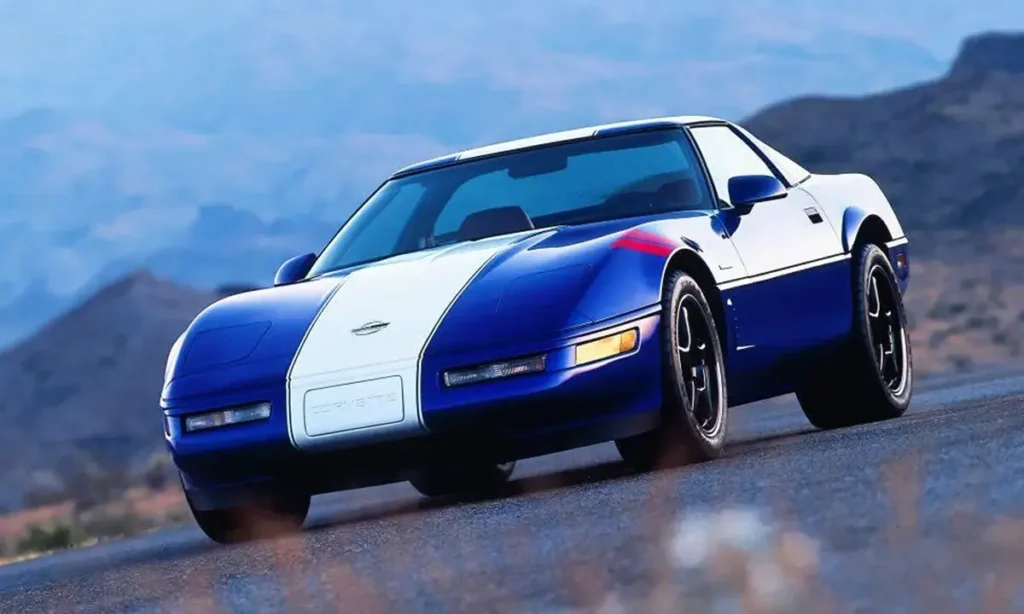
The Grand Sport badge returned to the Corvette lineup in 1996 — 33 years after the original programme’s termination — as a limited-production special edition commemorating the conclusion of the fourth-generation C4 Corvette’s production run. The execution was deliberately and respectfully heritage-conscious. All 1,000 examples were finished in Admiral Blue with an Arctic White centre stripe and a pair of red hash marks on the driver’s side front fender — a direct visual reference to the racing liveries associated with the original five cars. The wider rear fenders required to accommodate the black five-spoke wheels borrowed from the C4 ZR-1 gave the car a more muscular and more distinctive stance than the standard C4. The LT4 5.7-litre V8 — a higher-performance development of the LT1 with a more aggressive camshaft, aluminium roller rocker arms, hollow intake valves, sodium-filled exhaust valves, a performance crankshaft and a higher 10.8:1 compression ratio — produced 330 horsepower, available exclusively with the six-speed manual transmission whose mechanical engagement was entirely consistent with the Grand Sport’s driver-focused engineering identity.
The C4 Grand Sport was not a race car, and its specification did not attempt to claim the performance extremes of the original. It was, instead, an honest and well-executed tribute — one that applied the Grand Sport name to a car that delivered genuine performance distinction from the standard C4 while honouring the visual and emotional heritage of the badge it carried. Eight hundred and ten coupes and 190 convertibles were produced, each with unique vehicle identification numbers that distinguished them from standard C4 production. Their current collector values, with top examples reaching $35,750 at major auction events, confirm that the heritage investment the C4 Grand Sport represented has appreciated proportionately to the name it wore.
The C6 Grand Sport: The Badge Returns as a Production Model and Transforms the Lineup
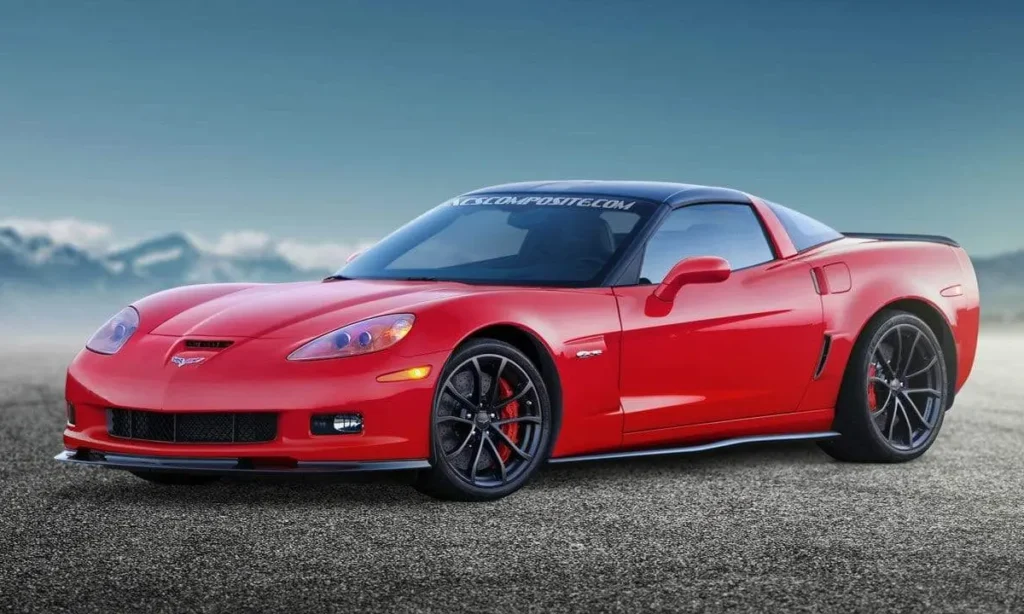
The 2010 introduction of the Grand Sport designation for the sixth-generation C6 Corvette represented the most important development in the badge’s modern history — its transition from a limited commemorative edition to a regular production variant that occupied a specific and carefully considered position in the Corvette performance hierarchy between the entry-level base model and the track-focused Z06. The engineering decisions that defined the C6 Grand Sport were characteristically thorough and characteristically honest in their performance intent. The Z06’s wider front and rear fenders — requiring meaningful structural changes to accommodate their track-width increase — were adopted directly, giving the Grand Sport the Z06’s visual stance on the standard car’s naturally aspirated LS3 V8 base. The Z06’s cross-drilled Brembo brake system, with its 355mm front rotors gripped by six-piston calipers and 340mm rear rotors with four-piston units, provided stopping power commensurate with the car’s widened track and elevated performance ambitions. A stiffened suspension with unique springs, larger anti-roll bars, a transmission cooler and, for manual-gearbox examples, the dry-sump oiling system shared with the Z06 and ZR1 completed a package whose comprehensiveness validated the Grand Sport name with the rigour that its heritage demands.
The C6 Grand Sport became, by a significant margin, the most commercially successful Grand Sport variant in the badge’s history — accounting for approximately half of all C6 Corvette sales despite its introduction partway through the generation’s production run. This commercial success reflected buyers’ recognition that the C6 Grand Sport delivered the maximum available performance from the Corvette platform without requiring the Z06’s substantially higher price or its more demanding maintenance requirements from the high-revving LS7 7.0-litre V8.
The C7 Grand Sport: Aerodynamics, Dry-Sump Engineering and Z06 DNA
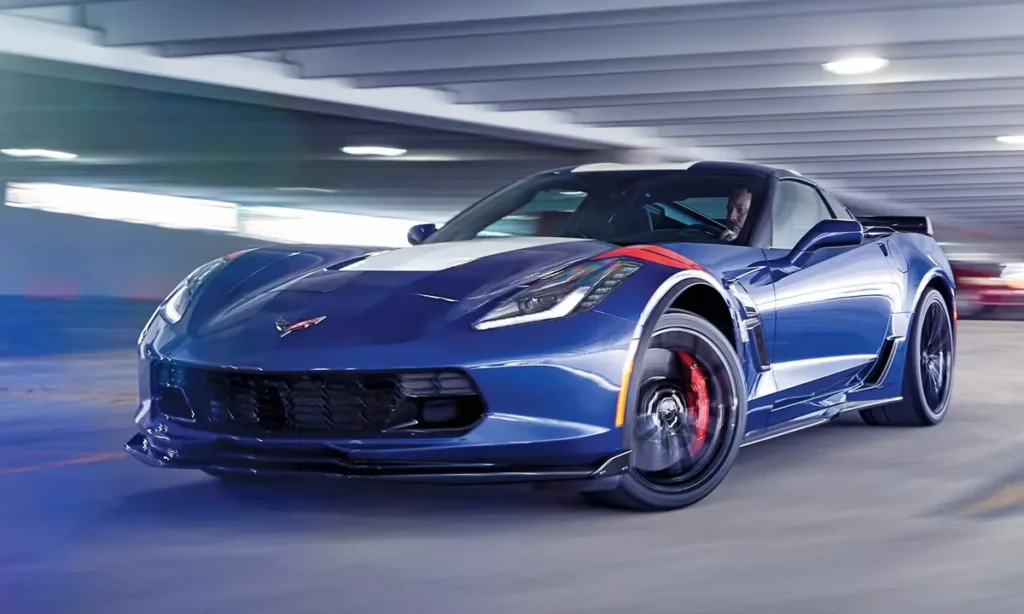
The seventh-generation Grand Sport, introduced at the 2016 Geneva Motor Show for the 2017 model year, extended and deepened the engineering philosophy established by the C6 variant while incorporating the aerodynamic development and chassis sophistication that the C7 generation’s more comprehensive engineering programme had made available. Z06-sourced wide body components framed the standard LT1 naturally aspirated 6.2-litre V8 — a powerplant whose 460 horsepower output from natural aspiration, supported by the dry-sump oiling system that ensured oil pressure consistency during the sustained lateral loads of track driving, gave the C7 Grand Sport a power delivery character that complemented the aerodynamic stability provided by its Z06-derived bodywork. Active magnetic ride control with Grand Sport-specific calibration, a Brembo braking system with 14-inch front rotors and six-piston calipers, an electronic limited-slip differential and Michelin Pilot Super Sport summer tyres as standard completed a package whose track capability was the most comprehensively resolved the Grand Sport badge had yet worn on a production car available to any buyer who walked into a Chevrolet dealership.
The C7 Grand Sport Collector Edition — limited to 935 examples across 784 coupes and 151 convertibles — added heritage hash marks, specific interior colour treatments and a numbered dashboard plaque that acknowledged the original five cars’ legacy in the most direct and most appropriate manner available to a production special edition.
The Badge That Racing Built
The engineering philosophy behind the Corvette Grand Sport badge is, ultimately, the philosophy of Zora Arkus-Duntov himself — the conviction that the Corvette deserved to be judged against the world’s finest performance cars on the world’s most demanding circuits and that achieving this required not incremental improvement of the production car but the willingness to start from the engineering brief the performance ambition demands and to build whatever that brief requires. In 1963, that brief produced five cars that should never have existed and that changed the Corvette’s competitive identity permanently. In every subsequent application, it has produced the Corvette that sits at the sweet spot of the lineup’s performance hierarchy — more capable than the standard car in every dimension that matters on the road and on the track, more accessible than the full race-focused Z06 and more honestly engineering-driven than any badge applied purely for commercial purposes could ever genuinely be. The Grand Sport is not a package. It is a promise — and the history of the badge is the history of Chevrolet consistently honouring it.
Corvette Grand Sport – Generation Summary Chart
| Generation | Year(s) | Units Built | Engine | Power | Key Engineering Feature |
| C2 Original | 1963 | 5 (Race Only) | Aluminium 377 V8 | Up to 550 hp | Tubular Frame / All-Aluminium Construction / ~2,000 lbs |
| C4 | 1996 | 1,000 | 5.7L LT4 V8 | 330 hp | ZR-1 Wheels / Wide Rear Fenders / Manual Only |
| C6 | 2010–2013 | High Volume | 6.2L LS3 V8 | 436 hp | Z06 Brakes / Wide Body / Dry-Sump (Manual) |
| C7 | 2017–2019 | High Volume | 6.2L LT1 V8 | 460 hp | Z06 Aero / Dry-Sump / MagRide / eLSD |
| C7 Collector Edition | 2019 | 935 | 6.2L LT1 V8 | 460 hp | Heritage Livery / Numbered Plaque |
| C8 | TBD | TBD | Mid-Engine / Various | TBD | Mid-Engine Platform Debut for GS |