ABS System Explained: Picture it. A kid chases a ball into the road, or the truck ahead slams to a halt out of nowhere. Your body does exactly one thing: your right foot mashes the brake pedal to the floor with everything you’ve got. Pure animal panic. And here’s the wild part. In that split second, the smartest thing in your car is doing its best to ignore you.
That’s not a bug. That’s the whole point. Your anti-lock braking system was engineered specifically to override your panicked instincts, because for decades those instincts were getting people killed. Let me pull back the curtain on the little computer that’s quietly refereeing your worst moment behind the wheel, and why it’s one of the most important pieces of tech you’ll never see.
The Old Way Was a Death Trap
Rewind to driver’s ed a generation ago. If you learned to drive before the 2000s, someone told you to “pump the brakes” in a skid. And they weren’t wrong, for the car they were driving. On an old system, if you stood on the pedal in an emergency, your wheels stopped turning entirely. They locked.
And a locked wheel is a disaster. Here’s the physics that trips everyone up: a tire that’s skidding has way less grip than a tire that’s still rolling. Worse, once your wheels are locked and sliding, turning the steering wheel does absolutely nothing. You’re a two-ton hockey puck. You can crank the wheel all you want and you’ll keep sliding dead ahead, right into whatever you were trying to avoid. Pumping the brakes by hand was the workaround, manually releasing and reapplying to let the wheels grab and roll between skids. It was slow, it was clumsy, and in a real panic almost nobody did it right.
What Your ABS Is Actually Doing in That Half-Second
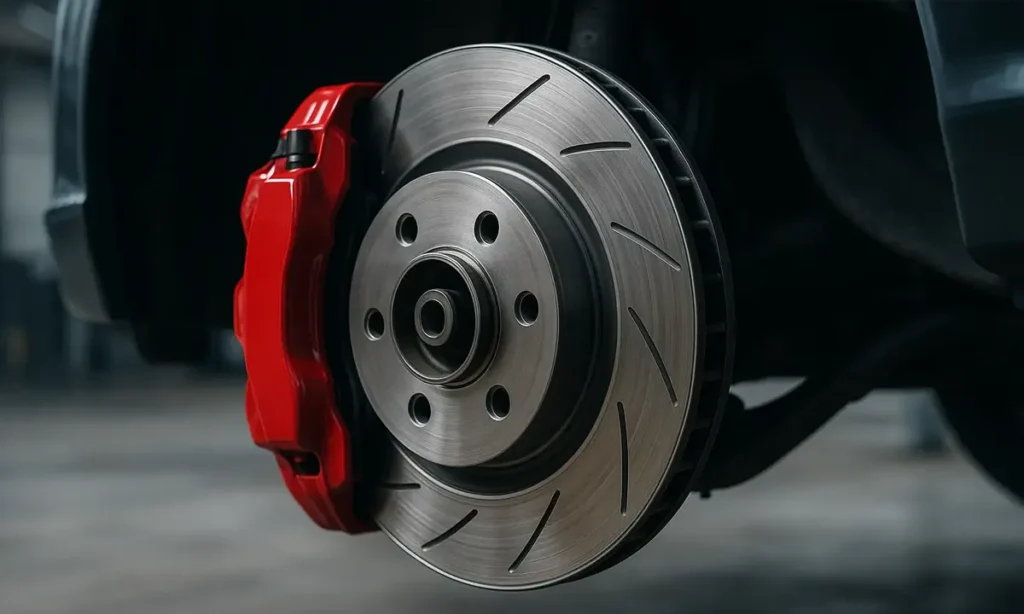
Now here’s where the magic happens. Your modern car has a speed sensor at every wheel, watching each one many times a second. The instant the computer sees a wheel about to lock, a valve snaps shut and eases off the brake pressure to that one wheel, just for a heartbeat, letting it keep rolling. Then it clamps right back down. Then it eases off again.
It does this incredibly fast. Some systems can pump an individual brake up to 15 times per second, far quicker and more precisely than any human ankle could ever manage. That’s what that weird shuddering, grinding pulse under your foot is during a hard stop. That’s not something breaking. That’s the system doing its job, cycling the brakes dozens of times while you just stand there pressing.
And this is the key thing every driver needs to burn into memory: the correct response is to stomp, stay, and steer. Plant your foot hard, keep it planted, and do not let up no matter how strange the pedal feels. The car handles the pumping. You handle the steering, because unlike those old locked-up wheels, ABS keeps your tires rolling just enough that you can actually swerve around the danger.
Read: Squeaking Brakes? The True Cost of New Pads in the USA
The Twist: It’s Not Really About Stopping Shorter
Here’s the myth I need to bust, because almost everyone gets this wrong. ABS is not primarily designed to stop you in a shorter distance. On dry pavement it barely changes your stopping distance at all, and on loose gravel or snow it can actually make you roll a touch farther.
What it buys you is control. The entire purpose is keeping your wheels turning so you retain the ability to steer during a panic stop. Stopping distance is a nice bonus on wet roads, where it genuinely helps. But the real gift is that you can dodge the obstacle instead of just plowing into it with locked wheels. Once you understand that ABS is a steering-saver first and a stopping aid second, the whole system finally makes sense.
Some cars sweeten the deal further with brake assist, a system that senses the frantic speed of a true panic jab and instantly slams on full braking force even if you didn’t quite press hard enough. Between the two, the car is quietly compensating for the two things panicking humans do worst: not braking hard enough, then not steering once they do.
The Sneaky Reason Every New Car Has It
Here’s a piece of history that surprises even car nerds. ABS was never actually mandated on its own in the United States. Early government studies in the 1990s were honestly a bit of a mess. Cars with ABS saw big drops in wet-road and pedestrian crashes, but a puzzling spike in single-vehicle run-off-road wrecks, up 28 percent at first. Drivers, startled by that unfamiliar pedal shudder, were lifting off the brake or oversteering into the ditch. The net effect on fatal crashes hovered near zero. Not exactly a glowing endorsement.
So how did ABS end up in literally every new car? It rode in on the coattails of its smarter cousin. Regulators mandated electronic stability control, the system that catches skids and prevents rollovers, on all light vehicles built from the 2012 model year onward. And stability control physically cannot work without ABS hardware underneath it. The wheel-speed sensors, the valves, the ability to brake one wheel at a time, that’s all ABS machinery. By requiring stability control, the government made anti-lock brakes universal without ever writing a rule that said so. As drivers learned to keep their foot down and stability control blanketed the fleet, that scary run-off-road number fell from 28 percent to single digits.
The Bottom Line: Trust the Machine
So are you stopping wrong? If your instinct in an emergency is to pump the pedal like your driving instructor taught you back in the day, then yes, on any car built in the last couple of decades, you’re doing it wrong. That advice died with the cars it was written for.
The move now is beautifully simple. In an emergency, jam the brake pedal to the floor, keep it pinned there through all the shuddering and groaning, and steer toward your escape route. Let the computer do the frantic pumping it does 15 times a second. It’s smarter, faster, and calmer than you will ever be in that moment, and it was built for exactly the half-second when your panic takes over. The best thing you can do is get out of its way and point the car where you want to go. Your brakes have your back. Literally.