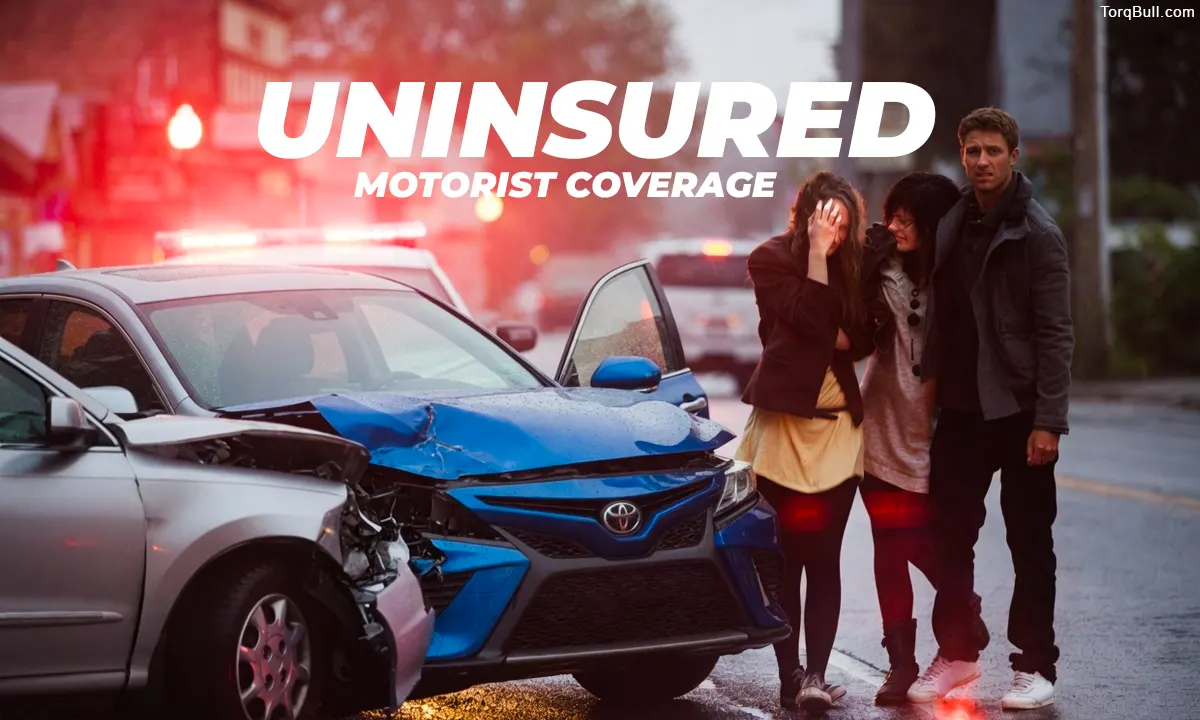
- Uninsured Motorist (UM) coverage protects you when the at-fault driver has no insurance or flees the scene and cannot be identified.
- Depending on your state and policy, UM coverage can help pay for medical expenses, lost income, pain and suffering damages and, in some jurisdictions, vehicle repairs.
- Because uninsured and underinsured drivers remain common, UM and Underinsured Motorist (UIM) coverage are among the most valuable optional protections available and are required in many states.
Uninsured motorist coverage is the most misunderstood yet critical component of an auto insurance policy, and the gap between what most drivers assume their policy covers and what it actually covers becomes financially devastating only at the worst possible moment, after a serious accident with a driver who cannot pay for the damage they caused. With one in seven drivers nationally carrying no insurance at all, and significantly higher rates in certain states, the question of whether uninsured motorist coverage is worth adding to a policy is not a marginal consideration but a fundamental decision about financial protection. This complete guide explains exactly what the coverage does, how it works in practice, what it costs and the specific factors that determine whether any individual driver should carry it and at what limits.
What Uninsured Motorist Coverage Actually Covers
Uninsured motorist coverage replaces the liability insurance that the at fault driver should have carried but did not. When a driver without insurance causes an accident, that driver’s nonexistent policy cannot pay for the victim’s medical bills, lost income, pain and suffering or vehicle damage. Uninsured motorist coverage steps into this gap, with the victim’s own insurer paying these costs as if the at fault driver’s insurance had been in place.
The coverage splits into two distinct types. Uninsured motorist bodily injury coverage pays for medical expenses, lost wages while recovering, pain and suffering compensation and funeral expenses if the accident results in a fatality. Uninsured motorist property damage coverage helps repair or replace the insured vehicle when it is damaged in an accident caused by an uninsured driver, though some states do not require or even offer this property damage component and instead expect collision coverage to handle vehicle repairs.
A closely related and frequently bundled coverage is underinsured motorist protection. This applies when the at fault driver does have insurance, but their policy limits are insufficient to cover the full scope of the victim’s damages. A driver carrying only the state minimum liability limits, often as low as $25,000 per person, can leave a seriously injured victim with tens of thousands of dollars in uncovered medical bills even though the at fault driver was technically insured. Underinsured motorist coverage fills this remaining gap up to the victim’s own policy limits.
Both uninsured and underinsured motorist coverage also extend to hit and run accidents. Because the at fault driver in a hit and run cannot be identified, there is no insurer to pursue, and the victim’s own uninsured motorist coverage is frequently the only available compensation source for these incidents, which occur with striking frequency on American roads.
Read: How Insurance Companies Determine Vehicle Rates. The Complete 2026 Guide
How the Coverage Works in Practice

Uninsured motorist coverage functions essentially like the liability coverage that the at fault driver should have carried. When filing a claim under this coverage, the victim’s own insurance company evaluates the accident, determines fault and assesses damages in much the same way the at fault driver’s insurer would have, except the victim’s own carrier is now the party paying out the claim.
This arrangement means the claims process is handled entirely through the victim’s relationship with their own insurer rather than through negotiation with a stranger’s insurance company. For many claimants, this produces a more straightforward claims experience because the insurer with whom they have an ongoing policy relationship is the party processing the claim, though it can also create a different dynamic where the same company that the victim pays premiums to is also the party with a financial interest in minimising the payout.
The coverage limits selected at the time of purchase determine the maximum amount available regardless of how severe the actual damages turn out to be. A driver who selects uninsured motorist limits matching only the state minimum liability requirement may find those limits insufficient for a serious injury claim, just as the at fault driver’s minimum liability policy would have been insufficient had they carried insurance at all.
Where the Requirement Stands in 2026
State requirements for uninsured and underinsured motorist coverage vary significantly, and 2026 has brought the most significant wave of changes to these requirements in recent memory. Twenty states and the District of Columbia require uninsured motorist coverage, while fourteen states specifically require the underinsured version. Twenty two states require some form of UM or UIM coverage as part of mandatory minimum limits.
Seven states increased their minimum coverage requirements across 2025 and 2026, more changes than occurred in the prior ten years combined. Several of these changes specifically affected uninsured and underinsured motorist minimums. New requirements in certain states mandate that all new and renewed policies include both uninsured and underinsured motorist coverage at matching limits, with UIM coverage that was previously optional becoming mandatory alongside UM coverage at the same limit level.
California’s minimum liability requirements increased for the first time since 1967, with corresponding increases to uninsured and underinsured motorist minimums when that coverage is purchased, now matching the new and higher liability limits. Massachusetts increased its minimum liability requirements for the first time since 1988, with personal injury protection minimums remaining unchanged but the overall coverage framework substantially revised.
Even in states where uninsured motorist coverage is not legally required, it remains a sound financial decision, particularly in states with high rates of uninsured driving. The legal requirement and the financial wisdom of carrying this coverage are two separate questions, and many financially prudent drivers in non-mandatory states carry uninsured motorist coverage anyway because the protection it provides far outweighs its modest cost.
Read: How to Lower Car Insurance After Buying a New Car
Do You Need It? The Honest Assessment
The honest answer to whether any individual driver needs uninsured motorist coverage depends on a combination of factors that together paint a picture of personal risk exposure.
The frequency of driving is the most directly relevant personal factor. The more often someone drives, the more likely they are to benefit from this coverage, simply because more time on the road increases exposure to the statistical probability of encountering an uninsured driver. Commuters who drive daily face meaningfully more exposure than occasional drivers who use their vehicle only for weekend errands.
Geographic location matters enormously because uninsured driving rates vary dramatically by state. In states where as many as one in seven or more drivers carry no insurance, the statistical likelihood of being in an accident with an uninsured driver at some point during years of regular driving becomes a meaningful probability rather than a remote possibility.
Existing health insurance and disability coverage affect how much uninsured motorist protection an individual genuinely needs, though they rarely eliminate the need entirely. Health insurance may cover medical bills from an accident, but it typically does not cover lost wages, pain and suffering, or vehicle damage, leaving significant gaps that only uninsured motorist coverage addresses.
The financial consequence of an uninsured accident without this coverage is the factor that most decisively answers the question for most drivers. Motor vehicle injuries in the United States carry an estimated economic cost in the hundreds of billions of dollars annually, and an individual victim of a serious accident with an uninsured driver can face tens or hundreds of thousands of dollars in medical bills, lost income and vehicle repair costs with no realistic path to recovering those costs from the at fault driver. Against this potential financial catastrophe, the modest monthly cost of uninsured motorist coverage represents one of the most favourable risk to cost ratios available in personal insurance.
Uninsured Motorist Coverage at a Glance — Complete Reference Chart
| Category | Detail |
| What it covers | Medical bills, lost wages, pain and suffering, funeral expenses, vehicle damage in some states |
| When it applies | At fault driver has no insurance, or flees in a hit and run |
| Underinsured version | Covers the gap when at fault driver’s limits are insufficient |
| States requiring UM | Twenty states plus the District of Columbia |
| States requiring UIM | Fourteen states |
| States requiring some UM or UIM | Twenty two states total |
| National uninsured driver rate | Approximately one in seven drivers |
| Hit and run frequency | Every 43 seconds nationally |
| 2025 to 2026 regulatory trend | Seven states raised minimums, most changes in over a decade |
| Typical added monthly cost | Modest, often a small fraction of total premium |
| Claims process | Handled through your own insurer, similar to liability coverage |
| Best practice limit recommendation | Match your liability limits for consistent protection |
| Who benefits most | Frequent drivers, residents of high uninsured rate states, those with limited health coverage |
Read: How Interest Rates Affect Your Monthly Car Payment. The Complete 2026 Calculation Guide
The Practical Next Step
The most actionable advice for any driver evaluating this coverage is to pull out the current insurance declarations page and check whether uninsured and underinsured motorist coverage appears as a line item, and if so, at what limits. Many drivers discover they either lack this coverage entirely or carry it at limits matching an outdated state minimum that no longer reflects either the current legal requirement or realistic accident cost exposure.
Given the regulatory changes happening across multiple states in 2025 and 2026, even drivers who confirmed their coverage was adequate a few years ago should verify it again, particularly if they live in one of the states that recently increased minimum requirements. A brief call to an insurance agent to review and, if necessary, adjust uninsured motorist limits is among the smallest time investments that produces the largest potential financial protection in an entire insurance portfolio.