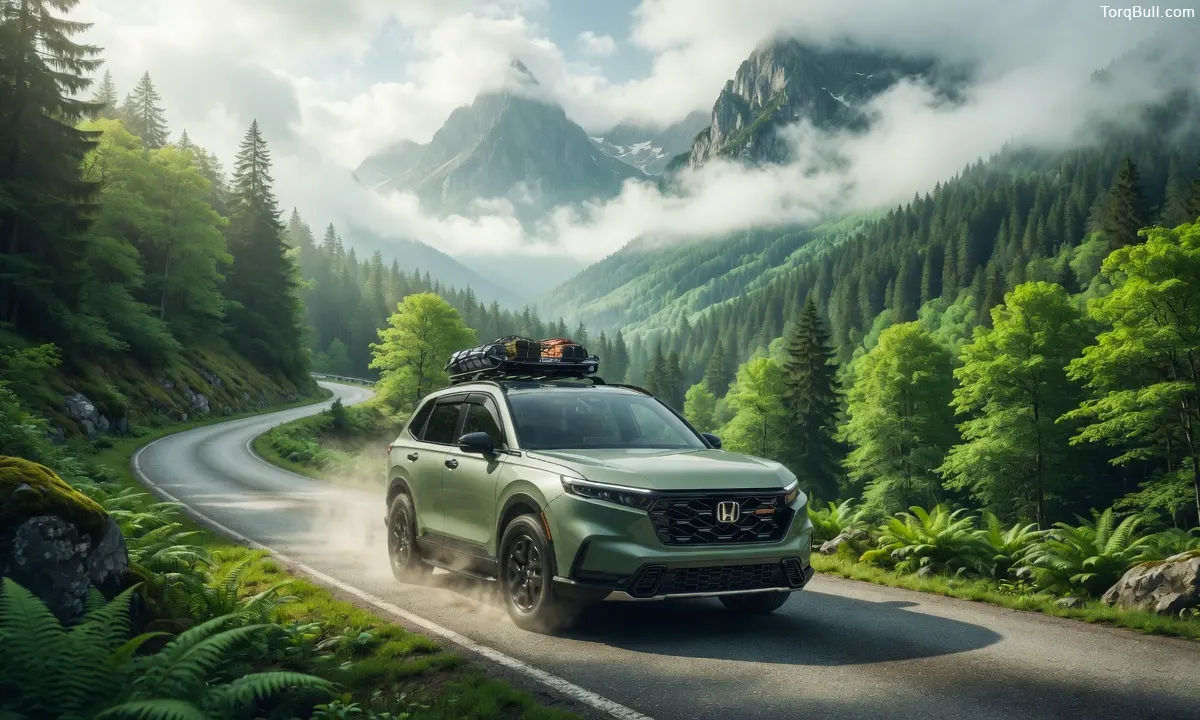
- The 2026 Honda CR-V’s updated AWD system is significantly more capable than before, with improved torque distribution and enhanced traction management on slippery or uneven surfaces.
- AWD increases ground clearance from 7.8 to 8.2 inches and costs approximately $1,500 more than the equivalent front-wheel-drive model.
- For drivers who regularly encounter snow, rain, dirt roads or steep terrain, the AWD upgrade is generally worth the added cost, while urban and warm-climate buyers may be better served by the less expensive FWD version.
Every year, millions of compact SUV shoppers face the exact same fork in the road. Do you spend the extra money on all wheel drive, or do you save it and stick with front wheel drive? For the 2026 Honda CR-V, this decision just got more interesting, because Honda did not just slap the same old system on the latest model and call it a day. They actually went in and improved how the whole thing works. Let’s dig into exactly what changed, how it performs, and whether that 1,500 dollar price tag is money well spent.
What Real Time AWD With Intelligent Control Actually Does
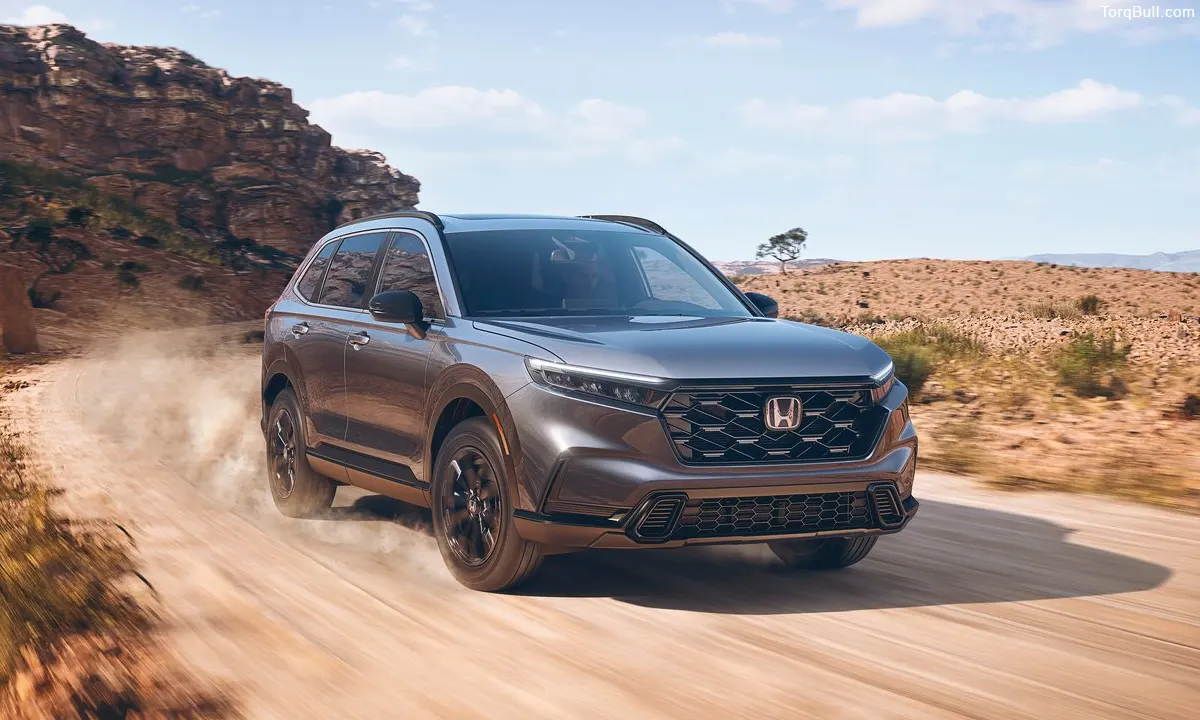
The system at the heart of every AWD CR-V is called Real Time All Wheel Drive with Intelligent Control, and for 2026, Honda gave it a genuine overhaul rather than a name change dressed up as news.
The current generation Real Time AWD System can actually torque split 50 50 across the axles, and the improved braking force to slipping wheels ensures you don’t wind up hopelessly stuck in a loss of traction situation as easily. That 50 50 split is a big jump from where things used to be. It can now split torque 50 50 between the front and rear wheels, where earlier models could only do 60 40, and hill descent control is standard.
Here is the part that really matters in the real world. So even if two wheels are in the air, the system can effectively brake the free spinning ones and route torque to the grounded pair. Picture one corner of your CR-V lifted off the ground on an uneven trail or a snowbank. The old system would have struggled to get usable power to the wheels still touching the ground. The new system actively brakes the spinning wheels and shifts power where it can actually do something, which is exactly the kind of behavior that gets you unstuck rather than leaving you spinning helplessly.
Honda also tweaked the all wheel drive system across all CR-Vs to offer more aggressive brake based torque vectoring below 9 mph, with the goal of transferring more power to the wheels that have grip. This low speed focus is smart, because low speed crawling on slick boat ramps, icy driveways, and gravel parking lots is exactly where most drivers actually encounter traction problems in daily life, not at highway speeds.
Read: Best Honda CR-V Trim to Buy. Which Model Delivers the Most Value in 2026?
The Ground Clearance Bonus You Did Not Know About
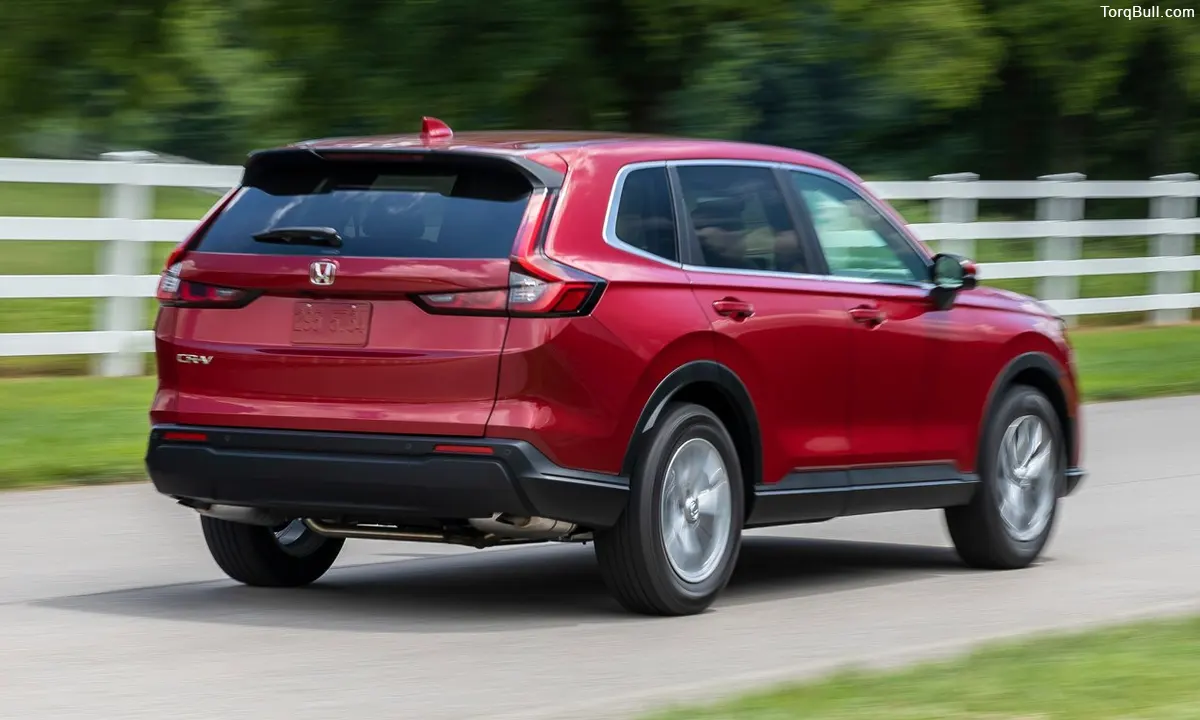
Here is a detail that flies under the radar for a lot of shoppers, but it genuinely matters if you live somewhere with real winters or rough roads.
Adding all wheel drive lifts the CR-V’s ground clearance from 7.8 to 8.2 inches. That might sound like a tiny difference on paper, but those extra 0.4 inches can be the difference between scraping your bumper on a snow berm and clearing it cleanly, or between your undercarriage catching on a rutted dirt road versus gliding right over it. It is a small bonus that comes bundled into the AWD purchase, essentially adding a bit of extra capability you did not even have to specifically ask for.
How It Performed in Actual Slip Testing
Talk is cheap, so let’s get into how this system actually behaves when put through real low traction testing, because the results tell an interesting story about generational improvement.
A few months ago, testers drove the pre refresh 2025 CR-V Sport Touring Hybrid on a slip test, and the result was not pretty. The TL DR version is that it did not perform well, struggling in low traction conditions in a way that left a lot to be desired.
Fast forward to the updated 2026 Honda CR-V TrailSport, and the story flips completely. The updated 2026 Honda CR-V TrailSport did much better in low traction conditions. Traction was clearly stronger on dirt surfaces, and during the roller test, where one or more wheels are left spinning freely, the new system showed off exactly the kind of capability that the 50 50 torque split and improved brake based vectoring were designed to deliver. As you’d expect, the all terrain tires do make a difference against the all seasons too, which means part of that improvement comes down to rubber choice, but the underlying AWD hardware deserves real credit here too.
Read: Honda CR-V Rear Seat Comfort Review. Space, Legroom and Everyday Practicality Explained
Meet the TrailSport, the New AWD Specialist
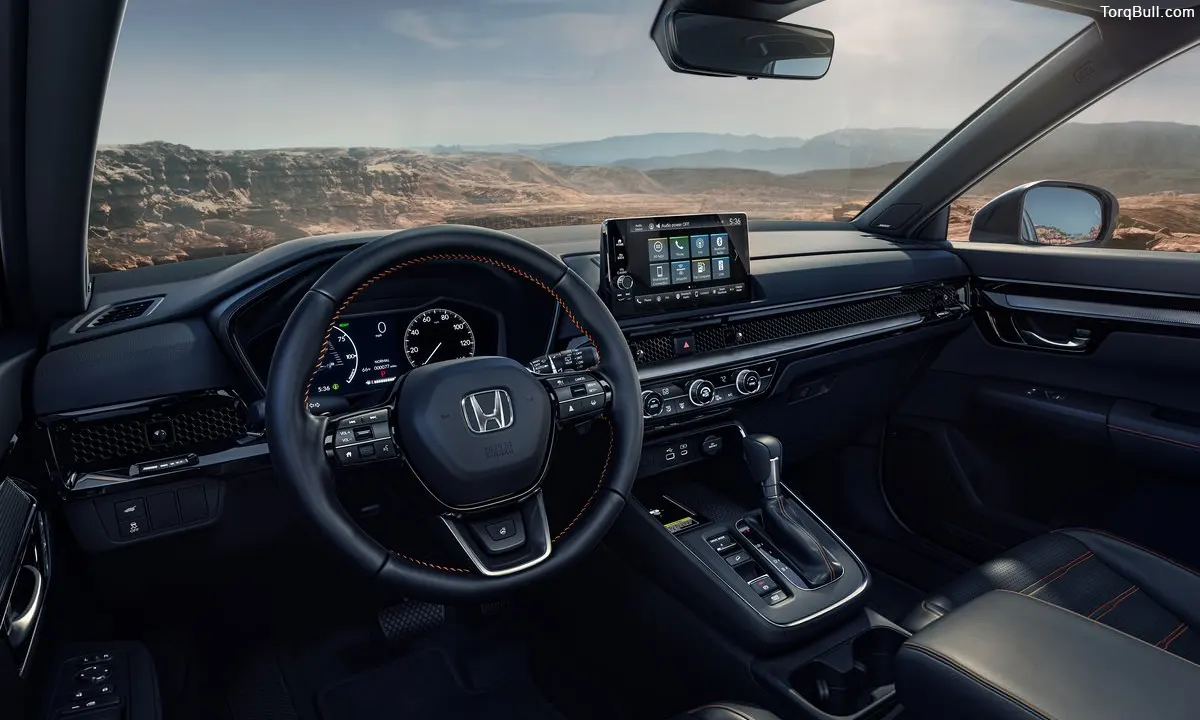
For 2026, Honda introduced a brand new trim that puts this upgraded AWD system front and center, and it is worth knowing about even if you do not end up choosing it.
The TrailSport adopts a more rugged, off roady look thanks to revised front end styling, gray painted wheels and black exterior accents. With an MSRP starting at 38,800 dollars before fees, the TrailSport slots between the Sport L and Sport Touring trims, and it is hybrid only, meaning AWD comes as part of the package rather than an optional add on.
The TrailSport wraps its 18 inch gray wheels in a set of 235 60R18 Continental CrossContact ATR all terrain tires, which is the single biggest functional difference setting it apart from a standard AWD CR-V. However, it is worth setting expectations correctly here. With the exception of those tires, the TrailSport doesn’t offer any additional trail ready features or attitude. It doesn’t get more ground clearance, for example, which is something that comes on the Wilderness version of the Subaru Forester. The honest verdict is straightforward. Sure, the TrailSport looks cooler than a regular CR-V. Just don’t venture too far off the paved path.
The Fuel Economy Tradeoff You Need to Know
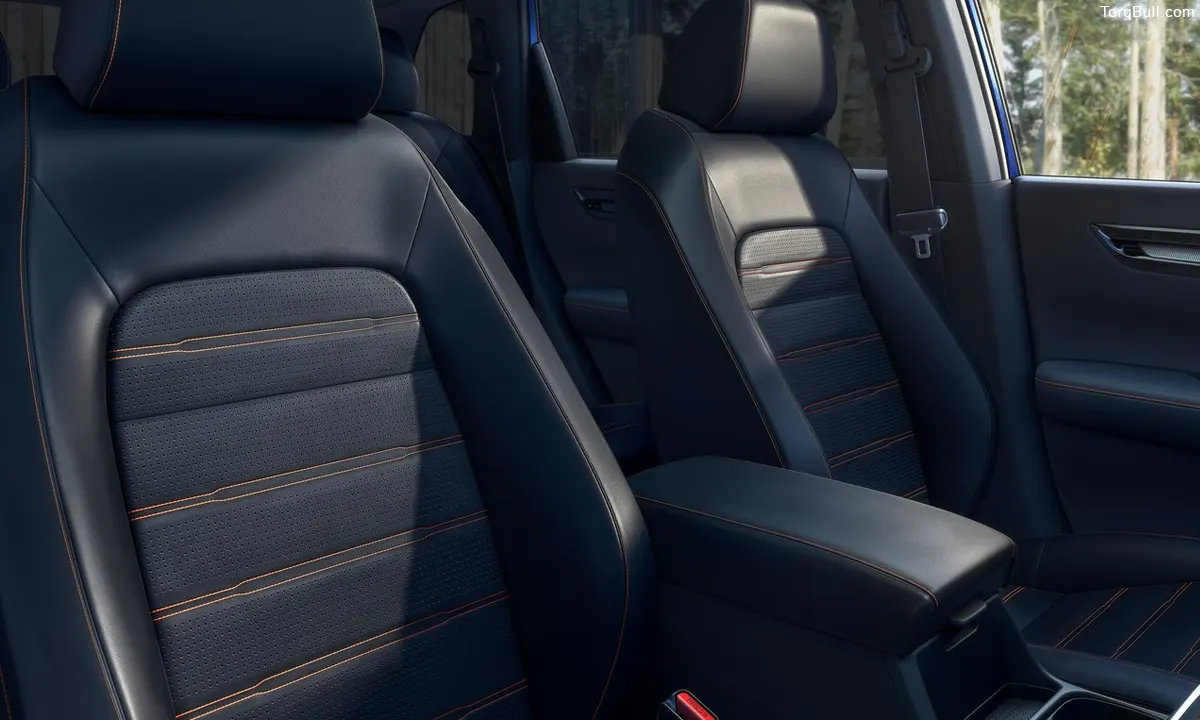
Nothing in life is free, and AWD comes with a real, measurable fuel economy cost that you should factor into your decision.
On the gas powered CR-V, front wheel drive LX, EX, and EX-L trims are rated at 28 city, 33 highway, and 30 combined mpg, while the AWD versions of those same trims drop to 27 city, 31 highway, and 29 combined mpg. That is roughly a 1 mpg combined penalty across the board, which is a relatively modest tradeoff for the traction benefits.
The hybrid story is a bit more dramatic. For more fuel savings, the hybrid gets up to 40 mpg, with all wheel drive, that estimate drops to 37 mpg. In real world testing, an AWD hybrid averaged a disappointing 33.3 mpg on a highway biased evaluation route, though testers noted this was a tough route where most of the CR-V’s rivals also underperformed, and better fuel economy showed up in day to day driving around town where the hybrid system could do its thing more effectively.
Read: Honda CR-V Fuel Cost Per Year. Is This Compact SUV More Affordable Than You Think?
Honda CR-V AWD — Quick Reference Chart
| Feature | Front Wheel Drive | All Wheel Drive |
| Price Premium | Baseline | Plus $1,500 |
| Ground Clearance | 7.8 inches | 8.2 inches |
| Gas Fuel Economy | 28 city, 33 highway, 30 combined | 27 city, 31 highway, 29 combined |
| Hybrid Fuel Economy | Up to 40 mpg | Up to 37 mpg |
| Real World Hybrid Test | Not specified | 33.3 mpg on highway biased route |
| Torque Split | Not applicable | 50 50, up from 60 40 |
| Low Speed Traction Aid | Not applicable | Brake based vectoring below 9 mph |
| Hill Descent Control | Not standard | Standard |
| TrailSport Availability | Not available | Hybrid only, starts at $38,800 |
| Drive Modes (Hybrid) | Individual, sport, normal, econ, snow | Same, plus snow optimized AWD behavior |
| Best For | Mild climates, maximize mileage | Snowbelt regions, winter confidence |
So, Is AWD Worth It
Here is the bottom line. For those in snowbelt regions, AWD is a smart add on, while front wheel drive models eke out slightly better fuel economy. If you live somewhere that sees real snow, ice, or regularly muddy and gravel roads, the genuinely improved 50 50 torque split, the smarter brake based traction system, and that small but real ground clearance bump make the 1,500 dollar premium an easy yes. The slip test results alone show this is not just a marketing refresh, the system actually performs noticeably better than its predecessor.
If you live somewhere with mild winters and mostly paved roads, the math shifts the other way. The roughly 1 mpg combined penalty on gas models and the larger hybrid efficiency gap add up over years of ownership, and you may simply never encounter the conditions where AWD would have made a real difference. Choose AWD if winter traction is a must, but front wheel drive will return slightly better mileage for milder climates, and honestly, that simple rule of thumb still holds up perfectly in 2026.