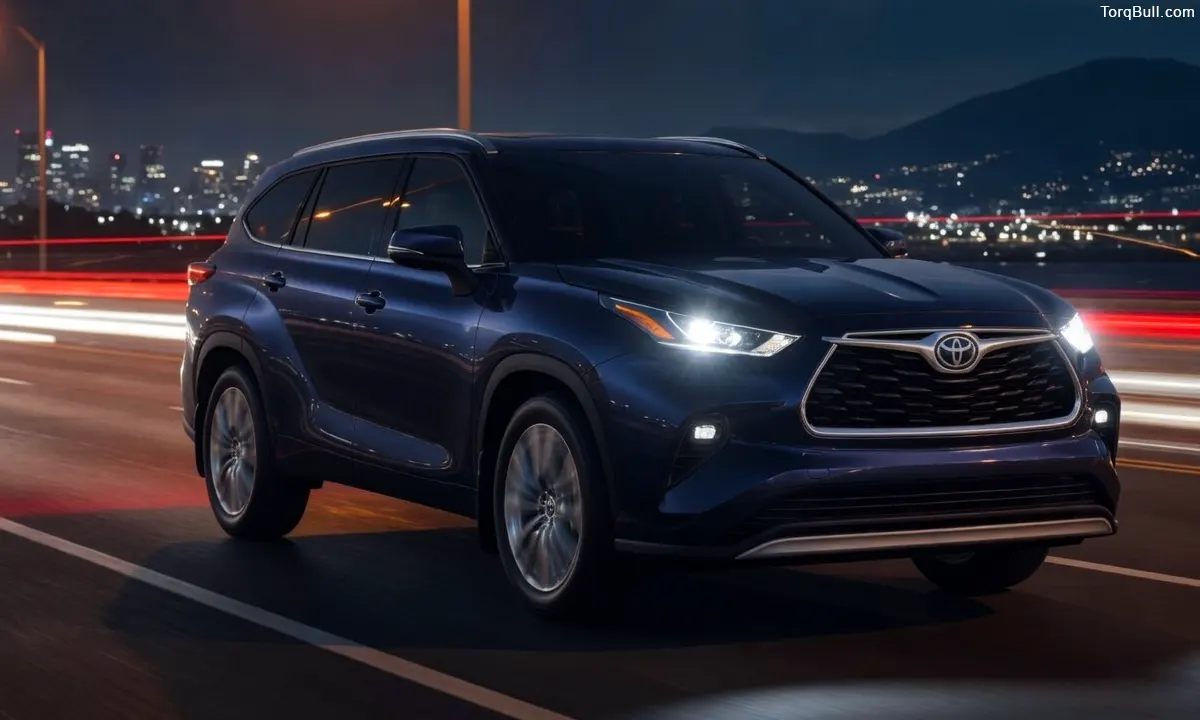
- Hybrid: 36 MPG city, 35 MPG highway
- More efficient in city than highway driving
- Gas model: 21 city / 28 highway MPG
- Edmunds real-world: ~26.6 MPG
- Owner reports: ~22 city to ~34 highway
Toyota Highlander Fuel Economy: The Toyota Highlander’s city versus highway fuel economy profile is one of the most interesting and most instructive comparisons in the midsize SUV segment — because the gas and hybrid powertrain versions behave in fundamentally opposite directions in these two environments. The gasoline Highlander, like most conventional vehicles, earns its better fuel economy on the highway where continuous steady-speed driving minimises energy wasted in acceleration. The Highlander Hybrid inverts this relationship — delivering its best efficiency in city driving where regenerative braking recovers energy that the gasoline model wastes as heat, and its lower-than-expected efficiency on the highway where sustained speed minimises the hybrid system’s primary advantages. Understanding this inversion, and what it means for any specific buyer’s annual fuel cost based on their actual driving mix, is the most practically useful fuel economy analysis available for the Highlander.
Gallery: Toyota Highlander
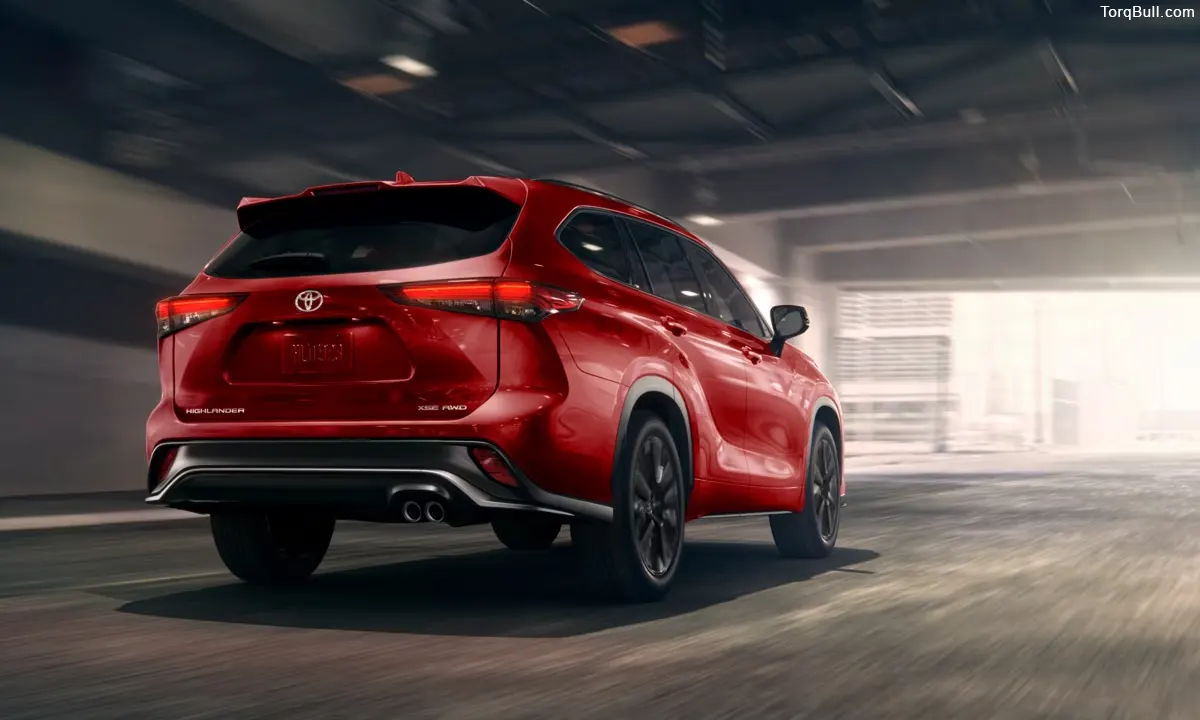
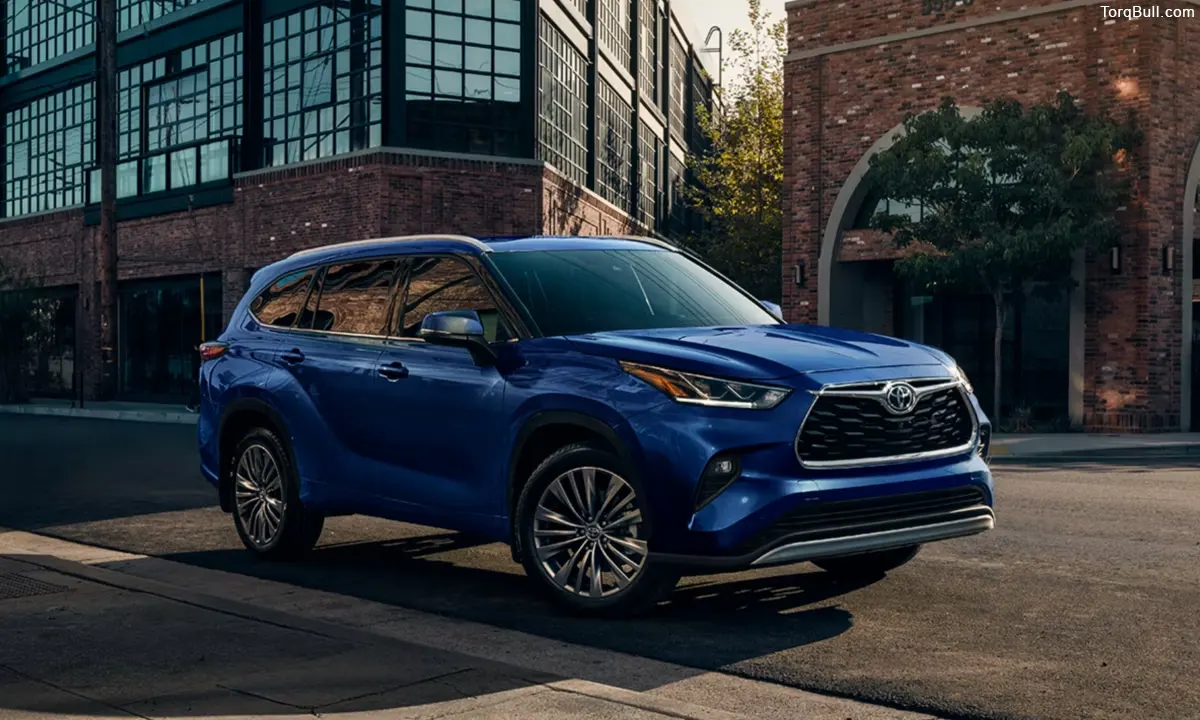
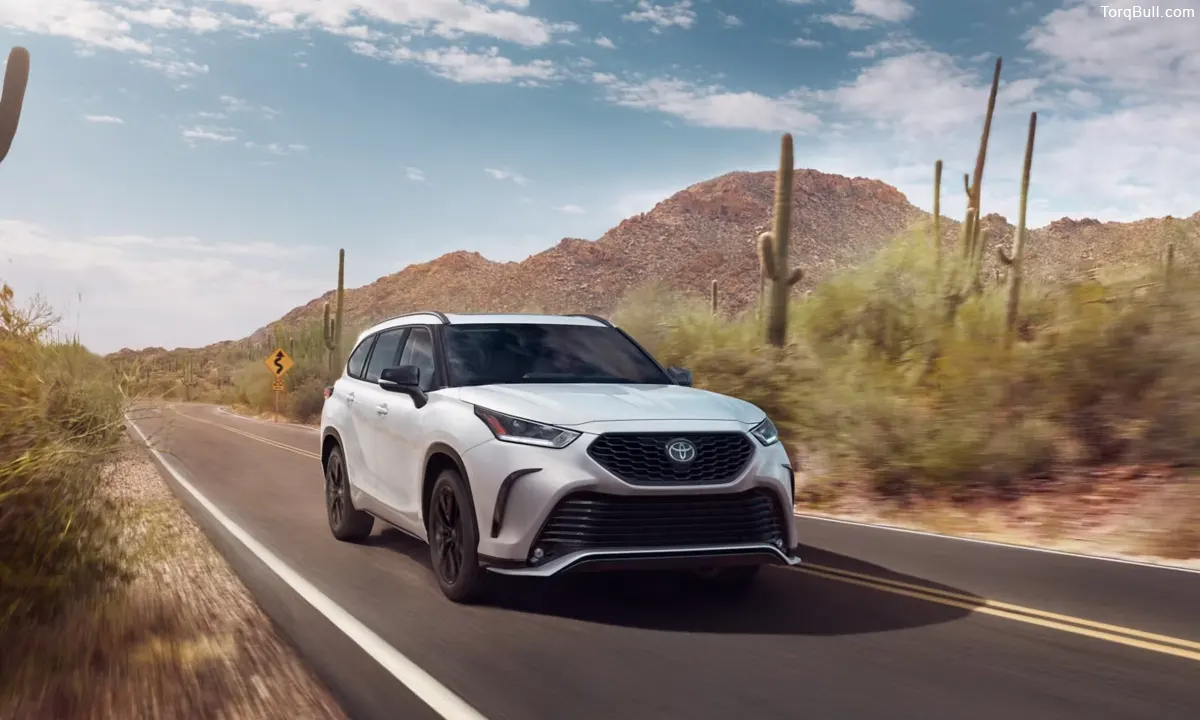
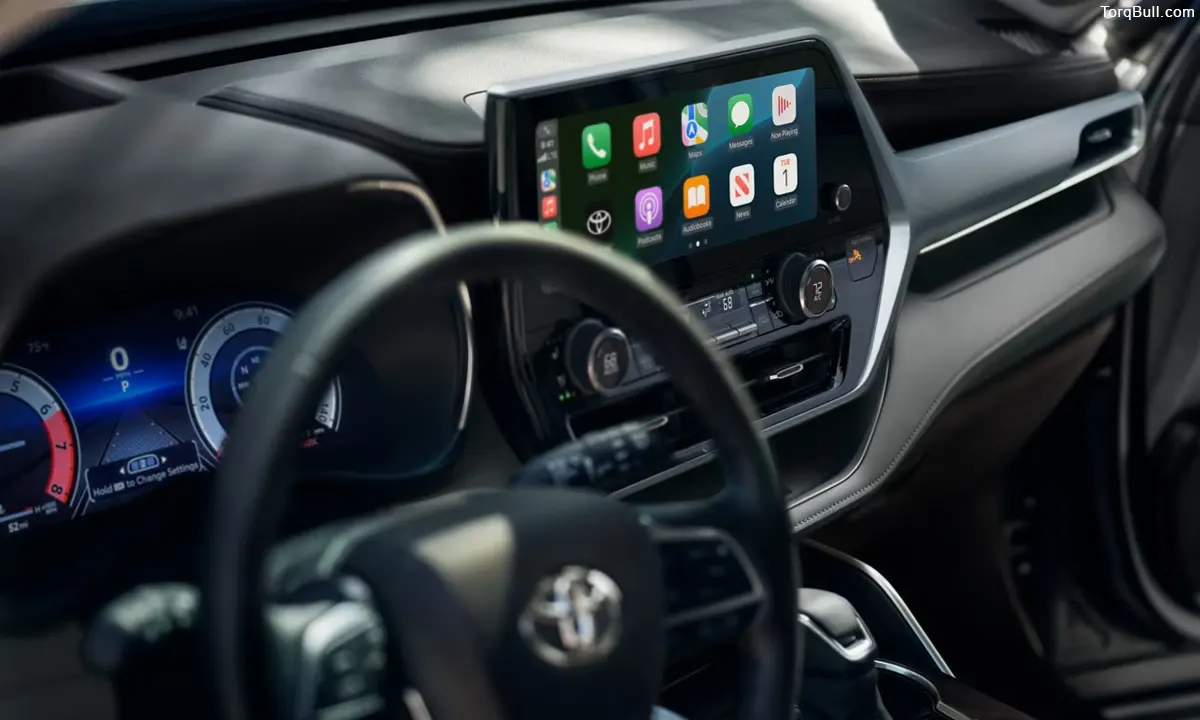

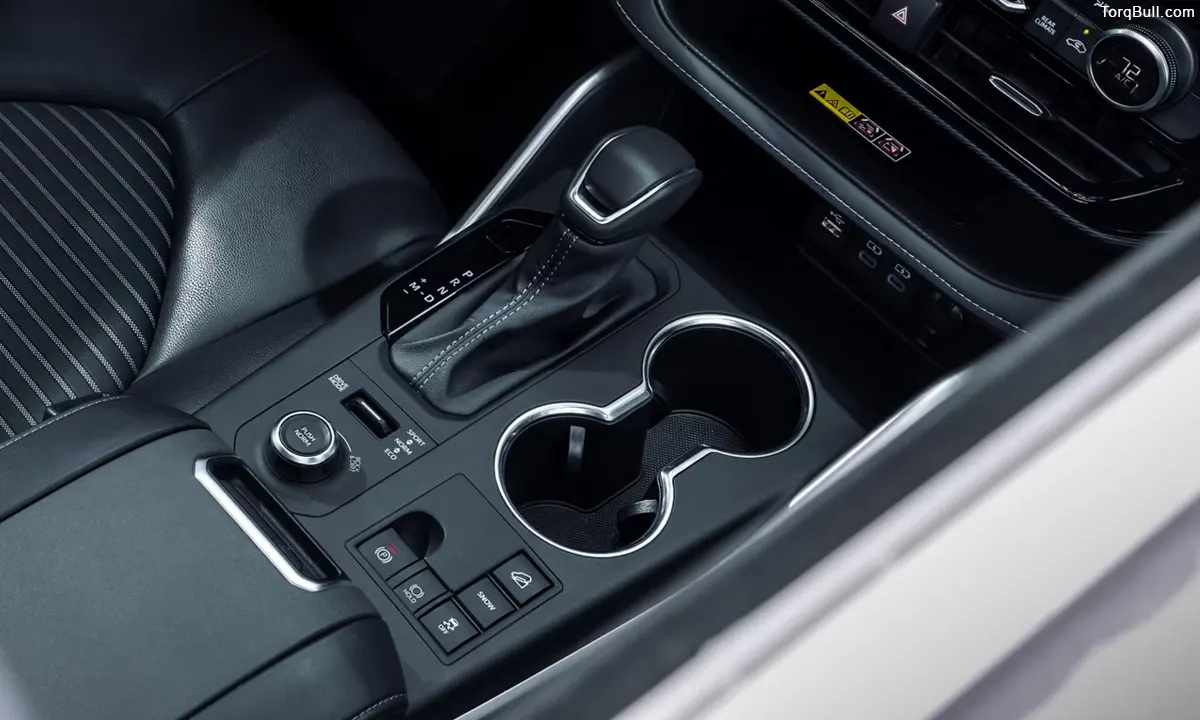
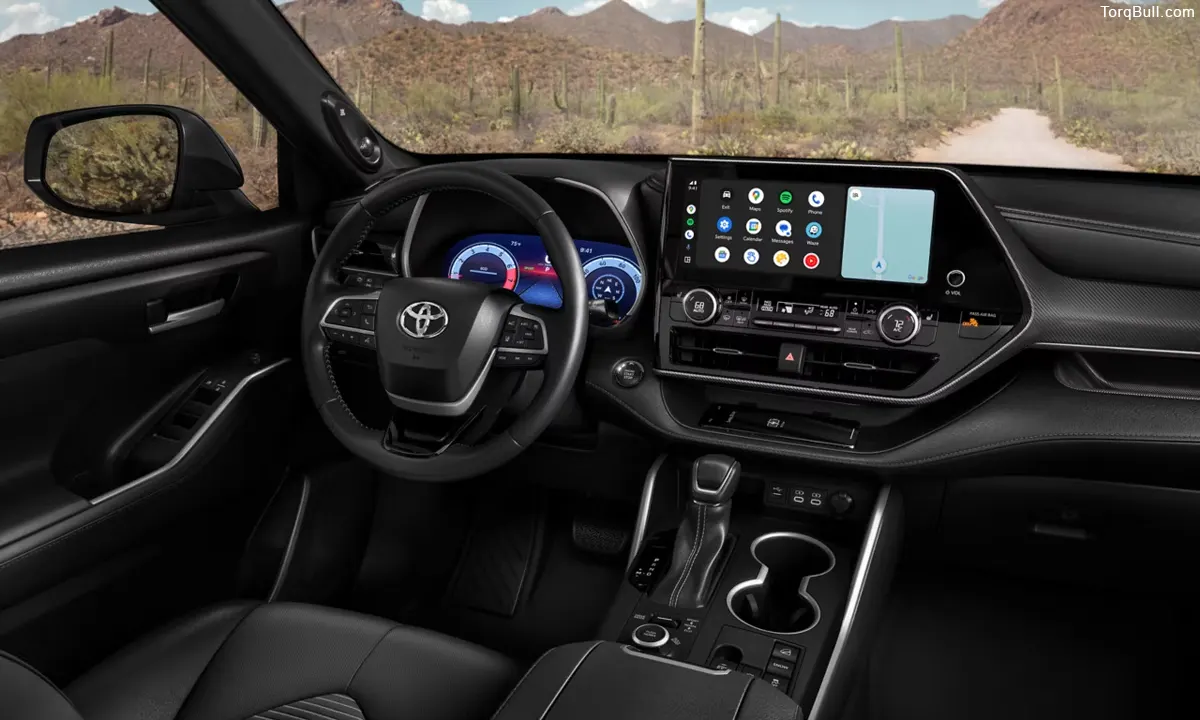


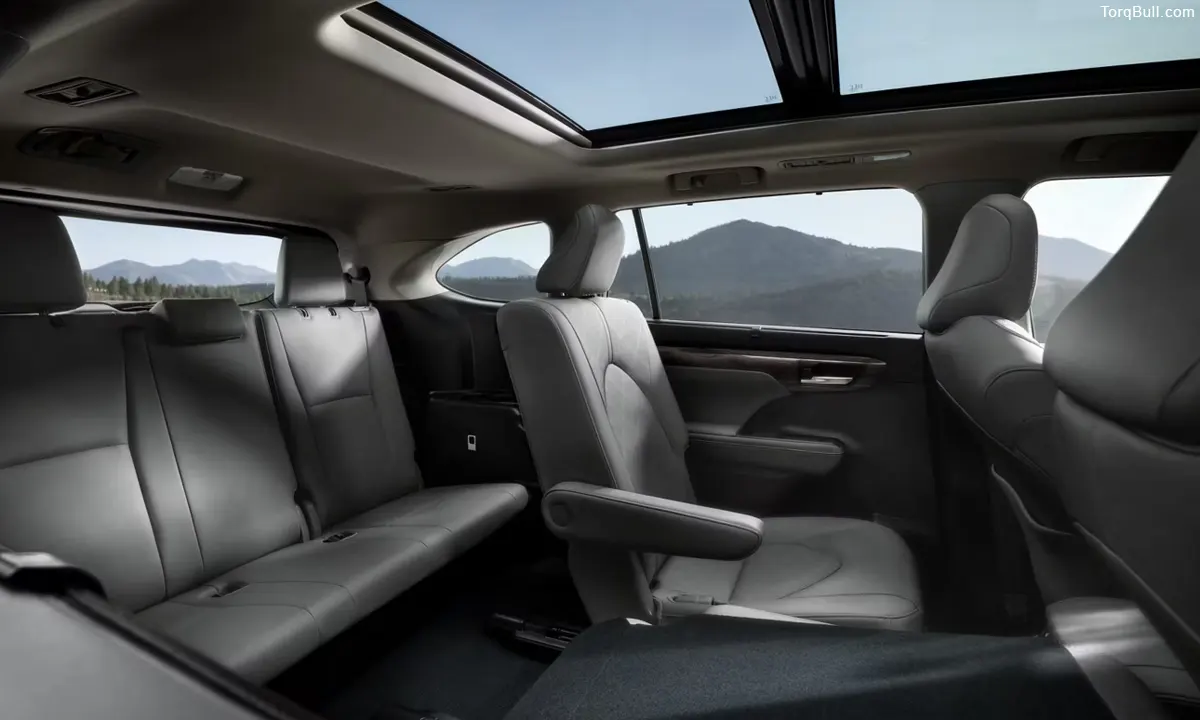

The 2026 Highlander Gas: EPA Ratings and the City-Highway Gap
The 2026 Toyota Highlander with the standard 2.4-litre turbocharged four-cylinder engine follows the conventional vehicle fuel economy pattern — better on the highway than in city driving — but the specific numbers and the gap between the two environments require careful attention to drivetrain configuration.
All 2026 Highlander gas models now include standard AWD following the elimination of the front-wheel-drive option. This means every gas Highlander buyer faces the same EPA numbers: 21 MPG city, 28 MPG highway and 24 MPG combined. Toyota’s official newsroom confirms these figures for the 2026 gas Highlander alongside the note that the engine uses balance shafts for smooth operation and Toyota’s D-4S dual fuel injection system for efficiency optimisation across load ranges.
The 7 MPG gap between the gas Highlander’s city and highway ratings — 21 versus 28 MPG — is among the larger city-highway spreads in the three-row midsize SUV class. It reflects the turbocharged engine’s specific operating characteristics: the turbocharger builds boost pressure most efficiently at higher sustained engine speeds found in steady highway driving, while city driving’s frequent stops and starts prevent the engine from operating at its peak efficiency range for extended periods. Additionally, city driving on urban surfaces with frequent deceleration events wastes all the kinetic energy the engine spent building as heat in the brakes — energy that the gasoline engine has no mechanism to recover.
Read: Cheapest Hybrid SUVs In USA 2026. The Complete Affordable Hybrid SUV Comparison
The 2026 Highlander Hybrid: The City-Highway Reversal
The 2026 Toyota Highlander Hybrid’s EPA fuel economy profile inverts the conventional gas vehicle pattern in a way that makes intuitive sense once the hybrid system’s operating principle is understood — but consistently surprises buyers who assume highway driving will always produce better fuel economy.
The Highlander Hybrid FWD carries EPA ratings of 36 MPG city and 35 MPG highway for XLE and most mid-range trims. The Limited and Platinum AWD carry 36 MPG city and 34 MPG highway. The pattern is consistent: city MPG equals or exceeds highway MPG across every Highlander Hybrid configuration. The Toyota official EPA figures confirm: Highlander Hybrid XLE and Limited models with FWD carry 36 city and 35 highway; AWD reduces both by approximately 1 MPG.
The explanation for the city advantage is regenerative braking — the mechanism that makes hybrid systems dramatically more efficient in stop-and-go environments than on the open highway. Every time the Highlander Hybrid decelerates for a traffic signal, a stop sign or a traffic obstruction, the electric motor operates as a generator, converting the vehicle’s kinetic energy into electricity that charges the battery rather than allowing that energy to disappear as brake heat. In heavy city traffic, these regenerative recovery events happen dozens of times per hour, building stored electrical charge that the hybrid system then uses to power the vehicle on electricity alone during low-speed movement — reducing gasoline engine engagement and improving overall fuel economy.
On the highway at sustained 65 to 75 MPH, the Highlander Hybrid’s aerodynamic drag is the dominant energy consumer, and regenerative braking events are rare. The gasoline engine carries the primary load, and the electric motor contributes mainly during acceleration events. The hybrid system still improves highway economy compared to the non-hybrid Highlander — by approximately 7 MPG at highway speed — but the advantage over the gasoline version is smaller on the highway than in city driving, because the hybrid’s primary advantage is least applicable at sustained high speeds with minimal braking.
Real-World Testing: What Professionals and Owners Actually Achieve
EPA ratings establish the reference framework, but real-world driving data from professional evaluations and owner tracking provides the most practically useful fuel economy picture.
Edmunds’ formal evaluation of the 2026 Highlander gas model achieved 26.6 MPG on their standardised real-world evaluation route — 2.6 MPG above the 24 MPG EPA combined estimate for AWD configurations, and a result that Edmunds characterises as stellar and encouraging. Edmunds specifically notes that this result indicates the EPA estimates should be achievable, suggesting the 2026 gas Highlander’s turbocharged engine is well-calibrated to real-world driving speeds rather than optimised specifically for test cycle performance.
For the Highlander Hybrid, Edmunds’ real-world evaluation route returned 33 MPG — 2 MPG below the 35 MPG EPA combined estimate for the most common configurations. This small negative gap between EPA and Edmunds’ real-world result is typical for hybrid vehicles, which are highly sensitive to driving speed. Edmunds’ evaluation route includes highway segments at speeds above 60 MPH where the hybrid’s city efficiency advantage does not apply, pulling the average slightly below the predominantly city-driving EPA figure. Owners who drive primarily at city and suburban speeds consistently report figures approaching or exceeding the EPA estimate.
Owner-reported data corroborates these patterns. Multiple Highlander Hybrid owners report 34 to 36 MPG in predominantly city and suburban commuting with Eco mode engaged and moderate speeds. Owners on highway-dominant routes at 65 to 70 MPH report 32 to 35 MPG — still impressive for a three-row SUV but below the EPA city figure. One committed Eco mode user reports consistently achieving 35 MPG in city driving and 34 to 35 MPG on the highway at 65 to 70 MPH — confirming that conservative highway speed management closes the city-highway MPG gap in real-world Highlander Hybrid operation.
The gasoline Highlander’s real-world city figures align less favourably with the EPA estimate. Owners report city MPG ranging from 19 to 23 MPG in urban stop-and-go conditions — with the EPA’s 21 MPG city estimate representing approximately the centre of this distribution rather than an optimistic ceiling. Highway performance is more consistently favourable, with multiple owners reporting 25 to 29 MPG at 65 to 70 MPH highway speeds, broadly consistent with the 28 MPG EPA highway figure.
Read: 5 SUVs That Last Longer Than You Think and Are Worth the Money
Why Speed Matters More Than Driving Environment for the Gas Highlander
One of the most practically significant fuel economy insights for gas Highlander owners is that driving speed — not the city versus highway dichotomy per se — is the primary determinant of fuel economy above 60 MPH. The EPA highway rating of 28 MPG is calibrated at average test cycle speeds below 65 MPH. Real-world highway driving at 70 to 75 MPH — the de facto American interstate cruising speed — produces lower economy than the EPA highway estimate due to rapidly increasing aerodynamic drag.
Gas Mileage Guide’s owner analysis confirms this directly: setting cruise control at 65 to 70 MPH on the highway consistently produces better fuel economy than driving at 75 to 80 MPH on the same road. One owner explicitly notes managing 26 to 28 MPG at 65 MPH highway speed versus 22 to 24 MPG at 75 MPH — a 15 to 17 percent fuel economy difference from a 10 MPH speed reduction alone. For gas Highlander owners who regularly drive on interstates where the speed limit is 70 to 75 MPH and traffic moves at 75 to 80 MPH, real-world highway economy of 24 to 26 MPG rather than the EPA’s 28 MPG is a more realistic expectation.
Toyota Highlander Fuel Economy — Complete City vs Highway Chart 2026
| Configuration | EPA City MPG | EPA Highway MPG | EPA Combined | Real-World City (est.) | Real-World Highway (est.) | Annual Fuel Cost* |
| Highlander Gas AWD | 21 MPG | 28 MPG | 24 MPG | 19–23 MPG | 24–28 MPG | ~$1,925 |
| Highlander Hybrid FWD (XLE/Limited) | 36 MPG | 35 MPG | 35 MPG | 34–37 MPG | 30–35 MPG | ~$1,323 |
| Highlander Hybrid AWD (XLE) | 36 MPG | 34 MPG | 35 MPG | 33–36 MPG | 30–34 MPG | ~$1,323 |
| Highlander Hybrid AWD (Limited/Platinum) | 36 MPG | 34 MPG | 35 MPG | 33–36 MPG | 29–33 MPG | ~$1,365 |
| Honda Pilot 2026 (gas) | 20 MPG | 27 MPG | 22 MPG | 18–22 MPG | 23–27 MPG | ~$2,100 |
| Hyundai Palisade Hybrid 2026 | 33 MPG | 35 MPG | 34 MPG | 31–34 MPG | 32–35 MPG | ~$1,365 |
Annual fuel cost calculated at $3.08/gallon, 15,000 miles per year, using EPA combined ratings.
The Eco Mode Effect: A Free Fuel Economy Improvement
Both the gas and hybrid Highlander include an Eco driving mode that modifies throttle response, climate control aggressiveness and transmission mapping to prioritise fuel economy over performance responsiveness. Multiple owner accounts and professional reviews confirm that Eco mode produces measurable and consistent fuel economy improvements, particularly in city driving where the mode’s influence on throttle mapping and climate management is most pronounced.
One Highlander Hybrid owner who drives exclusively in Eco mode reports averaging 35.2 MPG in predominantly city driving — approaching the EPA city maximum and confirming that Eco mode engagement meaningfully improves real-world efficiency versus Normal mode operation. Gas Mileage Guide’s owner analysis recommends keeping Eco mode engaged unless acceleration urgency is required, noting it softens acceleration responses and helps save fuel every day. The mode can be toggled instantly from the drive mode selector and has no permanent effect — owners who need to merge aggressively or pass on a two-lane road can temporarily switch to Normal or Sport mode and return to Eco without any reset required.
Climate control management is where Eco mode has its strongest impact in city driving. Aggressive air conditioning at maximum cool consumes meaningful electrical energy — approximately 1 to 2 kW of load — that reduces the alternator’s power availability for other systems in the gas model and reduces the battery charge available for electric motor assistance in the hybrid. Eco mode reduces the climate system’s aggressiveness, maintaining cabin temperature at a slightly higher setpoint to minimise the parasitic load on the drivetrain. In summer city driving, this trade-off — slightly warmer cabin in exchange for measurably better city fuel economy — is worth considering, particularly when combined seat ventilation provides occupant cooling independently of climate control intensity.
Read: Is The 2026 Infiniti QX60 The Best Family Luxury SUV You Can Buy Right Now?
Who Benefits Most from the Hybrid’s City-Highway Inversion
The Highlander Hybrid’s city-dominant efficiency advantage produces the largest financial return for owners whose driving patterns are predominantly urban and suburban — specifically those who spend the majority of their driving time in stop-and-go traffic at speeds below 50 MPH where regenerative braking events are most frequent and most energetically significant.
A buyer who lives in a metropolitan area, commutes daily through city traffic and takes two or three highway road trips per year will experience the Highlander Hybrid’s 34 to 37 MPG city advantage for the overwhelming majority of their annual miles. Their annual fuel cost at 15,000 miles and $3.08 per gallon with a predominantly city driving profile is approximately $1,250 to $1,350 — compared to $1,930 to $2,370 for the gas Highlander in the same driving pattern. The five-year fuel saving of $2,900 to $5,100 justifies the Highlander Hybrid’s approximately $7,000 to $9,000 purchase price premium within six to twelve years, with the payback period shortening at higher gasoline prices or higher annual mileage.
A buyer who lives in a rural area and drives predominantly at sustained 70 MPH highway speeds — commuting long distances on open interstates — captures less of the hybrid’s city efficiency advantage. Their Highlander Hybrid experience will be 30 to 34 MPG on the highway rather than 34 to 37 MPG in city driving, producing a smaller annual fuel saving versus the gasoline Highlander. The hybrid remains more efficient than the gasoline version in this driving pattern — but by a smaller absolute margin that makes the payback period longer and the financial case more dependent on the resale value and fuel price trends that extend beyond the initial purchase calculation.