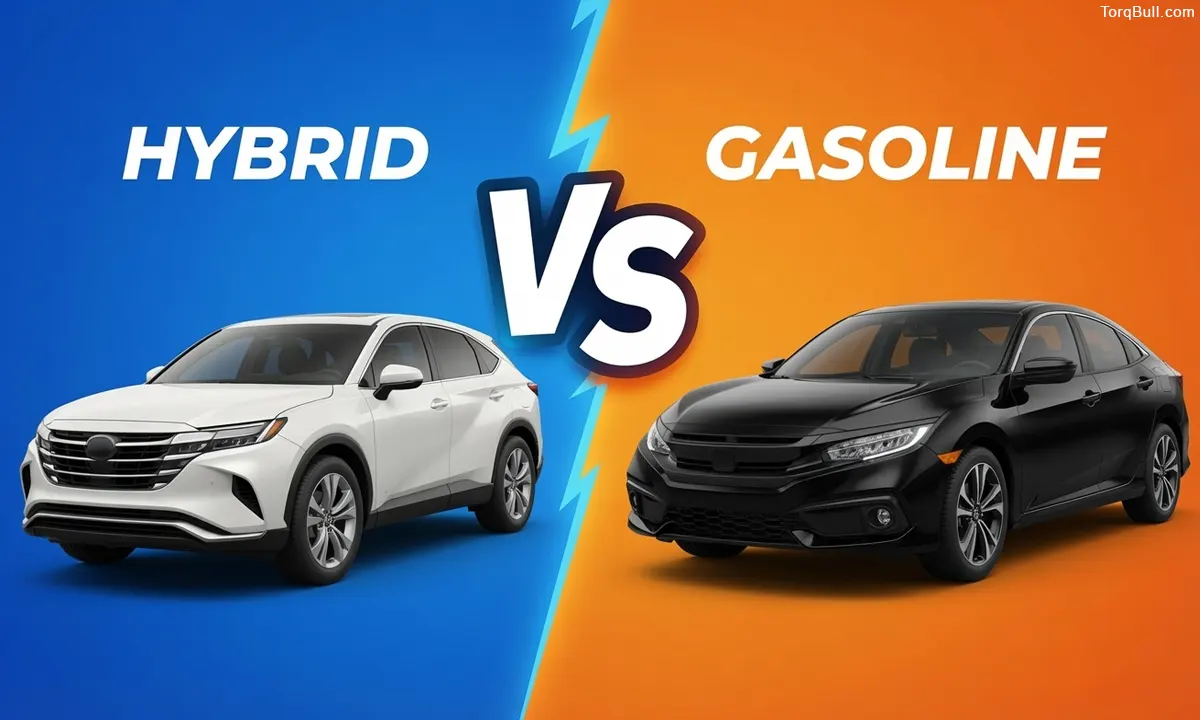
Here’s a scene that plays out at dealerships every single day. Gas prices tick up, a buyer walks in, sees a hybrid promising 50 mpg next to a gas model doing 34, and thinks, “That’s a no-brainer, I’ll save a fortune.” They pay a bit more, drive off feeling smart and green, and assume the savings are already rolling in.
Then, years later, some of them do the math and discover an uncomfortable truth: they never actually saved a dime. In some cases, they lost money.
How is that possible when the hybrid genuinely burns less fuel? Because the real cost equation has almost nothing to do with the number on the window sticker’s MPG rating. There’s a hidden reason your hybrid might not save you money, and once you understand it, you’ll never shop for one the same way again. Quick note, these are averages and estimates that vary by model and situation, and this is general guidance, not personalized financial advice.
The Core Truth: A Hybrid Is an Investment, Not a Discount
Here’s the mental shift almost nobody makes. Most people make the simple connection that because hybrids are more efficient and you’re spending less on gas, they must save you money pretty quickly. The reality is that it takes years before the fuel savings offset the higher price you paid.
That’s the whole hidden reason, distilled. You don’t get a hybrid’s savings up front, you pay a premium up front and earn it back slowly at the pump. Hybrid models still cost noticeably more than comparable gas versions, with the difference often being $3,000 or more, and sometimes far higher. So a hybrid isn’t a discount, it’s an investment with a break-even point, and whether it pays off depends entirely on whether you reach that break-even before you get rid of the car. Miss it, and the “savings” never materialize. This is where the sneaky sabotage factors come in.
Hidden Reason One: You Sell It Too Soon
This is the biggest killer, and it’s shockingly common. The typical hybrid takes four to five years of fuel savings just to claw back its higher price, and some take much longer. So if you’re someone who likes to trade in their car every two to four years, you’re not giving your hybrid enough time to save you money on gas for it to be worth it.
Think about what that means. If your break-even is year five and you trade at year three, you paid the full premium and collected only part of the payback. The finish line was there, you just quit the race before crossing it. For serial traders and lease-hoppers, the break-even point may never arrive at all. You’re permanently paying for a payoff you never stick around to collect.
Hidden Reason Two: You Don’t Drive Enough
The break-even math runs on miles. The more you drive, the faster the fuel savings pile up, and most calculations assume the average of around 15,000 miles a year. Drive significantly less than that, and the whole timeline stretches out, sometimes past the point of ever making sense.
A real-world example makes it vivid. One driver comparing a CR-V Hybrid at 11,000 miles a year found the hybrid saved only about $320 annually, pushing the payback to seven or eight years. If you’re a low-mileage driver, a retiree, a work-from-homer, or a two-car household where the hybrid is the second car, that small annual saving may never overtake the premium you paid. Fewer miles means a smaller sum saved, which pushes the payback back to a point where a hybrid just doesn’t give you enough of a return.
Hidden Reason Three: You’re a Highway Driver
Here’s a counterintuitive one that catches people off guard. Hybrids don’t help much on the highway. Traditional gas cars are generally most efficient on the highway, because a consistent speed in a high gear delivers the most miles per gallon. Hybrids, on the other hand, work their magic in stop-and-go city traffic, where the electric motor does the low-speed work and regenerative braking recaptures energy.
So while hybrids perform exceptionally in urban areas, their highway efficiency usually isn’t much better than their gas-only counterparts. If your daily life is long, steady highway commutes, the fuel-economy gap between the hybrid and the gas version shrinks dramatically, and with it, your savings. For a highway warrior, the hybrid premium often simply doesn’t pay back.
Hidden Reason Four: You Bought the Wrong Hybrid
Now the sneakiest reason of all, the one even careful buyers miss. You can do everything right, keep the car long enough, drive plenty of city miles, and still lose money if you picked a bad hybrid. Because poor resale value is a hidden cost that can erase any fuel savings a hybrid delivers over time.
Some hybrids combine below-average reliability with steep depreciation, meaning you pay a premium up front and take a loss on the back end. The examples are genuinely alarming. One popular plug-in hybrid is projected to lose roughly 62 percent of its value over five years. Another compact hybrid SUV depreciated 54 percent in just two years while scoring a dismal 39 out of 100 on reliability. One hybrid sedan was even recalled for the risk of its fuel tank melting, and leaves owners with about $14,300 in residual value on a $30,000-plus purchase. On a car like that, the repair bills and resale losses vaporize every dollar you ever saved at the pump, and then some. The fuel savings were real, but the depreciation and unreliability quietly ate them alive.
Read: The Battle of Tomorrow: Synthetic Fuels vs EVs
What Sabotages Savings vs What Protects Them
Here’s the picture at a glance.
| Kills Your Savings | Protects Your Savings |
| Selling within 2 to 4 years | Keeping the car 5+ years |
| Low annual mileage | 12,000+ miles a year |
| Mostly highway driving | City / stop-and-go driving |
| Unreliable, fast-depreciating model | Proven, value-retaining model |
| Big-premium plug-in hybrid | Right-sized regular hybrid |
| Buying new at full premium | Buying lightly used |
The Other Side: When Hybrids Absolutely Do Save
Now let me be fair, because I don’t want you to swear off hybrids entirely. For the right buyer and the right model, they’re a genuinely smart financial move, and several hidden benefits work in your favor too.
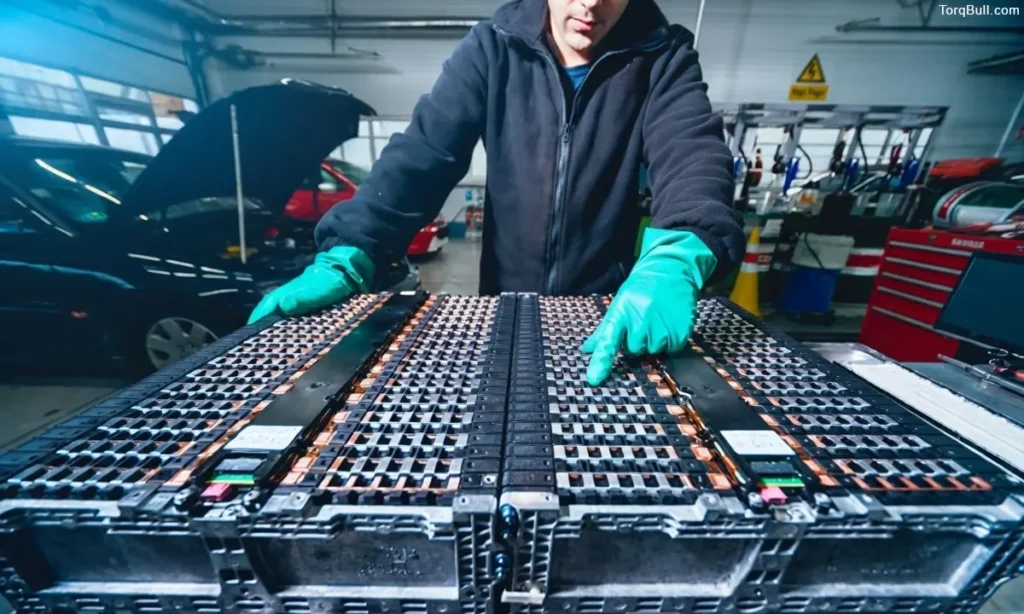
The resale story can flip from villain to hero on a good hybrid. Because hybrid demand is strong, a well-chosen three-year-old hybrid retains roughly 10 to 15 percent more value than its gas sibling, so that $3,500 premium you paid might return $2,500 in resale, making the real cost of the hybrid closer to $1,000. A Prius holds around 50 percent of its value after five years, beating a Corolla’s 42 percent. Maintenance leans in your favor too, since regenerative braking can extend brake pad life past 100,000 miles, saving hundreds per service, and the battery fears are overblown, with warranties covering 8 to 10 years and replacements rarely needed. And reliability isn’t the boogeyman for the right brands, since Toyota, Honda, and Hyundai hybrids match or beat their gas siblings, and traditional hybrids actually have about 15 percent fewer problems than gas-only cars.
Add it up and for moderate-to-high-mileage drivers, a good hybrid delivers roughly $3,000 to $6,000 in five-year savings after fuel, maintenance, and insurance, and it becomes a brilliant hedge if gas spikes back toward $5 a gallon. Buy a reliable one used, skipping the new-car premium entirely, and the math tilts heavily in your favor.
How to Make Sure Your Hybrid Actually Saves You Money
So how do you avoid becoming the person who paid extra for nothing? Run four checks before you buy. First, do the break-even math: divide the hybrid premium by your realistic annual fuel savings, and make sure that number of years is comfortably shorter than how long you’ll actually keep the car. Second, be honest about your mileage and driving mix, since a hybrid rewards high-mileage city drivers and punishes low-mileage highway ones. Third, check the specific model’s reliability score and projected three-to-five-year depreciation, because a bad one on those metrics is a money pit no matter how good the MPG looks. And fourth, seriously consider buying used, which sidesteps the entire premium problem and hands you the fuel savings with none of the payback wait.
Verdict: It’s Not the Gas, It’s the Math
So what’s the real hidden reason your hybrid might not save you money? It’s that a hybrid was never an instant discount, it’s an investment with a break-even point, and most buyers never check whether that break-even actually fits their life. The fuel savings are real, but they arrive slowly, and three sneaky factors can push the payoff past the horizon: selling the car too soon, driving too few miles, or spending most of your time on the highway. And the sneakiest killer of all is picking an unreliable, fast-depreciating model whose repair bills and resale losses quietly erase everything you saved at the pump.
But here’s the balanced truth, and it matters. Hybrids are not a scam, and for the right person they’re one of the smartest buys on the market. Keep the car five or more years, rack up decent city miles, choose a proven model with strong resale like a Toyota or Honda, and ideally buy it lightly used, and a hybrid will genuinely save you thousands, cushioned by better resale and lower maintenance, while protecting you from the next gas-price spike. The difference between saving $5,000 and losing money isn’t the hybrid badge. It’s whether you did the homework.
So before you buy on the seductive logic of “great MPG equals savings,” stop and run the real numbers. Calculate your break-even, confirm you’ll own the car past it, match it to how you actually drive, and vet the model’s reliability and depreciation. Do that, and you’ll be the hybrid owner who quietly banks the savings for years. Skip it, and you might be the one who paid the premium, drove the highway, traded it in early, and never saw a dime. The savings are absolutely out there. You just have to make sure the math is working for you, not against you.