Why the Honda Rebel Is the Ideal First Bike for New Riders in 2026. The Perfect Starting Point
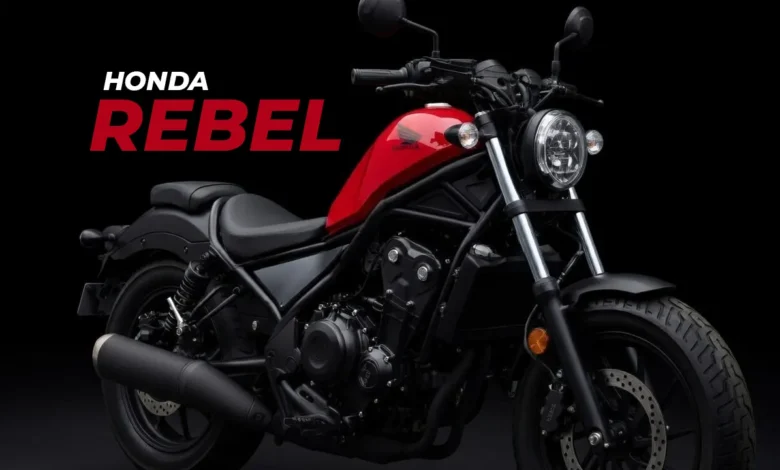
- Low 27.2-inch seat height for beginner-friendly accessibility
- E-Clutch system prevents stalling on the Rebel 300
- Standard ABS across the Rebel 500 lineup
- Proven Honda reliability and ease of ownership
- Affordable pricing under $5,000 makes it an ideal first motorcycle
Every motorcyclist remembers their first bike — the one that either built their confidence or broke it, the one that either made the sport feel accessible or overwhelming. The choice of that first motorcycle is arguably the single most consequential decision a new rider makes, because a machine that is too powerful, too heavy, too complicated or too demanding does not simply produce a difficult first riding experience. It produces an experience that ends careers before they begin. Honda has understood this truth since it introduced the original Rebel 250 in 1985 and built its entire philosophy around it — that the gateway to motorcycling should be wide, welcoming and genuinely enjoyable rather than a character test that only the determined survive. For 2026, the Honda Rebel lineup has never better embodied that philosophy, arriving with updates that address the final friction points between a new rider and the confidence they need to fall in love with riding.
The 2026 Rebel 300 E-Clutch: Removing the Biggest Beginner Barrier
The single greatest anxiety for new motorcycle riders who have never driven a manual vehicle — and in a generation where most cars are automatics, that describes the majority of people entering motorcycling today — is the clutch. Coordinating the friction zone with throttle input while simultaneously processing steering, braking, traffic and road conditions demands a degree of multitasking that can overwhelm even capable learners in the critical early weeks of riding. Honda’s solution for 2026 is the E-Clutch system applied to the Rebel 300, and it is, without question, the most rider-friendly innovation the beginner motorcycle segment has received in years.
The E-Clutch is not a fully automatic transmission and it is not Honda’s dual-clutch DCT system. It is a smart electronic actuator that controls clutch engagement and disengagement automatically — while leaving the clutch lever in place so riders can intervene manually at any time they choose. The rider still operates the six-speed gearbox with their left foot, as on any traditional motorcycle. What changes is that the risk of stalling through clutch mismanagement is eliminated. A new rider can focus entirely on mastering throttle response, braking technique, steering inputs and spatial awareness — the foundational skills of safe riding — without simultaneously wrestling with clutch coordination. When they are ready to learn manual clutch operation, the lever is right there, and the switch is as simple as reaching for it.
The practical result, as confirmed by every first-ride review of the 2026 Rebel 300 E-Clutch, is a motorcycle that makes the learning curve feel genuinely shallow rather than merely manageable. Pulling away from a stop sign in traffic for the first time is no longer a tense moment of stall avoidance. It is simply twist and go — and then the rider can start actually learning to ride.
The Rebel 300 vs. Rebel 500: Choosing the Right Starting Point
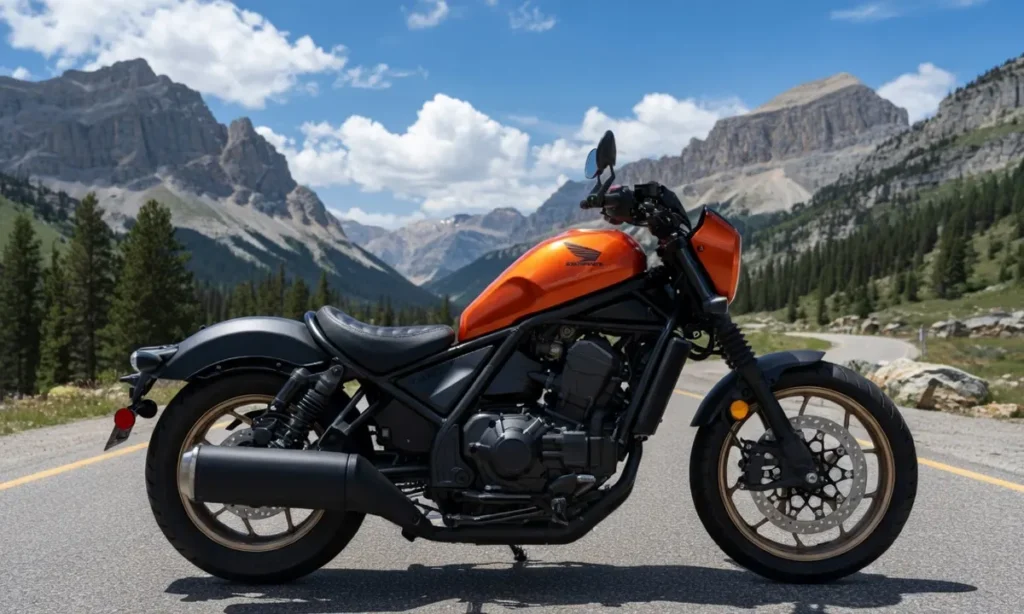
Honda’s Rebel lineup in 2026 offers new riders a clearly differentiated choice between two outstanding entry-level machines, with the decision primarily coming down to displacement ambition, physical stature and long-term riding goals.
The Rebel 300, powered by a 286cc liquid-cooled single-cylinder engine, is the natural choice for riders with zero previous experience, shorter stature or those who anticipate predominantly urban riding. Its 379-pound curb weight and 27.2-inch seat height combine to make it one of the most physically manageable motorcycles available at any price. The addition of E-Clutch for 2026 makes it the easiest first motorcycle ever sold under the Honda name.
The Rebel 500 occupies a more ambitious position — appropriate for new riders who are taller, physically confident or anticipate that their riding ambitions will quickly extend beyond city streets and neighbourhood exploration. Its 471cc liquid-cooled parallel-twin engine produces smooth, progressive power that new riders can access gradually rather than all at once. Standard ABS across the entire 2026 Rebel 500 lineup is a meaningful safety upgrade that Honda has made compulsory rather than optional, ensuring that every buyer benefits from the braking protection that wet roads, unexpected hazards and the occasional overcautious panic stop demand. The slipper clutch delivers a pull effort approximately 30 percent lighter than a conventional clutch — a specification whose impact on reducing left-hand fatigue across a full day of city riding is immediately apparent to anyone who has compared it.
Honda itself describes the Rebel 500 as the industry’s best-selling cruiser — a claim that reflects both the model’s genuine quality and the depth of trust that instructors, experienced riders and first-time buyers have collectively placed in it over multiple model years.
Why the Rebel’s Physical Design Makes Learning Easier
The engineering decisions that define the Rebel’s beginner-friendly character are not accidental. They reflect decades of Honda’s research into what makes a new rider feel confident rather than anxious, and they are present in every dimension of the motorcycle’s physical architecture.
The 27.2-inch seat height — shared across both the Rebel 300 and Rebel 500 — is among the lowest available on any modern production motorcycle outside of purpose-built small-displacement commuters. For a new rider at a traffic light, on a hill start or manoeuvring through a car park, the ability to plant both feet flat on the ground without stretching is not a comfort feature. It is a confidence foundation that prevents the tip-over incidents that damage new riders’ relationship with motorcycling before it has a chance to develop.
The Rebel’s slim tank-to-seat junction — deliberately designed to be narrow at the critical contact point between rider and motorcycle — allows even shorter-legged riders to reach the ground with assurance, because the bike does not force their legs to splay outward against its width. The relaxed, mid-mounted footpeg position and the upright handlebar ergonomics produce a riding posture that is neither the aggressive crouch of a sportsbike nor the stretched reach of a large cruiser — it is a neutral, balanced stance from which a new rider can apply inputs accurately and recover from mistakes without the motorcycle punishing them for the attempt.
The all-LED lighting fitted across the entire 2026 Rebel line is more than an aesthetic upgrade — in urban riding where visibility in traffic is a genuine safety factor, brighter, more attention-commanding lighting is a practical protection. The clear LCD instrument cluster displays gear position, fuel level and speed in a layout that a rider glancing down for less than a second can read and process without losing focus on the road ahead.
Honda Reliability: The Confidence That Money Cannot Fully Buy
The case for the Honda Rebel as a first bike is not made solely by specifications and price. It is made, equally powerfully, by Honda’s four-decade track record of building motorcycles whose reliability removes the maintenance anxiety that can make an already challenging learning period feel overwhelming.
The Rebel’s simple, proven engine architecture — liquid-cooled and fuel-injected across both the 300 and 500 — requires no extraordinary maintenance knowledge to keep running flawlessly. Service intervals are generous and dealer support is available in virtually every part of the United States. The Rebel is one of the most common motorcycles used in Motorcycle Safety Foundation Basic RiderCourse training fleets — a fact that speaks louder than any review, because training schools select equipment based not on marketing but on demonstrated reliability under continuous use by inexperienced riders.
Read: Why the Honda CRF300L Is the Best Beginner Motorcycle in 2026
2026 Honda Rebel Lineup — Complete Specifications at a Glance
| Specification | Rebel 300 E-Clutch | Rebel 500 (2026) |
| Engine | 286cc Single-Cylinder | 471cc Parallel-Twin |
| Cooling | Liquid-Cooled | Liquid-Cooled |
| Valve Configuration | DOHC | DOHC |
| Fuel System | Fuel Injection | Fuel Injection |
| Transmission | 6-Speed + E-Clutch | 6-Speed + Slipper Clutch |
| Clutch Pull Reduction | E-Clutch (Optional Manual) | ~30% Lighter Than Standard |
| Seat Height | 27.2 inches | 27.2 inches |
| Curb Weight | 379 lbs | ~408 lbs |
| Front Brake | Single Disc | Dual Disc |
| Rear Brake | Single Disc | Single Disc |
| ABS | Optional | Standard — All 2026 Trims |
| Lighting | All-LED | All-LED |
| Instrument Cluster | Digital LCD | Digital LCD |
| Gear Position Indicator | Yes | Yes |
| Customisation Accessories | 22+ Honda Genuine Options | 23+ Honda Genuine Options |
| Starting MSRP (USA) | $4,849 (Standard) / $5,349 (E-Clutch) | $6,799 (Standard) / $6,999 (SE) |
| Recommended For | Complete Beginners, City Riders | Progressing Beginners, All-Round |
| MSF Course Use | Yes — Common Fleet Choice | Recommended Step-Up |
The Rebel Grows With You
One of the most underappreciated qualities of the Honda Rebel as a first motorcycle in 2026 is that it is not merely a motorcycle you will outgrow and discard — it is the entry point to a family of machines that Honda has deliberately structured as a progression path. From the Rebel 300 E-Clutch, a rider can step to the Rebel 500, then to the Rebel 1100 with its optional DCT, and at each stage they carry forward the muscle memory and ergonomic familiarity of a lineup that Honda has designed to feel consistent across its range. The skills built on a Rebel 300 translate directly and naturally to everything that follows.
For the new rider standing at the threshold of motorcycling in 2026, weighing the options and wondering where the right place to begin actually is, the Honda Rebel answers that question better than any motorcycle in its class — with the E-Clutch innovation that removes the greatest technical barrier to entry, the physical dimensions that provide genuine ground-level confidence, the proven reliability that eliminates maintenance anxiety, and a price accessible enough that the financial commitment matches the commitment being asked of a rider who is still discovering whether motorcycling is the lifelong pursuit it very likely will become.
2 Comments