- 72-month loan lowers monthly payments
- Higher interest vs 60-month financing
- Increased risk of negative equity
- Longer exposure to depreciation and repairs
- Total cost often higher despite lower EMI
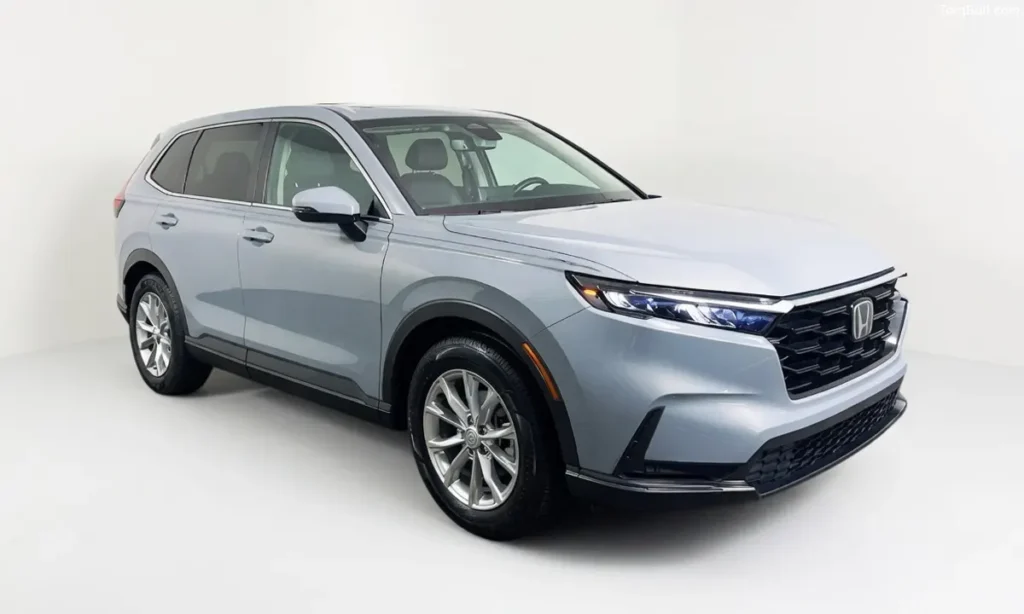
Is a 72-Month Car Loan a Bad Idea for a Used Honda CR-V: The Honda CR-V is the correct used vehicle for an enormous number of American buyers in 2026 — reliable, practical, widely serviced, strong on resale and available at multiple price points across a broad model year range. Financing a used CR-V purchase with a 72-month loan is a decision that significantly more buyers make than should, drawn in by a monthly payment figure that looks manageable without examining what that payment costs over the full six-year term. The 72-month auto loan is currently the most common loan term in the American market according to Edmunds data, accounting for 36.1 percent of all new car financing and a similar proportion of used car financing. Its popularity is not evidence of its wisdom. This article provides the complete financial analysis — total interest paid, negative equity risk, the used CR-V depreciation curve and the specific scenarios where a 72-month loan makes sense despite its disadvantages — so that every buyer can make an informed rather than payment-focused decision.
This article provides general financial information for educational purposes. Individual loan terms, rates and financial circumstances vary. Consult a qualified financial advisor before making significant financing decisions.
What a 72-Month Loan Actually Costs on a Used Honda CR-V
Before evaluating whether a 72-month loan is a bad idea, establishing precisely what it costs compared to shorter alternatives is essential. The average used car interest rate across all credit profiles in 2026 is 11.87 percent according to Experian data, though borrowers with excellent credit can access rates beginning around 6 to 7 percent on used vehicles from competitive lenders including credit unions.
Using a $25,000 loan — representative of a 2021 to 2023 Honda CR-V purchase in the current market — at a 9 percent APR, the numbers across different loan terms produce the following results:
Over 48 months, the monthly payment is approximately $622 and total interest paid over the loan life is approximately $4,854. Over 60 months, the monthly payment drops to approximately $519 and total interest paid is approximately $6,140. Over 72 months, the monthly payment falls to approximately $447 and total interest paid reaches approximately $7,192.
The 72-month loan’s apparent monthly payment advantage over the 48-month term is $175 per month. Its actual cost advantage is negative: the 72-month loan costs approximately $2,338 more in total interest over the full term. The buyer who chooses the 72-month term to save $175 per month pays $2,338 more for the same vehicle. Additionally, lenders consistently charge higher interest rates on 72-month loans than 60-month loans — because longer loan terms represent greater default risk for the lender — meaning that the actual interest rate differential compounds the total cost comparison further against the longer term.
The Specific Problem With a 72-Month Loan on a Used Honda CR-V

A used CR-V introduces compounding risks that a new vehicle loan at the same term does not carry to the same degree, and understanding these risks explains why multiple financial publications and automotive advisors specifically identify the combination of a long loan term and a used vehicle as particularly problematic.
The depreciation versus payoff mismatch is severe and immediate. A used Honda CR-V has already experienced its steepest depreciation curve — which occurs in years one through three of a vehicle’s life — but it continues to depreciate throughout the ownership period. A three-year-old CR-V financed with a 72-month loan will be nine years old when the final payment is made. A four-year-old CR-V will be ten years old at payoff. During the first two to three years of a 72-month loan on a used vehicle, the loan balance typically exceeds the vehicle’s market value — a condition called being underwater or upside-down on the loan. Edmunds identifies this as the primary financial risk of combining used vehicle financing with long loan terms: the buyer owes more than the vehicle is worth for a sustained period with no margin for error if they need to sell, trade in or if the vehicle is totalled.
The vehicle’s age at payoff creates a reliability timing problem. Edmunds’ director of insights specifically notes this risk: most buyers trade their vehicles at three to four years of ownership on average, but a 72-month loan on a three-year-old used CR-V means that anyone wanting to trade at year three of ownership is on the hook for three additional years of payments on a depreciating asset. If the buyer reaches the end of the loan, the CR-V is nine to ten years old — precisely the age range at which many vehicles experience their first significant mechanical expenses. The prospect of completing a final car payment in the same period a major repair bill arrives is not hypothetical; it is a predictable outcome of the timeline arithmetic.
Used car rates are higher than new car rates, and 72-month rates are higher than 60-month rates. This double rate penalty is the most directly financial problem with the combination. As Capital One’s published rate data confirms, starting rates for used 72-month loans are approximately 0.38 percentage points higher than 60-month used car loans from the same lender — and the market average used car rate of 11.87 percent is already significantly higher than the 7 percent average for new car loans. Applying a 72-month term to a used CR-V loan compounds a rate already elevated by the used vehicle risk premium with an additional term-length risk premium.
Read: GAP Insurance vs New Car Replacement for Honda CR-V: Which Coverage Is Better?
The Negative Equity Problem: When Your CR-V Is Worth Less Than You Owe
Negative equity — owing more on the loan than the vehicle is currently worth — is the defining financial risk of a 72-month used car loan, and it is a risk that materialises almost immediately after purchase. A used Honda CR-V purchased for $25,000 and financed at 9 percent over 72 months has the following equity profile across the loan term:
At the end of month 12, approximately $2,948 in principal has been repaid, leaving a loan balance of approximately $22,052. If the vehicle has depreciated by 12 to 15 percent from the $25,000 purchase price — consistent with typical used vehicle annual depreciation — its current market value is approximately $21,250 to $22,000. The buyer is at or below the break-even equity point after one year. At the end of month 24, approximately $5,970 in principal has been repaid, leaving a loan balance of approximately $19,030. The vehicle’s market value at year two from purchase may be $18,000 to $19,500 depending on the specific model year and condition. The buyer remains in a marginal equity position with little cushion.
If the vehicle is involved in an accident, stolen or requires trade-in during this negative equity period, the buyer faces the prospect of owing more than the insurance payout or trade-in value covers — leaving a deficiency balance that must be paid out of pocket or rolled into a subsequent loan, establishing a cycle of accumulated negative equity that can persist across multiple vehicle transactions.
When a 72-Month Used Honda CR-V Loan Makes Practical Sense
Acknowledging the genuine costs and risks of a 72-month used car loan, honesty requires identifying the specific circumstances where it represents the most practical available option rather than a clear financial mistake.
For a buyer whose monthly cash flow is genuinely constrained by unavoidable obligations — a mortgage, childcare, medical expenses — and for whom the difference between a 60-month and 72-month payment determines whether a reliable transportation solution is accessible, the 72-month loan’s lower payment may enable a purchase that genuinely improves financial stability compared to the alternatives of no vehicle or a cheaper, less reliable used vehicle with higher expected repair costs. The Honda CR-V’s well-documented reliability — with a well-maintained example capable of exceeding 250,000 miles — means that a nine-to-ten-year-old CR-V at payoff can still provide years of reliable service without the catastrophic repair probability that the same timeline would represent for a less reliable used vehicle.
The case for a 72-month loan strengthens considerably when the buyer makes a substantial down payment — 20 percent or more of the vehicle price — which compresses the negative equity exposure period by reducing the loan balance relative to the vehicle’s depreciating market value. A buyer who puts $5,000 down on a $25,000 CR-V and finances $20,000 over 72 months is in a meaningfully better equity position throughout the loan than one who finances the full purchase price.
Read: Best Used SUVs Under $25,000 That Will Not Let You Down. Best Reliability Picks Ranked
72-Month vs Shorter Loan Terms on a $25,000 Used Honda CR-V at 9% APR
| Loan Term | Monthly Payment | Total Interest Paid | Total Cost of Vehicle | Payoff Age (3-yr-old CR-V) | Negative Equity Risk |
| 36 months | ~$795 | ~$3,624 | ~$28,624 | 6 years old | Very Low |
| 48 months | ~$622 | ~$4,854 | ~$29,854 | 7 years old | Low |
| 60 months | ~$519 | ~$6,140 | ~$31,140 | 8 years old | Moderate |
| 72 months | ~$447 | ~$7,192 | ~$32,192 | 9 years old | High |
| 84 months | ~$395 | ~$8,176 | ~$33,176 | 10 years old | Very High |
Calculations are approximate. Actual payments depend on lender terms, credit score, down payment and prevailing interest rates.
Strategies That Reduce the Risk of a 72-Month Used CR-V Loan
If a 72-month loan is the financing structure a buyer requires, four specific steps meaningfully reduce the financial exposure that the longer term creates.
Making a down payment of at least 20 percent of the vehicle’s purchase price is the single most effective risk reduction measure — it compresses the negative equity exposure window and reduces total interest paid by reducing the principal balance. Getting pre-approved through a credit union rather than relying on dealership financing typically produces an interest rate one to two percentage points lower on used vehicle loans — a saving that significantly reduces total interest over a 72-month term. Purchasing GAP insurance at a cost-effective rate — available from insurance companies independently at $20 to $40 per year rather than from the dealership’s finance office at dramatically higher rates — protects against the financial exposure if the vehicle is totalled during the negative equity period. And making occasional additional principal payments whenever budget allows — without penalty, which should be confirmed before signing — accelerates equity building and reduces the total interest paid without committing to a higher mandatory monthly payment.
The most honest answer to the question this article’s title poses is this: a 72-month loan on a used Honda CR-V is not automatically a bad idea, but it consistently costs more than necessary, creates negative equity risk for an extended period and leaves the buyer paying for an aging vehicle at payoff. If a 60-month loan is financially manageable — even at a modest budget stretch — it is almost always the superior choice. If it genuinely is not, a 72-month loan with a meaningful down payment, a competitive credit union rate and GAP insurance is an acceptable compromise, not a financial catastrophe.