2026 Lexus ES Is Fully Electrified, Dramatically Redesigned and the Best ES Ever Built
A Fully Electrified Lineup Featuring a New-Generation Hybrid and Twin All-Electric Variants, a Dramatically Redesigned Clean Tech x Elegance Exterior, Lexus Safety System+ 4.0, and a Spacious Tazuna-Inspired Interior Make the All-New 2026 Lexus ES the Most Ambitious and Technologically Advanced Luxury Sedan in the ES Nameplate's 35-Year History
The Lexus ES has represented something uniquely important in the luxury automotive landscape since its debut alongside the flagship LS sedan in 1989 — a vehicle that consistently delivered genuine luxury refinement, outstanding reliability and thoughtful, driver-focused technology in a package accessible to a broader audience than most premium European alternatives. For 35 years and across seven successive generations, the ES has earned its place as one of Lexus’s most commercially significant and critically admired models, building a loyal global following on the strength of its exceptional quietness, its polished ride quality and the kind of long-term ownership confidence that has become synonymous with the Toyota and Lexus approach to vehicle engineering.
Gallery: 2026 Lexus ES
The eighth-generation 2026 Lexus ES, unveiled at the Shanghai International Automobile Industry Exhibition in April 2025 under the concept of Experience Elegance and Electrified Sedan, represents the most consequential and comprehensively transformed chapter in the nameplate’s history. It is larger in every dimension, more technologically sophisticated than any predecessor, available for the first time as a fully battery-electric vehicle, and designed according to a new visual philosophy that Lexus calls Clean Tech x Elegance — a language inspired directly by the brand’s LF-ZC next-generation BEV concept and representing the clearest signal yet of where Lexus intends to take its design identity across the coming decade. The 2026 ES does not merely update a familiar formula. It rewrites it entirely, creating a vehicle that honours 35 years of ES heritage while committing fully and unambiguously to the electric future.
Exterior Design: Clean Tech x Elegance Gives the ES a New Visual Identity

The visual transformation of the 2026 Lexus ES is the most dramatic the nameplate has undergone in any single generational step, departing from the polarising angular complexity of its predecessor in favour of a cleaner, more flowing and more architecturally cohesive design language that Lexus believes will define its aesthetic direction for the foreseeable future. The result is an exterior that succeeds in being simultaneously more elegant and more technically expressive than the outgoing model — a combination that the Clean Tech x Elegance concept articulates with unusual precision and conviction.
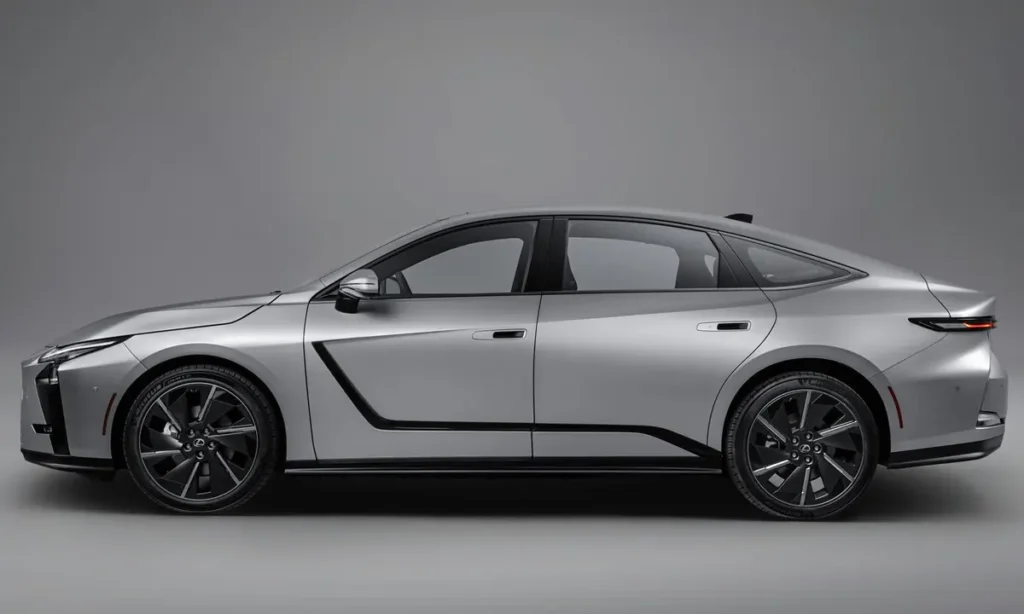
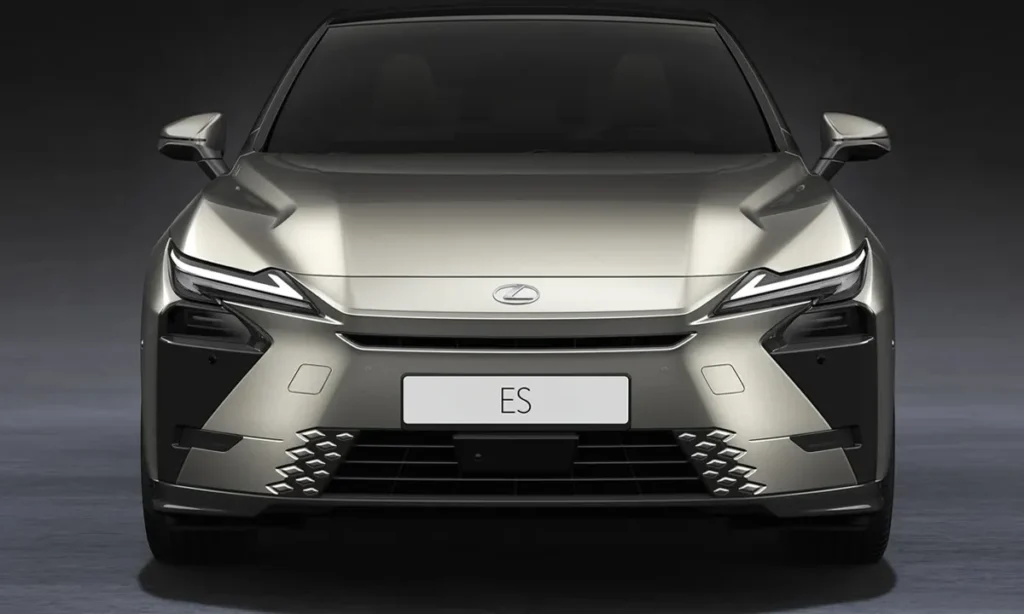
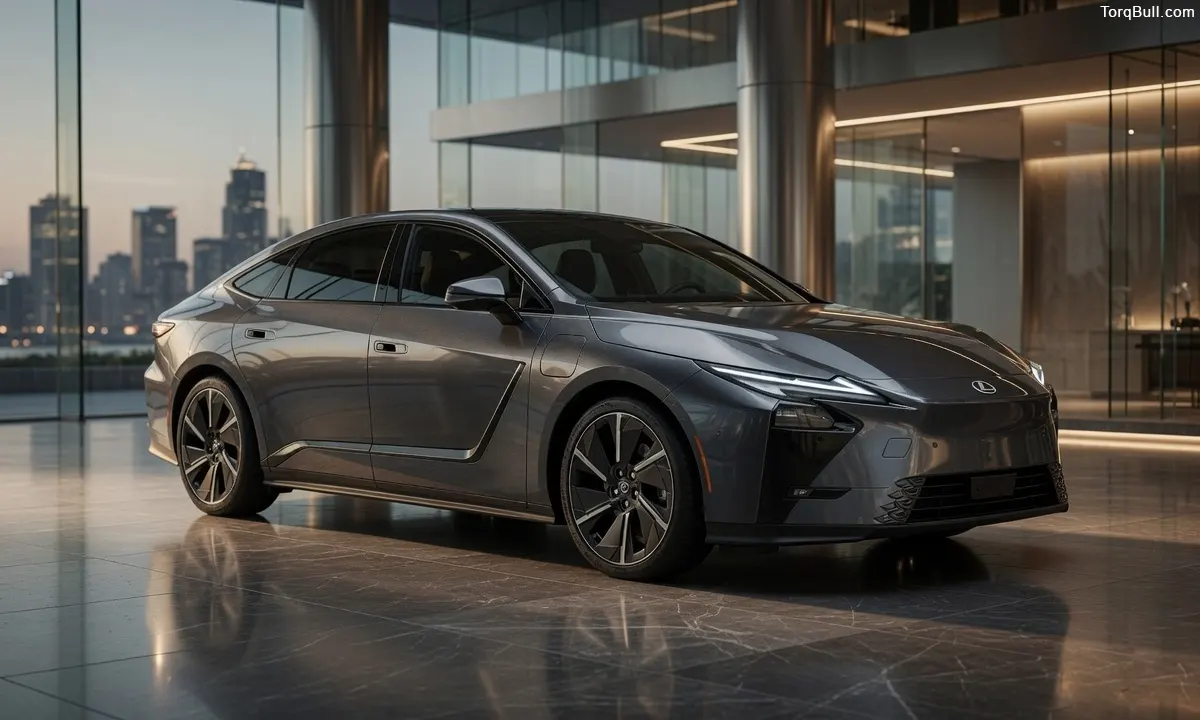
At the front, the familiar Lexus spindle grille has been completely reimagined. The aggressive, deeply recessed spindle form of previous generations is replaced by a new spindle body design — a treatment in which the grille architecture integrates seamlessly into the bonnet surface and bumper corners, creating a more unified and visually grounded front end. Twin L-Signature LED headlight clusters define the front face with a confident and immediately distinctive lighting signature, with their L-shaped daytime running elements creating a visual reference that will allow the 2026 ES to be identified instantly from both a distance and in a rearview mirror. The electric variants ES 350e and ES 500e wear a specific front fascia with minimal apertures, achieving a low 0.25 drag coefficient that reinforces both aerodynamic efficiency and the clean, purposeful aesthetic appropriate for a battery-electric luxury sedan. The hybrid ES 350h wears a slightly different front treatment that acknowledges its combustion-assisted identity while maintaining visual coherence within the 2026 ES family.
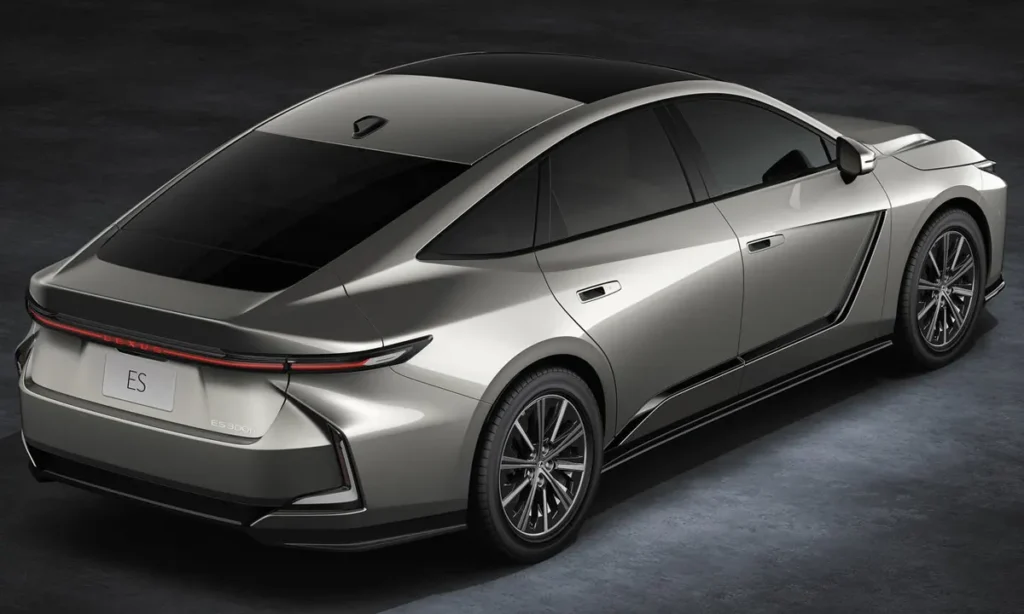
The profile of the 2026 ES reveals a flowing fastback-inspired roofline that tapers toward the rear in a more coupe-like arc than any previous ES generation, creating a silhouette that communicates sportiness and aerodynamic intent without compromising the interior headroom that luxury sedan buyers require. Sharp character lines connect the headlights to the C-pillar, while an L-shaped body trim element spans the length of both door surfaces, adding a layer of visual structure to the otherwise clean and expansive flanks. Precise wheel placement at the outermost corners of the body — a consequence of the new platform’s extended wheelbase and overhang management — gives the 2026 ES a planted, wide-footed stance that communicates stability and driver confidence at a glance. Available wheel sizes extend to 21 inches on higher specification models, filling the wheel arches with a presence appropriate for a vehicle of the 2026 ES’s ambition and scale.
At the rear, the new Rear L-Signature Lamp consolidates taillight and stoplight functions into a single, seamlessly integrated light bar that is connected to an illuminated Lexus logo — a detail that creates a distinctive and premium rear graphic visible at night from a considerable distance. By repositioning secondary lighting elements to the outer edges of the rear bumper, Lexus’s designers have emphasised the car’s wide stance and created a more architecturally clean boot lid surface. The absence of visible exhaust pipes on the electric variants further enhances the rear’s contemporary character, replacing exhaust outlets with a clean diffuser-style lower bumper that looks precisely as a premium electric sedan should.
Lexus has also introduced an exclusive new paint option for the 2026 ES called Wavelength — a Lexus-first colour with a carefully engineered optical character that shifts subtly in different lighting conditions, sitting somewhere between deep sapphire and luminous sky blue. Available across all three powertrain variants, Wavelength joins a colour palette that also includes Copper Crest, Cloudburst Gray and Iridium, providing a range of finishes that support the diverse aesthetic preferences of the ES’s broad global buyer base.
The Fully Electrified Powertrain Lineup: Three Paths to Perfection

One of the most significant and commercially consequential decisions in the 2026 ES’s development is the complete elimination of any non-electrified powertrain option. Where previous ES generations offered a petrol-only variant alongside the hybrid, the 2026 car offers exclusively electrified powertrains — a hybrid, a single-motor battery electric and a dual-motor battery electric — reflecting Lexus’s conviction that the luxury sedan market is ready to embrace full electrification and that the ES is the appropriate vehicle through which to lead that transition.
The entry-level powertrain is the ES 350h hybrid, which deploys a next-generation 2.5-litre four-cylinder petrol engine paired with a revised integrated electric motor and battery system operating on the same fundamental hybrid principle that Lexus has refined across two decades of luxury hybrid development. In this updated configuration, the hybrid system produces 243 combined horsepower — a 28-horsepower improvement over the outgoing ES 300h — and covers the zero-to-60 mph sprint in 7.4 seconds with front-wheel drive and 7.2 seconds with all-wheel drive. Fuel economy estimates comparable to the outgoing generation’s impressive 43 to 44 miles per gallon EPA rating are anticipated, maintaining the hybrid ES’s reputation as one of the most efficient luxury sedans available in its class while delivering meaningfully improved performance.
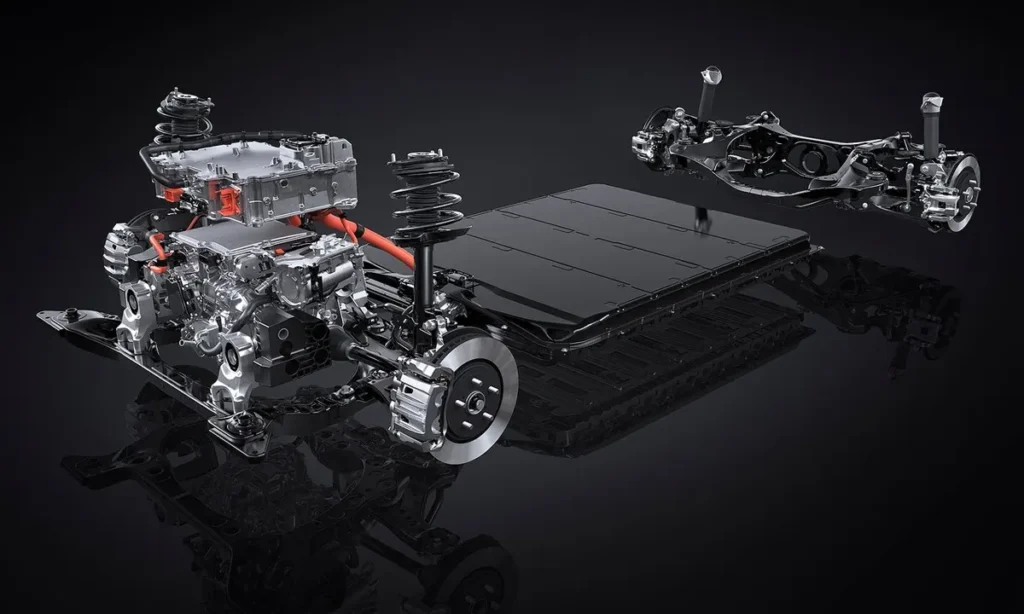
The ES 350e represents the first-ever battery-electric ES, deploying a single front-mounted electric motor producing 221 horsepower in a front-wheel-drive configuration. Lexus estimates a range of approximately 300 miles on 19-inch wheels — a figure that places the ES 350e competitively within the luxury electric sedan segment for everyday range capability. The zero-to-60 mph time of 7.7 seconds reflects the deliberately comfort and efficiency-oriented character of this variant rather than any performance compromise, with instant electric torque providing responsive and effortlessly smooth acceleration for urban and highway driving. The ES 350e and ES 500e both share a 74.7 kWh lithium-ion battery pack and support DC fast charging at a maximum rate that enables a 10 to 80 percent charge in approximately 30 minutes — a charging window brief enough to make longer journeys practical and unhurried. NACS charging port fitment provides access to the extensive Tesla Supercharger network alongside all other compatible public charging infrastructure.
The flagship ES 500e adds a second electric motor at the rear axle, creating Lexus’s DIRECT4 all-wheel-drive system — a torque distribution architecture that continuously and intelligently adapts the power split between front and rear axles in response to traction conditions, driver inputs and road surface variations. The ES 500e produces sufficient combined power to cover zero to 60 mph in an estimated 5.4 seconds — the quickest ES ever produced — while its DIRECT4 system provides the all-weather confidence and handling balance that drivers in climates with challenging seasonal conditions particularly value. Range of approximately 250 miles reflects the energy consumption of the dual-motor configuration, representing a reasonable real-world compromise for buyers who prioritise the ES 500e’s performance and traction capability over the extended range of the single-motor variant.
Platform and Chassis Engineering: Bigger, Stiffer and More Refined

The 2026 Lexus ES is built on a comprehensively redesigned version of the TNGA GA-K platform — the Toyota New Global Architecture foundation that has underpinned the Lexus ES, the Camry and several other Toyota and Lexus models in varying forms. For the 2026 ES, this platform has been fundamentally reengineered to accommodate both hybrid and fully battery-electric powertrains within the same vehicle architecture — a packaging achievement that required substantial structural redesign while also providing an opportunity to improve the platform’s rigidity, noise insulation and overall dynamic character.
The most immediately impactful dimensional change is an increase in overall length of approximately 6.5 inches, complemented by a 3.0-inch wheelbase extension that translates directly into meaningfully improved passenger accommodation throughout the cabin. Width increases by 2.2 inches, and the vehicle’s height grows by 4.5 inches compared to the outgoing generation — the taller body profile necessary to accommodate underfloor battery placement while preserving interior headroom. These changes produce a vehicle that occupies a meaningfully larger footprint than its predecessor, moving the 2026 ES into direct dimensional competition with longer-wheelbase variants of European rivals while maintaining the ES’s traditional strengths of refinement and comfort.
The front seating position has been raised to improve ease of ingress and egress for occupants of all ages and mobility levels — a practical detail that is particularly valued in the ES’s predominantly mature buyer demographic. Electronic door latch releases replace conventional mechanical handles as standard equipment, incorporating the Safe Exit Assist system that monitors for approaching traffic and provides an alert before occupants open their doors into the path of other vehicles. The inclusion of soft-close door functionality on higher specification ES 350e and ES 500e Luxury trim models reinforces the premium, unhurried quality of every interaction with the vehicle that defines the ES ownership experience.
Suspension architecture reflects the 2026 ES’s ambition to advance both ride comfort and handling precision simultaneously. A MacPherson strut front suspension is complemented by a new multi-link rear suspension system — a more sophisticated arrangement than the previous generation’s layout — providing improved wheel control and more consistent geometry throughout the suspension’s travel. The result is a chassis that delivers noticeably better body control in corners and improved directional stability at highway speeds, while the enhanced structural rigidity of the redesigned platform reduces the transmission of road noise and vibration into the cabin that has always been a defining quality of the ES luxury experience.
Interior, Technology and the Tazuna Concept


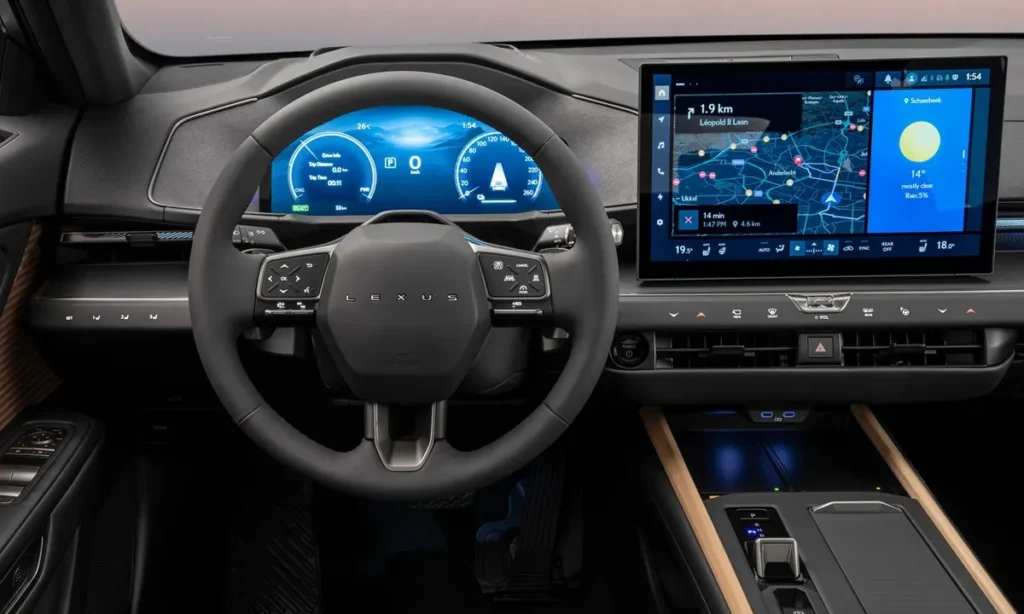
The interior of the 2026 Lexus ES represents a philosophical evolution from the design language of its predecessor — moving from the multi-faceted, layered complexity of the outgoing cabin toward a cleaner, more horizontally composed architecture that creates a more spacious and psychologically calming environment. The organising principle is Lexus’s Tazuna concept — a Japanese term meaning horse reins, implying an intuitive connection between driver and vehicle achieved through the intelligent arrangement of controls and information within the driver’s natural sightline and reach.
The Tazuna cockpit is structured around a low-profile meter hood housing a uniquely shaped 12.3-inch multi-information display whose form allows a more open and airy feel than a conventional instrument cluster surround. This display now incorporates native navigation mapping directly into the gauge cluster, eliminating the need for the driver’s eyes to travel to the central infotainment screen for routing information during active navigation. The centrepiece of the dashboard is a 14-inch infotainment touchscreen running the newest generation of Lexus Interface multimedia software, upgraded with split-screen capability, a new onscreen home button for intuitive navigation and a significantly faster native voice assistant that responds to natural language commands with markedly reduced latency compared to its predecessor.
Wireless Apple CarPlay and Android Auto are standard, alongside simultaneous dual Bluetooth telephone connectivity — a feature that proves particularly valuable in households where multiple occupants use the vehicle and wish to connect their respective devices simultaneously. An improved native voice assistant system provides hands-free control of navigation, media and vehicle settings, with faster processing enabling more conversational and less rigidly scripted interactions. The optional Mark Levinson surround sound audio system remains available for music enthusiasts who regard premium audio performance as integral to the luxury experience, while the updated Lexus app ecosystem provides enhanced EV-specific functions including a Find Station quick link and an EV Knowledge Hub for electric variant owners.
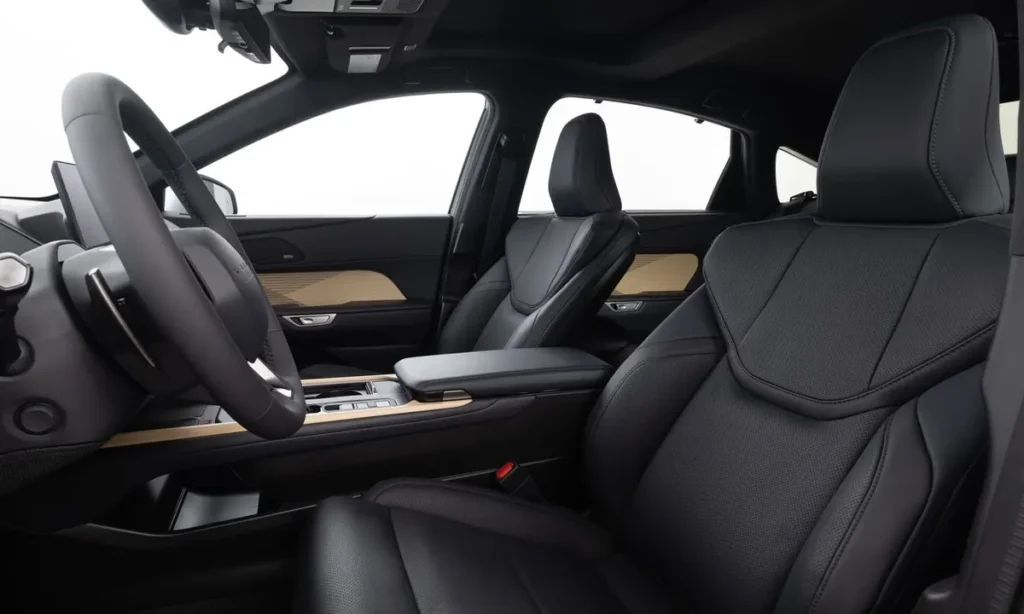
Interior materials reflect the Clean Tech x Elegance philosophy through the use of carefully selected suede surfaces, refined leather upholstery and ambient lighting that collectively create an atmosphere of sophisticated calm rather than ostentatious display. Window frame edges on both front and side apertures are lowered to increase the glass area and maximise natural light within the cabin, reinforcing the 2026 ES interior’s sense of openness and spatial generosity. Slimmer seat profiles, made possible by refined structural design, contribute additional perceived cabin volume without reducing the supportive comfort that ES occupants have always expected from the model.
The optional Executive Package — available for the first time in the ES’s history on the ES 350e Luxury trim — provides rear outboard seat occupants with power adjustment, heating, ventilation, a massage function and a passenger-side ottoman, creating a rear seat environment that approaches the travelling retreat character of dedicated business class-configured luxury sedans typically costing considerably more.
Lexus Safety System+ 4.0: The Most Advanced Active Safety Platform in ES History

Making its debut on the 2026 ES, Lexus Safety System+ 4.0 represents the most comprehensive and technically sophisticated active safety and driver assistance suite that Lexus has offered on any production vehicle to date. The new system incorporates enhanced sensor hardware — combining front-facing cameras with millimetre-wave radar in an integrated configuration that improves detection reliability across a wider range of environmental conditions than the previous generation’s separate sensor architecture.
The Pre-Collision System provides automatic emergency braking with pedestrian, bicyclist and motorcyclist detection, now operating with improved confidence in intersection scenarios where other vehicles or pedestrians enter the car’s path from the side. Lane Tracing Assist maintains the vehicle’s position within its lane with smoother and more natural corrections than previous iterations, while Dynamic Radar Cruise Control with curve speed management automatically adjusts motorway cruise speed before approaching bends based on mapping data and camera input. Road Sign Assist interprets speed limit and road signs and displays them in the driver’s instrument cluster, while Intelligent High Beams manage headlight intensity automatically based on detected oncoming traffic. Together, these systems provide a safety architecture that reduces the cognitive load on the driver across a wide range of everyday driving scenarios while maintaining the kind of natural, un-intrusive character that Lexus has always prioritised in its assistance systems.
Read: BMW 7 Series Sets New Standards in Luxury and Technology
2026 Lexus ES – Full Specifications and Configuration Chart
| Category | Specification |
| Vehicle Type | Luxury Mid-Size Sedan |
| Generation | Eighth Generation (2026) |
| Platform | TNGA GA-K (Redesigned for EV/Hybrid) |
| Powertrain Variants | ES 350h (Hybrid), ES 350e (FWD BEV), ES 500e (AWD BEV) |
| ES 350h Engine | 2.5-Litre Four-Cylinder Hybrid (Next-Gen System) |
| ES 350h Power | 243 Combined hp |
| ES 350h 0–60 mph | 7.4 sec (FWD) / 7.2 sec (AWD) |
| ES 350h Expected MPG | Approx. 43–44 City/Highway |
| ES 350e Motor | Single Front Electric Motor |
| ES 350e Power | 221 hp (FWD) |
| ES 350e 0–60 mph | 7.7 seconds |
| ES 350e Range | Approx. 300 miles (19-inch wheels) |
| ES 500e Motors | Dual Motor — Front + Rear (AWD) |
| ES 500e Drive System | Lexus DIRECT4 All-Wheel Drive |
| ES 500e 0–60 mph | 5.4 seconds |
| ES 500e Range | Approx. 250 miles |
| Shared BEV Battery | 74.7 kWh Lithium-Ion |
| DC Fast Charging (10–80%) | Approx. 30 minutes |
| AC Home Charging | 11 kW |
| Charging Port | NACS (Standard) |
| Drag Coefficient (BEV) | 0.25 Cd |
| Overall Length | 202.3 inches (Approx. 5,138 mm) |
| Wheelbase Extension | +3 inches over outgoing ES |
| Width Increase | +2.2 inches over outgoing ES |
| Height Increase | +4.5 inches over outgoing ES |
| Front Suspension | MacPherson Strut |
| Rear Suspension | New Multi-Link |
| Door Latches | Electronic (Standard) with Safe Exit Assist |
| Infotainment Screen | 14.0-inch Lexus Interface Touchscreen |
| Driver Display | 12.3-inch Multi-Information Display |
| Navigation | Integrated into Gauge Cluster |
| Connectivity | Wireless Apple CarPlay, Android Auto, Dual Bluetooth |
| Audio | Mark Levinson Surround Sound (Optional) |
| Active Safety | Lexus Safety System+ 4.0 (Standard) |
| Executive Package | Rear Heated/Ventilated/Massage Seats + Ottoman (ES 350e Luxury) |
| Wheel Options | Up to 21-inch Alloys |
| Design Language | Clean Tech x Elegance |
| Interior Philosophy | Tazuna Cockpit Concept |
| New Exterior Colour | Wavelength (Lexus-First) |
| US Market Launch | Early 2026 (BEV First, Hybrid Following) |
The ES Legacy Elevated: Why the 2026 Marks a Turning Point
The 2026 Lexus ES earns its status as the most consequential chapter in the nameplate’s 35-year history not through incremental improvement but through genuine transformation — a willingness on Lexus’s part to reimagine every dimension of the ES simultaneously, from its powertrain lineup to its exterior design philosophy to its interior architecture and its safety technology. The decision to eliminate non-electrified powertrain options entirely is the boldest strategic commitment in the ES’s history, and one that Lexus has made from a position of considerable electrification experience and credibility rather than reactive necessity.
For buyers who have always chosen the ES for its serene ride quality, its exceptional long-term reliability, its thoughtfully designed interior and its understated premium character, the 2026 generation delivers all of these qualities in their most refined and technologically advanced form to date. The extended wheelbase, the expanded cabin dimensions, the new multi-link rear suspension, the Tazuna cockpit and the Lexus Safety System+ 4.0 collectively create a vehicle that represents meaningful advancement across every axis that ES buyers have historically valued.
For buyers who have been waiting for an electric or electrified Lexus sedan with genuine premium character and the reassurance of Toyota Group’s engineering depth behind it, the 2026 ES delivers that option with unusual breadth — from the familiar and fuel-efficient hybrid to the range-optimised single-motor electric to the performance-capable dual-motor DIRECT4 AWD flagship. In a luxury sedan market where the relevant competitive landscape is shifting rapidly, the 2026 Lexus ES arrives with precisely the combination of ambition, refinement and real-world practicality that the moment demands.