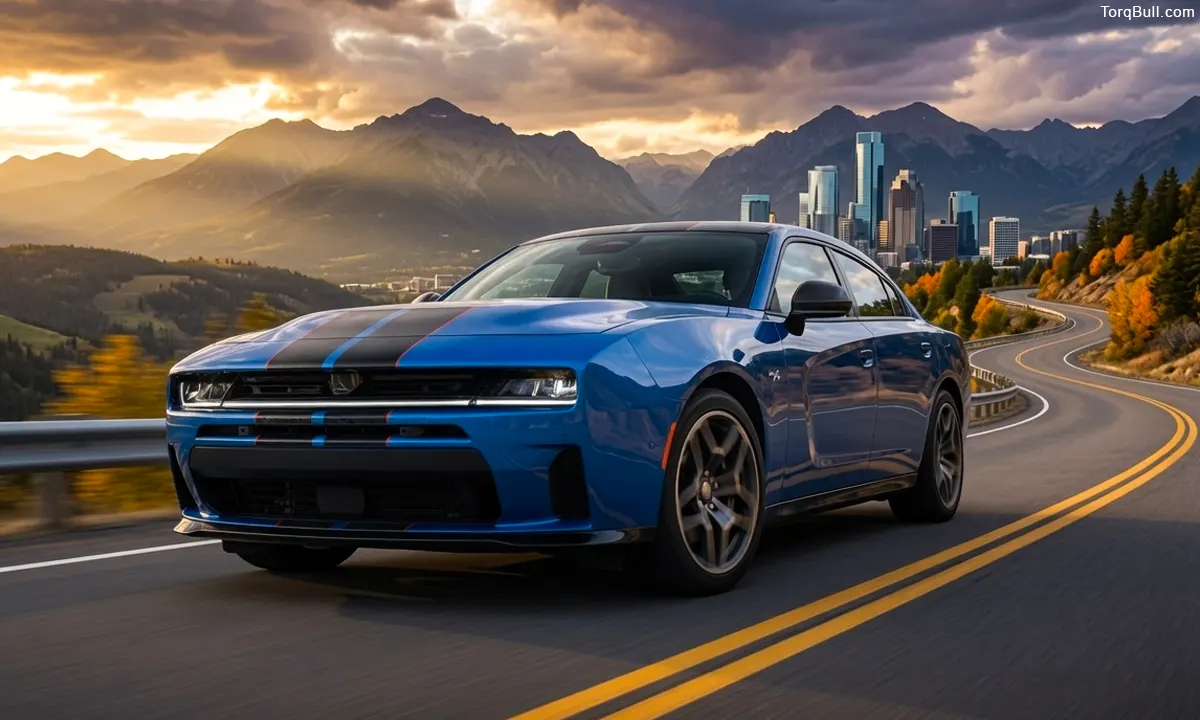
Let me tell you about the angriest corner of the internet right now. It is not politics. It is not sports. It is Dodge fans, and they are absolutely losing their minds, because the 2026 Charger committed what many of them consider an unforgivable sin. It killed the V8.
For decades, the formula was sacred. American muscle meant a big, thumping, eight cylinder lump of iron under a long hood, rear wheel drive, and a soundtrack that set off car alarms three blocks away. That was the religion. And Dodge just walked into the church and replaced the altar. The V8 HEMI has officially passed the torch to the 3.0 liter Hurricane Twin-Turbo Inline-Six, branded as the Sixpack.
A turbo six. In a Charger. I felt the disturbance in the force from my couch. But here is the thing, and I say this as someone who loves a good V8 as much as anyone. After looking at what this engine actually does, I am not mad. I am kind of thrilled. Let me explain why this controversial little six cylinder deserves a whole lot more respect than the angry mob is giving it.
The Numbers Don’t Apologize, So Why Should You?
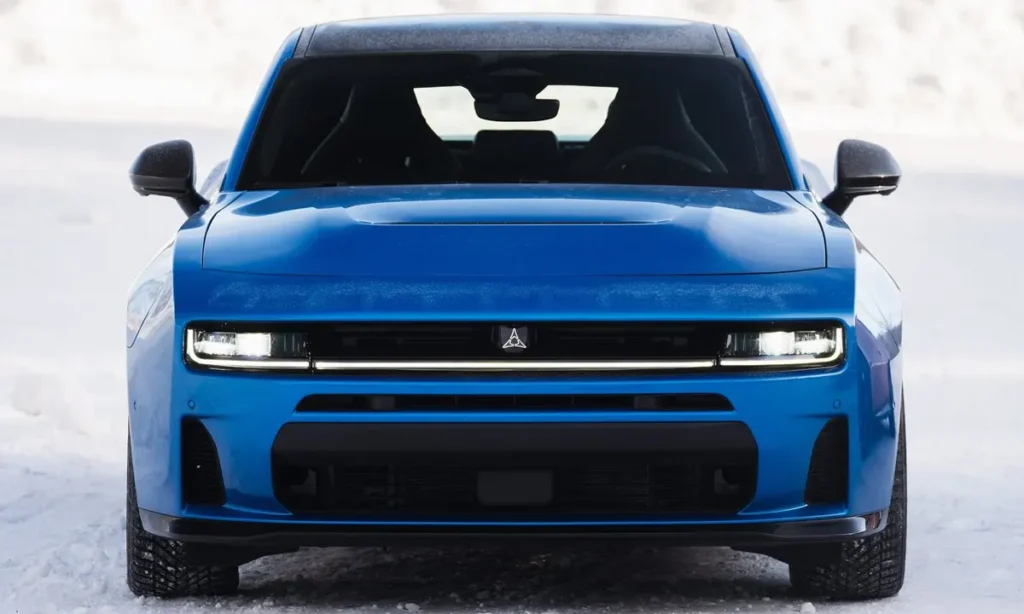
Let’s cut straight to the part that ends most of the arguments. The Sixpack is not some weak, compromised downsizing exercise. In its hottest form, it is a monster.
The 3.0L Sixpack HO Twin-Turbo straight-six in the Scat Pack delivers a maximum 550 horsepower and 531 pound feet of torque, with twin 54mm Garrett turbochargers spun up fast and backed by forged pistons and a two chain driven pump. And here is the line that should silence the haters. It outperforms the last generation 6.4 liter V8 in both horsepower and torque.
Read that again. The new six cylinder makes more power and more torque than the old 392 cubic inch V8 it replaced. This is not a step backward dressed up in marketing. It is a measurable step forward. And the torque arrives early and hard. Its low end power provides 88 percent of peak torque at just 2,500 rpm, spooling those twin Garrett turbos toward a peak of 30 psi of boost. That is the immediate, shove you in the seat punch that makes turbo engines so addictive.
It’s Genuinely, Stupidly Fast
Big power numbers mean nothing if the car is slow. The Charger Sixpack is not slow. It is, in fact, properly quick.
Car and Driver tested the Scat Pack coupe from 0 to 60 mph in 3.7 seconds, with a quarter mile of 12.1 seconds at 116 mph, and Dodge claims a top speed of 177 mph. And the reviewer made the key point. Those are not paper numbers, they are results from a 4,889 pound American performance coupe with all wheel drive.
Nearly two and a half tons of muscle car hitting 60 in 3.7 seconds. The old V8 Charger could only dream of those times without a supercharger and a Hellcat badge. The Sixpack does it on boost, on all four wheels, and it does it every time you ask. The performance argument is simply over. The six wins.
Wait, It Still Does Burnouts?
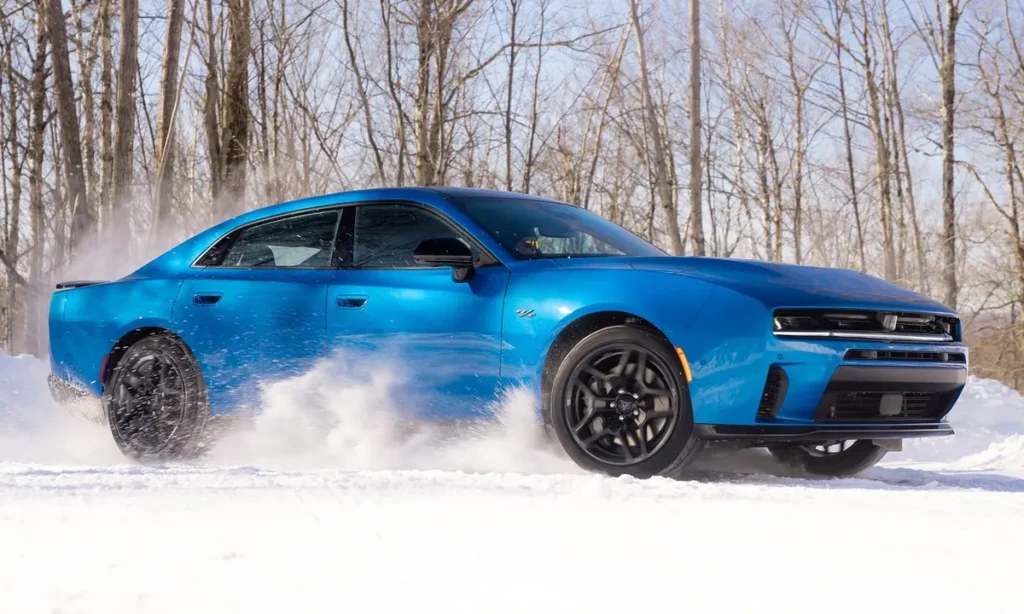
Here is the part that made me grin and quieted my inner purist. Dodge did not turn the Charger into some sensible all wheel drive appliance. It kept the hooligan spirit fully intact.
Both gas models come standard with all wheel drive, with the ability to shift to 100 percent rear wheel drive at the push of a button, giving you control when you want it and classic rear drive dynamics when you don’t. And it goes further than just rear drive. The Scat Pack includes a driver switchable rear wheel drive mode, drift modes, and Line Lock for when you want the rear tires to carry the full output.
Translation? You get all weather traction for the 360 days a year you are just driving, and then, with a button, you unlock smoky burnouts, drift mode, and tail out shenanigans for the days you want to misbehave. That is the best of both worlds, and it is exactly the kind of unapologetic muscle car attitude the badge demands.
It Actually Handles, Too
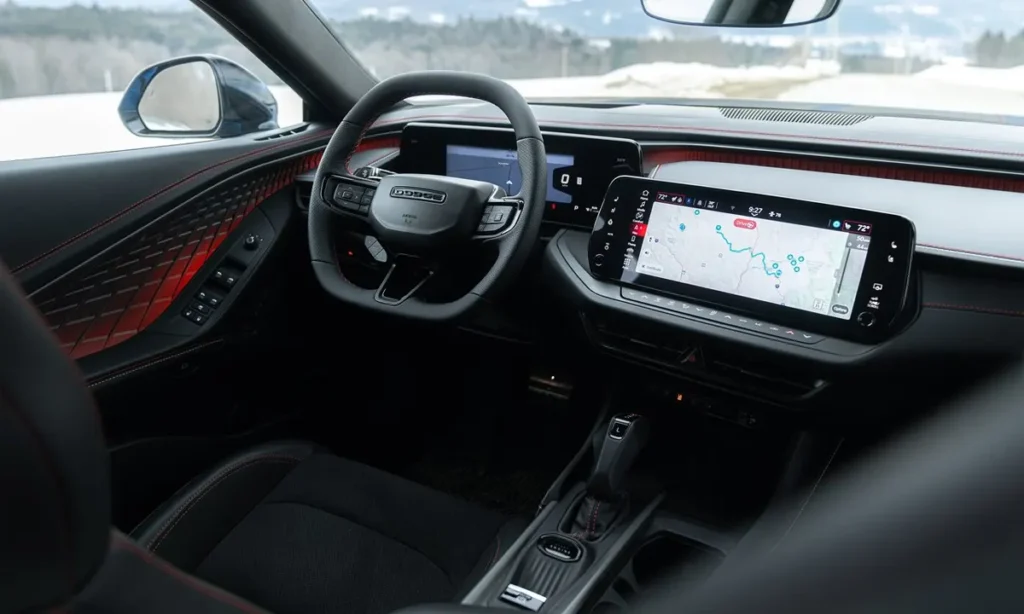
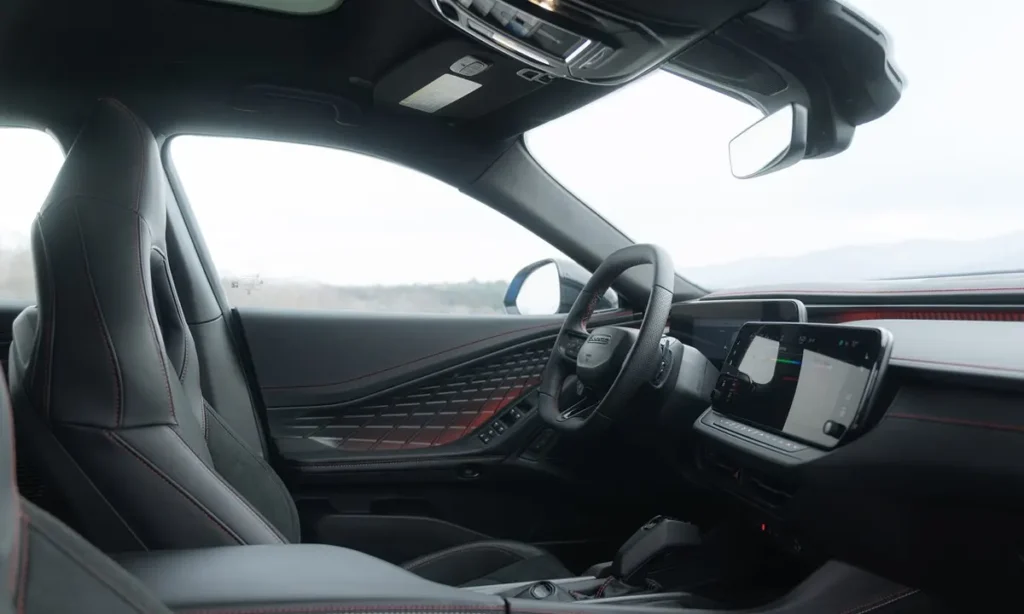
The old knock on muscle cars was that they only went in a straight line. The Sixpack quietly fixed that, and the track testers noticed. One jury of test drivers found the Sixpack not guilty of being strictly for straight line thrills, with Brembo six piston front calipers clamping 380 millimeter discs that showed no sign of brake fade all day, a shocking revelation given the 4,800 pound curb weight.
Is it a precision scalpel? No. There is some body roll mid corner, giving the sensation of sitting more on than in the car, but apexes come easy thanks to nice steering feel. For a big, heavy muscle coupe, that is a genuinely respectable showing, and miles better than the muscle cars of old.
How It Stacks Up
Here is where the Sixpack lands against its own family and its history.
| Model | Engine | Power | 0 to 60 | Starting Price |
| Charger R/T (Sixpack S.O.) | 3.0L TT I6 | 420 hp | Quick | About $51,990 |
| Charger Scat Pack (Sixpack H.O.) | 3.0L TT I6 | 550 hp | 3.7 sec | $56,990 |
| Charger Daytona Scat Pack (EV) | Electric | 670 hp | Quicker | $61,990 |
| Old Charger Scat Pack (6.4L V8) | 6.4L V8 | 485 hp | Slower | Discontinued |
The lineup is flexible and the value is real. The Scat Pack starts at $56,990, the R/T opens at $51,990, and the battery electric Daytona starts at $61,990, with any model available as a four door for an extra two grand. And the world took notice. The Dodge Charger was named the 2026 North American Car of the Year, recognizing its benchmark setting performance and power. Car of the Year. For the car the purists swore was ruined.
Let Me Be Honest About What Was Lost
Now I am going to step off the hype train for a moment, because the angry fans are not entirely wrong, and I respect you too much to pretend otherwise.
Something real was lost here, and it is not on any spec sheet. It is the sound. The soul. The visceral, chest thumping rumble of a V8 at idle that you feel in your sternum. A twin-turbo inline-six, no matter how powerful, does not stir the primal part of your brain the same way. Dodge points out the inline-six is inherently smoother and more balanced than a V8, and that is true, but smoothness was never why people fell in love with muscle cars. They fell in love with the drama.
There are practical gripes too. It is heavy at nearly 4,900 pounds. The Scat Pack climbs fast with options. One optioned out tester rang in at $68,755, which is a lot of dough. And no amount of horsepower will convince a die hard V8 loyalist that a turbo six belongs in a Charger.
Here is my read, though. The soul argument is emotional, and emotions are valid. But the muscle car was always, at its core, about going fast without apology. The V8 was the means, not the mission. The Sixpack chases that exact same mission, and it does it faster, in more weather, with more versatility than the engine it replaced. The romance took a hit. The substance did not.
Verdict: Mourn the V8, Respect the Six

So where do I land on the 2026 Charger Sixpack? Genuinely impressed, with a small lump in my throat.
Do I miss the V8? Of course I do. I will always miss the V8. The sound, the heritage, the sheer theater of it. If you are buying a muscle car purely for the soundtrack and the soul, the Sixpack will leave a hole no boost can fill, and I will not tell you you are wrong to feel that.
But if you can set the grief aside for a second and look at what Dodge actually built, it is remarkable. The mission hasn’t changed: deliver unapologetic performance, with boosted power, aggressive styling, and the kind of traction that lets drivers put every bit of those 550 horses to the pavement. It is quicker than the old V8, more powerful, more capable in the corners, drivable year round, and it still rips glorious burnouts at the push of a button. It kept the muscle car alive in an era that wanted to electrify it into oblivion or kill it entirely.
So buy the Scat Pack if you want the full 550 horsepower experience, or the R/T if you want a 420 horsepower daily that still humiliates the old HEMI off the line. Either way, you are getting a car that refuses to apologize for what it is, even as it drags American muscle kicking and screaming into the future.
Twin-turbo. 550 horsepower. Zero apologies. Pour one out for the V8, then go drive the thing that beat it. The Sixpack earned its place, whether the church likes it or not.