End of an Era! Why the Audi R8 GT Is More Than Just a Farewell
Eighteen Years, Two Generations, 333 Final Units, 300 Kilograms of Downforce and the Last Naturally Aspirated V10 Supercar Audi Will Ever Build — The R8 GT Is Not Simply the End of a Production Run. It Is the Closing of an Entire Philosophy About What a German Supercar Could and Should Be
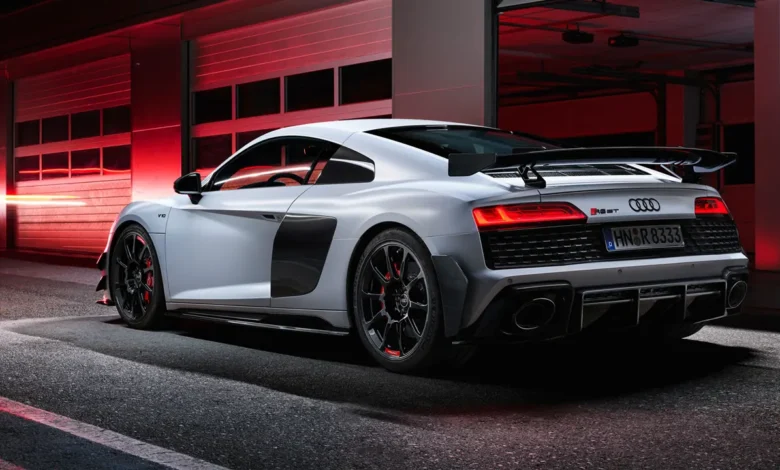
There are production endings in the automotive industry that arrive quietly — a model whose numbers gradually declined, whose replacement was already in the showroom, whose discontinuation was noticed mostly by inventory specialists. And then there are endings that feel more like cultural events — moments when the cessation of a specific car’s production represents the closing of a chapter in how the industry understood itself. The Audi R8 GT belongs firmly in the second category. When the last R8 rolled off the production line at Audi Sport’s Böllinger Höfe facility in March 2024, it was not simply an automobile that had reached the end of its commercial life. It was the conclusion of eighteen years of an argument that Audi had been making, consistently and with growing conviction, about what a high-performance supercar from a German manufacturer could be — approachable and exotic simultaneously, naturally aspirated in an era of forced induction, accessible to daily use without sacrificing the capability that a dedicated track day demands.
Gallery: Audi R8 GT
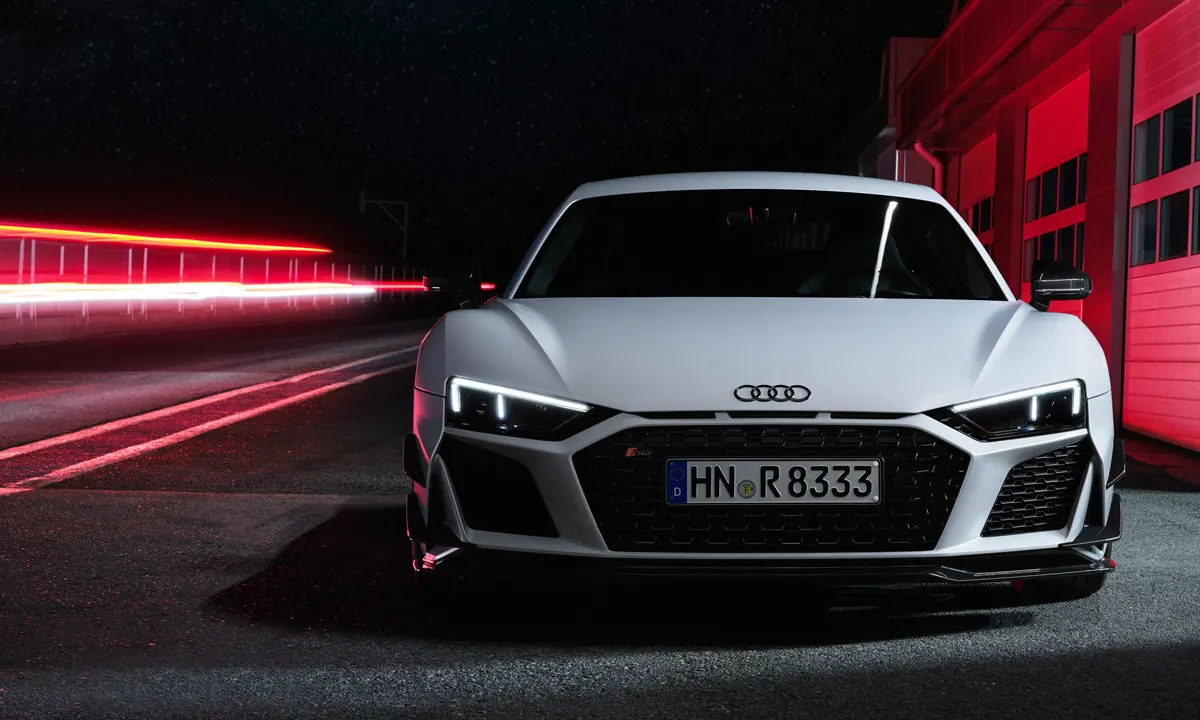
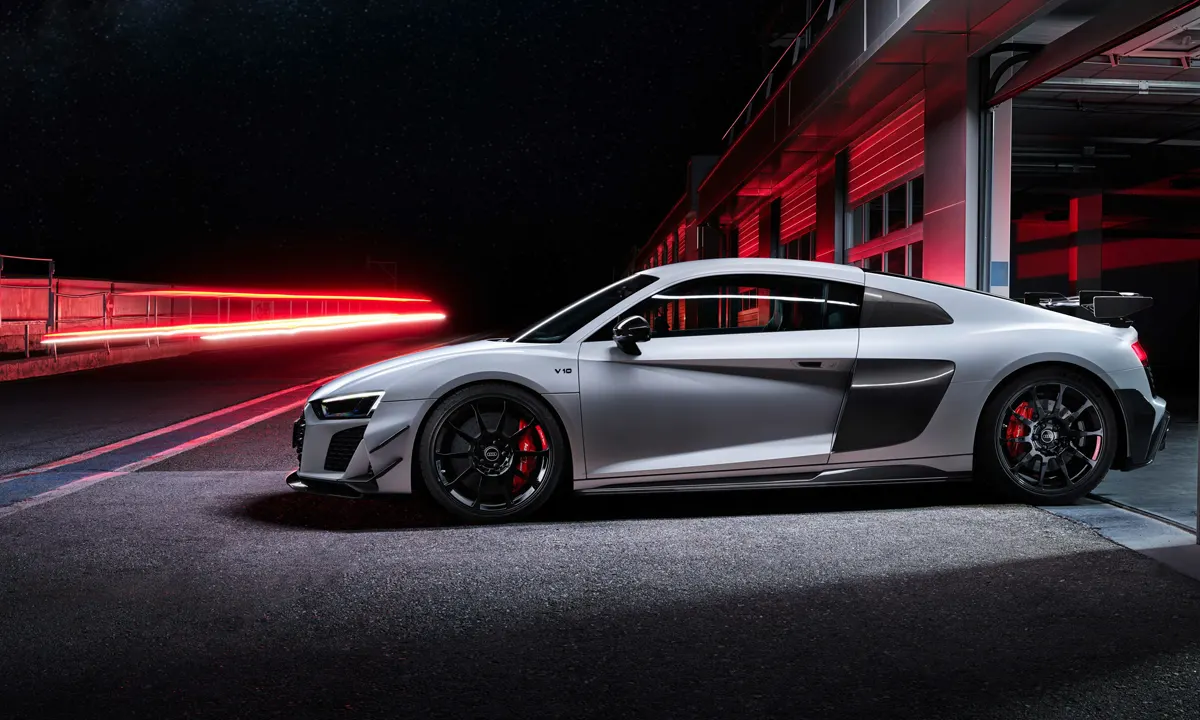
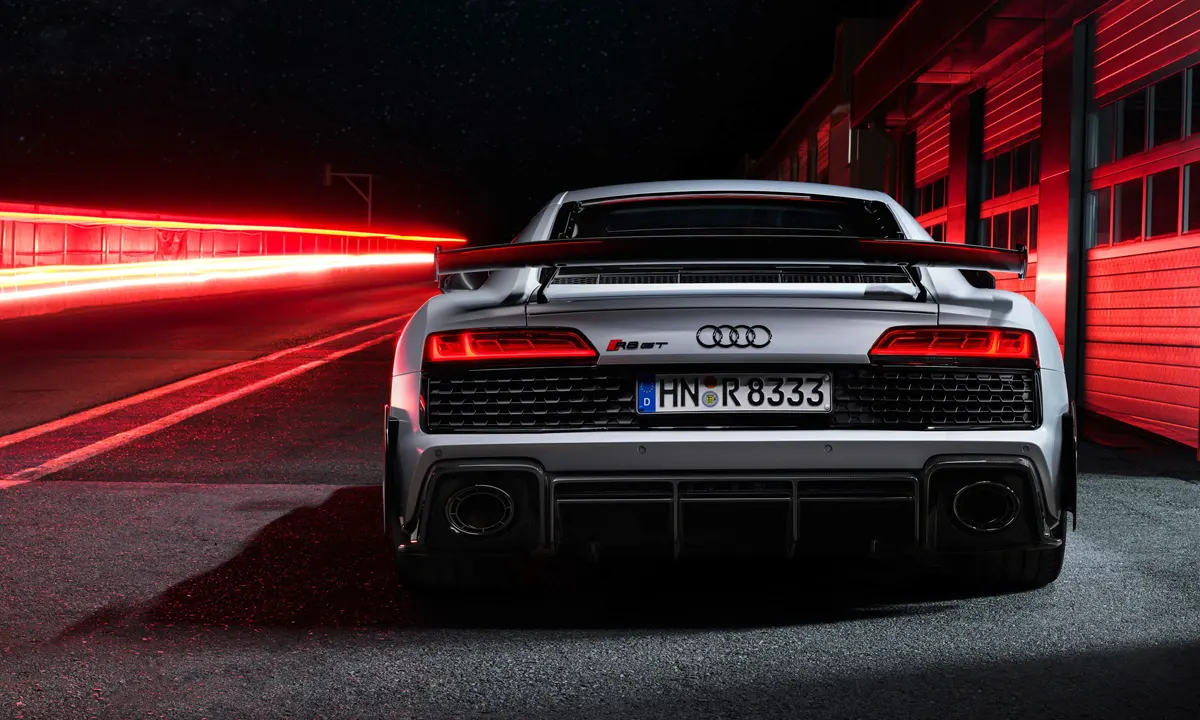
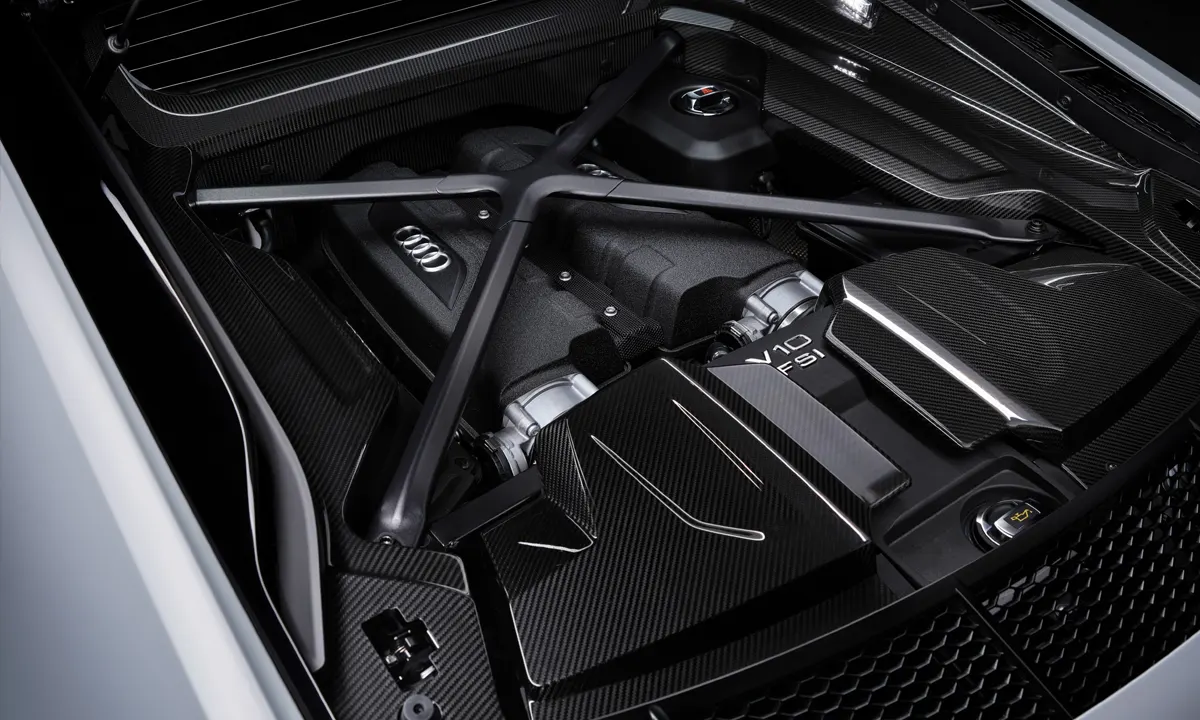
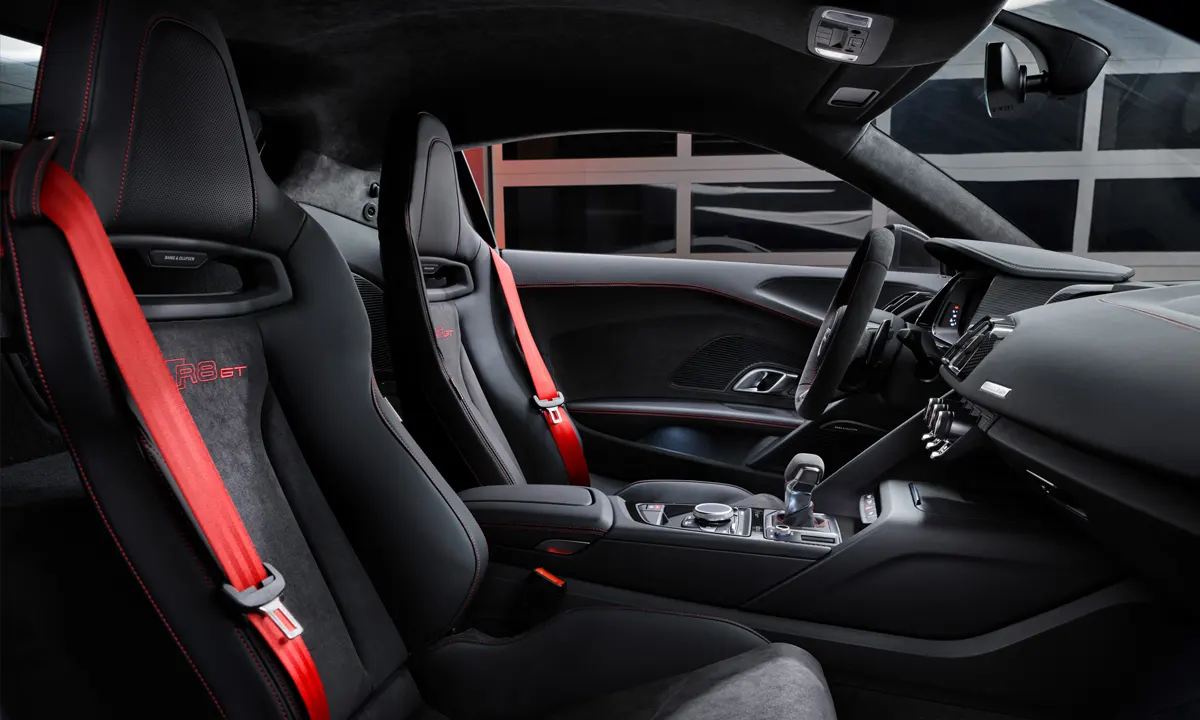
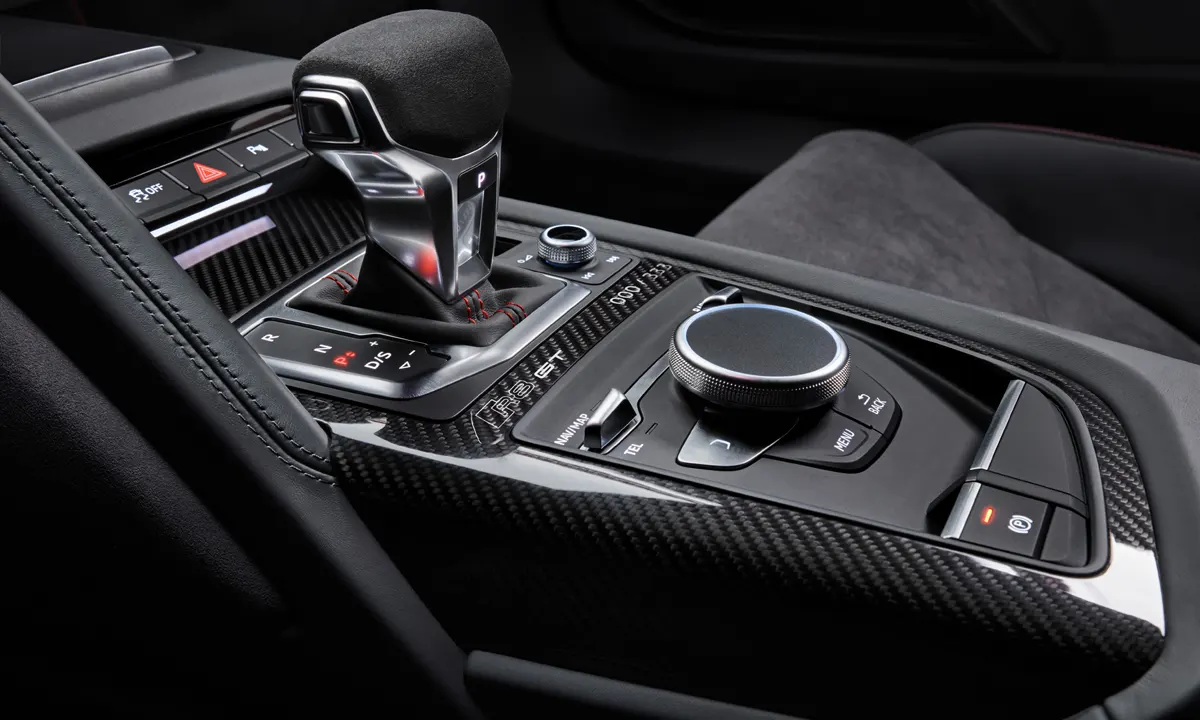
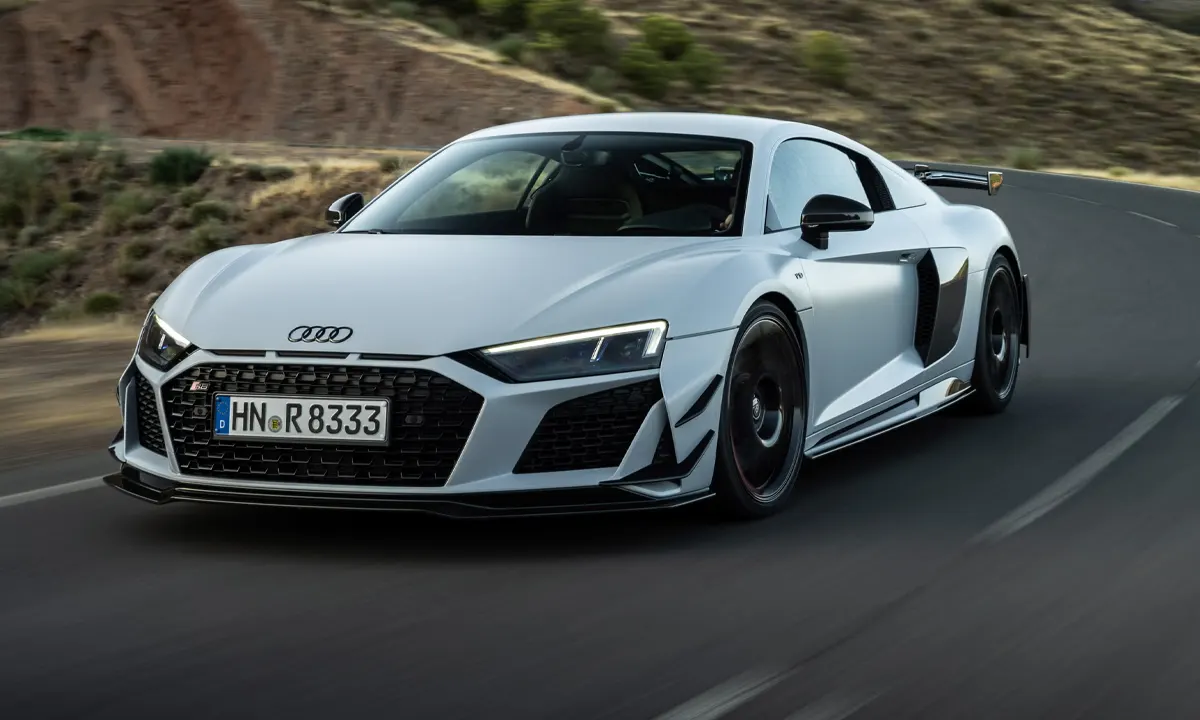
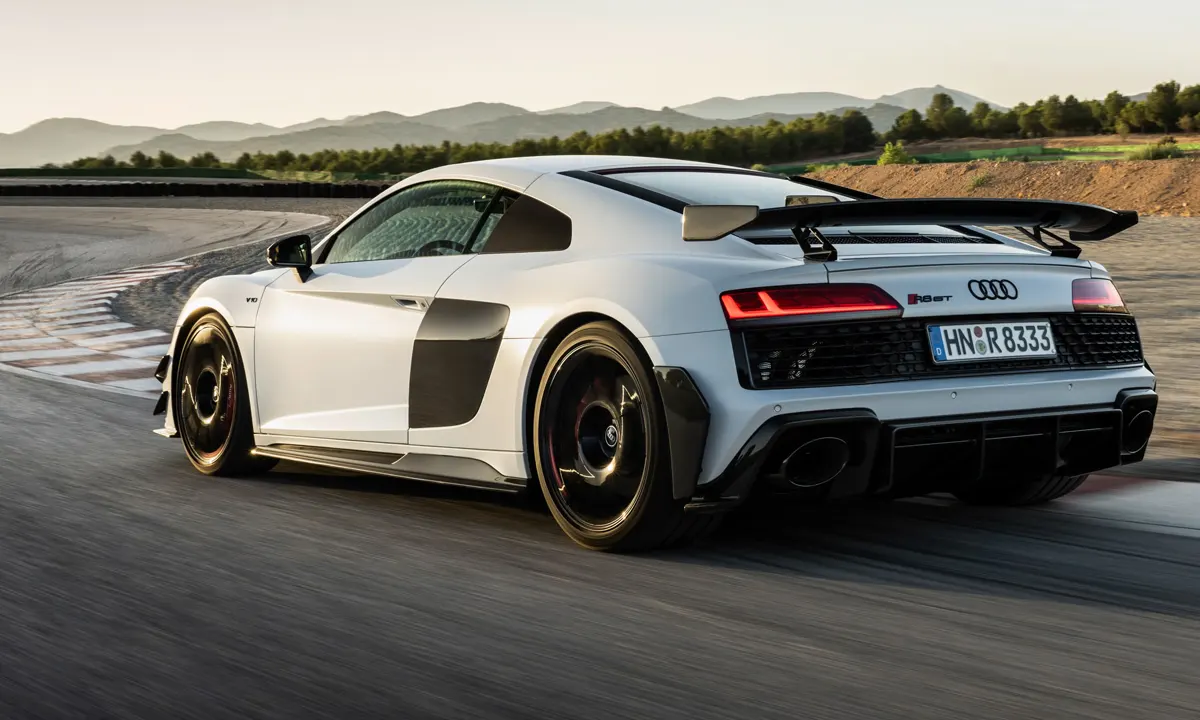
The R8 GT — the final, most extreme and most focused production version of the second-generation R8, limited to 333 individually numbered examples worldwide with only 15 allocated to the United Kingdom — carries that conclusion with a dignity and a seriousness of engineering intent that makes it considerably more than a farewell edition. It is the R8 at its most resolved, its most driver-focused and its most visually dramatic. And it is the last naturally aspirated V10 supercar that Audi will produce in its history.
What the R8 Meant: Eighteen Years of a Single Argument
The original Audi R8, unveiled as a concept in 2003 and entering production in 2006, made an argument that was genuinely surprising at the time — that the Volkswagen Group’s most technically sophisticated mass-market manufacturer could produce a mid-engined two-seat supercar capable of competing directly with Porsche, Ferrari and Lamborghini in the segment that those manufacturers had defined as their exclusive territory. That the original R8 was built on a platform derived from the Lamborghini Gallardo, and that the V10 engine it would eventually adopt was shared with the Lamborghini Huracán, was not incidental. It was the technical foundation that made the argument possible — and the quality of Audi Sport’s execution of that foundation, particularly in terms of everyday usability, interior quality and weather compatibility through the quattro all-wheel drive system, created a supercar identity that was distinctly and specifically Audi’s own rather than a repackaged Italian product.
The impact of the R8’s introduction on Audi’s broader brand identity was transformative in a manner that extended far beyond the supercar segment’s direct commercial significance. When the concept was revealed in 2003, Audi produced just two RS performance models. By the time the last R8 GT left production in 2024, the RS lineup had expanded to ten distinct models — a proliferation of high-performance variants whose credibility with buyers was directly underwritten by the halo status that an Audi supercar provided. The R8 was not primarily a volume product. It was a brand architecture investment — the car whose existence in the lineup gave every RS badge a performance credential that the RS models alone, however capable, could not independently establish. That halo function was not merely theoretical. It was commercially measurable in the premium that Audi’s performance variants commanded over their rivals and in the rate at which buyers chose RS models over comparable products from BMW M and Mercedes-AMG in markets where the R8’s presence was strongest.
The V10: A Decision Against the Current
The single engineering decision that most clearly defined the R8’s identity across its entire production life — and that gives the R8 GT its most powerful claim on the emotions of the enthusiasts who valued it — was the commitment to the naturally aspirated 5.2-litre V10 engine that the second-generation R8 shared with the Lamborghini Huracán. In an automotive industry that progressively abandoned large-displacement naturally aspirated engines in favour of smaller, turbocharged alternatives throughout the 2010s and early 2020s — driven by fuel economy regulations, emissions targets and the genuine engineering advantages that forced induction offers in terms of power density — Audi’s persistence with the V10 was an act of deliberate, principled differentiation.
The V10’s characteristics were not merely different from those of turbocharged alternatives. They were different in ways that produced a specific and deeply valued driving experience that no turbocharged engine of any displacement, however sophisticated, could replicate. The engine’s power delivery was relentlessly linear — there was no turbo lag, no sudden surge of additional torque as boost pressure built, no management of an artificial power curve designed to maximise test cycle performance at the expense of in-use response. Power built smoothly, continuously and with mounting urgency from low revs through to the 8,400-rpm redline, and the relationship between throttle position and engine response was as direct and as immediate as any mechanically injected racing engine’s. The acoustic character that accompanied this delivery — the complex, layered, high-frequency shriek of ten cylinders spinning beyond eight thousand revolutions per minute — was among the most celebrated and most emotionally affecting sounds produced by any production engine in the modern era.
In the R8 GT, this engine produces 611 horsepower at 8,000 rpm and 417 lb-ft of torque — figures achieved entirely through software calibration rather than mechanical modification, reflecting both the sophistication of the engine management system and the depth of performance headroom that the naturally aspirated V10 architecture contained in standard production specification. The seven-speed dual-clutch transmission received revised shift software that reduces change times and allows downshifts at higher revs than the standard R8 — a change specifically designed to keep the V10 operating in the upper portion of its rev range where the acoustic and performance rewards are most spectacular. The result, experienced under full acceleration from a standing start, is one of the most theatrically engaging powertrain experiences that any road-legal production car produced in the modern era could deliver.
The Aerodynamic Architecture: Racing DNA Made Legal
The visual identity of the R8 GT is defined by an aerodynamic package that references the Audi R8 LMS GT3 racing car with a directness and a visual confidence that previous limited-edition R8 variants approached but never fully achieved. The programme of aerodynamic components — a front splitter with double winglets at the lower corners of the bumper, prominent side sills, canards positioned behind the rear wheels and, most dramatically, a swan-neck mounted rear wing derived directly from the GT3 competition car’s aerodynamic architecture — is not a styling exercise designed to create the impression of aerodynamic sophistication. It is a wind tunnel-validated package that generates 300 kilograms of total downforce at the 199-mph maximum speed — a figure that represents 155 kilograms more than the standard R8 Performance generates at the same speed and that fundamentally changes the dynamic behaviour of the car during high-speed cornering.
The swan-neck rear wing mounting — in which the support arms attach to the upper surface of the wing rather than to its lower surface — is a specific aerodynamic solution that allows airflow to pass beneath the wing without the interruption that lower-surface mounting structures create, producing a cleaner, more efficient pressure distribution across the wing’s working surface and therefore higher downforce for equivalent drag increase. That this solution was developed for competition cars before being adapted for the GT’s road-legal specification confirms the directness of the technical transfer between Audi Sport’s motorsport and road car programs. Unpainted carbon fibre is used throughout the aerodynamic package, creating a visual identity that communicates purpose through material choice rather than through colour or decoration — every carbon element visible from the outside confirms that mass reduction, structural efficiency and aerodynamic function were the design priorities rather than conventional automotive finish aesthetics.
The weight reduction achieved by the GT programme amounts to 20 kilograms compared with the R8 Performance RWD — achieved primarily through the carbon fibre front anti-roll bar, the forged alloy wheels and the lightweight interior seats. This figure is modest in absolute terms but meaningful in the specific context of a car that weighs approximately 1,570 kilograms in standard GT specification, where 20 kilograms represents a proportional mass reduction that has measurable effects on cornering inertia, braking distance and the responsiveness of the suspension to rapid direction changes. The optional manually adjustable coilover suspension — offered on the R8 GT for the first time in the model’s history and specifically developed as an option because Audi Sport’s chassis engineers wanted the final version of the car to be the best driver’s R8 that had ever existed — allows ride height reduction of up to 10 millimetres below the standard GT setting, with 18 clicks of adjustability for both compression and rebound at each corner. This is not a feature for concours car owners who prioritise originality over performance. It is a feature for the track day drivers that the R8 GT was specifically designed to serve.
Torque Rear: The Digital Drift Mode That Honours the Driver
One of the most thoughtful and most characteristic additions to the R8 GT’s specification is the Torque Rear seven-stage adjustable slip control system — a technology that provides adjustable intervention thresholds for rear-wheel traction management, allowing the driver to select the degree of rear-axle slip that the system will permit before intervening with corrective torque reduction. At the system’s lowest settings, the car behaves with the composed, limit-protecting character that makes fast, confident driving accessible to a broad range of driver skill levels. At the highest settings, the system retreats to a supervisory role that allows significant rear-axle angles to develop and sustain before providing modest correction — creating the conditions for controlled, driver-managed oversteer that was previously the exclusive domain of the rear-wheel-drive R8 in its DSC-off configuration.
The significance of Torque Rear in the R8 GT’s story is not merely technical. It represents Audi Sport’s explicit acknowledgement that the buyers of the final, most expensive and most limited R8 deserved a system that rewarded their skill and engagement rather than managing their inputs toward a predetermined dynamic outcome. The system was designed, in the words of Audi Sport’s own engineers, to make the GT feel like Audi’s answer to Ferrari’s Slip Side Control — to give a sophisticated, adjustable electronic tool for exploiting the rear-wheel-drive R8’s natural tendency toward expressive cornering when the driver chooses to explore it, while retaining the ability to dial back to conventional stability management for road driving.
333 Numbers, One Legacy
Every one of the 333 R8 GT coupes produced was sold before the public announcement of the model was widely disseminated — a commercial fact that speaks to both the car’s extraordinary desirability and to the deeply personal relationship that the Audi supercar community had developed with the R8 nameplate across eighteen years of production. At a base price of approximately £198,333 in the United Kingdom and a comparable figure in other markets, the R8 GT commanded a significant premium over the standard R8 Performance — a premium that its buyers regarded not as an inflated exit price but as appropriate recognition of what the car represented: the definitive, most focused and most aerodynamically capable R8 that Audi Sport’s engineers had the technical freedom to build, produced in a quantity so limited that its rarity would be self-evident from the day of delivery.
The interior of each GT carries an individually numbered plaque that identifies its position within the production run — a detail that transforms a specification item into a statement of each car’s unique identity within the limited series. Red stitching throughout the cabin, lightweight sport seats standard, grippy Alcantara surfaces on the most tactile contact points and the full complement of Audi Sport’s Virtual Cockpit instrumentation create a cabin that balances the emotional character of a special edition with the ergonomic rationality that distinguished the R8 from Italian competitors whose dramatic interior architecture sometimes conflicted with the practical demands of daily supercar ownership.
Whatever follows the R8 in Audi Sport’s lineup will almost certainly be battery-electric — a reflection of the same regulatory and commercial forces that have driven the entire premium automotive industry toward electrification. Whether that successor can replicate the specific emotional qualities of the R8 GT’s V10 — the naturally aspirated linearity, the screaming acoustic character, the physical intimacy of a mechanically direct connection between throttle and response — is a question that honesty requires answering carefully. The engineering excellence of electric powertrains is not in serious doubt. Their ability to replace the specific character of a 5.2-litre naturally aspirated V10 spinning to 8,400 rpm is a different and more genuinely uncertain proposition. The R8 GT is the end of a philosophy as well as the end of a production run. And in that dual significance lies its status as something considerably more than just a farewell.
Read: Toyota GR Supra Finally Goes Pure No More BMW DNA
Audi R8 GT — Specifications and Production Details Chart
| Category | Specification |
| Production Period | 2022–2024 (Final Production — March 2024) |
| Total Production | 333 Units Worldwide |
| UK Allocation | 15 Units |
| Body Style | Coupe (Rear-Wheel Drive) |
| Engine | 5.2-Litre Naturally Aspirated V10 |
| Engine Shared With | Lamborghini Huracán |
| Horsepower | 611 hp (612 PS) at 8,000 rpm |
| Torque | 417 lb-ft (565 Nm) — Arrives 200 rpm Earlier Than Performance RWD |
| Redline | 8,400 rpm |
| Transmission | 7-Speed Dual-Clutch S Tronic — Revised for Faster Shifts |
| Drivetrain | Rear-Wheel Drive |
| 0–62 mph | 3.4 seconds |
| Top Speed | 199 mph (320 km/h) — Clipped from Standard by Shorter Gearbox Ratios |
| Total Downforce (Top Speed) | 300 kg |
| Additional Downforce vs Performance R8 | +155 kg |
| Front Aerodynamics | Splitter, Double Winglets, Three Strakes (Ur-Quattro Reference) |
| Rear Aerodynamics | Swan-Neck Wing (GT3-Derived), Enlarged Diffuser, Rear Canards |
| Side Aerodynamics | Large Sill Extensions |
| Carbon Fibre Components | Anti-Roll Bar (Front), Exterior Aero Elements, Interior Trim |
| Weight Saving vs Performance RWD | 20 kg — Via Forged Wheels and Carbon Anti-Roll Bar |
| Kerb Weight | ~1,570 kg |
| Standard Suspension | Passive Dampers — 10mm Lower Than Standard R8 |
| Optional Suspension | 18-Way Manually Adjustable Coilovers — Additional 10mm Drop Available |
| Traction Control System | Torque Rear — 7 Adjustable Slip Levels |
| Standard Brakes | Carbon-Ceramic |
| Wheels | Forged Alloy — 20-inch |
| Tyre Options | Michelin Pilot Sport (Standard) / Michelin Pilot Sport Cup 2 (Optional) |
| Interior | Lightweight Sports Seats, Red Stitching, Alcantara, Individual Numbered Plaque |
| Instrument System | Audi Virtual Cockpit |
| Optional Fixed Steering Rack | Available (Replaces Variable-Ratio Dynamic Steering) |
| UK Base Price | ~£198,333 |
| Sales Status | 333/333 Sold — Pre-Launch Sellout |
| Successor Powertrain | Battery-Electric — Confirmed |
| Production Facility | Audi Sport — Böllinger Höfe, Neckarsulm, Germany |
| R8 Production Total (All Generations) | ~45,949 Units Worldwide |
| R8 Motorsport Program | R8 LMS GT3 — Nürburgring 24-Hour Class Winner Multiple Times |
| Generation | Second Generation — 2015–2024 |
| First Generation | 2006–2015 — V8 and V10 Powertrains |
| RS Model Count (2003 vs 2024) | 2 Models (2003) to 10 Models (2024) — R8 Halo Effect |