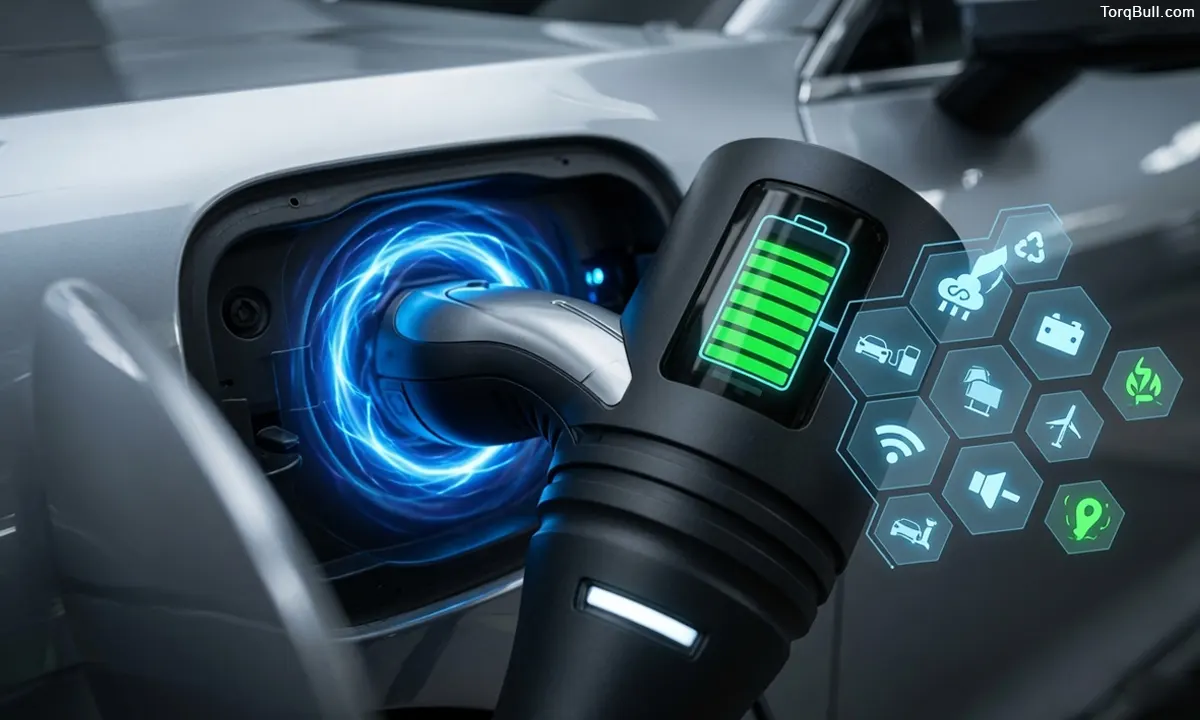
Charging anxiety is the last great hurdle standing between electric cars and total dominance. Range keeps growing, but the wait at the plug has remained the stubborn dealbreaker. Fifteen minutes here, thirty minutes there. It is the one thing gas cars still do better: pull in, fill up, leave in five minutes.
So when BYD, the world’s largest maker of plug-in electric cars, stood up and declared it had solved charging anxiety entirely, the whole industry sat up. And the numbers behind the claim are genuinely jaw-dropping.
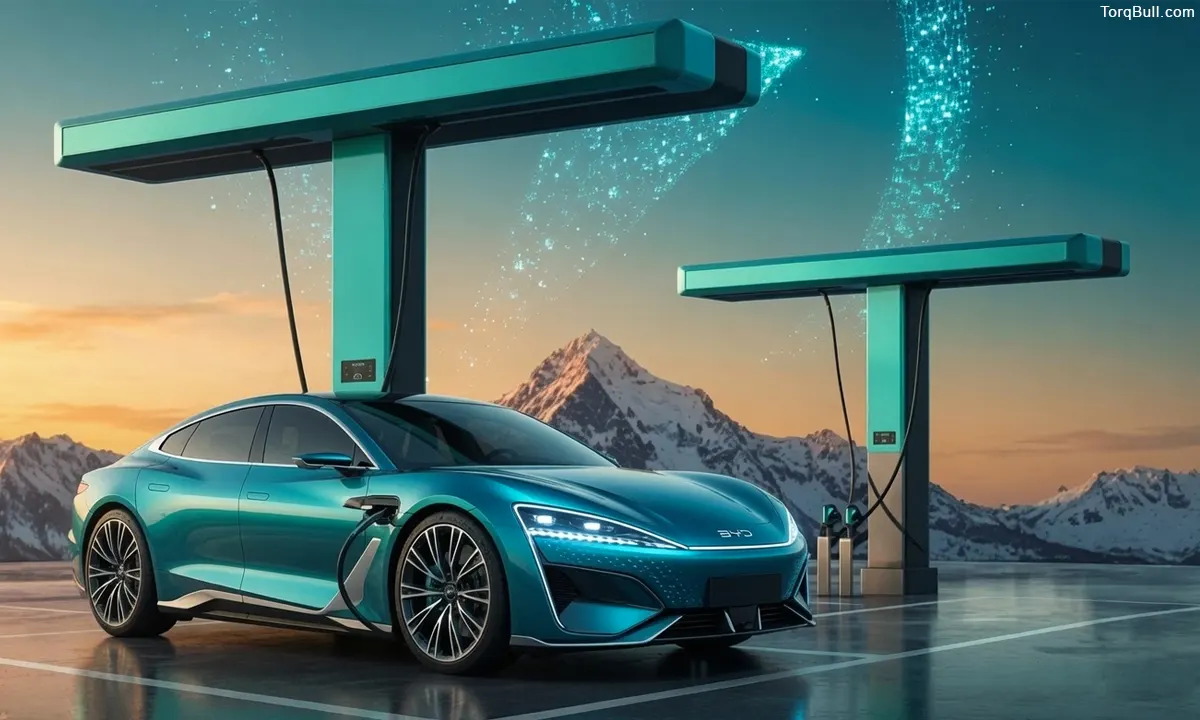
BYD’s Super e-Platform delivers a peak charging power of 1 megawatt, or 1,000 kilowatts, enabling a vehicle to gain 2 kilometers of range every second, or 400 kilometers in just 5 minutes, effectively matching the time it takes to refuel a gasoline car. BYD’s chairman put the mission plainly: the ultimate solution is to make charging as quick as refueling a gasoline car. On paper, they did exactly that. Let me explain how this wizardry works, and then give you the honest reality check every American reader needs to hear.
The Headline: Gas-Station Speed, for Real
Let’s establish just how big a leap this is. For years, the fastest EVs topped out around 250 to 350 kilowatts. BYD blew past that into a completely different league. The platform is the world’s first full-domain 1000V high-voltage architecture for mass-produced passenger vehicles, integrating ultra-high voltage of 1,000 volts and ultra-high current of 1,000 amps.
Multiply those together, 1,000 volts by 1,000 amps, and you get 1,000,000 watts. One megawatt. That is why BYD calls it the highest peak charging speed in the world, at 1 second for 2 kilometers. In practical terms, five minutes plugged in buys you 400 kilometers, roughly 250 miles, of range. The old reality was that refueling a gas car took 5 to 8 minutes, and now, for the same range, an electric car takes only 5 to 8 minutes to charge. The wait, in theory, is gone.
How It Works, Part One: A Battery That Drinks Electricity
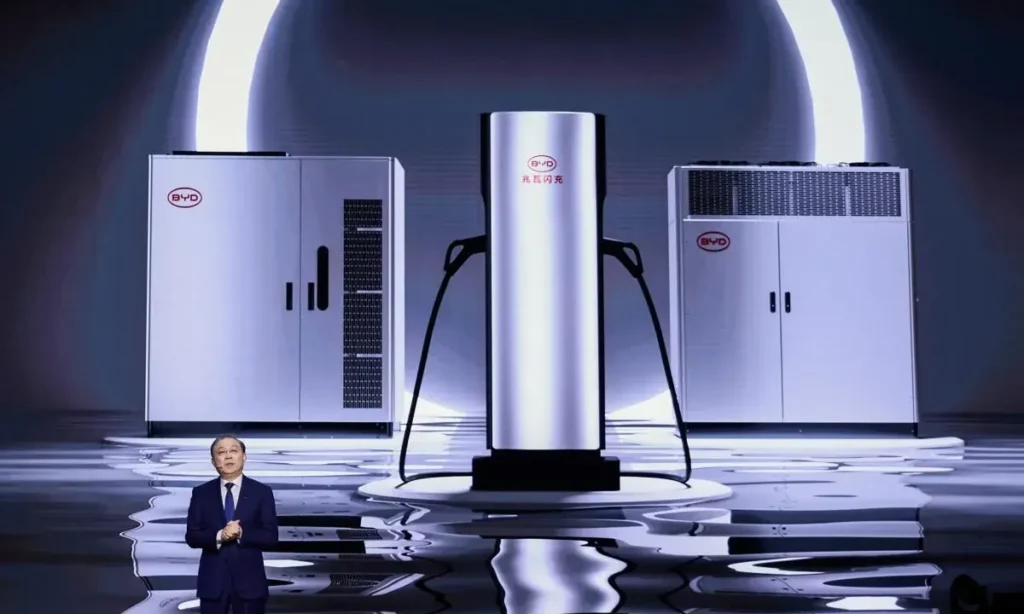
The magic starts with the battery, because you cannot pour a megawatt into a normal pack without it catching fire. BYD redesigned its famous Blade Battery from the ground up to handle it.
The newly developed Flash Charging Battery introduces ultra-fast ion channels and reduces internal resistance by 50 percent, achieving a world-record charging rate of 10C and a charging current of 1,000 amps. That 10C figure is the key. A 1C rate fills a battery in one hour, so 10C means it can theoretically fill in one-tenth of that, around six minutes. Cutting internal resistance in half is what lets all that current flow without the pack overheating.
And here is the detail that matters most for real-world use: the curve stays flat. These flash-charging batteries maintain high power levels throughout the charging process, achieving up to 600 kilowatts even at 90 percent state of charge. Most EVs slam on the brakes after 50 or 60 percent, crawling the rest of the way. BYD’s battery keeps gulping power almost to the top, which is what makes the five-minute claim actually achievable rather than a peak-number fantasy.
How It Works, Part Two: The Chargers and the Grid Trick
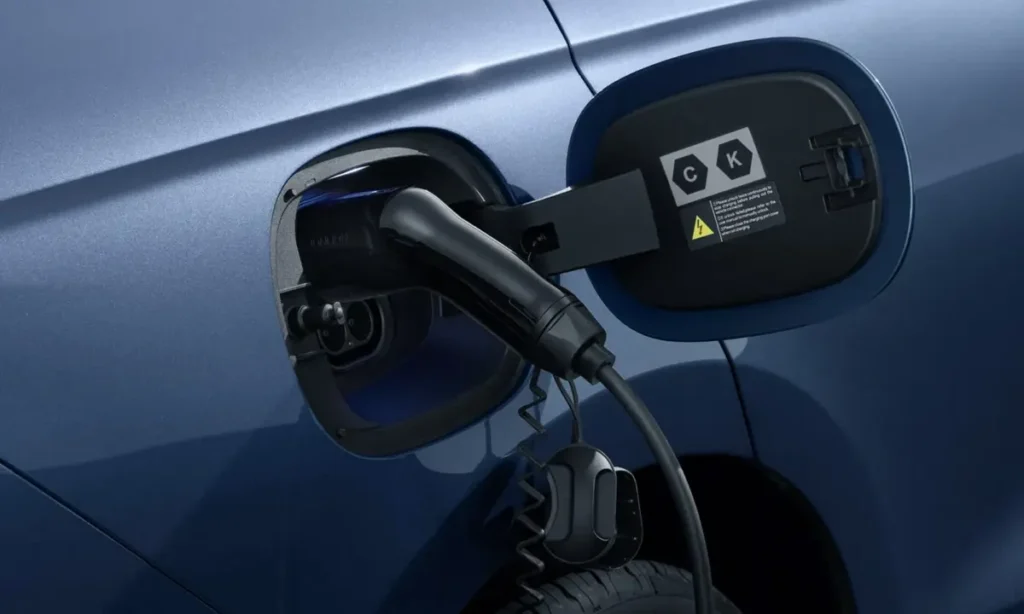
A megawatt battery is useless without a megawatt charger, and this is where BYD got genuinely clever. It built the world’s first all-liquid-cooled Megawatt Flash Charging terminal system, capable of delivering up to 1,360 kilowatts, with plans to deploy over 4,000 stations across China.
But pulling a megawatt straight from the grid at every gas station would melt the local power supply. So BYD buffers it. The stations pair a modest grid connection with an onboard battery energy storage system, so a site drawing only around 200 to 280 kilowatts from the grid can still deliver the full 1,000 kilowatts to your car by topping up from its own battery buffer. It is the same trick a camera flash uses, storing energy slowly, then dumping it all at once.
There is one more workaround worth knowing. Because existing connectors physically cannot handle 1,000 amps at 1,000 volts, BYD uses two DC charging inlets and two plugs simultaneously to handle the full power. Yes, you plug in twice. It is a bit awkward, but it is how they hit the number today. BYD also added dual-gun and intelligent voltage-boost technology that makes the cars backward compatible with existing public fast chargers, so you are not stranded if a megawatt station is not around.
Read: The EV Battery Lie? What US Drivers Are Actually Experiencing After 100k Miles
How It Stacks Up
Here is where BYD’s 1 megawatt lands against the previous record holders.
| System | Peak Charging Power | Notes |
| BYD Super e-Platform | 1,000 kW (1 MW) | 400 km in 5 min, 1000V |
| Xpeng (previous leader) | 800 kW | 800V architecture |
| NIO | 640 kW | Also offers battery swap |
| Li Auto MEGA | 520 kW | Previous production record |
| Tesla V4 Supercharger | ~500 kW (promised) | Western benchmark |
BYD’s figure roughly doubles Tesla’s latest V4 Superchargers and nearly triples most systems on the road. And it is not standing still. Leaked specs point to a second-generation system supporting up to 1,500 kilowatts and 1,500 amps, a 1.5-times jump over the debut version.
The Bonus: It’s a Rocket, Too
The Super e-Platform is not just about charging. BYD stuffed in the world’s first mass-produced 30,000 RPM motor, spinning up to 30,511 rpm, with a single motor producing 580 kilowatts and a top speed over 300 kilometers per hour. In its performance applications, like the upcoming Denza Z sports car, this platform underpins a roughly 1,000-horsepower machine. So the same tech that ends charging anxiety also builds a supercar. Show-offs.
Now, the Honest Reality Check for Americans
Alright, I have to pump the brakes, because that headline exclamation point needs a serious asterisk for US readers. Here is the truth: you cannot buy this.
BYD passenger cars are effectively locked out of the American market by tariffs and politics, and this technology is, in BYD’s own framing, designed in China, for China, at least for now. The first cars to get it, the Han L sedan and Tang L SUV, are China-only, with a premium Denza model heading to Europe next. There is no US launch on the horizon. The 4,000 megawatt chargers are going up across China, with Europe to follow, and precisely zero are planned for America.
Even the infrastructure standards are not ready here. In Europe and North America, 350-kilowatt-class chargers still define the upper end of most public deployments, and the connectors we use, CCS and NACS, most likely cannot transfer a full megawatt. There is a separate Megawatt Charging System connector in the works for the West, but it is aimed at trucks, not passenger cars.
And a dose of skepticism on the claims themselves is healthy. Independent verification of BYD’s most aggressive charging numbers at scale is still pending. That 400-kilometers-in-five-minutes figure is measured on China’s optimistic CLTC test cycle, so real-world and EPA-equivalent range would be lower. And technically, 400 kilometers of charge in five minutes still is not quite the range a gas car adds in the same time, so the “matching refueling” line is a slight stretch.
Here is my read, though. None of that erases the achievement. The point, as one analyst put it perfectly, is that with this platform it is the size of your bladder or how hungry you get that determines when you stop, rather than how much range is left in your battery. That psychological ceiling, the fear of the wait, is genuinely broken. It just is not broken in America yet.
Why It Still Matters to You
So if you cannot buy it, why should an American driver care? Two reasons.
First, competitive pressure. BYD just proved that gas-station-speed charging is possible in a mass-produced car at a reasonable price. That forces everyone else, Tesla, the Koreans, the Germans, to accelerate their own programs or look slow. The platform’s charging rate pressures competitors to advance, potentially driving rapid industry-wide progress. When one company breaks a ceiling, the whole industry eventually climbs through the hole.
Second, it is a preview of your future. The tech that debuts in China today has a way of reaching the rest of the world in a few years. Faster batteries, flatter charging curves, and buffered megawatt stations are the direction the entire EV world is heading. What BYD is doing now is a window into what charging will feel like everywhere by the end of the decade.
Verdict: A Real Breakthrough, With an Asterisk
So has BYD ended charging anxiety? My honest answer is that it has proven charging anxiety can be ended, which is nearly as significant.
The engineering is genuinely brilliant and genuinely real. A redesigned Blade battery that accepts a 10C charge with half the internal resistance. A full 1,000-volt architecture with industry-leading silicon carbide chips. A charging curve that holds 600 kilowatts even at 90 percent. Liquid-cooled megawatt chargers cleverly buffered by their own batteries so they do not crush the grid. This is not vaporware or a lab demo. It is mass-produced, on sale, and already backed by hundreds of stations across China. That deserves real applause.
But the exclamation point in the headline belongs to Chinese drivers, not American ones. For us, BYD’s Flash Charging is a spectacular glimpse of the future we cannot yet touch, blocked by trade barriers, unready infrastructure, and connector standards that top out at a third of BYD’s power. The claims lean on optimistic test cycles and peak numbers, and independent large-scale verification is still catching up.
So here is where I land. BYD’s Flash Charging system is the most important charging breakthrough in years, a legitimate proof that plugging in can be as quick as filling up. It shatters the last great excuse against electric cars. For now, though, Americans get to admire it from across the ocean while it lights a fire under every automaker that does sell here. The end of charging anxiety is coming. BYD just proved it is possible and showed everyone else the way. When it finally reaches our shores, and the pressure BYD is applying makes that a question of when, not if, the last real argument against going electric will quietly disappear. That day is worth getting excited about, even if we have to wait a little longer than five minutes for it.