We have been charging our phones wirelessly for years. Plop it on a pad, walk away, come back to a full battery. So simple a toddler can do it. And for just as long, every EV owner has looked at that little phone pad and thought, why on earth can I not do this with my car? Why am I still out here in the rain, wrestling a filthy cable, coiling it back up, scraping my knuckles on the bumper like it is 2012?
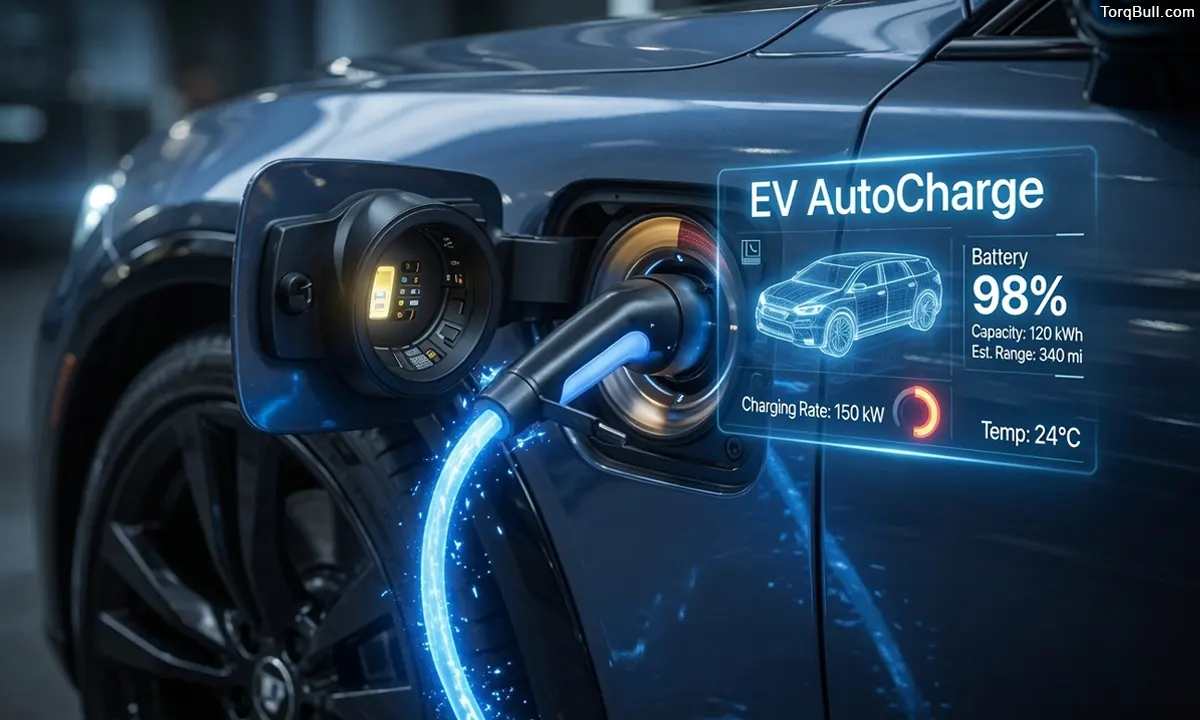
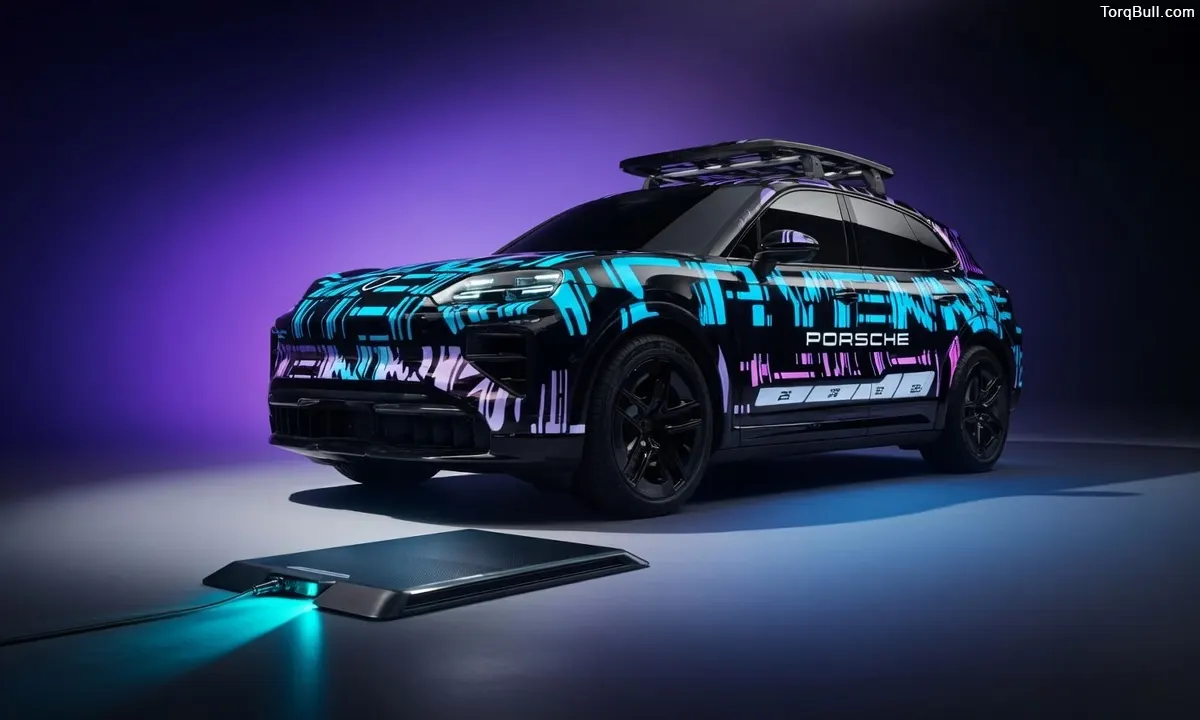
Well, friends, the wait is over, and of course it took Porsche to do it properly. The new Cayenne Electric is the first production car you can buy that charges itself wirelessly at home. No plugs, tangled cords, or dirty hands. You literally park over a pad and the car does the rest.
I have been waiting for this exact feature for a decade, so let me tell you how it works, why it is genuinely clever, and the one catch that might make you wince.
How the Magic Actually Happens
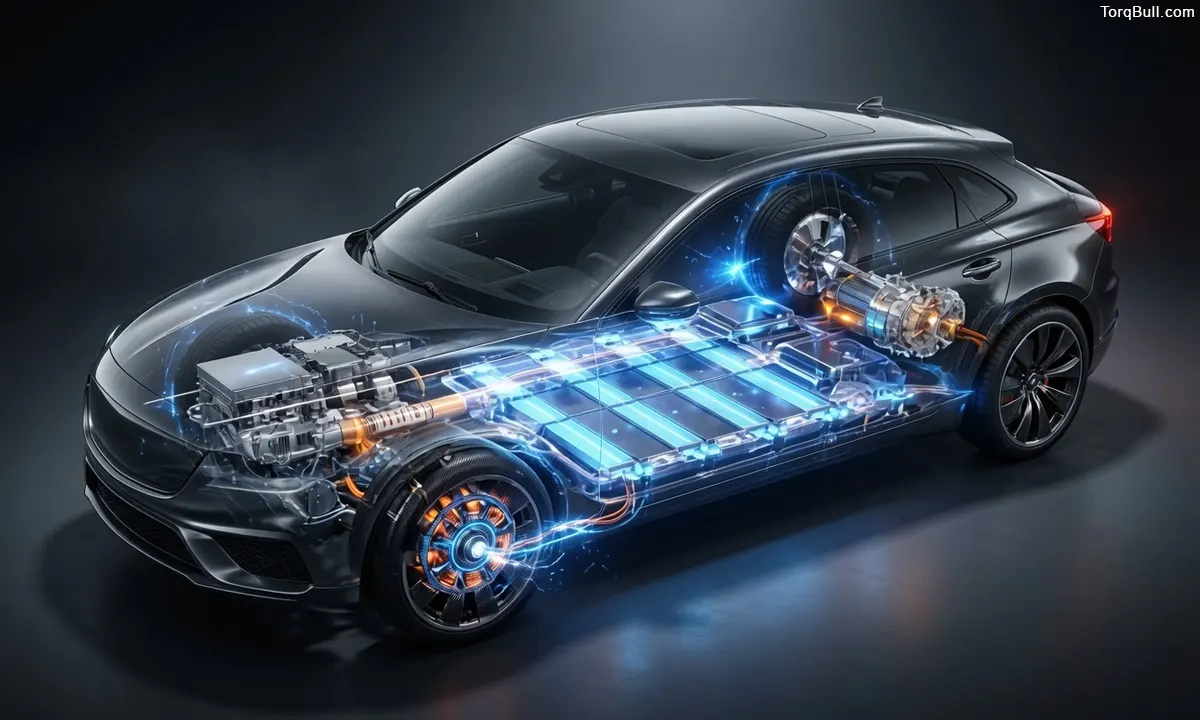
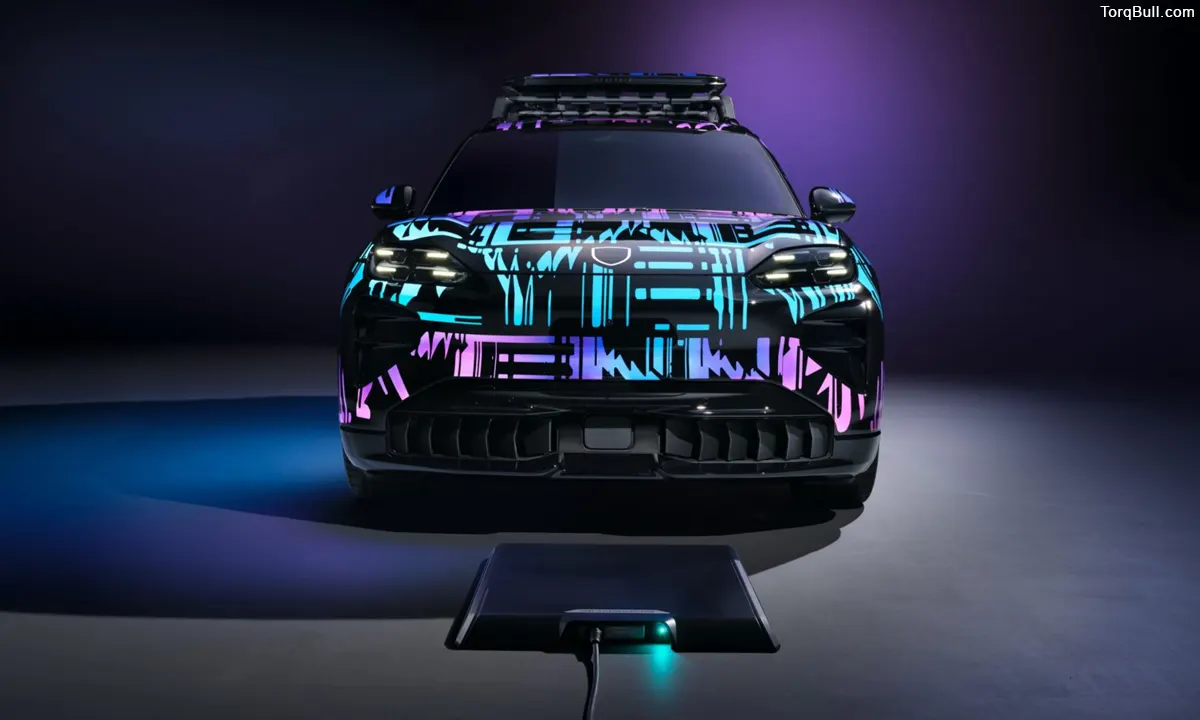
The setup is beautifully simple, which is the whole point. The system consists of just two components: a floor plate for the garage or parking space, and a receiver unit located behind the front axle of the Cayenne. The pad plugs straight into your home’s power. No wallbox is needed, just 240 volt house power.
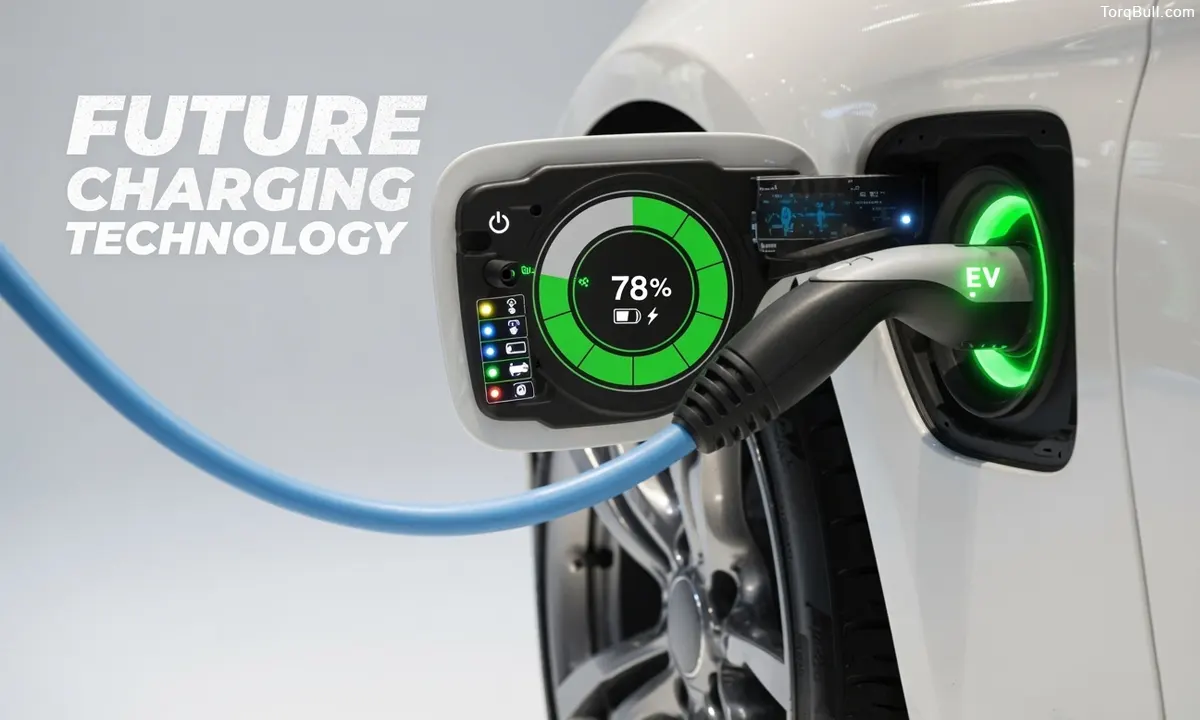
Parking over it is foolproof, because the car holds your hand the whole way. The Cayenne appears on the display in the Surround View parking function, with a green dot marking the receiver around the front axle and a green circle showing the charging coil. Once the dot is inside the circle, the SUV is in the correct position. Then it gets even slicker. The car automatically lowers its ride height over the pad, and once parked with the brake engaged, charging begins immediately.
That is it. Pull in, line up a dot and a circle, set the brake, walk inside and have dinner. Your Porsche charges itself in the garage like a giant phone. I cannot overstate how futuristic this feels in practice.
It’s Faster Than the Plug They Give You
Here is the part that genuinely surprised me, and it is the detail that turns this from a gimmick into a legitimately smart choice for American buyers.
You would assume wireless charging is the slow, lazy option you accept for the convenience. Not here. The system transmits up to 11 kW with over 90 percent efficiency, despite an air gap of 12 to 18 centimeters, and charging time is equivalent to a wired wall box. That gets the job done overnight with ease. It charges the pack from 10 to 80 percent in about 7.5 hours.
And now the kicker for us in the States. Porsche’s own US mobile connector caps at 9.6 kW, making wireless the faster home charging option for American owners. Read that again. The no cord, walk away pad actually fills your car quicker than the cable Porsche hands you in the trunk. It also embarrasses a wall outlet. Porsche confirmed Level 1 wired charging runs at just 60 percent efficiency, meaning the wireless pad is a significant step up over a standard household outlet. So this is not convenience at the expense of speed. It is convenience that happens to be faster too.
The Engineering Is Wildly Cool
I have to geek out for a second, because pulling this off is no small feat. Your phone battery sips a tiny amount of energy. A Cayenne’s battery is a monster by comparison, so beaming that much power through the air is a real challenge.
The pad is a clever, tough little beast. Inside, grid electricity is converted and stepped up to high frequency AC, creating an 85 kilohertz magnetic field that extends from the pad to the car, and the waterproof unit can be placed outdoors, unaffected by leaves or snow. It even fights winter for you. The air cooled pad can get warm enough to melt any snow, reaching temperatures as high as 50 degrees Celsius. A charging pad that de ices itself. Come on, that is just delightful.
Safety is handled too, which matters when you are blasting a magnetic field around your garage floor. Sensors detect coins or cats and shut it down, and the whole thing is built to survive abuse. The pad weighs about 110 pounds, needs professional installation, and even driving over it, while not exactly advised, will not cause serious damage. Run it over, drop a wrench on it, let the cat nap on it. It copes.
The Car Underneath Is a Monster Too
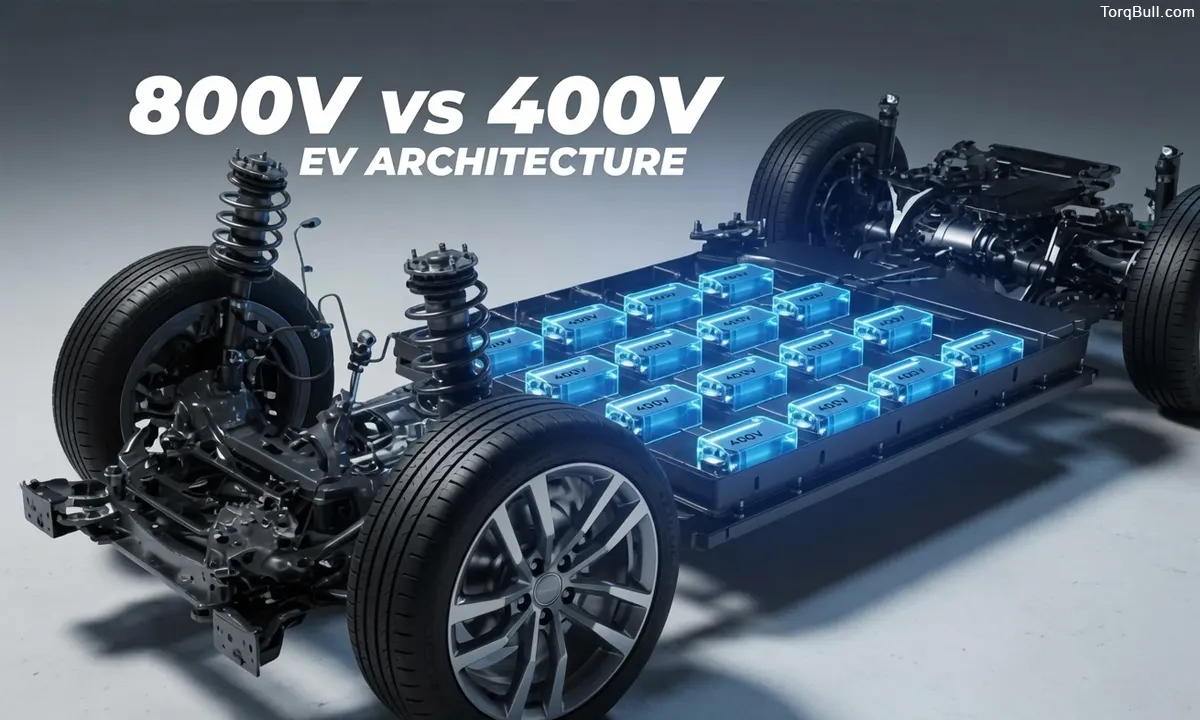
Lest we forget, this wireless wizardry is bolted to a genuinely staggering EV. The 2026 Cayenne Electric and Turbo Electric arrive with up to 1,139 horsepower and a 2.4 second 0 to 60, starting at $109,000 for the Electric and $163,000 for the Turbo. The fundamentals are pure Porsche. With its 800 volt architecture, it can charge at up to 400 kW at a public DC station, enough to fill from 10 to 80 percent in about 16 minutes, and it tows up to 7,716 pounds. So the wireless pad is the cherry on top of a seriously capable, seriously fast luxury EV.
Read: 2026 Toyota bZ Woodland: Toyota Just Built a Rugged Electric Wagon and It Packs 375 Horses
How It Stacks Up
Here is how the Cayenne’s home charging options compare.
| Charging Method | Power | 10 to 80% Time | Efficiency | Convenience |
| Porsche wireless pad | 11 kW | About 7.5 hrs | 89 to 92% | Park and walk away |
| US mobile connector (plug) | 9.6 kW | Slightly longer | High | Manual plug in |
| Standard wall outlet (L1) | Low | Very slow | About 60% | Manual, inefficient |
| Public DC fast charge | Up to 400 kW | About 16 min | High | On the road |
The pattern is clear. For daily home charging, where Porsche says most owners do the vast majority of their fill ups, the wireless pad is the most convenient option and, for Americans, the fastest one too.
The Catch: It Is Not Cheap
Alright, I promised you a wince, so here it is. This convenience costs real money. In the UK the entire setup is expected to run around 9,125 dollars, with about 6,421 dollars of that being for the base plate alone, and it is expensive enough to give buyers pause. You will also need a professional to install it, and it is an optional extra on a car that already starts at six figures.
So no, this is not arriving on your neighbor’s Chevy anytime soon. It is a luxury flex for now, available from the second half of 2026 at the earliest. And there is a small efficiency tax. At 89 to 92 percent, you lose a sliver more energy than a wired connection’s roughly 95 percent, so you pay a tiny premium on every charge.
Here is my read, though. Every transformative convenience tech starts expensive and exclusive. Power windows, backup cameras, adaptive cruise, they all began as luxury options before becoming standard on economy cars. Wireless EV charging is following the exact same path, and somebody had to go first. Porsche going first, on a flagship, is precisely how this technology eventually trickles down to the rest of us.
My Verdict: This Is the Future, and I Want It Now
So where do I land on the wireless Cayenne? Genuinely thrilled, price tag and all.
Yes, it is expensive. Yes, it is optional. Yes, you give up a hair of efficiency. But none of that dims how legitimately cool and useful this is. It solves the single most annoying part of daily EV ownership, the cord, and it does so while charging faster than the plug Porsche includes. For elderly or disabled drivers, for anyone who has ever forgotten to plug in and woken up to a dead car, for everyone tired of wrangling a wet cable in January, this is a real quality of life upgrade, not a party trick.
And the best part is what comes next. Over the air updates will add self parking precision over the pad, meaning your Porsche will eventually park itself over the charger and top itself up with zero human involvement. Drive home, get out, walk inside, and the car handles the rest. That is the actual dream of EV ownership, and Porsche just took the first real step toward it.
The plug had a good run. But after seeing what the Cayenne Electric can do, I am ready to say goodbye to it for good. Porsche built the future I was promised, and it turns out the future is just parking your car and walking away. Sign me up.