Residual Value of Honda CR-V After 5 Years and 100,000 Miles. Here Is Complete Depreciation Analysis

- Estimated $22,406 residual value after five years
- Mileage significantly impacts resale value
- Trim level and optional features affect pricing
- Accident history reduces market value
- Competition (e.g. Toyota RAV4) influences resale demand
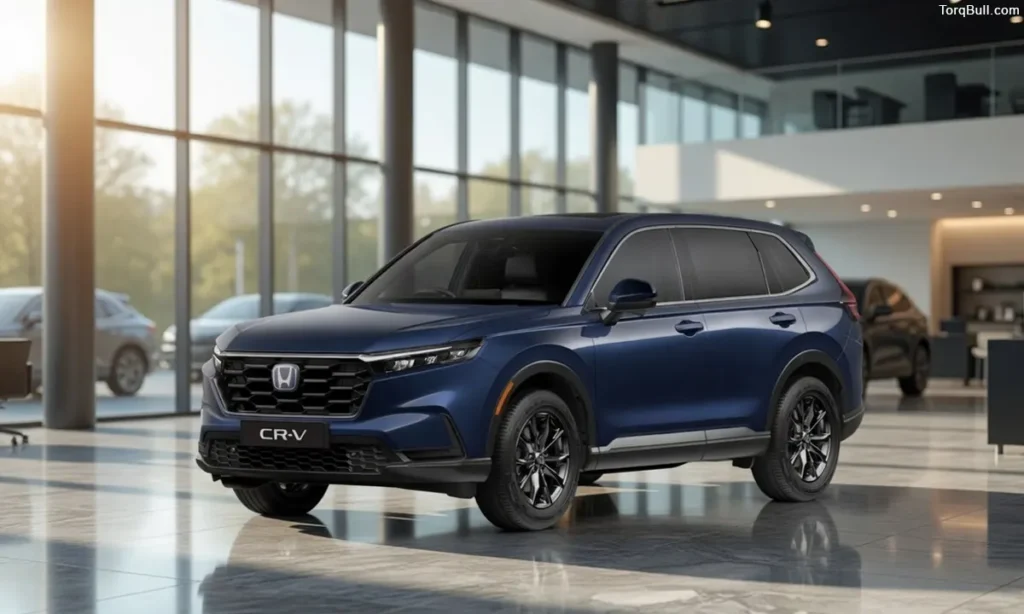
Residual Value of Honda CR-V: Understanding the residual value of a Honda CR-V at the five-year, 100,000-mile mark is one of the most financially consequential pieces of information available to buyers, lessees and current owners of this vehicle — because it directly determines the total cost of ownership across that period, the equity position available for a trade-in or private sale and the realistic monthly cost of operating a CR-V when depreciation is included in the calculation rather than ignored. The Honda CR-V occupies one of the most consistently strong positions in the compact SUV segment for value retention, ranking among the segment leaders alongside the Toyota RAV4 in independent studies from iSeeCars, Kelley Blue Book and CarEdge. This guide provides the specific residual value numbers at five years and 100,000 miles, the depreciation curve across the full ownership period, how high mileage specifically affects the CR-V’s residual calculation and the factors every owner can control to protect their vehicle’s value.
The Honda CR-V Five-Year Residual Value: The Headline Numbers
The most authoritative and current residual value data for the Honda CR-V comes from Kelley Blue Book’s cost-to-own analysis, which specifically models depreciation over a five-year ownership period from purchase date. According to KBB’s April 2026 data:
The 2026 Honda CR-V Hybrid depreciates $14,674 over five years from its purchase price, leaving a five-year residual value of $22,406. The 2025 Honda CR-V Hybrid depreciates approximately $15,236 over five years, producing a five-year residual value of approximately $20,809.
The iSeeCars five-year depreciation analysis places the Honda CR-V’s five-year value retention at approximately 63.52 to 65.5 percent of original purchase price, implying a total five-year depreciation of approximately 34.5 to 36.5 percent — based on a comprehensive study of over three million vehicle transactions. For a 2021 CR-V purchased new at approximately $32,000 to $34,000, this produces a projected 2026 residual value of approximately $20,500 to $22,300 — consistent with the KBB analysis and market observation.
The CarEdge depreciation analysis places the CR-V firmly at the top of the compact SUV segment for value retention, noting that in the small SUV segment it ranks alongside Toyota models as one of the lowest-depreciation vehicles available. This is a meaningful competitive distinction: the average five-year depreciation across all vehicle types in the American market is approximately 45 to 50 percent of original value, making the CR-V’s 34 to 37 percent five-year depreciation materially better than the segment average.
The Depreciation Curve: When the CR-V Loses the Most Value
Understanding that a CR-V retains approximately 63 to 66 percent of its value after five years is useful, but understanding when that value is lost across the five-year period is more useful for owners making timing decisions about sale or trade-in.
New vehicle depreciation is front-loaded by design. The Honda CR-V — like virtually every other vehicle in the American market — loses its largest proportion of value in the first two years of ownership, driven primarily by the transition from new to used status, which alone accounts for approximately 15 to 20 percent of original value in most compact SUV transactions. KBB specifically notes that the most dramatic depreciation for CR-V models occurs in the first two to three years and tapers off thereafter.
Year one depreciation on a CR-V purchased new is typically 15 to 18 percent of the new vehicle purchase price. By year two, cumulative depreciation reaches approximately 25 to 30 percent. By year three — the typical lease return period — the CR-V has depreciated approximately 30 to 35 percent from its original purchase price, leaving a residual of 65 to 70 percent. Years four and five see the depreciation rate slow further, with each additional year adding only approximately 4 to 6 percent to the cumulative total. This pattern means that buyers who purchase a two or three-year-old CR-V avoid the steepest portion of the depreciation curve while still acquiring a nearly new vehicle with modern safety features, minimal wear and substantial remaining useful life.
How 100,000 Miles Specifically Affects the CR-V’s Residual Value
The five-year residual value benchmarks above assume average mileage — typically 13,500 to 15,000 miles per year, producing 67,500 to 75,000 miles across a five-year period. A five-year CR-V with 100,000 miles has accumulated approximately 25,000 to 32,500 more miles than the benchmark assumption, and this excess mileage has a measurable effect on residual value.
The automotive valuation industry’s standard pricing adjustment for excess mileage on compact SUVs is approximately $0.07 to $0.12 per mile above the benchmark. Applying this range to 25,000 excess miles produces a residual value reduction of approximately $1,750 to $3,000 compared to the low-mileage benchmark. A five-year CR-V Hybrid with a benchmark residual of $22,406 but 100,000 miles rather than 70,000 miles would therefore carry a practical market value of approximately $19,400 to $20,650 — still a strong residual for a compact SUV but meaningfully below the published average.
The Honda CR-V’s specific advantage at high mileage is its well-documented reliability, which provides used market buyers with greater confidence in a high-mileage example than they might extend to competing brands. A five-year, 100,000-mile CR-V in excellent maintained condition with complete service records commands a premium above equivalent mileage examples without documentation — sometimes $1,500 to $3,000 more in private party sale — because the vehicle’s maintenance history provides verifiable evidence of the care that determines whether 100,000 miles represents the beginning or the end of a Honda CR-V’s productive life. A well-maintained CR-V can last 250,000 miles or more, meaning 100,000 miles at year five represents roughly 40 percent of the vehicle’s realistic maximum life — a very different risk profile than a less reliable vehicle at the same mileage.
Honda CR-V vs Competitors: Five-Year Value Retention Comparison
The CR-V’s residual value is most meaningful when compared to its direct competition in the compact SUV segment — the vehicles buyers are most likely choosing between when making a purchase decision. The comparison is favourable but not dominant.
The Toyota RAV4 retains approximately 69.7 percent of its original value after five years according to iSeeCars data, representing a depreciation of 30.3 percent — approximately 4 percentage points better than the CR-V’s 34.5 percent five-year depreciation. This difference, on a $35,000 original purchase price, translates to approximately $1,500 in additional residual value in favour of the RAV4 at year five. The RAV4’s superior value retention reflects its slightly stronger brand recognition in the used car market and its broader appeal in work and commercial contexts that maintain demand for used inventory across a wider buyer demographic.
The Ford Escape depreciates approximately 31 percent over five years in some trim configurations but shows greater variability than either the CR-V or RAV4 across model years, with certain Escape generations showing higher-than-average reliability issues that have negatively affected used market values. The Nissan Rogue depreciates approximately 28 percent in the first five years in some analyses, though this figure varies significantly by model year and does not consistently reflect the same breadth of used market demand as the CR-V or RAV4. The Mazda CX-5 consistently demonstrates strong five-year value retention comparable to the CR-V, with the compact SUV segment’s average five-year depreciation running approximately 40 to 45 percent across less well-regarded models.
Read: Is a 72-Month Car Loan a Bad Idea for a Used Honda CR-V? Complete Financial Analysis Before Signing
Honda CR-V Residual Value and Depreciation — Complete Reference Chart
| Ownership Period | Average Mileage | Depreciation (% of MSRP) | Residual Value (% of MSRP) | Est. Dollar Value ($35K MSRP) |
| Year 1 | ~15,000 miles | ~17–20% | ~80–83% | ~$28,000–$29,000 |
| Year 2 | ~30,000 miles | ~25–28% | ~72–75% | ~$25,200–$26,250 |
| Year 3 | ~45,000 miles | ~30–33% | ~67–70% | ~$23,450–$24,500 |
| Year 4 | ~60,000 miles | ~32–35% | ~65–68% | ~$22,750–$23,800 |
| Year 5 / ~75K miles | ~75,000 miles | ~34–37% | ~63–66% | ~$22,050–$23,100 |
| Year 5 / 100K miles | 100,000 miles | ~38–42% | ~58–62% | ~$20,300–$21,700 |
| Year 7 | ~105,000 miles | ~48–52% | ~48–52% | ~$16,800–$18,200 |
| Year 10 | ~150,000 miles | ~60–65% | ~35–40% | ~$12,250–$14,000 |
All figures are estimates based on good condition, complete service history, no accidents. Actual values vary by trim, region, condition and prevailing market conditions.
The Factors That Protect or Destroy Your CR-V’s Residual Value
Several factors within an owner’s control have a direct and measurable effect on whether a specific CR-V’s residual value falls at the upper or lower end of the ranges established above, and understanding them early in the ownership period allows deliberate management of the vehicle’s value trajectory.
Service and maintenance documentation is the single most powerful value-protecting practice available to a CR-V owner. A complete, dated service record — either from a Honda dealer or a reputable independent shop — that demonstrates regular oil changes, scheduled inspections and prompt attention to any mechanical issues provides the used market buyer with tangible evidence that the vehicle was maintained correctly. Private party buyers pay $1,500 to $3,000 more for a documented high-mileage CR-V than for an equivalent undocumented example, and dealers offering certified pre-owned status rely on service history as a primary qualification criterion.
Accident history is the most damaging single event to residual value, and its effect persists permanently through public records accessible via vehicle history services. A CR-V with a single moderate accident — one that appears on its vehicle history report even if repaired correctly to pre-accident condition — typically sells for 10 to 20 percent below a clean-history equivalent in the used market. The effect is permanent and compounds over time as the vehicle ages. GAP insurance, comprehensive coverage and careful driving discipline are the only meaningful protections against accident-related value damage.
Trim level significantly affects where within the CR-V’s residual value range a specific example falls. EX-L, Sport and Sport-L trims command premiums of $2,000 to $4,000 over base LX or Sport FWD configurations at equivalent age and mileage, because their additional feature content — panoramic sunroof, leather seating, premium audio, additional safety technology — remains desirable in the used market and narrows the feature gap relative to newer model years more slowly than a base-trim vehicle.
Regional demand variation produces meaningful residual value differences between markets. All-wheel drive CR-V examples command premiums in northern, mountain and Pacific Northwest markets where AWD is a practical winter requirement. Hybrid CR-Vs show stronger used market premiums in markets with higher gasoline prices — California, New York, and New England states — where fuel savings are more financially meaningful to used car buyers.
Read: 2026 Toyota RAV4 vs 2026 Honda CR-V Reliability Test. Which Compact SUV Will Last Longer?
Why the Five-Year, 100,000-Mile CR-V Is One of the Best Value Used Car Purchases in 2026
The Honda CR-V’s five-year, 100,000-mile residual value analysis produces a conclusion that is practically useful to two very different buyer groups. For current CR-V owners approaching the five-year mark with 100,000 miles, the analysis confirms that the vehicle still holds approximately $20,000 to $22,000 in market value — meaningful trade-in equity that can be applied toward a next purchase — while simultaneously still having 100,000 to 150,000 miles of reliable life ahead of it under proper maintenance, suggesting that continued ownership rather than trade-in may be the most financially rational decision if the vehicle meets current transportation needs.
For buyers in the used car market, a five-year CR-V with 100,000 miles represents one of the market’s strongest value propositions: a proven, highly reliable platform at a price approximately 38 to 42 percent below its original purchase price, with independent reliability data suggesting realistic additional life of 100,000 to 150,000 miles, in a vehicle whose replacement cost as new is approximately $35,000 to $40,000. The five-year, 100,000-mile CR-V is, by almost any measure, one of the best combinations of per-mile operating cost, remaining utility and purchase price available in the 2026 compact SUV used car market.