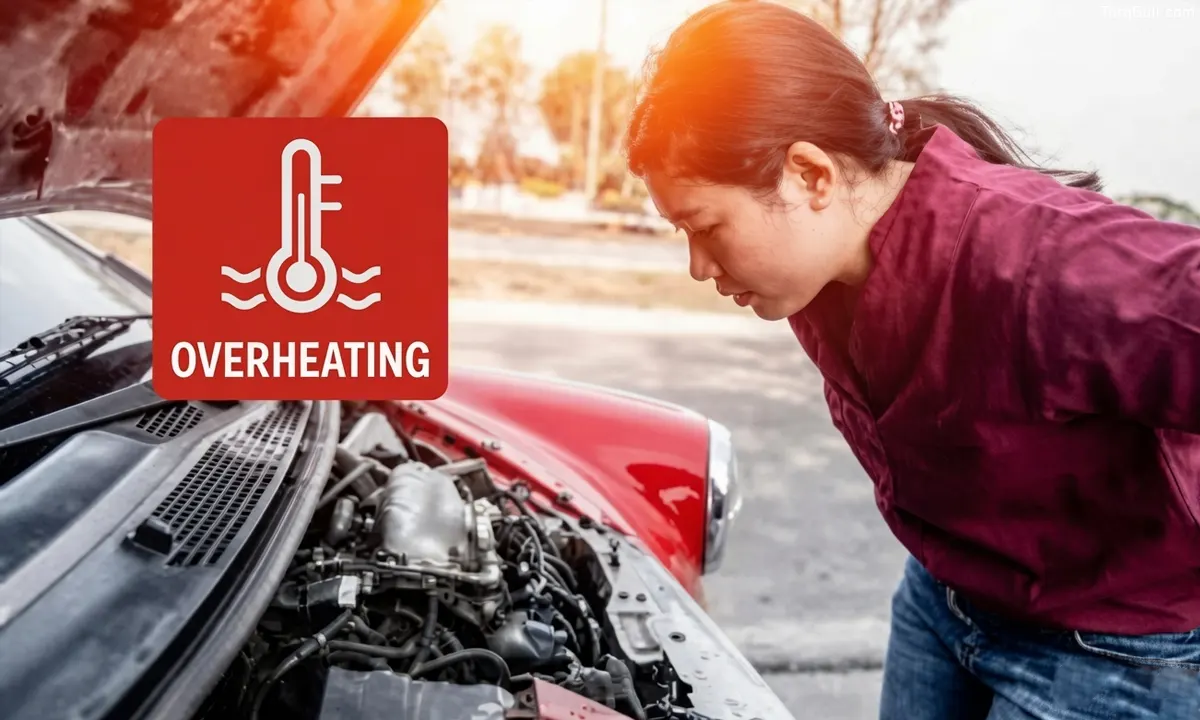
Your engine is basically a controlled explosion happening hundreds of times a minute, and the only thing standing between that inferno and a puddle of melted metal is the cooling system quietly doing its job. When it stops doing that job, things go bad fast. Really fast.
Here’s a number that should get your attention: nearly 30 percent of all vehicle breakdowns are related to the engine cooling system. Overheating is one of the most common ways engines die, and it’s also one of the most preventable. The difference between a few-hundred-dollar repair and a several-thousand-dollar catastrophe often comes down to how quickly you react and whether you know what’s actually wrong.
So let me give you the complete playbook: why overheating is so dangerous, exactly what to do the instant it happens, every common cause with how to spot it, and the solutions that actually fix it. This is the stuff that saves engines. Quick note, costs are national averages that vary by vehicle and region.
Why Overheating Is So Dangerous
Let’s be clear about the stakes, because this isn’t a “deal with it later” problem. Prolonged high temperatures can warp metal components, degrade gaskets, and lead to catastrophic failures. We’re talking a blown head gasket that lets coolant and oil mix, warped cylinder heads, or a cracked engine block, which is one of the most expensive failures there is.
And it happens quickly. Even short trips can cause serious engine damage if your car is overheating. This is why the math is so brutal: a thermostat replacement might cost a few hundred dollars, but waiting until overheating destroys the engine can cost several thousand. The engine is genuinely the one part of the car where minutes matter, so let’s talk about those minutes.
What to Do the Moment It Overheats
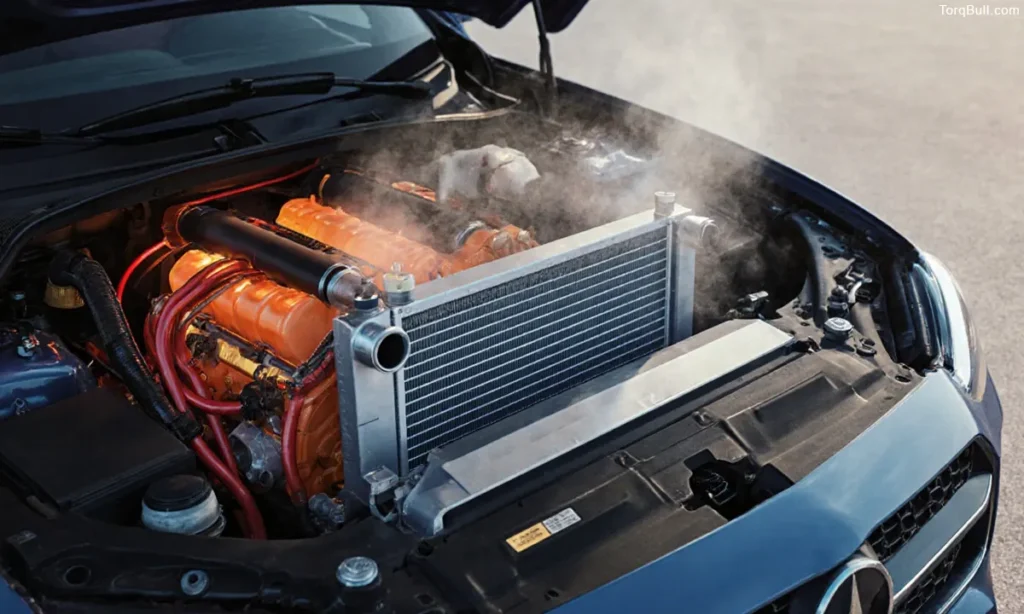
Burn these steps into your memory, because doing them right can save your engine. The instant you see the gauge spike or the temperature light glow, act.
First, turn off the air conditioning immediately, which removes a big load from the engine. Second, and this feels backwards but works, crank the heater to full blast, because it literally pulls heat off the engine and dumps it into the cabin, buying you precious time. Third, pull over safely as soon as you can and turn off the engine to stop the heat from building further. Then let the engine cool down for at least 15 to 20 minutes before you even think about opening the hood.
Now the critical warning: never open the radiator cap while the engine is hot. The system is pressurized, and hot coolant will erupt out and cause severe burns. If you smell a sweet or burning odor, open your windows to disperse the fumes. Once things have cooled, check the coolant reservoir and top it off if it’s low. And if the car overheats again quickly after that, stop driving and get it towed, because continuing even a short distance risks turning a repair into a replacement.
The Common Causes and How to Spot Them
Once you’re safe, it’s time to figure out why. Overheating almost always traces back to one of these culprits.
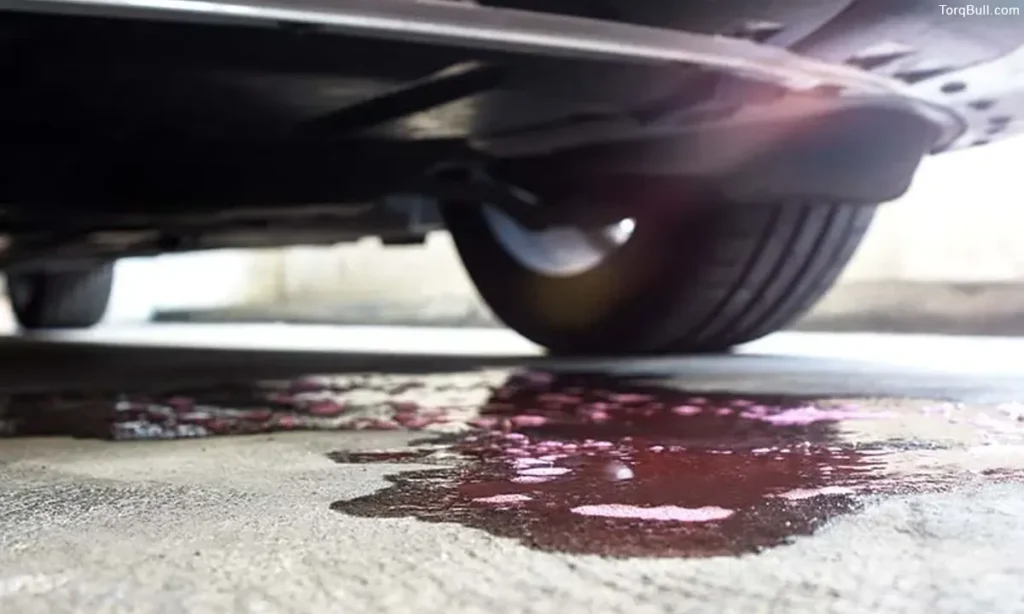
The most common is low coolant from a leak. Since the cooling system is sealed, if you’re low on coolant, you have a leak somewhere. You’ll spot puddles of green, orange, or pink fluid under the car, a sweet smell near the front, and a temperature gauge that climbs gradually over days or weeks before hitting the danger zone.
Next is a stuck thermostat. This valve opens to let coolant reach the radiator, and when it fails closed, coolant gets trapped in the engine block and the temperature skyrockets. The tell is that the engine overheats fast after startup, sometimes within minutes, the upper radiator hose stays cool, and the cabin heater blows cold. A failed water pump is another big one, especially past 100,000 miles. The pump circulates coolant, so when its impeller breaks or a bearing fails, the fluid just sits there and the engine cooks even though there’s plenty of coolant.
Then there’s a clogged or damaged radiator, where rust, scale, or debris block its ability to shed heat. A bad cooling fan produces a very telling symptom: the engine overheats in stop-and-go traffic or at idle but stays fine on the highway, because at speed, air rams through the radiator on its own, but in traffic the fan has to do the work. Finally, watch for a cracked serpentine belt or brittle hoses, since a broken belt stops the water pump instantly, and split hoses leak coolant. Even low engine oil can contribute, because oil helps carry heat away, and running low raises friction and temperature.
Read: Engine Nightmare? Common Car Problems and the Exact Fix
Causes, Fixes, and Costs at a Glance
Here’s your diagnostic cheat sheet.
| Cause | How You’ll Know | Solution | Rough Cost |
| Low coolant / leak | Puddles, sweet smell, gradual climb | Find leak, replace hose or part, refill | $20 to $1,000+ |
| Stuck thermostat | Overheats minutes after startup, cool upper hose | Replace thermostat | A few hundred |
| Failed water pump | Overheats on long drives, over 100k miles | Replace pump, flush system | Moderate |
| Clogged radiator | Runs hot, dirty coolant | Flush or replace radiator | $300 to $1,000+ |
| Bad cooling fan | Overheats in traffic, fine on highway | Replace fan motor, fuse, or relay | Varies |
| Broken belt/hose | Fast overheat, visible damage | Replace belt or hose | Low to moderate |
| Blown head gasket | White smoke, milky oil, bubbling | Professional repair | $2,000 to $5,000 |
The “Add Coolant and It’s Fine” Trap
Here’s a mistake I see constantly, and it destroys engines. A driver notices the car running hot, tops off the coolant, and expects the problem to vanish, only to watch the gauge climb again, sometimes within minutes. The frustrating truth is that if your car keeps overheating even after adding coolant, the problem is much bigger than a low fluid level.
Adding fluid won’t fix mechanical failures like a faulty thermostat, a clogged radiator, a failing water pump, or a cooling fan problem. Coolant is the messenger, not always the cause. So here’s the rule: if you’ve had to top off your coolant more than once, you have a leak or a mechanical failure, and you need a proper cooling system pressure test to find the root cause. Chasing the symptom with more antifreeze just delays the real fix while the engine keeps cooking.
How to Prevent It in the First Place
The best overheating repair is the one you never need, and cooling system maintenance is genuinely cheap insurance. Improper maintenance of the cooling system leads to a 40 percent increase in engine repair costs, so a little care pays off big.
The single most important habit is flushing and replacing your coolant on schedule, generally every few years or around 100,000 miles per your owner’s manual, because old, contaminated coolant clogs the radiator and loses its ability to regulate temperature. Beyond that, check your coolant level at least once a month, inspect hoses and belts for cracks and brittleness, keep the radiator clear of debris, and always use the correct coolant-to-antifreeze mixture, since running straight water or the wrong ratio won’t protect the engine properly. Stay on top of oil changes too, and get an annual cooling system inspection. Catching a weeping hose or a tired water pump during a routine check is a minor expense. Discovering it when your temperature gauge is buried in the red is a very different story.
Verdict: Respect the Gauge, Nail the Response
So here’s the bottom line on engine overheating. It’s one of the fastest, most destructive things that can happen to a car, capable of turning a cheap thermostat into a dead engine in the span of a single drive. But it’s also one of the most manageable problems you’ll ever face, as long as you respect that temperature gauge like the smoke alarm it is.
The single most valuable thing to remember isn’t diagnosing the exact failing part on the shoulder of the highway. It’s nailing the immediate response: AC off, heater on full, pull over, engine off, and hands off that radiator cap until everything cools. Those few actions, done right, are the difference between a minor repair and a five-figure disaster. Everything else, the leak, the thermostat, the water pump, the fan, can be diagnosed and fixed calmly once you’ve stopped the damage. From there, find the real root cause rather than drowning the problem in coolant, because a car that keeps overheating has a broken part, not just a low fluid. Fix that part, and keep it from ever happening again with the cheapest insurance in the automotive world: fresh coolant on schedule, a monthly level check, and healthy hoses and belts. Do that, and your cooling system will quietly protect that controlled explosion under your hood for hundreds of thousands of miles. Ignore it, and it’ll remind you why 30 percent of breakdowns start right here. Watch the gauge, know the drill, and your engine will thank you with a long, cool life.