- 77% of 2026 Hyundai Elantra owners recommend it, with 63% giving a 5-star rating
- Key strengths: standout styling and strong reliability
- Key concerns: poor wet-weather visibility, inconsistent wireless Apple CarPlay, and IVT durability doubts
The Hyundai Elantra’s transformation from budget sedan to genuinely competitive compact car is one of the most complete brand and product narratives in the American automotive market over the past decade. The current seventh-generation Elantra — still the platform in service for 2026 — introduced proportions, interior architecture and technology content that most compact sedans at equivalent pricing could not match when it debuted. Consumer Reports’ testing recorded 33 MPG overall and described handling as nimble. KBB’s 2026 owner community produces a 77 percent recommendation rate with 63 percent of reviewers awarding the maximum five stars. These are strong numbers for any vehicle — and they coexist with specific, documented and recurring owner complaints that deserve equal weight in any honest purchase assessment. This guide presents both sides with the same rigour.
The Real Ownership Context: Who Is Buying the Elantra and What They Actually Experience
Understanding the Elantra’s owner review profile requires understanding who buys the vehicle and what they prioritise. The majority of Elantra buyers are value-conscious compact car shoppers who prioritise fuel economy, standard feature content relative to price, modern technology and distinctive styling. This buyer profile largely defines the nature of the positive owner feedback — and it explains why the complaints that appear most frequently are concentrated in specific areas that the value-oriented positioning creates.
The 2026 Elantra starts at approximately $22,000 for the base SE trim and reaches approximately $29,000 for the Limited. The SE comes with a 147-horsepower naturally aspirated 2.0-litre engine and IVT transmission. The Hybrid Blue trim adds Hyundai’s hybrid system for approximately $26,000 and achieves up to 53 MPG city in EPA testing — one of the most fuel-efficient compact sedans available at any price. The N Line adds 201 turbocharged horsepower for approximately $28,000. This broad powertrain and trim range means the Elantra owner community spans a wide range of priorities — from pure economy to genuine performance — and the review data reflects that diversity.
Read: Honda Civic vs Hyundai Elantra: Which Compact Sedan Is Actually Better in 2026?
The Pros: What Real Elantra Owners Consistently Praise
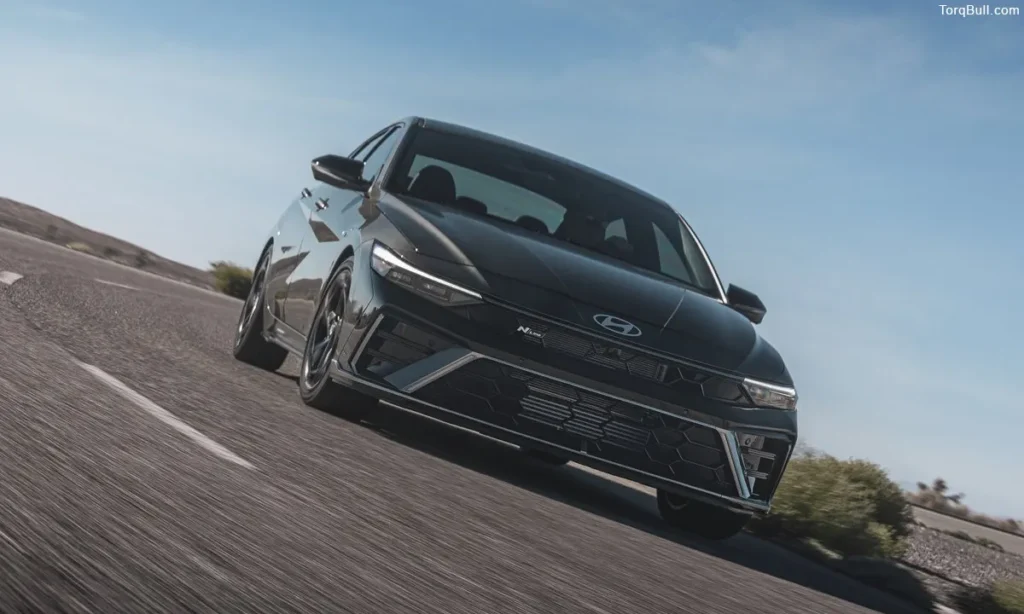
Pro 1: Styling That Sets the Compact Sedan Standard
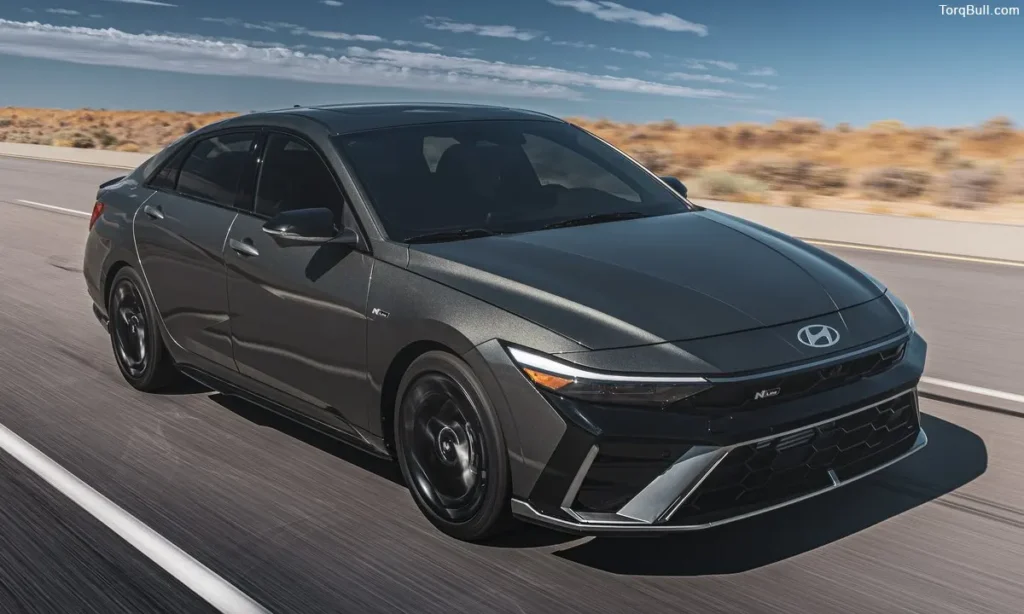
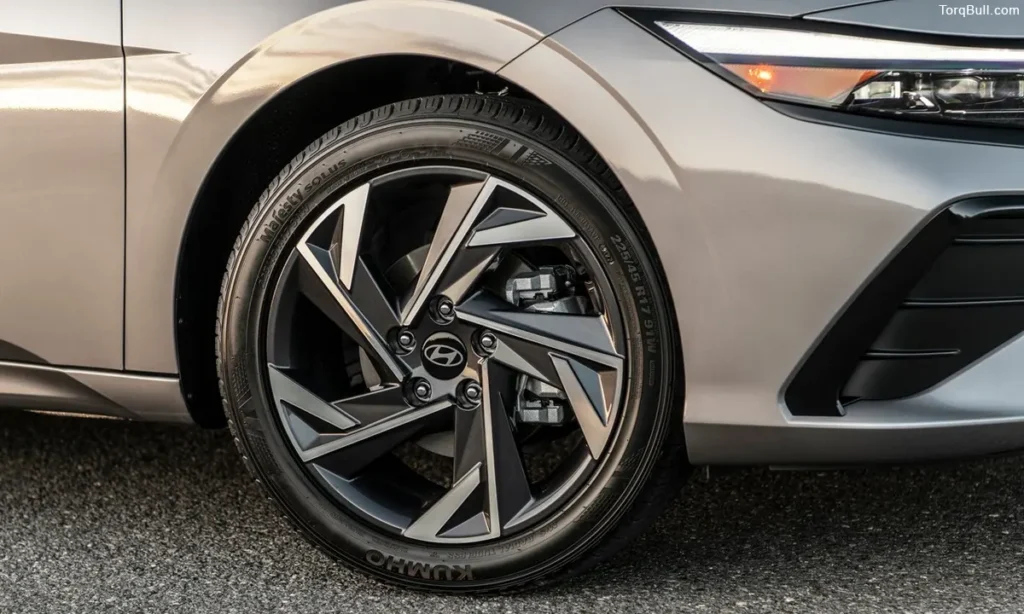
KBB’s aggregated owner sentiment identifies styling as the Elantra’s single strongest attribute — ahead of even reliability and technology in terms of how consistently owners mention it. This is unusual in the compact segment, where most vehicles are designed for inoffensive practicality rather than visual statement. The current Elantra’s angular, fast-backed profile, intricate LED light signatures and sculpted body surfaces produce a design identity that owners describe as fresh, elegant and modern. One KBB reviewer who purchased a Limited specifically lists the fresh exterior design as the first pro, noting that the interior layout also feels elegant and logical — a coherent design philosophy that extends from the outside in rather than treating interior and exterior design as separate exercises.
For a vehicle starting at $22,000, the visual sophistication the Elantra delivers is genuinely unusual in the segment — and it contributes directly to the owner satisfaction that produces the 63 percent five-star rate, because drivers of attractive cars simply enjoy their vehicles more.
Pro 2: Fuel Economy That Stands Above the Segment
Fuel economy is the second most consistently praised Elantra owner attribute — and with good reason. The base 2.0-litre naturally aspirated engine achieves EPA ratings of 31 city, 40 highway and 35 MPG combined — among the most efficient non-hybrid compact sedans available in 2026. Consumer Reports’ testing achieved 33 MPG overall in mixed real-world driving, confirming that the EPA figure is attainable in practice rather than optimistic by standard compact car metrics.
The Hybrid Blue trim extends this efficiency dramatically. KBB owners of the Hybrid report 41-plus MPG in warmer months and high 30s MPG in winter with winter tyres fitted — figures that rival dedicated hybrid compact cars costing significantly more. One repeat Hyundai buyer who sold their 2022 Hybrid Blue and immediately purchased a 2026 equivalent specifically cites the excellent gas mileage as a primary repurchase motivation. For commuters covering 12,000 to 15,000 miles annually, the Elantra Hybrid’s fuel cost versus a 30 MPG gasoline competitor saves approximately $500 to $700 per year — a real, ongoing financial advantage that accumulates meaningfully across a multi-year ownership period.
Pro 3: Technology and Feature Content Relative to Price
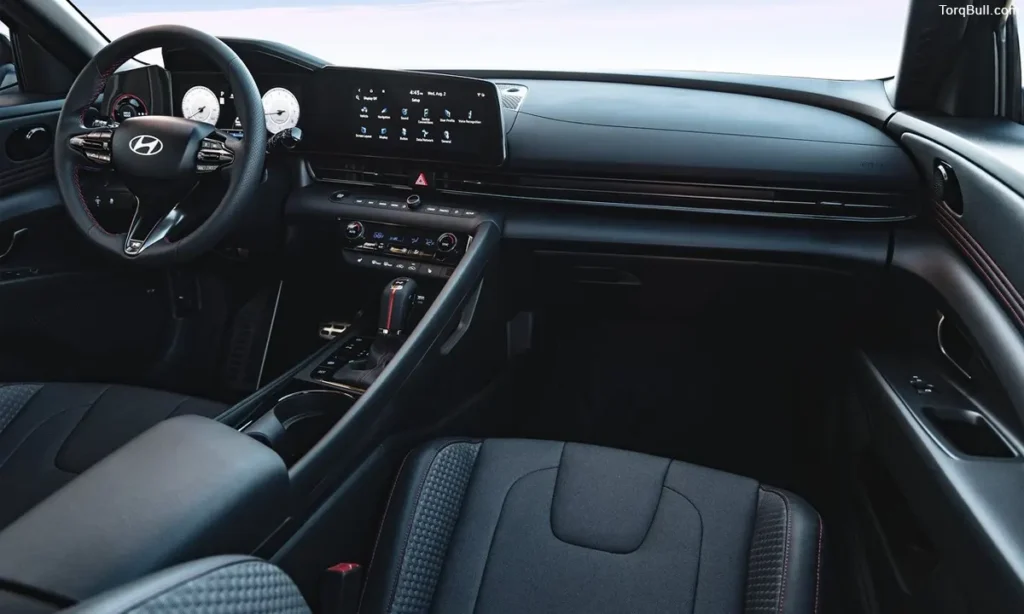
KBB owners consistently cite the Elantra’s technology as a standout for the price paid — specifically the standard digital displays, wireless Apple CarPlay and Android Auto, the high-quality interior material finish on upper trims and the availability of surround-view camera and parking sensors on the Limited trim that competing brands often reserve for higher vehicle categories. One Limited owner lists tech works the way it should and everything inside fits together well as specific positive attributes — the kind of interior coherence and electronic reliability that does not appear in every compact car at this price.
The standard Hyundai SmartSense safety suite — forward collision avoidance, lane keeping assist, adaptive cruise control, driver attention warning and blind-spot collision avoidance across most trims — is a significant standard-feature advantage that reduces the effective cost of safety technology relative to competitors who charge extra for comparable systems. U.S. News gives the 2026 Elantra a safety rating of 9.3 out of 10, reflecting this comprehensive standard safety technology across the trim lineup.
Pro 4: Rear Seat and Passenger Space for the Class
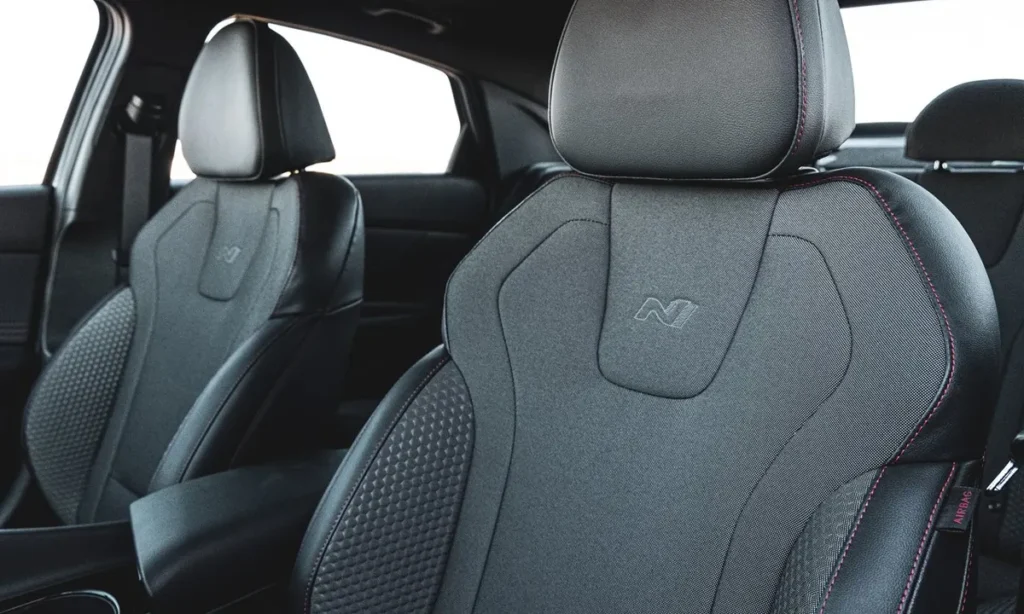
The current-generation Elantra’s fast-backed styling conceals a genuinely generous rear seat that multiple owner reviewers specifically praise. One KBB reviewer confirms that front seat legroom is ample even for people over 6 feet — and that the big back seat is a specific positive noted alongside exterior design in their list of ownership strengths. Consumer Reports’ assessment confirms the interior is relatively roomy with a decent rear seat. For a compact sedan that prioritises design over dimensional packaging, the Elantra’s rear seat generosity is a genuinely positive ownership discovery that buyers do not always anticipate based on the exterior’s sporty proportions.
Read: Hyundai Elantra IVT vs Manual Transmission Performance Comparison
The Cons: Where Real Owners Document Genuine Frustrations
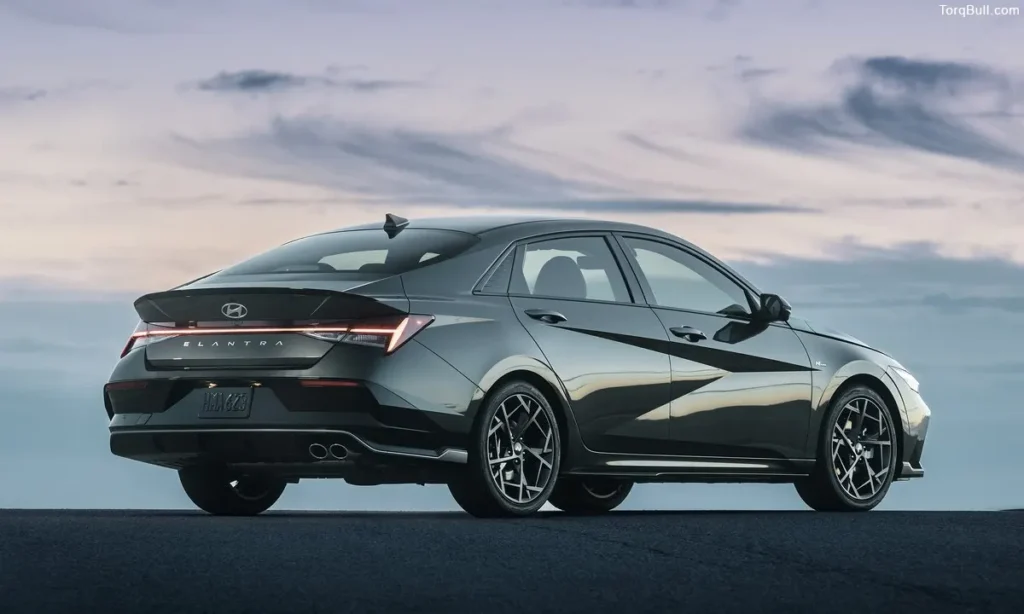
Con 1: Wet-Weather Visibility That Is a Safety Concern
The most serious owner complaint in the 2025 and 2026 Elantra KBB review database — and the one most deserving of prospective buyer attention — concerns wet-weather visibility. One KBB owner who rented the 2025 Elantra for a round-trip Georgia-to-Florida road trip specifically documents that during rain conditions it is virtually impossible to see out of the rear and side windows and rearview mirrors. The reviewer specifically identifies the car’s low ride height and the combination of the curvy roofline with small rear glass as the cause — and recommends the design needs correction.
This is not an isolated complaint. Consumer Reports notes that the low stance and curvy roofline make access a bit challenging and rear visibility somewhat compromised. The Elantra’s design prioritises visual drama over outward visibility — a trade-off that is acceptable in dry conditions and ideal lighting but genuinely challenging in the heavy rain conditions common across much of the American South, Pacific Northwest and Midwest. Buyers who drive frequently in wet weather should specifically evaluate rear and side visibility on a test drive in realistic rainy conditions rather than assessing visibility only in the ideal conditions of a dealership lot.
Con 2: Wireless Apple CarPlay Reliability Issues
Wireless Apple CarPlay connectivity problems appear in verified owner complaints across multiple KBB and Edmunds review submissions for 2024 to 2026 Elantra models — a pattern consistent enough to represent a documented production quality concern rather than isolated individual device incompatibility. One KBB reviewer specifically lists wireless Apple CarPlay issues as a reported problem. Another describes engine problems and inconsistent fuel economy alongside CarPlay connectivity as the primary negative ownership experiences.
The specific nature of the wireless CarPlay issues varies across reports — some describe intermittent disconnection, others describe difficulty with initial pairing and some describe audio dropouts during connected sessions. These issues are software and hardware interface concerns that Hyundai has addressed through over-the-air infotainment updates in some cases, but their persistence across multiple production years indicates the underlying integration is less reliable than the wired alternative or than competing implementations in the Toyota Corolla and Honda Civic at equivalent trim levels.
Con 3: Interior Material Quality at Odds With the Visual Impression
KBB aggregated sentiment identifies quality as the Elantra’s weakest consumer-rated attribute — and the specific quality complaints from owners point consistently to interior material choices that look better than they feel. One detailed KBB Limited trim owner review specifically lists some interior plastics should be better even for this class and notes that the armrests do not have adequate padding — a tactile disappointment that the otherwise well-designed interior’s visual coherence initially masks.
Consumer Reports’ assessment of seat comfort notes that front seats in the base SE trim are short on lumbar support — an ergonomic limitation that presents in longer drives and that the Limited’s power-adjustable seats better address. The Limited trim’s absence of memory seats and ventilated seats — noted by a KBB reviewer — represents a specification gap that other compact sedans at comparable pricing include as standard or commonly optioned features. For buyers who configure long daily commutes and value sustained seating comfort, the base and mid-tier Elantra trims’ seat limitations are worth evaluating on an extended test drive.
Con 4: IVT Long-Term Durability Uncertainty
The Hyundai Elantra’s Intelligent Variable Transmission — the chain-belt CVT alternative described in detail in the IVT vs manual performance comparison — is a newer transmission architecture that lacks the decades of real-world durability data that Honda’s established CVT or Toyota’s traditional automatic have accumulated. Multiple KBB owners specifically express concern about IVT long-term durability — with one first-time Hyundai buyer specifically noting concern about the IVT transmission and whether it will last as their primary ownership anxiety.
This concern is not supported by large-scale documented failure data — the IVT has not produced the kind of systematic reliability complaints that would appear in RepairPal’s repair frequency data if widespread failures were occurring. But the transmission’s relative novelty means that extended high-mileage performance beyond 100,000 miles has less comprehensive owner documentation than competing transmissions. For buyers planning ownership beyond five years and beyond 80,000 miles, the IVT represents an area where disciplined maintenance — specifically the 60,000-mile fluid service — is more important than with Toyota’s more established automatic transmission.
Read: Hyundai Sonata N Line Full Review 2026. The Last Affordable Performance Sedan Standing
Hyundai Elantra 2026 Pros and Cons — Real Owner Summary Chart
| Category | Verdict | Real Owner Evidence |
| Exterior styling | Strong Pro | KBB identifies styling as #1 owner strength; 63% five-star rate |
| Fuel economy (base) | Strong Pro | 35 MPG combined; Consumer Reports 33 MPG real-world |
| Fuel economy (Hybrid) | Strong Pro | 41+ MPG owner reports; repeat buyer repurchase motivation |
| Technology and features | Pro | Limited trim praised for surround camera, parking sensors |
| Rear seat space | Pro | Multiple owners confirm generous for compact segment |
| Standard safety suite | Pro | U.S. News 9.3/10 safety; comprehensive across trims |
| Interior visual quality | Moderate | Looks better than it feels; plastics below class expectation |
| Wet-weather visibility | Real Con | Owner documents “virtually impossible to see” in rain |
| Wireless Apple CarPlay | Real Con | Connectivity issues documented across multiple model years |
| Armrest padding | Con | Multiple KBB owners cite inadequate padding for a Limited trim |
| IVT long-term durability | Concern | First-time Hyundai owners express documented anxiety |
| Seat lumbar support (SE) | Con | Consumer Reports notes short on lumbar in base trims |
| Low ride height entry/exit | Minor Con | Consumer Reports and KBB reviewers note difficult access |
The Bottom Line: Who the Elantra Serves Best
The 2026 Hyundai Elantra is genuinely excellent for buyers who primarily commute daily in mild-weather conditions, who want maximum fuel economy per dollar spent — particularly in Hybrid configuration — who value distinctive exterior styling as part of their daily driving satisfaction and who prioritise the comprehensive technology and standard safety features that Hyundai packages aggressively at lower price points than many competing brands.
It is a more compromised choice for buyers who frequently drive in heavy rain and depend on rear and side visibility for safety confidence, who rely on wireless Apple CarPlay as a primary daily interface and need it to work reliably every time without reconnection management, or who want maximum interior tactile quality — soft armrests, leather padding, memory seat configuration — at the Limited trim’s price point.
Seventy-seven percent of owners recommending the Elantra is an honest representation of its ownership value. The 23 percent who would not recommend reflect the specific friction points that consistent owner reports document and that any prospective buyer deserves to understand before purchase.