2026 Most Reliable Compact SUVs Under $30K. Ranked By Real Data
From the Hyundai Tucson's Award-Winning Standard Equipment and Industry-Leading Warranty to the Nissan Rogue's Class-Leading Fuel Economy, the Subaru Forester's Standard All-Wheel Drive and the Mazda CX-30's Exceptional Interior Refinement — The Under-$30,000 Compact SUV Segment Has Never Been More Technically Sophisticated, More Reliably Engineered or More Consequential for the Millions of American Families Who Refuse to Accept That Dependability Must Come at a Luxury Price
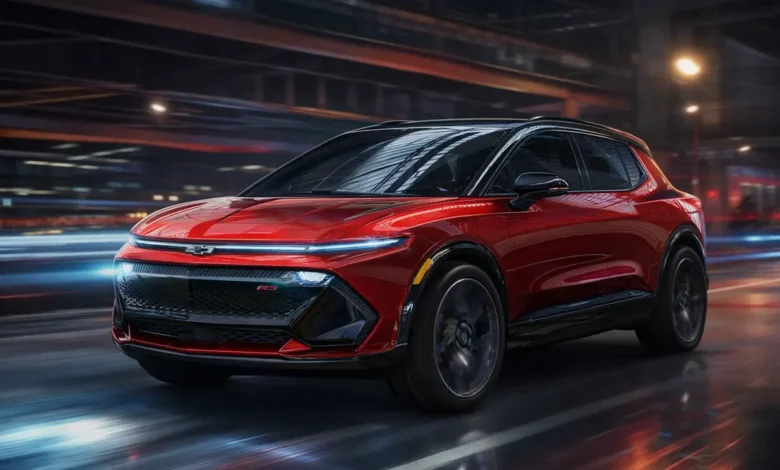
Most Reliable Compact SUVs Under $30K: Reliability is the most important specification that most compact SUV buyers never read on a window sticker. It does not appear in the manufacturer’s marketing materials alongside horsepower figures, cargo volume measurements and infotainment screen sizes. It is not a headline number in a press release. Yet it is the single dimension of vehicle ownership whose real-world financial consequences dwarf every other specification over a four-, five- or eight-year ownership period — determining the frequency and severity of unscheduled repair visits, the size of the gap between the vehicle’s purchase price and its eventual resale value, the consistency of its day-to-day operational dependability and the cumulative cost difference between an ownership experience defined by confidence and one defined by anxiety. For American buyers operating within the $30,000 ceiling that represents the practical budget threshold for the largest segment of new vehicle purchases in the country, understanding which compact SUVs deliver genuine, documented, data-supported reliability — rather than the reliability that marketing language implies — is the foundation of every sound buying decision in 2026. This guide provides that understanding in full.
What Reliability Actually Means in the Under-$30,000 Compact SUV Market
Before examining the individual vehicles, the evaluative framework that separates meaningful reliability data from manufacturer reputation requires explicit definition, because in a segment as competitive and as technically sophisticated as the under-$30,000 compact SUV market, the gap between a vehicle’s historical reliability record and its current buyer perception frequently obscures purchasing decisions that would benefit from greater precision. Reliability, as this guide defines it, is a composite of four measurable dimensions: the frequency of unscheduled repair visits over a five-year ownership period, the severity and cost of those repairs when they occur, the depth and generosity of the manufacturer’s warranty coverage that limits the buyer’s financial exposure during the ownership period, and the predicted reliability scores generated by independent testing organisations — principally RepairPal, J.D. Power and the Auto Reliability Index — whose methodologies aggregate actual owner experience across hundreds of thousands of vehicles rather than reflecting the controlled conditions of manufacturer testing.
Annual repair cost benchmarks provide an important grounding for this framework. The average annual repair cost for a compact SUV in the United States currently sits at approximately $521 per year. Vehicles whose documented average falls meaningfully below this figure deliver a real-money ownership advantage that compounds significantly over a five-year period. A compact SUV averaging $426 per year in repair costs rather than $521 generates a five-year saving of nearly $500 in unscheduled maintenance alone — money that, combined with the insurance, depreciation and financing advantages that reliable vehicles also tend to produce through better residual values, represents a financial argument whose importance to buyers at the $30,000 budget ceiling is substantial rather than academic.
Hyundai Tucson: The Segment’s Overall Reliability and Value Leader at $28,150
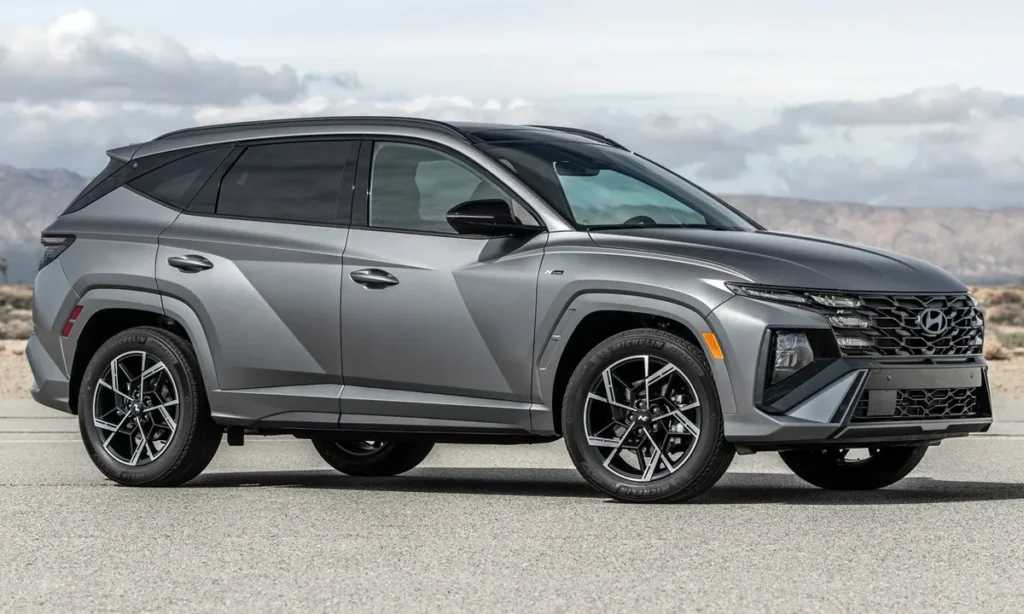
The 2026 Hyundai Tucson holds a position in the under-$30,000 compact SUV market that no direct competitor currently challenges across the complete breadth of dimensions that this guide’s reliability framework requires to be simultaneously satisfied. It is U.S. News and World Report’s winner of both the Best Compact SUV for the Money and the Best Compact SUV for Families awards in 2025, holds an overall score of 9.3 out of 10 — the highest rating in the compact SUV segment — and enters 2026 with a documented annual repair cost of approximately $426, which sits nearly $100 below the compact SUV segment average and provides a measurable, compounding financial advantage over the five-year ownership period that almost every buyer in this price range will experience.
The Tucson’s base front-wheel-drive trim enters the market at approximately $28,150 — positioning all of its standard equipment content, including wireless Apple CarPlay and Android Auto, blind-spot monitoring, pedestrian and cyclist detection, adaptive cruise control and a 12.3-inch touchscreen, below the $30,000 ceiling without requiring any trim-level compromise. The 2.5-litre four-cylinder engine producing 187 horsepower, paired with an eight-speed automatic transmission rather than the continuously variable transmissions that diminish the driving experience of several key competitors, delivers an adequately refined powertrain whose eight-speed gearing provides noticeably better highway refinement than CVT-equipped rivals. Fuel economy of 25 mpg city and 33 mpg highway in front-wheel-drive specification is competitive within the segment without leading it.
The warranty that Hyundai provides on the Tucson — five years or 60,000 miles of basic coverage and ten years or 100,000 miles of powertrain protection — is the most comprehensive manufacturer warranty available on any vehicle in the under-$30,000 compact SUV segment by a margin that no competitor approaches. In practical terms, this warranty eliminates the most financially consequential reliability risk facing compact SUV buyers — powertrain failure in years six through ten — and provides the kind of long-term ownership confidence that transforms the Tucson from a compelling near-term purchase into the segment’s strongest ten-year value proposition. Cargo space of 41.2 cubic feet behind the rear seats, expanding to 80.3 cubic feet with the seats folded, places the Tucson in the upper tier of the segment’s interior utility rankings.
Nissan Rogue: Fuel Economy Leadership and Comfort at $29,050
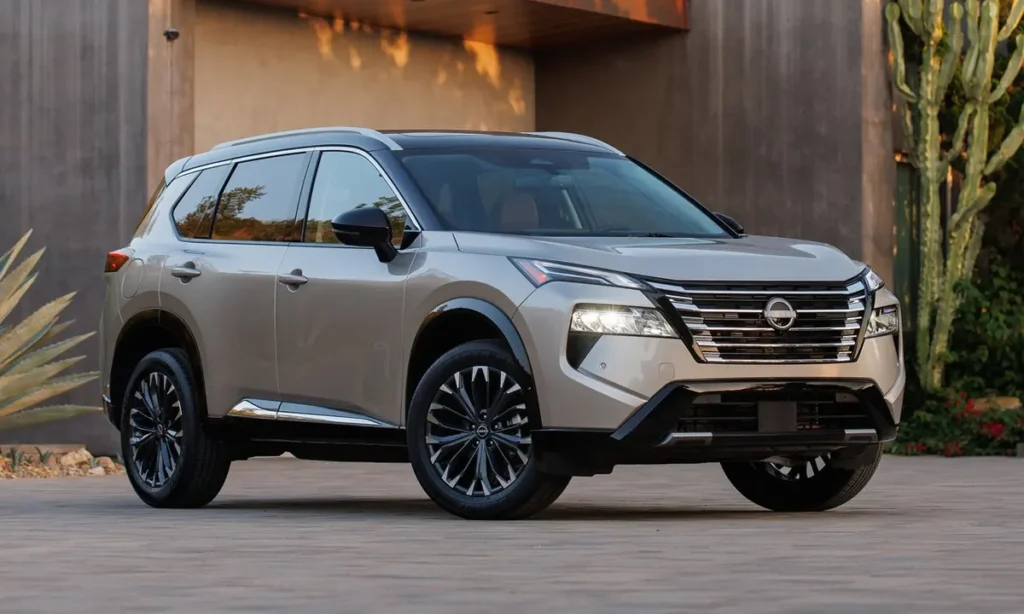
The 2026 Nissan Rogue makes its case for inclusion among the segment’s most reliable and most compelling under-$30,000 compact SUVs through a combination of class-leading fuel economy, above-average interior volume and an ownership cost profile that positions it as one of the most practical choices available to the American buyer whose daily driving patterns prioritise efficiency and comfort over driving dynamics and powertrain engagement. With a starting price of approximately $29,050, the Rogue’s base front-wheel-drive configuration achieves an EPA-estimated 33 mpg combined — the highest combined fuel economy figure of any non-hybrid compact SUV in the segment — and 30 mpg combined in all-wheel-drive specification, providing meaningful real-world fuel savings for high-mileage drivers whose annual odometer accumulation makes per-mile operating costs a genuine budget consideration rather than a theoretical footnote.
The Rogue’s reliability record, as tracked by the Auto Reliability Index, produces a predicted reliability score of approximately 77 out of 100 for the 2026 model year — a rating categorised as good and consistent with Nissan’s broader recent pattern of improved quality execution across its SUV lineup following the powertrain reliability concerns that affected earlier generation models. The 1.5-litre turbocharged three-cylinder engine, while unconventional in its configuration relative to the four-cylinder units that power most segment rivals, has demonstrated acceptable durability through its production history and delivers adequate performance for the Rogue’s role as a comfort-focused family transporter. Headroom and legroom in both rows are described by independent reviewers as among the most generous in the segment for the price point, making the Rogue’s interior space proposition one of the most compelling arguments for its inclusion in any under-$30,000 family SUV consideration.
Kia Sportage: Feature Richness, Warranty Parity and a 4-Out-of-5 Owner Rating at $28,785
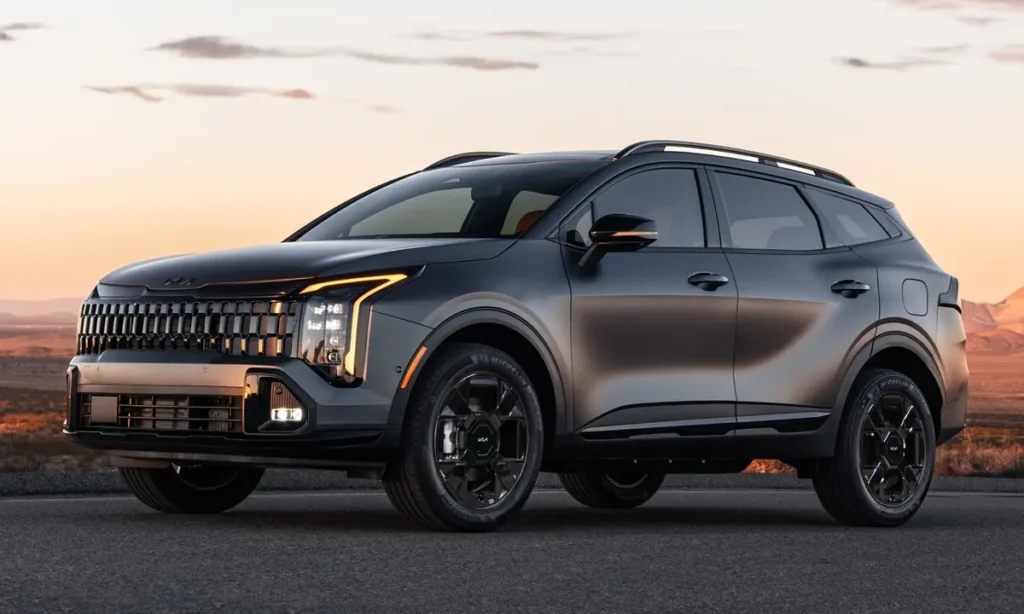
The 2026 Kia Sportage occupies an important position in the reliability conversation that the Korean manufacturer’s corporate family has shaped for the segment — one that delivers Kia’s matching ten-year, 100,000-mile powertrain warranty in a platform whose styling ambition, standard technology generosity and owner-reported reliability have combined to produce an above-average reliability rating of four out of five from the Kelley Blue Book owner community, the most democratically sourced reliability signal available to prospective buyers. The Sportage’s base LX trim starts at approximately $28,785, placing standard adaptive cruise control — now included across all 2026 Sportage models — wireless Apple CarPlay, Android Auto and a comprehensive suite of active safety technology within the $30,000 threshold without requiring a trim-level upgrade.
The 2.5-litre naturally aspirated four-cylinder engine producing 187 horsepower, paired with an eight-speed automatic transmission, delivers fuel economy of approximately 28 mpg combined in front-wheel-drive specification — a figure that trails the Nissan Rogue’s non-hybrid leadership but provides adequate real-world efficiency for mixed urban and highway use. The Sportage’s most commercially significant advantage in the reliability conversation is the availability of two electrified variants — the Sportage Hybrid, returning up to 43 mpg combined, and the Sportage Plug-in Hybrid with 34 miles of electric-only range — at prices that, while extending above the $30,000 base threshold, provide the segment’s most accessible pathway into meaningful electrification for buyers whose operating costs are better served by reduced fuel dependency than by the maximum powertrain savings achievable within the base price constraint.
Subaru Forester: Standard AWD, Safety Excellence and Outdoor Capability at $29,995
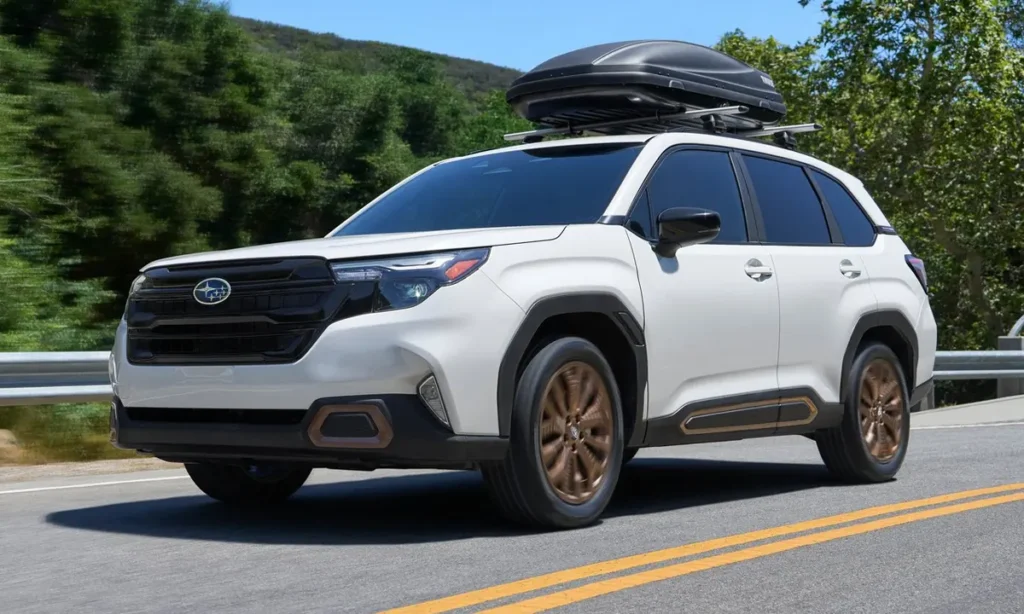
The 2026 Subaru Forester is the compact SUV that most comprehensively challenges the assumption that reliability, safety engineering and all-weather capability must be selected from among competing priorities rather than delivered simultaneously within a single vehicle at the $30,000 threshold. Standard symmetrical all-wheel drive across every Forester trim level — a design decision that eliminates the option-package calculation and trim-level negotiation that all-wheel drive availability requires in every competing vehicle — provides the segment’s most consistently available all-weather traction without price escalation above the base specification. Starting at $29,995, the Forester delivers standard AWD, Subaru’s EyeSight driver assistance suite — whose IIHS Top Safety Pick+ recognition validates genuine engineering quality rather than a features checklist — and a cargo volume of 31.1 cubic feet behind the rear seats in a package whose total-ownership proposition is defined by dependability rather than excitement.
The Forester’s powertrain — a 2.5-litre naturally aspirated four-cylinder producing 182 horsepower, paired with Subaru’s continuously variable transmission — is the source of the vehicle’s most consistent critical qualification: it delivers adequate rather than engaging acceleration and produces a powertrain refinement level that several competitors surpass at comparable price points. Fuel economy of 26 mpg city and 33 mpg highway in AWD specification is competitive without leading the segment. What the Forester’s powertrain does deliver, which its owner satisfaction data and its segment-leading safety recognition consistently reflect, is uncomplicated long-term mechanical dependability in a platform whose engineering priorities have never wavered from the conviction that predictable, all-weather, family-safe transportation is worth more to most buyers than any particular performance specification.
Mazda CX-30: Interior Refinement and Driving Dynamics at a Price That Redefines the Segment Floor at $25,350
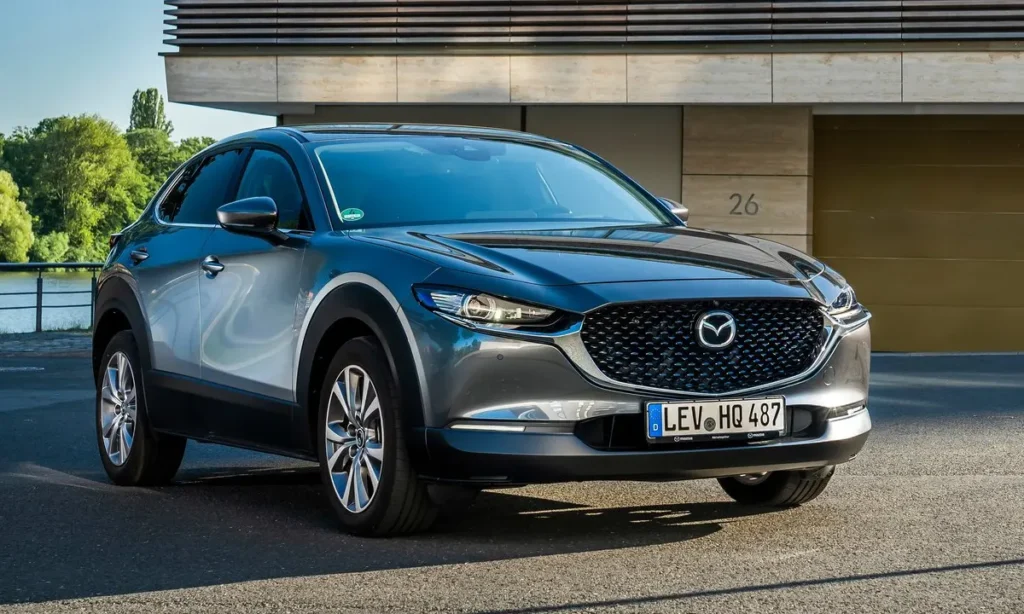
The 2026 Mazda CX-30 is the compact SUV whose interior quality, build precision and driving dynamics most convincingly challenge the assumption that the under-$30,000 segment requires buyers to accept compromised materials, uninspired cabin design or numb steering in exchange for price accessibility. Starting at approximately $25,350 — the most affordable entry point of any vehicle in this guide — the CX-30 delivers a cabin environment that independent reviewers consistently describe as the most refined and most premium-feeling in the under-$30,000 SUV segment, with soft-touch surface materials, design coherence and fit and finish quality that rivals vehicles priced significantly above the CX-30’s position. The standard 2.5-litre naturally aspirated four-cylinder producing 191 horsepower provides adequate performance, while the available turbocharged variant — pushing output to 227 horsepower — delivers the segment’s most genuinely engaging powertrain at this price point.
Reliability data for the CX-30 places Mazda in the highest tier of compact SUV manufacturers for long-term ownership predictability, with RepairPal’s broader Mazda brand reliability rating consistently ranking above the industry average and owner satisfaction scores that reflect the emotional connection buyers develop with a vehicle whose quality execution exceeds its price category’s expectations. The CX-30’s meaningful limitations — a rear seat that is tighter than competitors at comparable prices and a cargo volume of 20.2 cubic feet behind the rear seats that represents the most restricted storage capacity in this guide — are real and must be weighed honestly against its quality advantages. For buyers without regular rear-seat passenger requirements or significant cargo demands, the CX-30’s combination of interior premium and genuine driving engagement at the segment’s lowest entry price represents a value proposition whose uniqueness in the under-$30,000 compact SUV landscape is difficult to overstate.
Chevrolet Equinox: American Reliability and Family Space at $29,500
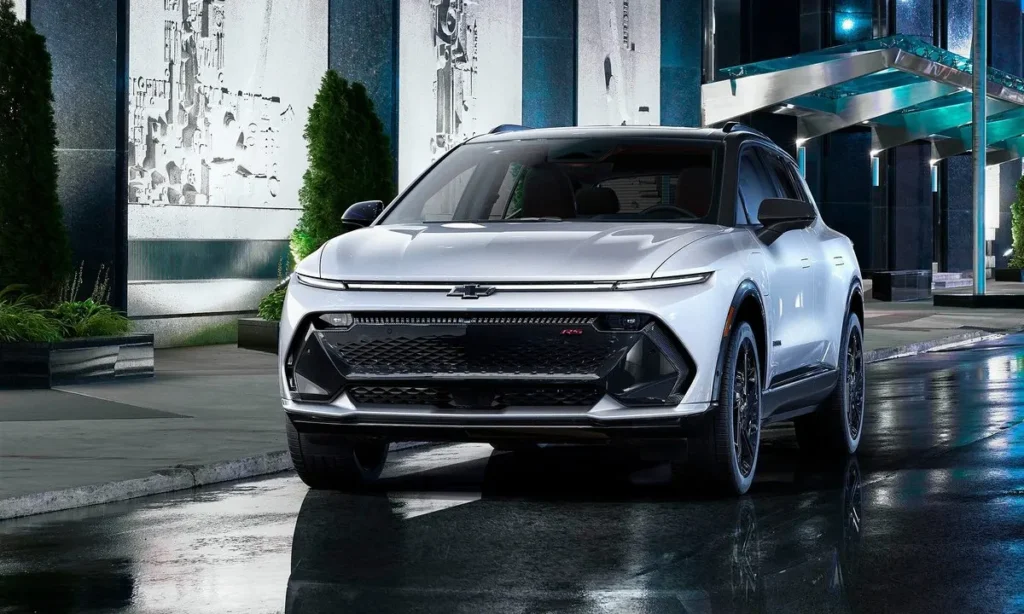
The 2026 Chevrolet Equinox, starting at approximately $29,500 for its base front-wheel-drive configuration, has entered the reliability conversation in 2026 with credentials that its predecessor generation could not claim — a fully redesigned platform, a predicted reliability score that U.S. News places at 88 out of 100 (tied for the highest reliability score in the under-$30,000 SUV segment), and a standard equipment content level whose upscale cabin design and 11.3-inch touchscreen represent a genuine departure from the value-concession approach that characterised the Equinox’s previous design generation. Its cargo volume of 26.9 cubic feet behind the rear seats falls between the CX-30’s restricted capacity and the Tucson’s segment-leading figure, and its passenger space is described by independent reviewers as one of the most generous in the segment at this price point.
The Equinox’s 1.5-litre turbocharged four-cylinder engine, producing 175 horsepower and paired with a six-speed automatic transmission, delivers fuel economy of approximately 26 mpg city and 31 mpg highway — figures that trail the Nissan Rogue’s efficiency leadership but represent a meaningful improvement over the previous Equinox generation’s performance. Chevrolet’s three-year, 36,000-mile basic warranty and five-year, 60,000-mile powertrain warranty represent the segment’s most limited manufacturer coverage — a structural warranty gap versus Hyundai and Kia that buyers planning extended ownership periods beyond five years should weigh carefully against the Equinox’s reliability score leadership.
The Sub-$30,000 Reliability Verdict: Which Compact SUV Best Matches Your Ownership Priorities
The most precise answer this guide can provide to the question of which under-$30,000 compact SUV is the most reliable is that the Hyundai Tucson, supported by an industry-leading ten-year powertrain warranty, below-average annual repair costs, the segment’s highest independent reliability score and the most generous standard equipment content available at its price point, makes the strongest complete case for buyers whose priority ordering places long-term ownership confidence, warranty protection and daily-life practicality at the top of their evaluation framework. It is the vehicle that wins across the broadest range of reliability-relevant criteria simultaneously.
The Nissan Rogue is the correct answer for buyers whose annual mileage is high enough that its segment-leading fuel economy generates real-money savings that compound meaningfully over ownership, and whose preference for spacious, comfort-focused transportation outweighs the warranty depth advantage of the Korean manufacturers. The Kia Sportage is the correct answer for buyers who want Hyundai’s warranty architecture paired with distinct styling, a strong owner satisfaction record and the segment’s most accessible pathway to hybrid electrification. The Subaru Forester is the correct answer for buyers in Northern states, mountainous regions or climates where standard all-wheel drive is a non-negotiable daily requirement whose value exceeds the premium of any option-package alternative. The Mazda CX-30 is the correct answer for buyers whose primary vehicle is a solo or dual-occupant commuter tool and whose priority is the most refined and most enjoyable-to-drive compact SUV that the under-$30,000 segment produces. The Chevrolet Equinox is the correct answer for buyers whose predicted reliability score confidence and family passenger space requirements align with domestic manufacturer preference and a well-priced new platform.
Reliability under $30,000 is not a single vehicle. It is a decision whose correct answer is determined by the specific combination of priorities, geography, mileage patterns and ownership duration that each American buyer brings to the most consequential vehicle purchase decision their budget allows.
Read: Why Toyota Cars Are Known for Bulletproof Reliability?
Most Reliable Compact SUVs Under $30K USA 2026 — Quick Reference
| Model | Starting MSRP | Powertrain | Combined MPG | Warranty (Powertrain) | Key Reliability Strength |
| Hyundai Tucson | ~$28,150 | 2.5L I4 / 187 hp | 28 mpg | 10yr / 100k miles | Lowest repair cost / best warranty |
| Nissan Rogue | ~$29,050 | 1.5L Turbo I3 / 201 hp | 33 mpg | 5yr / 60k miles | Segment-best fuel economy |
| Kia Sportage | ~$28,785 | 2.5L I4 / 187 hp | 28 mpg | 10yr / 100k miles | Owner rating 4/5, hybrid available |
| Subaru Forester | ~$29,995 | 2.5L I4 / 182 hp | 29 mpg | 5yr / 60k miles | Standard AWD all trims |
| Mazda CX-30 | ~$25,350 | 2.5L I4 / 191 hp | 29 mpg | 5yr / 60k miles | Best interior quality + lowest price |
| Chevrolet Equinox | ~$29,500 | 1.5L Turbo I4 / 175 hp | 28 mpg | 5yr / 60k miles | Highest predicted reliability score |