- Autopilot is SAE Level 2 driver assistance
- Uses 8 cameras for 360-degree visibility
- FSD adds advanced navigation on most roads
- Over 8.3 billion miles driven with FSD (2026)
- System still requires active driver supervision
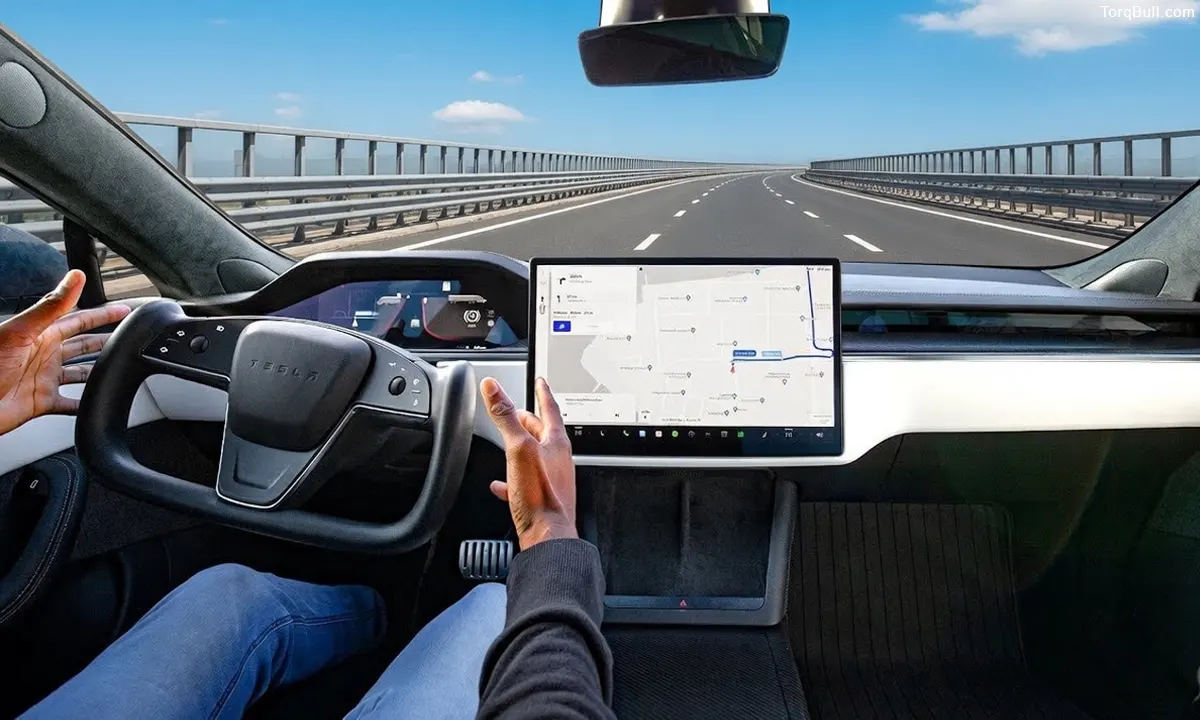
How Tesla Model 3 Autopilot Works: Tesla Autopilot is simultaneously the most discussed, most misunderstood and most capable driver assistance system available in any production vehicle sold in the American market in 2026. It is discussed because it defines the Model 3’s technology identity more than any other feature. It is misunderstood because its marketing name — Autopilot — implies a level of autonomy that the system does not provide and that Tesla’s own documentation explicitly disclaims. It is capable because, in MotorTrend’s January 2026 assessment, Full Self-Driving Supervised has become the best Advanced Driver Assistance System on the market. This guide explains exactly how every layer of Tesla Autopilot works — from the hardware that perceives the vehicle’s environment to the neural network that interprets what the cameras see, to the specific features available at each software tier, to the clear boundaries of what the system cannot and should not be trusted to do without the driver’s full attention.
What Autopilot Is and What It Is Not
Before examining how the system works, establishing what Autopilot actually is at a regulatory and functional level is essential — because the name creates expectations that the system’s capabilities do not fully meet, and misunderstanding this distinction has resulted in serious accidents by drivers who treated the system as more capable than it is.
Tesla Autopilot is classified as a SAE Level 2 automated driving system — the same classification used for lane departure warning systems, adaptive cruise control and similar features found on Toyota, Honda and BMW vehicles. Level 2 means the system can control both steering and acceleration simultaneously under defined conditions, but the driver must remain fully attentive, must keep their hands on or very near the steering wheel and must be prepared to take complete control of the vehicle at any moment without warning. The system is not Level 3, which would allow the driver to divert attention under defined conditions. It is not Level 4 or Level 5, which would provide fully autonomous operation without driver supervision. The driver is always legally and functionally responsible for the vehicle’s behaviour.
Tesla’s own Model 3 Owner’s Manual is direct on this point: “It is your responsibility to stay alert, drive safely, and be in control of the vehicle at all times.” The Full Self-Driving (Supervised) system reinforces this designation — the word Supervised specifically acknowledges that a human driver’s supervision is required at all times.
The Hardware: Eight Cameras and HW4 Vision Processing
The 2026 Model 3 uses Hardware 4 — Tesla’s current Autopilot computer generation, introduced for new vehicles from approximately mid-2023 onwards. HW4 represents a significant advancement over the previous HW3 generation that powered Model 3s from 2019 through early 2023.
The HW4 camera suite consists of eight cameras providing 360-degree visibility around the vehicle. Three cameras face forward at different focal lengths — a narrow long-range camera, a main wide-angle camera and an ultra-wide camera that covers the closest approach zone directly in front of the vehicle. Two rear-facing cameras provide visibility behind the vehicle and into the adjacent lanes that forward cameras cannot see. Two side-facing cameras cover the B-pillar area and provide the wide-angle views used for blind spot monitoring and lane change assessment. One rear-wide camera covers the area directly behind the vehicle, feeding the backup camera display.
This camera-only approach — which Tesla adopted by 2023 after removing the ultrasonic sensors that supplemented earlier hardware — is intentionally distinct from the sensor fusion approach used by most competing ADAS systems. Tesla’s argument is that vision is sufficient for driving because driving is a vision-dominant activity, and that a sufficiently capable neural network processing camera data can achieve better environmental understanding than a system that fuses heterogeneous sensor types with their different latencies and fusion errors. The HW4 computer processes data from all eight cameras simultaneously, feeding that processed perception data into the neural network that makes all Autopilot driving decisions.
HW3 vehicles — those produced between 2019 and mid-2023 — use a different camera suite and the older FSD computer. Tesla’s Q1 2026 earnings call confirmed that HW3 vehicles cannot achieve unsupervised Full Self-Driving. These vehicles continue to receive Autopilot and FSD Supervised software but are capped at FSD version 12 software, while HW4 vehicles have progressed to FSD version 14. A V14-lite update planned for late June 2026 will bring some improvements to HW3 vehicles, with Tesla offering a discounted trade-in programme for HW3 owners who want HW4 capability.
Read: How to Update Tesla Model 3 Software Without Visiting the Dealer. Why Some Owners Never Get Them
The Software: Three Tiers of Autopilot Capability
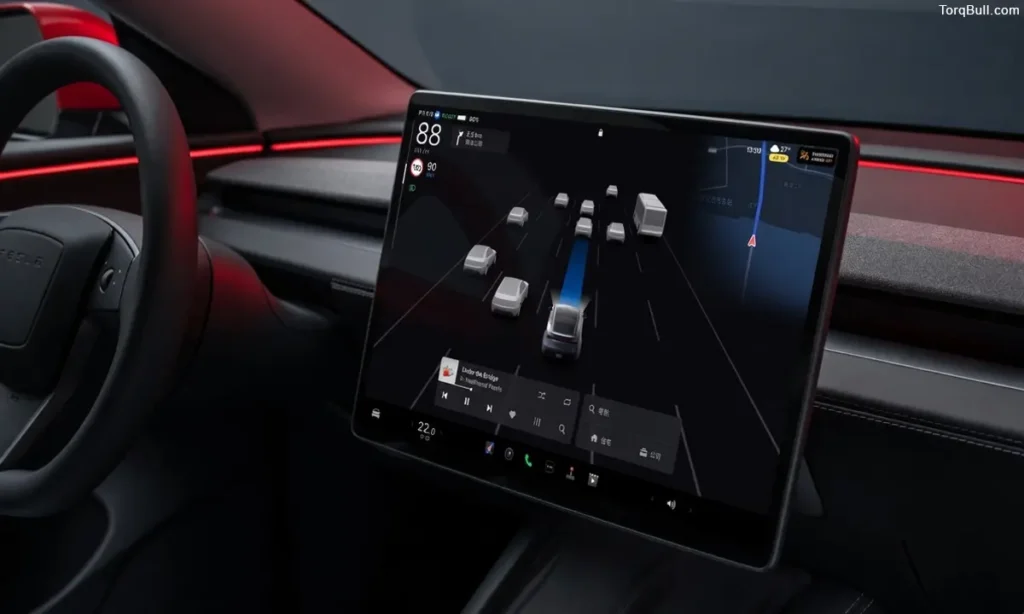
Tesla structures its Autopilot capabilities in three tiers that correspond to progressively more capable and more expensive software packages. Understanding what each tier includes — and what the differences are between them — is essential for any Model 3 buyer or owner evaluating their options.
Standard Autopilot (Included with every Model 3)
Every 2026 Model 3 includes two core Autopilot features at no additional cost: Traffic-Aware Cruise Control and Autosteer.
Traffic-Aware Cruise Control is Tesla’s implementation of adaptive cruise control — a system that maintains a set following distance from the vehicle ahead, automatically accelerating and decelerating to maintain that gap as traffic flow changes. Unlike conventional cruise control, which only maintains a fixed speed, Traffic-Aware Cruise Control can bring the vehicle to a complete stop in traffic and resume from stop automatically when traffic ahead moves. It is activated by pressing the right scroll button on the steering wheel and functions on all road types including city streets and highways. The Tesla Owner’s Manual notes that Traffic-Aware Cruise Control is designed for driving comfort and convenience — it is not a collision warning or avoidance system, and it cannot be relied upon to prevent all collisions.
Autosteer is Tesla’s implementation of lane-centering within the Traffic-Aware Cruise Control framework. When engaged, Autosteer uses the forward cameras to detect lane markings and road edges, applying steering inputs to keep the Model 3 centred within the detected lane. It also incorporates basic driver attention monitoring, requiring periodic steering wheel input to confirm the driver’s engagement with the driving task — typically generating a visual and audible alert when the driver has not touched the wheel for a defined period, and eventually engaging the hazard lights and bringing the vehicle to a stop if the driver remains unresponsive.
Full Self-Driving Supervised (Optional — $8,000 purchase or $99/month subscription)
Full Self-Driving Supervised — commonly abbreviated as FSD — adds a substantially more capable set of features that extend Autopilot’s functionality from highway lane-following to navigating nearly all road types including city streets, intersections, traffic lights and stop signs.
Navigate on Autopilot builds on Autosteer by adding automatic lane change capability — the system can suggest and, if configured, execute lane changes to pass slower vehicles and follow the navigation route’s highway transitions. Traffic and Stop Sign Control allows the vehicle to recognise traffic lights and stop signs, decelerate appropriately and stop at red lights and stop signs, then resume with driver confirmation when the light turns green. Autopark allows the vehicle to execute parallel and perpendicular parking manoeuvres automatically into detected spaces. Smart Summon and Summon allow the vehicle to navigate a parking lot and approach the owner’s smartphone location under supervision.
The most significant FSD capability is the end-to-end neural network driving mode — the system that, when engaged on appropriately mapped roads, can navigate from a parked position to a destination across city streets, making left and right turns, passing other vehicles, navigating roundabouts and handling complex junction scenarios. Tesla’s release notes for FSD version 14.3 (software version 2026.2.9.6) describe the system as starting from a parked position, making lane changes, selecting forks to follow the navigation route, navigating around other vehicles and objects, making left and right turns and parking at the destination.
As of February 2026, Tesla vehicles had driven 8.3 billion cumulative miles using FSD Supervised — a real-world operational dataset that forms the basis of the continuous neural network improvement that over-the-air software updates deliver to the entire fleet.
How the Neural Network Actually Makes Driving Decisions
The most technically distinctive aspect of Tesla Autopilot is its reliance on neural network inference rather than rules-based programming to interpret camera data and make driving decisions. Understanding the difference is central to understanding both why the system works as well as it does and why it still makes mistakes in scenarios outside its training distribution.
A rules-based ADAS system responds to detected objects — detecting a vehicle ahead, calculating its distance and velocity, applying a defined following distance formula to compute required deceleration. Tesla’s neural network approach processes raw camera pixel data and produces driving actions directly — the network has learned, from billions of miles of human driving footage, what the appropriate steering, acceleration and braking response is to any given camera input across millions of different driving scenarios.
This approach enables the system to handle novel scenarios — unfamiliar road geometries, unusual vehicle types, unexpected obstacles — by generalising from its training experience rather than failing when a situation does not match a predefined rule. It also means the system can improve continuously as new driving miles generate new training data — each software update incorporates learning from the collective experience of the entire Tesla fleet, improving performance across all vehicles simultaneously.
The limitation of this approach is that scenarios that are rare in the training data may still produce unexpected behaviour. Construction zones with unusual lane markings, emergency vehicle interactions, complex unprotected turns across multiple lanes of traffic and poor weather conditions that degrade camera visibility remain the most consistently documented situations where FSD Supervised behaviour diverges from what an experienced human driver would do.
Read: Tesla Model 3 Charging Cost Per Mile In USA. Complete 2026 Cost Analysis
Tesla Model 3 Autopilot Feature Tiers — Complete Reference Chart
| Feature | Standard Autopilot | FSD Supervised ($8K / $99/mo) | Notes |
| Traffic-Aware Cruise Control | Included | Included | Adaptive cruise, full stop-and-go |
| Autosteer (lane centering) | Included | Included | Highway and city streets |
| Automatic Emergency Braking | Included | Included | Active on all vehicles |
| Lane Departure Warning | Included | Included | Alert and steering correction |
| Navigate on Autopilot | Not included | Included | Automatic highway lane changes |
| Traffic Light and Stop Sign Control | Not included | Included | City street autonomy |
| Automatic Lane Change | Not included | Included | Supervised; driver confirmation configurable |
| Autopark | Not included | Included | Parallel and perpendicular |
| Smart Summon | Not included | Included | Parking lot navigation to owner |
| Full city-street end-to-end driving | Not included | Included (v14+, HW4) | Requires HW4 for latest version |
| Unsupervised FSD (Robotaxi) | Not available | Not yet available to public | Commercial testing in Austin and SF |
| Hardware required | HW3 or HW4 | HW4 for full v14 capability | HW3 capped at FSD v12 |
What Autopilot Cannot Do and Why Driver Attention Is Always Required
The capabilities described above do not exempt any driver from full legal and practical responsibility for the vehicle’s behaviour at any moment. Tesla’s documentation and the practical experience of eight-plus years of owner operation establish several consistent limitations that any Model 3 owner using Autopilot must understand.
Autopilot and FSD Supervised cannot reliably handle all construction zone configurations — temporary lane markings, unusual cones, missing road lines and adjacent workers create scenarios where the system’s lane-detection assumptions may produce unexpected steering responses. The system cannot fully predict the behaviour of pedestrians, cyclists and other road users in all situations — it can react to them but cannot anticipate their intentions the way an experienced human driver applies predictive judgement. In poor weather — heavy rain, snow, fog or direct glare — camera performance degrades and Autopilot may become unavailable or perform below its clear-weather standard. The system does not confer accident immunity — it has been involved in crashes documented by NHTSA and Tesla’s own safety reports, and the driver remains responsible for avoiding collisions at all times.
The practical guidance from Tesla’s own ownership documentation is the clearest statement of the appropriate use mindset: Autopilot reduces driving fatigue on long trips, improves comfort in stop-and-go traffic and provides a layer of driver assistance for lane-keeping and following distance management. It is a sophisticated tool for an attentive driver, not an automated chauffeur for an inattentive one.