- Model 3: 321–363 miles range with Supercharger access
- Ioniq 6: up to 361 miles with ultra-low drag (0.21 Cd)
- 800V architecture enables faster charging (10–80% ~18 min)
- Tesla offers strong software and charging network
- Hyundai delivers efficiency, design and safety advantage
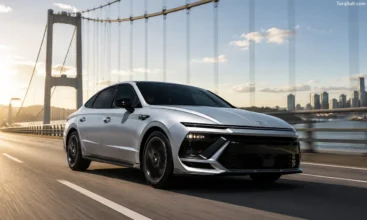
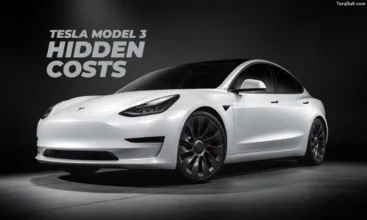
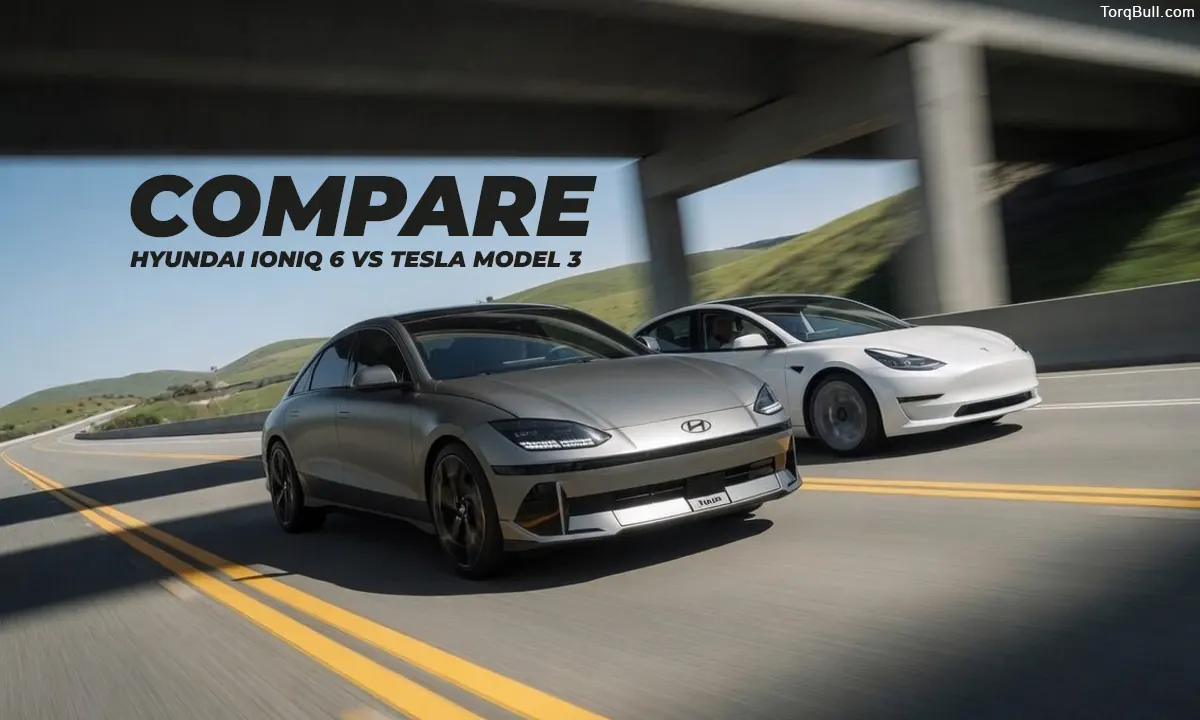
Tesla Model 3 vs Hyundai Ioniq 6: The competition between the Tesla Model 3 and Hyundai Ioniq 6 represents the most compelling EV sedan comparison in the American market in 2026 — two genuinely excellent vehicles at nearly identical starting prices, each making a strong argument for a fundamentally different vision of what an electric sedan should prioritise. The Model 3 is the benchmark: proven over nine years of production, backed by the most extensive fast-charging network in North America, continuous software improvement through over-the-air updates and performance figures that make the comparison with gasoline competitors embarrassingly lopsided. The Ioniq 6 is the challenger: a more aerodynamically sophisticated design achieving the world’s lowest drag coefficient of 0.21, an 800-volt electrical architecture enabling dramatically faster DC charging than most competitors, a more conventional and more comfortable interior layout and Hyundai’s comprehensive warranty package. Choosing between them requires understanding which differences are genuinely significant for the way a specific owner will actually use their car. This guide makes that determination clear.
Price and Value: Nearly Equal at the Starting Line
The price comparison between the Model 3 and Ioniq 6 is the closest between any two primary EV competitors in the segment — separated by only $715 at the base level and positioned identically in the mid-range configurations that most buyers actually purchase.
The 2026 Tesla Model 3 Standard RWD starts at $38,380 including the $1,640 destination charge, according to TrueCar’s 2026 comparison data. The Model 3 Premium RWD and Premium AWD configurations extend pricing into the $44,000 to $48,000 range, with the Performance AWD at $56,630. The 2025 Hyundai Ioniq 6 SE starts at $39,095 for the standard range configuration and extends to $52,600 for the Limited AWD at the top of the range — making it approximately $715 more at base level and comparable at mid-range configurations.
The pricing context that most directly affects the purchase decision is federal tax credit eligibility. The Tesla Model 3 qualifies for the $7,500 federal EV tax credit as a domestic-assembled vehicle meeting applicable battery sourcing requirements — reducing the effective purchase price to approximately $30,880 for buyers who qualify for the point-of-sale credit transfer. The Hyundai Ioniq 6 does not currently qualify for the federal EV tax credit, as its battery sourcing does not meet the requirements imposed by the Inflation Reduction Act’s critical mineral provisions. This $7,500 difference in effective price is the most significant financial distinction between these two vehicles for buyers who qualify for the credit, making the Model 3 approximately $8,215 less expensive on an after-credit basis than the Ioniq 6 at comparable trim levels.
The Ioniq 6 partially offsets this purchase price disadvantage through Hyundai’s industry-leading ownership support: three years of complimentary scheduled maintenance — an advantage the Model 3 does not provide — and a five-year, 60,000-mile basic warranty against the Model 3’s four-year, 50,000-mile coverage. Hyundai’s battery warranty covers ten years and 100,000 miles against Tesla’s eight years and 100,000 to 120,000 miles depending on trim.
Read: Tesla Model 3 vs Ford Mustang Mach-E: Ultimate Battle Between Sedan vs Crossover
Range and Efficiency: Comparable Results, Different Engineering
Both the Model 3 and Ioniq 6 are among the longest-range electric sedans in the American market at their respective price points — but they achieve competitive range through meaningfully different engineering approaches.
The 2026 Tesla Model 3 Standard RWD is EPA-rated at 321 miles on 18-inch wheels. The Premium RWD reaches 363 miles — the highest EPA rating in the Model 3 lineup and competitive with the very best in the segment. The Premium AWD achieves 346 miles and the Performance AWD 315 miles. In real-world highway testing at 75 mph, the Long Range AWD consistently delivers 280 to 310 miles — reflecting Tesla’s reputation for achieving close to EPA-rated figures in real-world conditions, which automotive testers consistently attribute to the vehicle’s sophisticated thermal management and efficient energy conversion.
The 2025 Hyundai Ioniq 6 RWD Long Range achieves an EPA rating of 361 miles — matching the Model 3 Premium RWD’s figure within two miles. The Ioniq 6’s efficiency advantage over the Model 3 is expressed most clearly in its MPGe rating: 140 MPGe combined for the Ioniq 6’s most efficient configuration versus the Model 3’s 137 MPGe — a 3 MPGe difference that reflects the Ioniq 6’s aerodynamic design advantage. With a drag coefficient of 0.21 — the lowest of any production vehicle currently sold — the Ioniq 6 is genuinely more aerodynamically efficient than the Model 3, and this efficiency advantage is most pronounced at highway speeds where aerodynamic drag is the dominant energy consumer.
The practical range difference between these vehicles at comparable trim levels is negligible for most real-world buyers. Both are capable of comfortable 300-plus-mile highway days with a single charging stop, and both cover the average American’s daily driving needs many times over on a single charge.
Charging Speed: Ioniq 6’s Most Decisive Advantage
Charging speed is the single category where the Ioniq 6 holds its most compelling and most practically significant technical advantage over the Model 3 — and it is an advantage rooted in fundamental electrical architecture rather than software or battery capacity.
The Hyundai Ioniq 6 uses an 800-volt electrical system — the same high-voltage architecture found in the Porsche Taycan and Kia EV6 — that enables DC fast charging at rates up to 350 kilowatts peak on compatible chargers. Hyundai quotes approximately 18 minutes for a 10 to 80 percent charge on the larger 77.4 kWh pack at a 350 kW station — one of the fastest charge rates of any production EV available in America. On a more commonly available 150 kW DC fast charger, the Ioniq 6 still charges significantly faster than the Model 3.
The Tesla Model 3 uses a 400-volt electrical system that accepts up to 250 kW at the fastest V3 Supercharger stations. Edmunds testing confirms the Model 3 added 100 miles of range in approximately 14 minutes at a Supercharger. At a 10 to 80 percent charge, the Model 3 Long Range takes approximately 25 to 30 minutes — approximately 10 minutes longer than the Ioniq 6 in optimal charging conditions.
The practical significance of this charging speed difference depends entirely on charging network access. The Tesla Supercharger network’s approximately 2,000 US stations with consistent 250 kW V3 availability means Model 3 owners can regularly approach the vehicle’s maximum charging rate with high reliability. The Ioniq 6’s 800-volt advantage is most pronounced on the Electrify America network’s 350 kW stations — but these stations are less uniformly distributed than Tesla’s network, and real-world station reliability has historically been less consistent. Recharged’s 2026 comparison identifies Tesla’s charging network as a decisive advantage for road-tripping owners despite the Ioniq 6’s higher peak speed: network ubiquity and reliability often matter more than peak charging rate.
Performance: Tesla’s Clearest Dominance
Performance is where the gap between these vehicles is widest — and where the Model 3’s engineering priorities are most clearly expressed in measurable outcomes.
The base 2026 Tesla Model 3 Standard RWD produces enough power for a 5.8-second 0-60 mph sprint — competitive with most gasoline sports sedans. The Premium AWD at 4.2 seconds is genuinely quick by any standard. The Performance AWD — with 510 horsepower and a claimed 2.9-second 0-60 — competes with dedicated performance cars costing two to three times its price.
The Hyundai Ioniq 6 SE Standard Range’s 149-horsepower base motor is substantially less powerful than any Model 3 configuration. The Ioniq 6 AWD produces 320 combined horsepower and reaches 60 mph in approximately 5.1 seconds — competitive with a mid-range Model 3 but without the performance differentiation that the Model 3 Performance offers. The Ioniq 6 compensates with a comfortable, refined driving character — progressive regenerative braking with paddle-adjustable intensity, a smooth and composed highway ride and a more relaxed orientation that Green Car Reports describes as prioritising “relaxed drives over razor-sharp handling.”
Safety: Ioniq 6 Leads on Formal Ratings
Both vehicles carry five-star NHTSA overall safety ratings, but the formal safety testing distinction between them favours the Ioniq 6.
The 2025 Hyundai Ioniq 6 earned IIHS Top Safety Pick+ status — the Insurance Institute for Highway Safety’s highest honour — across all applicable test categories including the updated moderate overlap front test, side test and headlight evaluation. The 2025 Tesla Model 3 earned an Acceptable score in the updated moderate overlap front test and a Good rating in the updated side test, but the IIHS declined to award the Model 3 its Top Safety Pick or Top Safety Pick+ badge. Both vehicles carry comprehensive standard ADAS suites — Autopilot for the Model 3 and SmartSense for the Ioniq 6 — with the Ioniq 6 additionally including rear cross-traffic collision-avoidance, safe exit assistance and a driver monitoring system as standard features.
Tesla Model 3 vs Hyundai Ioniq 6 — Complete Comparison Chart
| Category | Tesla Model 3 (2026) | Hyundai Ioniq 6 (2025) | Winner |
| Starting Price (before incentives) | $38,380 | $39,095 | Model 3 (slight) |
| After-credit effective price | ~$30,880 | ~$39,095 (no credit) | Model 3 (significant) |
| EPA Range (best config) | 363 miles (Premium RWD) | 361 miles (RWD LR) | Tie |
| Combined MPGe (best) | 137 MPGe | 140 MPGe | Ioniq 6 |
| Drag coefficient | ~0.23 | 0.21 | Ioniq 6 |
| 0-60 mph (base) | 5.8 sec | 7.4 sec (SE base) | Model 3 |
| 0-60 mph (AWD) | 4.2 sec | 5.1 sec | Model 3 |
| DC Fast Charging (peak) | 250 kW (400V) | 350 kW (800V) | Ioniq 6 |
| 10–80% charge time (DC fast) | ~25–30 min | ~18 min | Ioniq 6 |
| Charging network | Supercharger (2,000 US stations) | Electrify America + CCS | Model 3 |
| Apple CarPlay / Android Auto | No | Yes (standard) | Ioniq 6 |
| IIHS Safety Rating | Acceptable (updated MO front) | Top Safety Pick+ | Ioniq 6 |
| Autopilot / ADAS | Autopilot standard; FSD optional | SmartSense standard | Tie |
| Basic warranty | 4 yr / 50,000 mi | 5 yr / 60,000 mi | Ioniq 6 |
| Battery warranty | 8 yr / 100–120K mi | 10 yr / 100,000 mi | Ioniq 6 |
| Free maintenance | No | 3 years included | Ioniq 6 |
| 5-year depreciation | ~57% | ~60.4% | Model 3 |
| Over-the-air updates | Comprehensive | Limited | Model 3 |
| Used market depth (2026) | Extensive (since 2017) | Limited (since 2023) | Model 3 |
Interior and Technology: A Meaningful Philosophical Difference
The interiors of the Model 3 and Ioniq 6 represent two fundamentally opposed philosophies of automotive design — and the difference between them is one of the most important subjective factors in choosing between these vehicles.
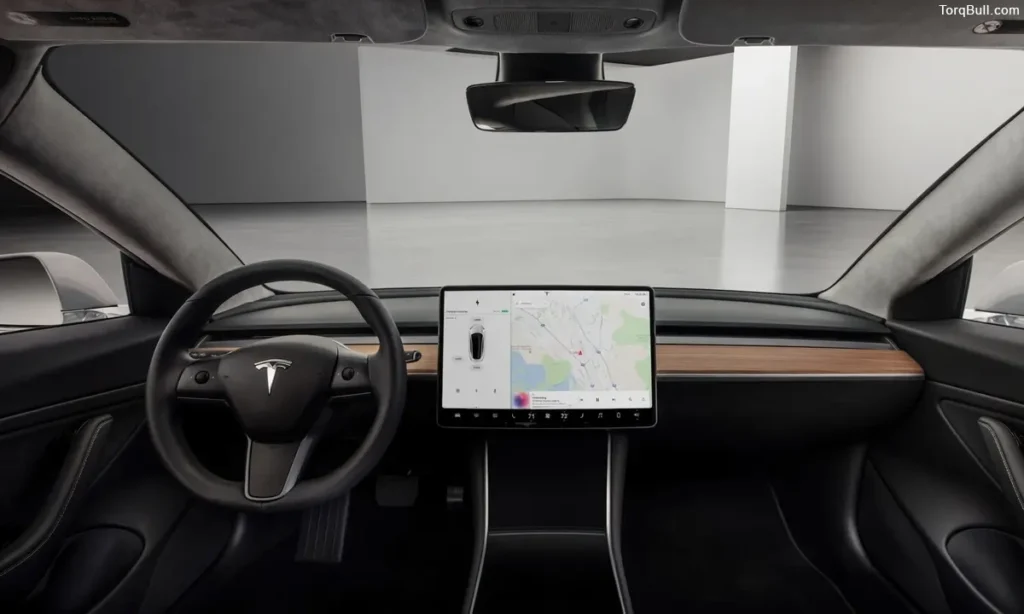
The Model 3’s minimalist interior concentrates nearly all controls in its 15.4-inch central touchscreen. There are no physical climate control buttons, no physical gear selector and minimal physical switchgear of any kind. The cabin is clean and futuristic in a way that appeals strongly to technology enthusiasts. It does not offer Apple CarPlay or Android Auto — a limitation that matters significantly to buyers whose phone ecosystem is central to their daily driving experience. The interior material quality on the 2025 to 2026 Highland generation is genuinely improved over prior years, though it does not match German luxury sedans at equivalent prices.
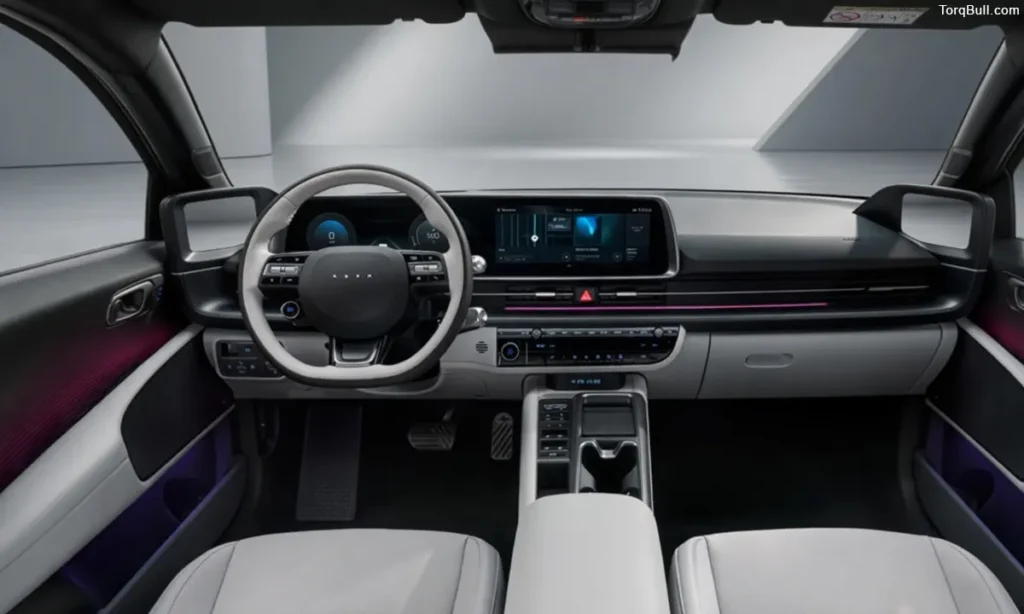
The Ioniq 6 offers dual 12.3-inch screens — one instrument cluster and one infotainment — alongside physical climate controls and a conventional switchgear layout. Apple CarPlay and Android Auto are standard. The Ioniq 6 provides more rear legroom in absolute terms and — according to Green Car Reports’ extended test — a more comfortable highway environment for adult rear passengers. The Ioniq 6’s cabin quality, while characterised by some cost-cutting in dashboard materials, is more comprehensively equipped with physical controls that many drivers find more intuitive and safer than a touchscreen-dependent approach.
The Verdict: Which Should You Buy?
The Model 3 is the correct choice for buyers who charge at home, value road trip confidence through the Supercharger network, want maximum performance at any trim level, qualify for the $7,500 federal EV tax credit and are comfortable with a touchscreen-centric ownership experience. It also holds its value better over five years than the Ioniq 6 — a meaningful financial distinction for buyers who anticipate selling or trading within that window.
The Ioniq 6 is the correct choice for buyers who prioritise the fastest public DC charging available, want Apple CarPlay and Android Auto connectivity, value a higher safety rating from IIHS, prefer physical controls in the interior and appreciate Hyundai’s more generous warranty and complimentary maintenance package. For buyers who do not qualify for the federal EV tax credit and are comparing these vehicles on an unsubsidised basis, the Ioniq 6’s slightly higher starting price is largely offset by its three years of free maintenance and longer warranty coverage.