- Performance costs ~$7,500 more than AWD
- Delivers ~2.9s 0–60 with track-focused upgrades
- Includes adaptive dampers, bigger brakes and Track Mode
- Trade-off: ~37 miles less range and higher running costs
- Best for enthusiasts, less ideal for daily comfort use
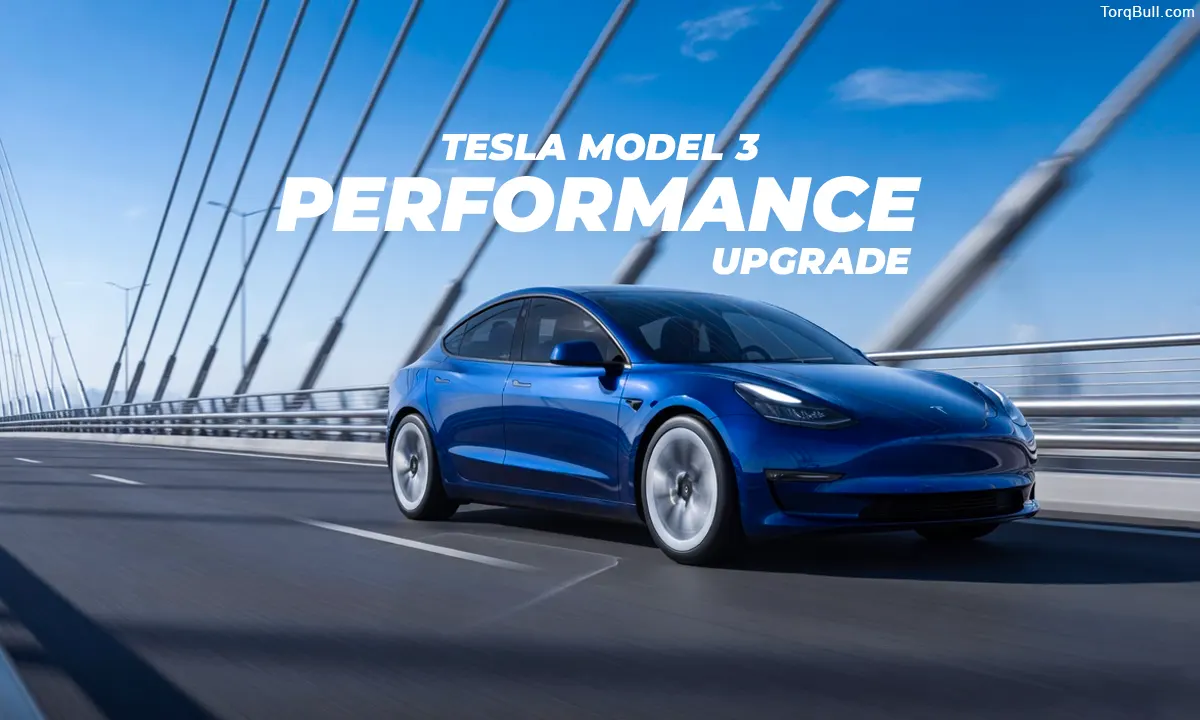
Is Tesla Model 3 Performance Upgrade Worth It: The Tesla Model 3 Performance is one of the most consistently debated purchase decisions in the American EV market — because the price gap between the Performance and the Premium AWD has narrowed to a point where the question of whether the upgrade is worth it is genuinely close rather than obviously resolved in either direction. At $54,990 for the Performance and $47,490 for the Premium AWD, the $7,500 premium buys a genuinely different vehicle — not just a faster version of the same car, but a car with a different chassis philosophy, a different suspension character, different brakes, different tyres and a different driving experience. Whether those differences justify the premium depends entirely on how the car will be used. This guide examines every dimension of the upgrade argument — performance, ride quality, range penalty, running cost implications, resale value and the honest buyer profile assessment — to produce a definitive 2026 verdict.
What the Performance Upgrade Actually Delivers: Every Difference Listed
The most important starting point for evaluating whether the Model 3 Performance upgrade is worth it is understanding precisely what $7,500 additional buys — because CarBuzz’s analysis identifies the Performance as potentially the best value in the entire Model 3 lineup given its unique combination of features, and the specification list supports that assessment in certain contexts.
Acceleration and power. The Model 3 Performance produces approximately 510 combined horsepower from its uprated dual-motor system, delivering a 0-60 mph time of 2.9 seconds — 1.3 seconds faster than the Premium AWD’s 4.2-second figure. This is not a subtle difference. The gap between 4.2 and 2.9 seconds is the difference between genuinely quick and legitimately shocking — the Performance’s launch places it in the company of dedicated sports cars costing two to three times its price, while the Premium AWD’s 4.2 seconds is merely impressive rather than remarkable. A peak lateral acceleration of 0.96g in the Performance versus 0.69g in the Long Range AWD — measured in TotallyEV’s instrumented comparison — confirms that the chassis capability advantage extends well beyond straight-line acceleration.
Adaptive suspension system. The Performance’s electronically controlled continuously variable dampers are the feature that most distinctively separates it from other Model 3 variants. The system adjusts damper rate in real time based on driving mode and road condition, enabling the suspension to operate in Standard mode with a cloud-soft compliance that absorbs road inputs generously — softer than even the Highland Long Range’s frequency-selective dampers — and in Sport mode with a firmness and body control that transforms the car into a tight, communicative sports sedan. Owner accounts from the Tesla Motors Club community describe the Standard-Sport transition as “immediately and significantly felt” — a mode-change experience unlike anything available in the non-Performance Model 3.
Upgraded brake system. Four-piston fixed front brake calipers replace the sliding single-piston calipers of other Model 3 variants. Front rotors measure 320mm and rear rotors 335mm, both ventilated. The performance brake system provides substantially higher repeated deceleration capability — important for track day use where conventional single-piston calipers fade after multiple high-speed braking events — and delivers improved pedal feel and more consistent bite that experienced drivers notice in spirited road driving.
Staggered tyre configuration. The Performance uses wider tyres at the rear than the front — a staggered setup specifically calibrated to maximise rear-axle cornering grip under hard acceleration and cornering loads. The standard lightweight 20-inch Warp wheels carry Pirelli high-performance rubber designed for the Model 3 Performance’s chassis tune. This combination provides sharper turn-in response, greater cornering traction at the limit and improved steering feedback compared to the symmetrical fitment of other Model 3 variants.
Track Mode V3. Only the Performance receives Track Mode, which allows independent adjustment of power distribution between front and rear axles, stability control threshold, regenerative braking intensity and suspension damping for dedicated track driving. Tesla’s implementation of Track Mode is comprehensively engineered — the system adjusts cooling priority, motor output mapping and chassis control simultaneously to optimise the car for circuit use in a way that simple stability control modifications cannot replicate.
Read: Tesla Model 3 Winter Range Loss In USA. Here Is Everything Cold-Weather Owners Need to Know
The Range and Efficiency Trade-Off
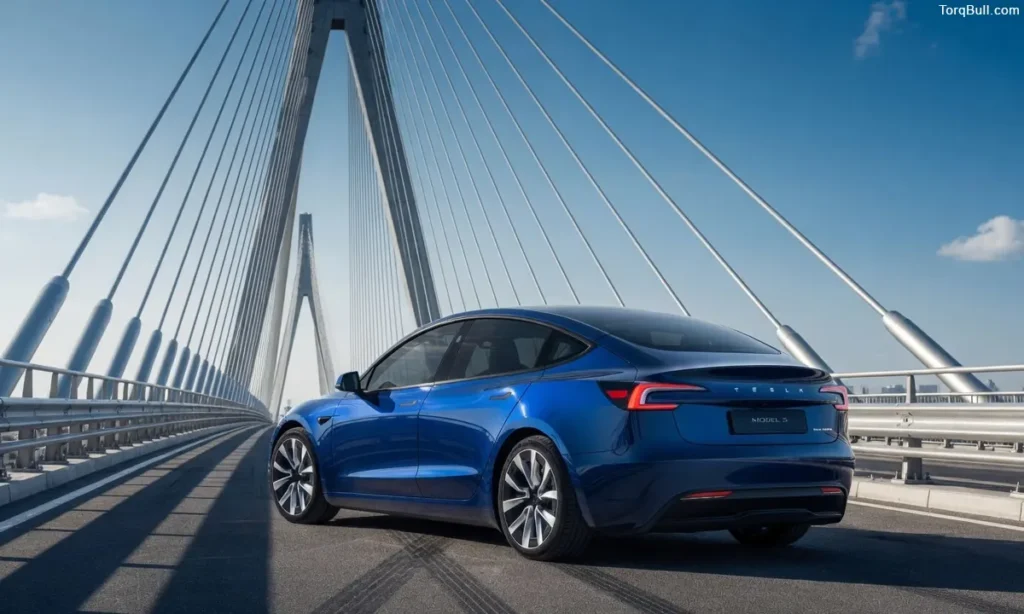
The Model 3 Performance’s most significant practical disadvantage relative to the Premium AWD is its reduced EPA range — 309 miles versus 346 miles for the Premium AWD, a difference of 37 miles. This gap reflects the Performance’s heavier wheels, higher rolling resistance performance tyres, slightly lower aerodynamic efficiency and the additional drivetrain losses of its more powerful motor configuration.
For daily commuting — covering the average American’s 37 miles per day from a home-charged battery — 309 miles of range is as effectively unlimited as 346 miles. The difference is imperceptible and irrelevant to the daily ownership experience for the overwhelming majority of driving scenarios. The gap becomes meaningful on very long road trips — specifically on stretches between Supercharger stations that approach 300 miles, where the Performance’s smaller comfort margin requires either a higher arrival state of charge or a slightly longer charging time to ensure adequate range for unexpected detours or headwind conditions. For most owners whose road trips involve Supercharger stops every 200 to 250 miles, the 37-mile range difference between the Performance and Premium AWD never materially affects the road trip experience.
The Arcoche comparison of Performance versus Long Range characteristics notes this distinction accurately: the Performance “is sure to dominate” in performance-focused driving categories while the Long Range is “designed as a family touring sedan, optimised for better efficiency and extended range.” The choice between them reflects this philosophical divide rather than a simple better-or-worse assessment.
The Real Running Cost Implications
The Model 3 Performance carries higher running costs than the Premium AWD in three specific and quantifiable areas that buyers should factor into the total ownership calculation before the purchase decision.
Tyre wear and replacement cost. The Performance’s staggered 20-inch Pirelli high-performance fitment wears faster than the standard Model 3’s tyres — both because of the tyres’ softer compound specifically engineered for grip rather than longevity, and because the Performance’s available power encourages more aggressive driving that accelerates wear further. Replacement sets for 20-inch Performance wheels cost approximately $900 to $1,200 installed — compared to $600 to $900 for 18-inch Photon wheels on standard Model 3 variants. For owners who use the Performance’s acceleration capacity regularly, replacement intervals may run as short as 18,000 to 22,000 miles rather than the 25,000 to 35,000 miles typical of conservatively driven standard Model 3 variants on standard tyres.
Insurance premium. The Model 3 Performance’s higher replacement value and higher repair cost relative to the Premium AWD produces a meaningfully higher insurance premium at most insurers. The national average for the Performance trim typically runs $50 to $100 per month more than equivalent coverage on the Premium AWD — adding $600 to $1,200 per year to the operating cost. Over five years, this premium differential adds $3,000 to $6,000 to the total ownership cost above the Premium AWD.
Energy cost. The Performance’s heavier wheels and performance tyres produce slightly higher energy consumption per mile than the Premium AWD — approximately 5 to 8 percent more in real-world mixed driving. At the national average home charging rate of $0.17 per kilowatt-hour and 15,000 annual miles, this additional consumption adds approximately $50 to $80 per year in electricity costs — a modest but real operating cost increase.
Read: Tesla Model 3 Battery Degradation After 100,000 Miles. What Separates The Best From The Worst Cases
Model 3 Performance vs Premium AWD — Complete Comparison Chart
| Feature | Tesla Model 3 Premium AWD | Tesla Model 3 Performance AWD | Performance Advantage |
| Starting Price | $47,490 | $54,990 | — ($7,500 premium) |
| 0–60 MPH | ~4.2 seconds | 2.9 seconds | +1.3 seconds faster |
| System Power | ~425 hp | ~510 hp | +85 hp |
| EPA Range | 346 miles | 309 miles | −37 miles |
| Suspension | Passive (freq-selective) | Active adaptive (Sport/Standard) | Adaptive system |
| Brake System | Single-piston sliding | 4-piston fixed (front) | Better fade resistance |
| Wheel / Tyre | 18-inch Photon (standard) | 20-inch Warp (staggered) | Higher grip |
| Track Mode | No | Yes (V3) | Yes |
| Top Speed | ~125 mph | ~163 mph | +38 mph |
| Peak G-Force (cornering) | ~0.69g | ~0.96g | +40% cornering grip |
| Tyre Replacement Cost | ~$600–$900 | ~$900–$1,200 | More expensive |
| Insurance Premium | Lower | ~$600–$1,200/yr more | Higher cost |
| Best Suited For | Daily comfort + all-weather | Performance + track + enthusiasts | Different purpose |
The Honest Buyer Profile Verdict
The Model 3 Performance is clearly worth the $7,500 premium for a specific and identifiable buyer profile — and clearly not worth it for an equally identifiable alternative profile.
The Performance is worth it for buyers who: actively use the car’s performance capability in their daily driving — who regularly make the most of the launch acceleration on highway on-ramps, who take pleasure from the cornering grip and body control on winding roads, who want the option of a track day or autocross without sacrificing daily usability and who value the adaptive suspension’s dual-mode character as a genuine enhancement to the driving experience across all their daily use cases. For this buyer, the Performance is not an incremental upgrade — it is a qualitatively different vehicle that delivers the most genuinely engaging driving experience available in the compact electric sedan segment at its price point.
The Performance is worth it specifically when compared to the BMW M3, AMG C43 or Porsche Cayman as alternative sports sedan purchases — CarBuzz’s analysis confirms the Performance outperforms all of them in 0-60 and in value terms after the federal EV tax credit that the Performance qualifies for but the Premium AWD does not, due to different battery sourcing. In this competitive context, the Performance is not just the best Model 3 but potentially the best value sports sedan available in America.
The Performance is not worth the premium for buyers who: primarily want a comfortable, capable everyday vehicle where the most important daily attributes are range comfort, cabin refinement and efficient commuting. These buyers would be paying $7,500 more for performance capability they will never regularly access — the adaptive suspension’s Standard mode comfort, while excellent, is not meaningfully better than the Highland Long Range’s ride quality for daily commuting purposes, and the 2.9-second 0-60 produces no practical advantage over the Premium AWD’s already quick 4.2 seconds for any urban or highway driving scenario that does not involve deliberate maximum acceleration.
The Performance is also not worth the upgrade for buyers concerned about tyre wear, insurance costs or who drive primarily on rough roads — because the benefits of the Performance’s chassis engineering are most fully expressed on smooth, grippy surfaces that allow the staggered tyre geometry and upgraded suspension to work within their design envelope. On the degraded, pothole-damaged urban roads that characterise many American cities, the practical difference between the Performance’s adaptive suspension and the Long Range’s frequency-selective dampers is less pronounced than on smooth tarmac.
The Tesla Motors Club community captures the decision framework honestly: some owners describe the Performance as “unnecessary but fun” for party tricks, while others describe it as delivering a genuinely transformative driving experience that justifies every additional dollar. Both assessments are correct for their respective drivers — the question that separates them is not how good the Performance is, but how much of its capability will be regularly used.