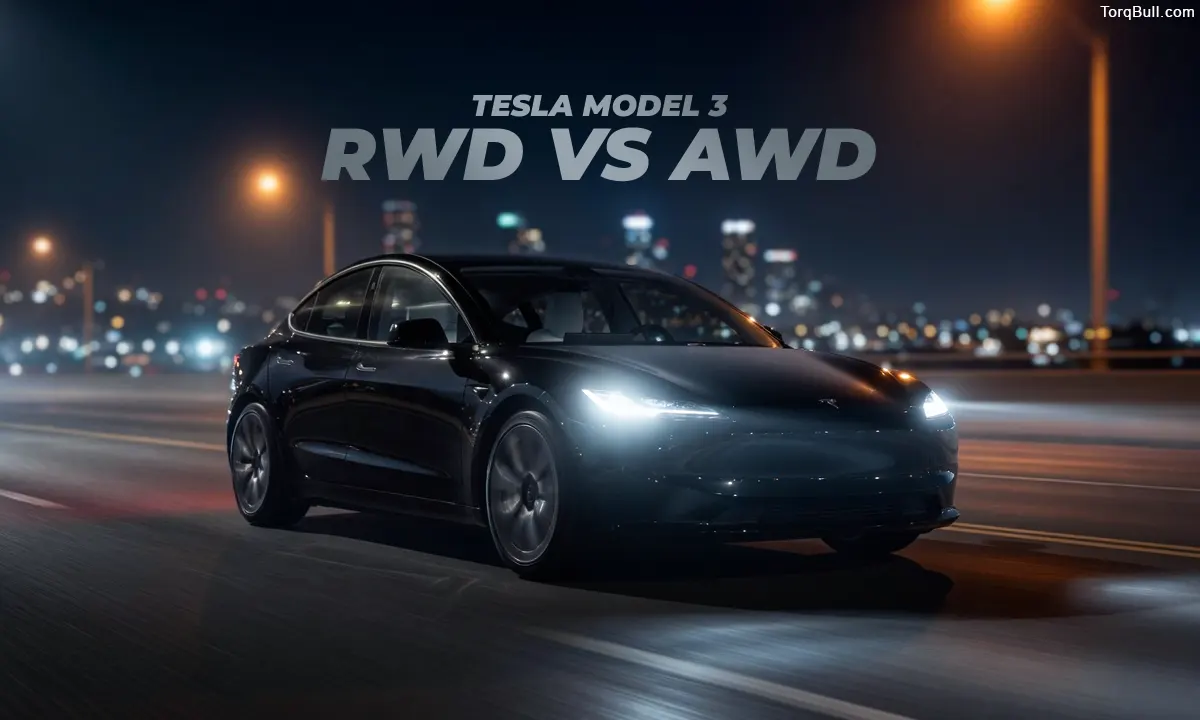
- RWD: 363 miles range, ~4.2s 0–60 mph
- AWD: ~346 miles range with dual-motor traction
- Performance AWD: ~2.9s 0–60 with upgraded hardware
- AWD improves grip; RWD maximizes efficiency
- Choice depends on performance vs range priorities
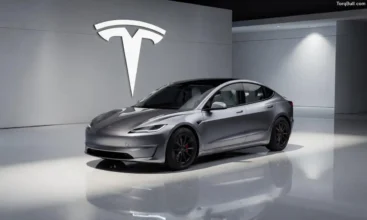
Tesla Model 3 RWD vs AWD: The choice between rear-wheel drive and all-wheel drive on the 2026 Tesla Model 3 is one of the most commonly debated purchase decisions among new EV buyers — because it involves trade-offs that are not immediately obvious from the EPA specification sheets alone. The RWD configuration offers more range per dollar and the lightest, most aerodynamically efficient powertrain in the lineup. The AWD configurations add a second motor that delivers better traction in wet and winter conditions, faster acceleration in the dual-motor versions and — in the Performance trim — a qualitatively different driving experience with adaptive suspension, upgraded brakes and staggered tyres. Understanding exactly what each drivetrain delivers, where the differences are genuine and consequential and where they are smaller than the specification gap suggests is the foundation of a well-informed Model 3 purchase decision. This guide provides that understanding completely.
How Tesla’s RWD and AWD Systems Actually Work
The Tesla Model 3 RWD uses a single rear-mounted permanent magnet electric motor that drives the rear axle through a single-speed reduction gear. All drive force is delivered exclusively to the rear wheels. The front wheels are unpowered and coast freely during acceleration. This is the same fundamental layout as a BMW M3, a Porsche 911 or any traditional rear-wheel drive sports sedan — with the specific advantage that an electric rear motor delivers its maximum torque instantaneously rather than building through an engine speed range.
The Tesla Model 3 AWD uses two electric motors — one at the rear and one at the front — each independently controlling its respective axle. The rear motor is the primary driver in most conditions, with Tesla Motors Club owner data confirming that in normal dry-road driving, the front motor contributes only a small fraction of total drive energy. One UK owner’s recorded data showed approximately 99 percent rear and 1 percent front motor contribution during typical mixed driving — meaning the AWD Model 3 is, in ordinary conditions, functionally a rear-wheel drive car with a front motor held in reserve for traction and performance events. The front motor activates in response to rear wheel slip detection, hard acceleration demands and winter traction requirements — providing the torque fill and stability that makes AWD genuinely valuable in the conditions where it matters.
This architecture explains why the efficiency difference between RWD and AWD is real but not dramatic. The front motor’s drag during periods of minimal engagement adds some energy consumption — but because the front motor is largely inactive in normal driving, the AWD penalty is not as large as the headline EPA comparison suggests.
Read: How Tesla Model 3 Autopilot Works and Why The Driver Must Always Stay Alert
Range: The RWD’s Most Significant Practical Advantage
Range is the single specification where the RWD configuration most clearly outperforms its AWD counterpart — and the gap is meaningful enough to be a real factor in purchase decisions for buyers who prioritise maximum range per dollar.
The 2026 Tesla Model 3 Premium RWD is EPA-rated at 363 miles — the highest range in the entire Model 3 lineup and one of the longest ranges available in any electric sedan in the American market at its price point. The Standard RWD achieves 321 miles. The Premium AWD is EPA-rated at 346 miles — 17 miles less than the Premium RWD despite carrying essentially the same battery capacity. The Performance AWD achieves 309 miles — 54 miles less than the Premium RWD.
The range penalty of AWD relative to RWD reflects two factors. First, the additional weight of the front motor and drivetrain components — typically 70 to 100 pounds additional mass — increases the energy required to accelerate and sustain the vehicle’s speed at any given point. Second, the front motor’s mechanical drag during periods when it is not actively driving — even with the motor electronically decoupled during low-demand driving — adds a modest but measurable frictional loss compared to the completely unpowered front axle of the RWD.
For buyers who regularly make long highway drives and want maximum comfort margin between Supercharger stops, the 17 to 54-mile range advantage of the RWD configurations over their AWD equivalents is practically meaningful. For buyers whose primary concern is daily commuting within 100 miles, the range difference between any Model 3 configuration and any other is irrelevant to daily driving.
Acceleration: Where AWD Delivers Its Performance Advantage
Acceleration is the performance category where the dual-motor AWD configurations hold their most decisive technical advantage — because two motors, one driving each axle independently, can distribute power to whichever wheels have the most grip at any instant, enabling harder acceleration without wheel spin.
The 2026 Model 3 Standard RWD reaches 60 mph in approximately 5.8 seconds. The Premium RWD, with its larger battery and higher-powered single rear motor, reaches 60 mph in approximately 4.2 seconds — quick enough to match or beat most mainstream performance sedans at any price. The Premium AWD reaches 60 mph in approximately 4.2 seconds — matching the Premium RWD’s figure despite the added weight — because the dual-motor system can apply power to all four wheels simultaneously from a standstill, providing the maximum possible traction during the launch phase that determines 0-60 time.
The Performance AWD — with its uprated dual-motor system, track-tuned suspension and electronically controlled dampers — reaches 60 mph in 2.9 seconds, producing 510 combined horsepower. TotallyEV’s instrumented testing measured a peak lateral acceleration of 0.96g in the Performance and 0.69g in the Long Range AWD — compared to 0.5g in the standard RWD — confirming that the Performance’s upgraded tyres, brakes and chassis produce a measurably higher capability envelope than any other Model 3 configuration.
Read: Tesla Model 3 Hidden Features You Should Know. 12 Hidden Features Will Surprise You
Winter and Wet Weather: The AWD’s Most Practically Valuable Advantage for Many Buyers
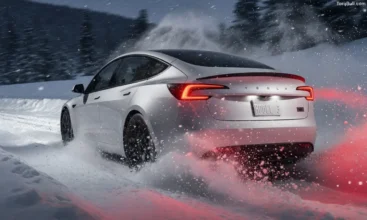
Beyond the acceleration headline, AWD’s most practically valuable real-world advantage over RWD is in winter and wet weather traction — a benefit that is irrelevant to buyers in Florida or Southern California but potentially decisive for buyers in Minnesota, Colorado, New England or the Pacific Northwest.
A rear-wheel drive electric vehicle applies all drive force through the two rear tyres simultaneously. Under hard acceleration on a slippery surface — snow, ice, wet road, loose gravel — the rear tyres can exceed their available grip and the vehicle begins to slide rearward. Tesla’s stability control system intervenes aggressively to reduce the likelihood of this occurring, but the physics of a single-axle drive system on a low-traction surface produce greater inherent slide sensitivity than an equivalent AWD system that divides drive force across all four contact patches.
Tesla Motors Club owners in northern states consistently confirm that the AWD Model 3 with winter tyres handles winter conditions with the confidence of any competent winter-capable vehicle, while RWD owners in the same climates achieve acceptable results specifically when they fit dedicated winter tyres. EV Life’s comparison guide confirms this distinction: the RWD is tailored for dry and mild weather conditions, while AWD ensures superior stability when faced with snowy conditions, slippery surfaces or challenging terrain. The practical guidance from experienced owners is consistent: if you experience meaningful winter weather regularly, AWD is worth the cost difference. If you live where winter means occasional rain and temperatures rarely below freezing, a set of all-season tyres on the RWD provides adequate year-round capability at lower total cost.
The Performance AWD: A Qualitatively Different Vehicle
The Model 3 Performance is not simply a faster version of the Premium AWD — it is a vehicle with genuinely different engineering priorities that make it a qualitatively distinct ownership experience from any other Model 3 configuration.
The Performance trim adds electronically controlled continuously variable dampers that adjust in real time to road conditions and driving inputs. The suspension is lowered approximately 10 millimetres for reduced centre of gravity and improved high-speed stability. Upgraded four-piston front brake calipers provide higher deceleration capability than the standard sliding calipers. Staggered tyre widths — wider at the rear than the front — improve cornering grip at the limit. A Track Mode is available through the touchscreen that allows the driver to adjust power distribution, stability control threshold and regenerative braking independently. TotallyEV’s instrumented testing recorded a 50-to-70-mph time of 1.51 seconds in the Performance versus 1.87 seconds in the Long Range AWD — a 19 percent improvement in mid-range acceleration that transforms the overtaking and highway performance character of the vehicle.
For buyers who want to use the Model 3 for occasional track days, autocross events or simply the most engaging daily driving experience available in the sedan segment at under $60,000, the Performance’s additional engineering justifies its approximately $7,500 premium over the Premium AWD. For buyers who want excellent everyday performance without circuit-day capability, the Premium AWD provides the dual-motor efficiency and traction benefits without the Performance’s compromises in ride comfort and tyre wear rate from the wider, stickier rubber.
Read: Is the Tesla Model 3 Worth It in USA in 2026? The Honest Answer
Tesla Model 3 RWD vs AWD vs Performance — Complete Comparison Chart
| Specification | Standard RWD | Premium RWD | Premium AWD | Performance AWD |
| Starting Price (2026) | ~$36,990 | ~$42,490 | ~$47,490 | ~$54,990 |
| Drive Configuration | Single rear motor | Single rear motor | Dual motor (F+R) | Dual motor (F+R) |
| EPA Range | 321 miles | 363 miles | 346 miles | 309 miles |
| 0–60 mph | ~5.8 sec | ~4.2 sec | ~4.2 sec | 2.9 sec |
| Top Speed | ~125 mph | ~125 mph | ~125 mph | 163 mph |
| Peak Charging Speed | 170 kW | 170 kW | 250 kW | 250 kW |
| Adaptive Suspension | No | No | No | Yes |
| Upgraded Brakes | No | No | No | Yes (4-piston) |
| Staggered Tyres | No | No | No | Yes |
| Track Mode | No | No | No | Yes |
| Winter Traction | Good (with winter tyres) | Good (with winter tyres) | Excellent | Excellent |
| Best For | Budget + maximum range | Range + strong performance | Winter + dual-motor torque | Maximum performance + track |
Charging Speed: The AWD’s Second Hidden Advantage
One performance difference that most buyers overlook in the RWD versus AWD comparison is the peak DC fast charging rate — a specification that affects road trip convenience as meaningfully as range does for drivers who make long highway journeys regularly.
The Standard RWD and Premium RWD configurations charge at a maximum rate of 170 kW at a Tesla V3 Supercharger. The Premium AWD and Performance AWD configurations charge at a maximum rate of 250 kW — the highest rate available on any current Model 3 variant and the rate at which the V3 Supercharger network can deliver approximately 100 miles of range in approximately 14 minutes. The RWD’s 170 kW peak takes approximately 25 to 30 minutes for a 10 to 80 percent charge — longer than the AWD’s approximately 25-minute equivalent at 250 kW. For buyers who make frequent long-distance highway trips, this 80 kW charging rate advantage represents meaningfully shorter Supercharger stops across a full year of road trip driving.
TotallyEV’s comparative review confirms this charging rate difference: “The AWD Model 3s can take up to 250 kW with the RWD models clocking in at 170 kW via a V3 Supercharger.” This difference is not mentioned in the official EPA specifications and is easily overlooked in a price-and-range-focused purchase comparison.
Which Configuration Should You Choose?
The decision between RWD and AWD on the Model 3 resolves cleanly along a framework of three questions: climate, performance priority and budget.
Choose the Premium RWD if you live in a mild-weather climate where meaningful winter conditions are rare, if maximum range and maximum range per dollar are your primary criteria and if strong daily performance at 4.2 seconds to 60 mph is adequate for your needs. At $42,490, the Premium RWD delivers the highest EPA range in the entire Model 3 lineup at a lower price than any AWD configuration — making it the most financially efficient Model 3 for most buyers in Sun Belt states and mild-winter markets.
Choose the Premium AWD if you live in a state with genuine winter weather — Minnesota, Colorado, Michigan, New England, the Pacific Northwest — where AWD’s traction advantage on snow and ice provides meaningful safety and confidence benefits that winter tyres alone cannot fully replicate on a RWD vehicle. The $5,000 premium over the Premium RWD delivers dual-motor torque, 250 kW charging and genuine all-weather capability in a package whose everyday driving dynamics are similar to the Premium RWD.
Choose the Performance AWD if you want the most engaging driving experience available in the Model 3 lineup, if track days or autocross events are a regular part of your driving life, or if 2.9-second acceleration and a genuinely sport-tuned chassis are worth the additional investment over the Premium AWD. The Performance’s adaptive suspension, upgraded brakes, staggered tyres and Track Mode make it a vehicle in a different experiential category from the other Model 3 configurations — not just faster, but fundamentally more engaging at the driving limit.