- Home charging: ~$10–$15 per full charge
- Supercharging: ~$21–$32 for the same charge
- Electricity rates: ~$0.17 vs $0.28–$0.42 per kWh
- Annual difference: ~$675–$942 more on Supercharging
- Home charging is the most cost-effective strategy
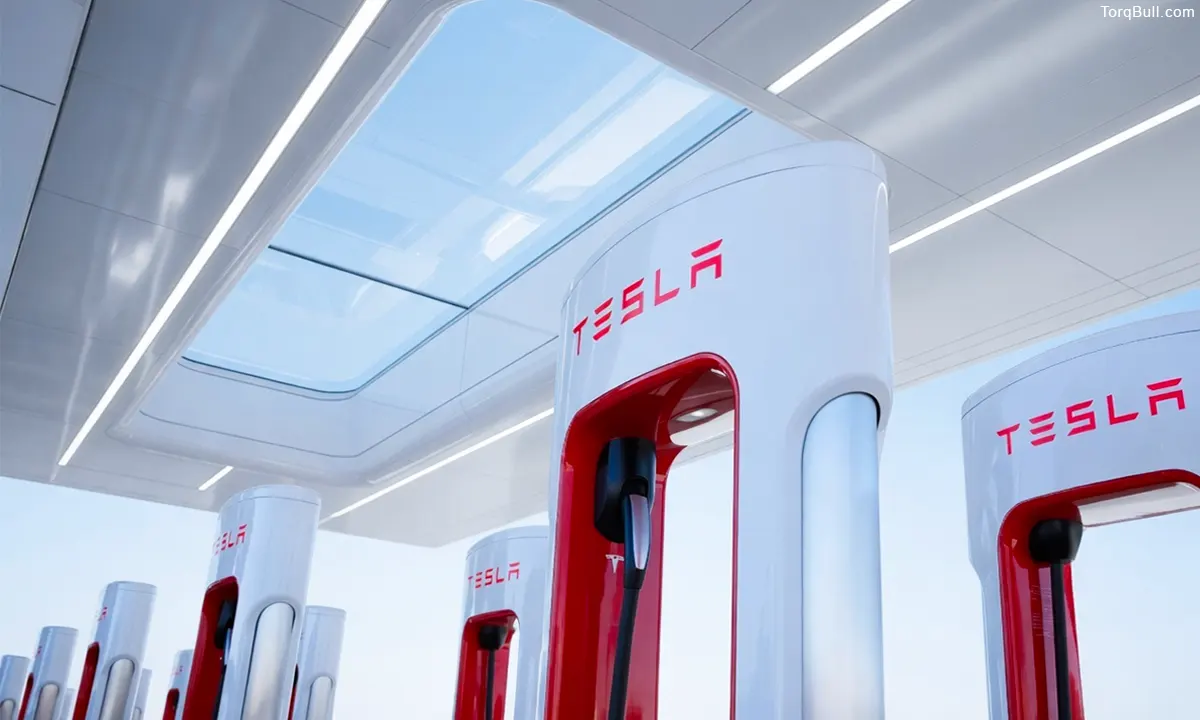
Tesla Supercharger vs Home Charging Cost: The most financially impactful decision a Tesla Model 3 owner makes after purchase is not which insurance company to choose or whether to buy the Full Self-Driving subscription — it is the daily charging decision between home Level 2 and the Tesla Supercharger network. Both deliver electrons to the same battery, but at rates that differ by two to three times per kilowatt-hour, producing an annual cost difference of hundreds to over a thousand dollars depending on how consistently home charging is used versus public Supercharging. Understanding precisely what each method costs in 2026, how those costs vary by state and how to construct the most cost-effective charging strategy for any owner’s specific lifestyle is the knowledge that determines whether a Model 3 owner realises the full financial benefit of EV ownership or spends unnecessarily on energy costs that home charging would eliminate.
Home Charging Cost in 2026: The Complete National Picture
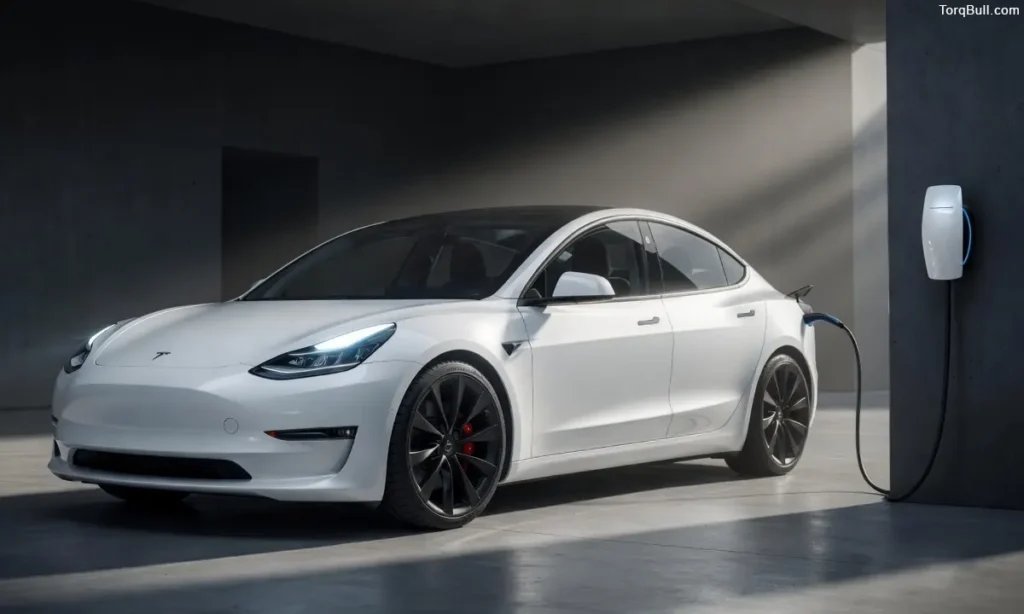
The foundation of any Tesla charging cost comparison is the home electricity rate — the number that, multiplied by the battery capacity, determines the total cost of any home charging session.
The U.S. Energy Information Administration places the national average residential electricity rate at approximately $0.17 per kilowatt-hour in 2026. This figure masks significant state-level variation that produces meaningfully different home charging economics across the country. Louisiana and Oklahoma average $0.11 to $0.12 per kilowatt-hour — the lowest in the continental United States — while California averages approximately $0.29 per kilowatt-hour and Hawaii exceeds $0.35 per kilowatt-hour. The practical implication is that a Tesla Model 3 owner in Louisiana spends approximately $8.25 to fully charge a Long Range battery from empty at home, while the same charge costs approximately $21.75 in California and $26.25 in Hawaii at their respective average residential rates.
At the national average of $0.17 per kilowatt-hour, the Model 3 Long Range’s approximately 75 kilowatt-hour usable battery capacity costs approximately $12.75 to charge from zero to 100 percent — accounting for the 90 percent charging efficiency that means roughly 83 kilowatt-hours of grid energy produces 75 kilowatt-hours of stored battery energy. In real daily use, most owners charge from approximately 20 percent to 80 percent — a 60 percent fill — costing approximately $8.50 at the national average rate. Monthly electricity bill increase for an owner covering 1,000 miles monthly: approximately $40 to $65 at national average rates, compared to $150 to $200 in monthly gasoline costs for a 30 MPG equivalent vehicle.
The cost per mile at home charging is approximately 4.3 cents at the national average rate — one of the lowest per-mile operating costs available from any motorised vehicle in the American market. Owners on time-of-use electricity plans who charge exclusively during off-peak overnight hours at rates of $0.08 to $0.13 per kilowatt-hour achieve per-mile costs of 2.2 to 3.6 cents — approaching the economics of solar-powered charging at $0.04 to $0.06 per kilowatt-hour, which Drive Authority identifies as the lowest achievable charging cost available to any American Tesla owner.
Tesla Supercharger Cost in 2026: Rates, Variability and Hidden Fees
Tesla Supercharger pricing in 2026 is neither as simple nor as uniform as a single national rate figure suggests — and understanding the full pricing structure, including idle fees and peak-hour surcharges, prevents the bill surprises that catch road-tripping owners off guard.
The national average Tesla Supercharger rate in 2026 is approximately $0.28 to $0.42 per kilowatt-hour for most U.S. stations, based on 2025 to 2026 pricing data compiled by Recharged and Drive Authority. At $0.35 per kilowatt-hour — the midpoint of this range — a 60 percent fill on the Model 3 Long Range costs approximately $17.63. A full 10 to 100 percent charge costs approximately $29.05. The range of $0.25 to $0.60 per kilowatt-hour covers the full national distribution, from low-cost rural locations in the Midwest and South to premium urban stations in California, New York and Hawaii where land costs, utility rates and demand charges push pricing to the high end.
Peak-hour pricing — applied during high-demand periods typically between 4 PM and 9 PM on weekdays at busy Supercharger locations — adds approximately $0.05 to $0.10 per kilowatt-hour above baseline rates. Charging a Model 3 at a busy California coastal Supercharger on a Friday afternoon can realistically cost $0.50 to $0.60 per kilowatt-hour — the equivalent of paying approximately $4.90 per gallon in gasoline terms for a 30 MPG vehicle. Idle fees — currently $1.00 per minute or more when a vehicle remains connected after reaching the charge target at a busy station — add meaningfully to session costs if the owner does not monitor the charging session and move the vehicle promptly.
Several Supercharger billing structures exist simultaneously across the network. In most U.S. states, Superchargers bill per kilowatt-hour. In states where per-kilowatt-hour billing for third-party EV charging is not yet legally permitted, Tesla charges per minute at two tiers — a lower rate at or below 60 kilowatts and a higher rate above 60 kilowatts. Per-minute billing disadvantages owners whose vehicles charge at lower rates — for example, an LFP-equipped Standard Range Model 3 charging at 100 kilowatts pays the same per-minute rate as a Long Range AWD charging at 250 kilowatts, despite receiving far fewer kilowatt-hours of energy per minute.
The Annual Cost Difference: Home vs Supercharger for Daily Charging
The financial difference between using home Level 2 charging as the primary daily charging method versus relying primarily on Supercharging is one of the largest annual cost decisions available to any Tesla owner — and one that compounds significantly across a multi-year ownership period.
At 15,000 annual miles and the Model 3’s approximately 0.25 kilowatt-hours per mile consumption, the total annual charging energy requirement is approximately 3,750 kilowatt-hours accounting for 90 percent charging efficiency. At the national average home rate of $0.17 per kilowatt-hour, this costs approximately $638 per year. At the average Supercharger rate of $0.35 per kilowatt-hour, the same 3,750 kilowatt-hours costs approximately $1,313 — a difference of $675 per year. Over five years, this annual difference accumulates to approximately $3,375 in additional charging cost for the owner who relies primarily on Supercharging versus the owner who primarily home-charges.
In high-electricity-rate states, the calculation is different but the home charging advantage persists. A California owner charging at $0.29 per kilowatt-hour at home pays approximately $1,088 annually — still approximately $225 per year less than an average-rate Supercharger session in California, where $0.45 to $0.55 per kilowatt-hour rates are common. The Recharged analysis is direct: Supercharging is priced two to three times higher per kilowatt-hour than home charging in the same state. The comparison always favours home charging financially — Superchargers should be used for their speed and convenience, not their cost.
Read: Best Level 2 Home Charger for Tesla Model 3 With Solar Panels
Tesla Supercharger vs Home Charging — Complete Cost Comparison Chart
| Charging Scenario | Rate Per kWh | Model 3 LR Full Charge (75 kWh) | Cost Per Mile | Annual Cost (15K mi) | 5-Year Total |
| Home (national avg $0.17) | $0.17 | ~$12.75 | ~4.3¢ | ~$638 | ~$3,190 |
| Home (off-peak TOU $0.09) | $0.09 | ~$6.75 | ~2.3¢ | ~$338 | ~$1,688 |
| Home (low-rate state: LA, OK) | $0.11–$0.12 | ~$8.25–$9.00 | ~2.8–3.0¢ | ~$413–$450 | ~$2,063–$2,250 |
| Home (high-rate state: CA) | $0.29 | ~$21.75 | ~7.3¢ | ~$1,088 | ~$5,438 |
| Supercharger (national avg) | $0.35 | ~$26.25 | ~9.3¢ | ~$1,388 | ~$6,938 |
| Supercharger (low-cost rural) | $0.25 | ~$18.75 | ~6.7¢ | ~$1,000 | ~$5,000 |
| Supercharger (peak urban CA) | $0.50–$0.60 | ~$37.50–$45.00 | ~13.3–16.0¢ | ~$2,000–$2,400 | ~$10,000–$12,000 |
| Home solar (net zero cost) | ~$0.05–$0.06 | ~$3.75–$4.50 | ~1.3–1.5¢ | ~$188–$225 | ~$938–$1,125 |
| 80% home + 20% Supercharger | Blended | — | ~5.4¢ | ~$800 | ~$4,000 |
Calculations use 90% charging efficiency. Actual results vary by driving speed, climate and individual billing structures.
How the Supercharger Compares to Gasoline: Is It Still Cheaper?
Despite being two to three times more expensive than home charging, the Tesla Supercharger remains cheaper per mile than gasoline in most American markets — a distinction that matters for owners who frequently travel long distances and compare their Supercharger costs to the fuel costs of a hypothetical gasoline alternative.
At $0.35 per kilowatt-hour and the Model 3’s 0.25 kilowatt-hours per mile consumption, the Supercharger cost is approximately 9.7 cents per mile. A 30 MPG gasoline vehicle at the national average of $3.08 per gallon costs approximately 10.3 cents per mile — slightly more than a mid-rate Supercharger session. A 25 MPG gasoline vehicle costs approximately 12.3 cents per mile — noticeably more than a typical Supercharger session. A 35 MPG vehicle costs approximately 8.8 cents per mile — slightly less than the average Supercharger rate. The Supercharger-versus-gasoline comparison is therefore closer than most Tesla owners expect: the Supercharger’s advantage over gasoline at average rates is modest, while the home charging advantage is dramatic.
Recharged’s summary captures this precisely: Supercharging is competitive with gasoline on a cost-per-mile basis for many owners, but it is nowhere near as cheap as home charging. The distinction between the two represents the entire financial case for home EV charging — and the reason why the Tesla Supercharger network should be understood as a convenience and road trip tool rather than a substitute for home charging economics.
Read: Tesla Model 3 Charging Cost Per Mile In USA. Complete 2026 Cost Analysis
The Optimal Strategy: Combining Home Charging and Supercharging
The charging strategy that minimises annual cost while maximising convenience combines home Level 2 charging for 80 to 90 percent of annual mileage with Supercharger access for the remaining 10 to 20 percent covering road trips and occasional convenience top-ups.
An owner who home-charges 80 percent of their 15,000 annual miles at $0.17 per kilowatt-hour and Supercharges the remaining 20 percent at $0.35 per kilowatt-hour pays a blended annual charging cost of approximately $800 — meaningfully below the $1,313 full-Supercharger-reliance cost but still modestly above the $638 full-home-charging cost. This blended approach reflects the realistic charging profile of most American Model 3 owners with home charging access and occasional road trip use.
Time-of-use electricity plan enrolment pushes the home portion of this blended cost down by 30 to 50 percent for owners in markets where off-peak overnight rates of $0.08 to $0.13 per kilowatt-hour are available — reducing the 80-percent-home portion’s annual cost from approximately $510 to approximately $270 and the total annual blended cost to approximately $560 to $600. The combination of TOU off-peak home charging for daily use and Supercharger access for road trips produces the most financially and practically optimal Tesla Model 3 charging profile available to most American owners in 2026.