- Model 3 sedan: $38,380 with up to 363 miles range
- Mustang Mach-E SUV: $39,840 with up to 320 miles range
- Tesla offers stronger efficiency and charging network
- Ford delivers more cargo space and practicality
- Choice depends on sedan efficiency vs SUV versatility
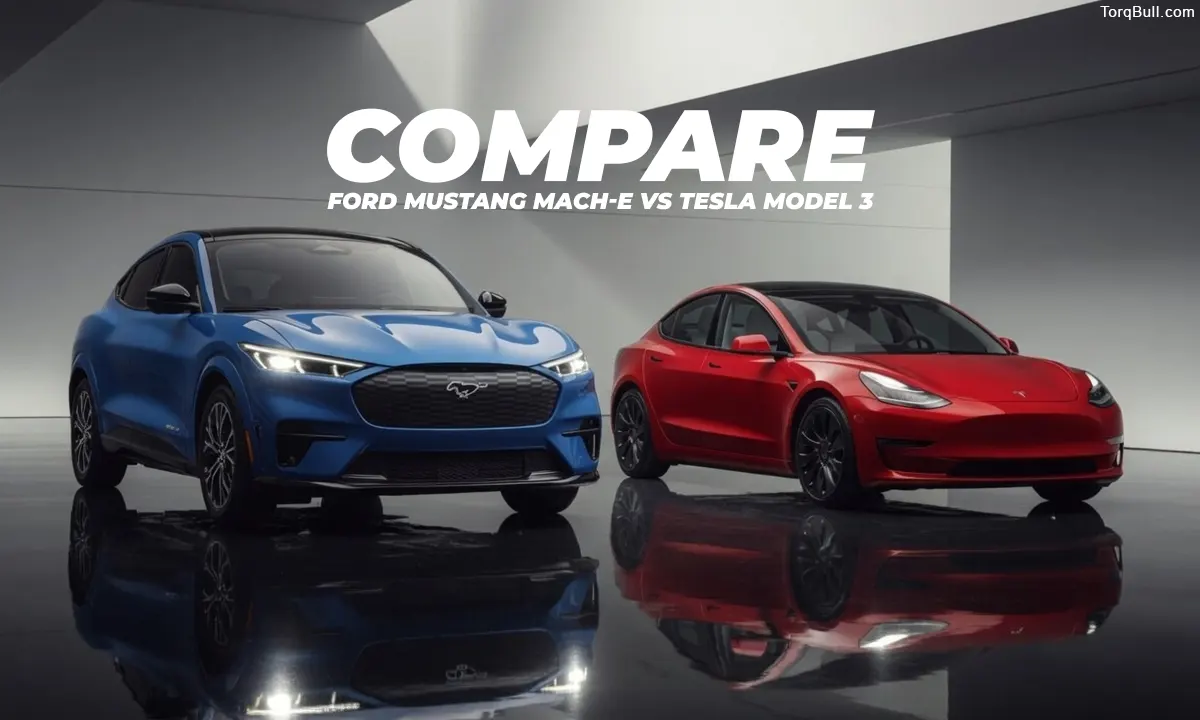
Tesla Model 3 vs Ford Mustang Mach-E: The Tesla Model 3 versus Ford Mustang Mach-E is one of the most commonly cross-shopped EV comparisons in the American market — and also one of the most frequently confused, because these two vehicles are not as directly comparable as their similar price points suggest. The Model 3 is a compact sedan whose low ride height, four-door body and minimal cargo volume prioritise range, efficiency and performance above the practical utility that most American families require from a primary vehicle. The Mustang Mach-E is a compact electric crossover SUV whose taller ride height, hatchback body and substantially larger cargo volume serve the same buyers who would otherwise purchase a conventional compact SUV — a much larger segment of the American market. Understanding which vehicle each of them is designed to serve — and which of those roles matches any specific buyer’s actual needs — is more important than comparing any individual specification in isolation. This guide makes that understanding complete.
Price and Value: Nearly Identical at the Starting Line, Very Different After Incentives
The base price comparison between the Model 3 and Mach-E is among the closest between any two EV competitors in the American market in 2026 — separated by only $1,460 at the entry level.
The 2026 Tesla Model 3 Standard RWD starts at $38,380 including destination, according to TrueCar’s comparative data. The Ford Mustang Mach-E Select starts at $39,840 — $1,460 more than the base Model 3. At equivalent feature levels — AWD configuration, larger battery and mid-range trim — the two vehicles are priced within $2,000 to $4,000 of each other across most comparable configurations.
The federal EV tax credit creates a meaningful pricing divergence. The Tesla Model 3 qualifies for the $7,500 federal EV credit as a domestically assembled vehicle meeting battery sourcing requirements, reducing the effective base price to approximately $30,880 for qualifying buyers. The Ford Mustang Mach-E currently does not qualify for the federal EV tax credit, as its battery sourcing configuration does not meet the Inflation Reduction Act’s critical mineral requirements. This $7,500 credit difference — applied to vehicles starting within $1,500 of each other — creates an effective price gap of approximately $9,000 in the Model 3’s favour for buyers who qualify for the point-of-sale credit transfer.
Ford’s Mach-E partially offsets this disadvantage through included standard features that the Model 3 charges extra for. Apple CarPlay and Android Auto are standard on all Mach-E trims — a meaningful inclusion for buyers who rely on smartphone integration for navigation, music and communication. The Mach-E also provides substantially more cargo volume as standard, without requiring the buyer to select additional configurations.
Body Style: The Most Fundamental Difference in This Comparison
Before comparing any specification, the most important distinction between these vehicles requires explicit acknowledgment: the Tesla Model 3 is a sedan and the Ford Mustang Mach-E is a crossover SUV — a body style difference that affects cargo volume, ride height, passenger headroom, towing capability and the daily ownership experience in ways that no performance or range figure can compensate for.
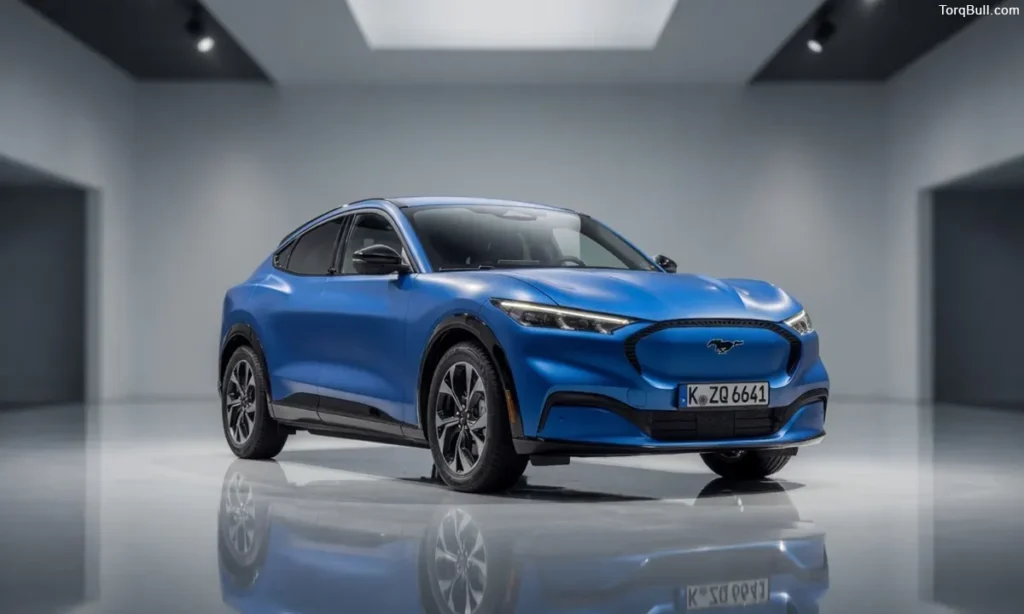
The Mach-E’s crossover body provides 29.7 cubic feet of cargo space with seats up, expanding to 59.7 cubic feet with seats folded — making it genuinely practical for families, dog owners, outdoor enthusiasts and anyone who regularly transports large items. The additional 81-litre front trunk supplements the main cargo area. The taller ride height — 182 millimetres above the Model 3 — provides the commanding seating position and ease of entry and exit that has made compact SUVs the dominant vehicle category in the American market. The Mach-E’s fully flat floor, facilitated by its dedicated EV platform, provides genuine three-adult rear seat accommodation without the tunnel intrusion that conventional vehicles impose.
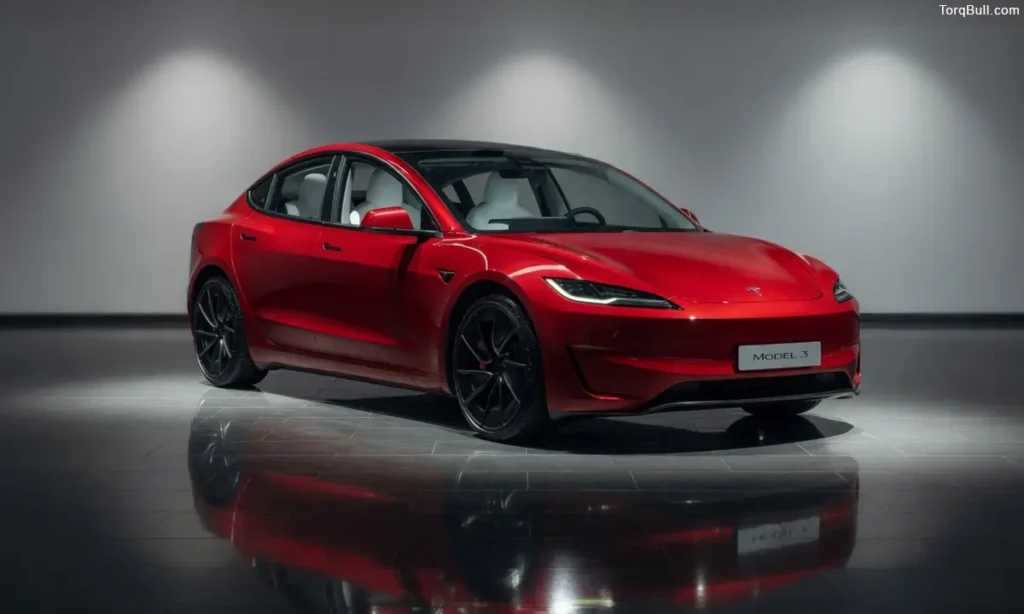
The Tesla Model 3’s sedan body provides 23 cubic feet of rear cargo — substantially less than the Mach-E — plus a 3.1 cubic foot front trunk for a combined 22.9 to 26 cubic feet depending on configuration. The Model 3’s lower ride height and sedan proportions prioritise aerodynamic efficiency and driving dynamics over the practical cargo utility that makes the Mach-E more versatile for family use. For buyers who need to transport large cargo regularly, the Mach-E’s advantage in this category may be the single most decisive factor in the comparison — one that no range or performance specification can overcome.
Range and Efficiency: Model 3’s Clear Technical Advantage
Range is the category where the Tesla Model 3 holds its most objectively significant advantage over the Mach-E — reflecting the sedan body’s aerodynamic efficiency benefit and Tesla’s powertrain optimisation.
The 2026 Tesla Model 3 Premium RWD achieves 363 miles of EPA-rated range — the highest in the Model 3 lineup. The base Standard RWD achieves 321 miles. Even the Performance AWD retains 309 miles of EPA range despite its dual-motor, high-output configuration.
The Ford Mustang Mach-E Extended Range RWD achieves up to 320 miles of EPA-rated range — the best in the Mach-E lineup. The Extended Range AWD achieves 300 miles. The GT and Rally performance variants drop to 280 and 265 miles respectively due to their heavier drivetrain configurations. The Mach-E Standard Range variants achieve 250 miles RWD and 230 miles AWD — meaningfully below any Model 3 configuration at comparable trim levels.
The range gap — 43 miles between the best Mach-E and the best Model 3 at equivalent AWD configurations — is real and accumulates in practical terms across long-distance driving. The Mach-E’s crossover body and greater frontal area create higher aerodynamic drag than the Model 3’s sedan profile, and the crossover’s greater weight — typically 200 to 300 pounds heavier than a comparable Model 3 configuration — reduces efficiency per kilowatt-hour. Car Connection’s 2025 analysis confirms both vehicles are standouts for quiet cabins and good highway rides following the Model 3 Highland refresh, but efficiency remains firmly in the sedan’s favour.
One meaningful recent Mach-E improvement: the entire 2025 lineup received a standard heat pump for climate management — addressing one of the vehicle’s previous cold-weather weaknesses and narrowing the winter range retention gap between the Mach-E and the heat-pump-equipped Model 3 Highland. Car Connection specifically notes this improvement means real-world winter results will be closer to rated figures than in previous model years.
Read: Tesla Model 3 Resale Value After 5 Years. 2026 Data From 15 Million Vehicles
Performance: Tesla Wins the Spec Sheet, Mach-E Offers More Engagement
Performance is the category where this comparison splits most clearly along the priorities that define each vehicle’s character.
The Tesla Model 3’s performance figures are remarkable across all configurations. The base Standard RWD produces an estimated 286 horsepower and reaches 60 mph in 5.8 seconds. The Performance AWD produces 510 combined horsepower and reaches 60 mph in 2.9 seconds — one of the fastest 0-60 times available in any production sedan at any price.
The Ford Mustang Mach-E’s performance range is similarly broad. The base single-motor RWD with the standard battery produces 264 horsepower and reaches 60 mph in approximately 6.3 seconds. The Extended Range AWD produces 365 horsepower. The GT and Rally high-performance variants produce 480 horsepower and reach 60 mph in approximately 3.3 to 3.4 seconds. On the Mach-E GT versus Model 3 Performance comparison — the two vehicles’ respective performance flagships at roughly comparable prices — the Mach-E GT’s 3.3-second 0-60 is fractionally slower than the Model 3 Performance’s 2.9 seconds, while the Mach-E offers more cargo utility at the same performance level.
Auto Express’ comparison specifically notes that the Mach-E provides “better steering and body control” than the Model 3 — the crossover rolls less through corners than intuition about taller vehicles would suggest, and the steering communicates more clearly about front wheel behaviour. Car Connection’s analysis adds that the Mach-E’s three driving modes — Whisper, Active and Unbridled — provide meaningfully different character tuning, with Whisper mode described as the most satisfying for everyday driving. For buyers who want spirited handling alongside practical utility, the Mach-E GT represents a genuinely capable performance crossover.
Charging: Model 3 Wins Decisively on Network Access
Charging infrastructure access is the category where the Model 3’s Supercharger network advantage is most practically significant — and most decisive for road-tripping owners.
The Tesla Model 3 charges at up to 250 kW at V3 Supercharger stations, adding approximately 100 miles of range in 14 minutes. The Supercharger network’s approximately 2,000 US stations with consistent reliability and native integration with the Model 3’s navigation system makes road trip planning straightforward and predictable.
The Ford Mustang Mach-E uses CCS charging at up to approximately 150 kW peak DC fast charging rate — meaningfully slower than the Model 3’s maximum, though this is rarely a practical limitation for most charging sessions which occur at 50 to 150 kW regardless of the vehicle’s maximum capability. The Mach-E’s 10 to 80 percent charge time at 150 kW is approximately 38 minutes versus the Model 3’s approximately 25 to 30 minutes at a Supercharger — a 10-minute difference that compounds across multiple road trip charging stops. Ford’s charging network access covers Electrify America, ChargePoint and other CCS networks, with NACS adapters available for Supercharger access, though the integration is less seamless than native Tesla use.
Read: Hidden Costs of Owning a Tesla Model 3 In USA. 7 Expenses Most Buyers Never Calculate Before Signing
Technology and Interior: A Philosophy Split
Both vehicles offer thoughtful technology packages, but with fundamentally different approaches that reflect each brand’s design philosophy.
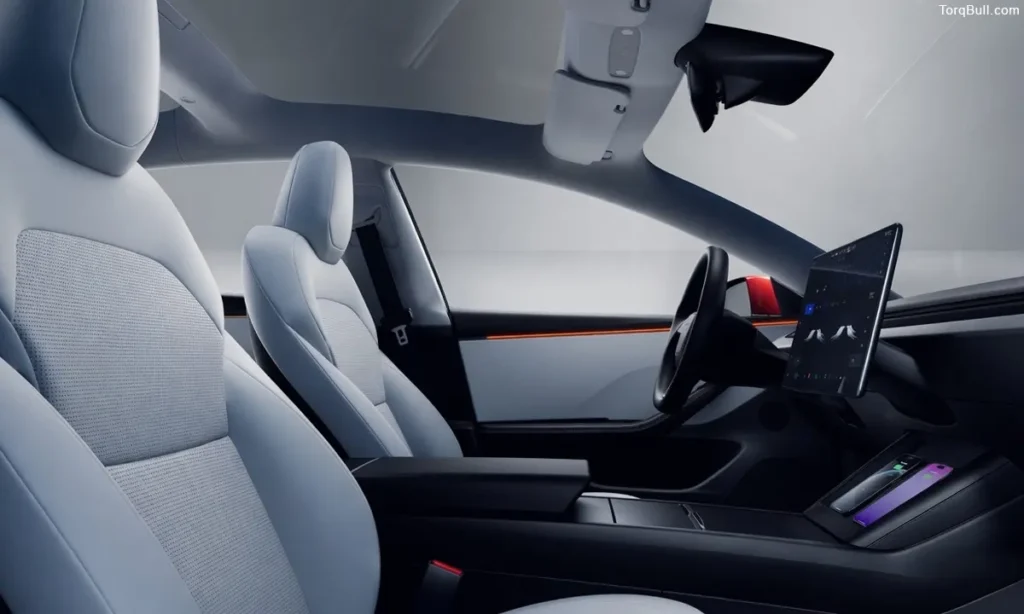
The Tesla Model 3 centres on its 15.4-inch touchscreen — the single point of control for climate, navigation, entertainment and most vehicle functions. Over-the-air software updates deliver new features monthly and have added capabilities including Grok AI voice assistant in the 2026 Spring Update. Autopilot is standard across all Model 3 variants. Apple CarPlay and Android Auto are not available.
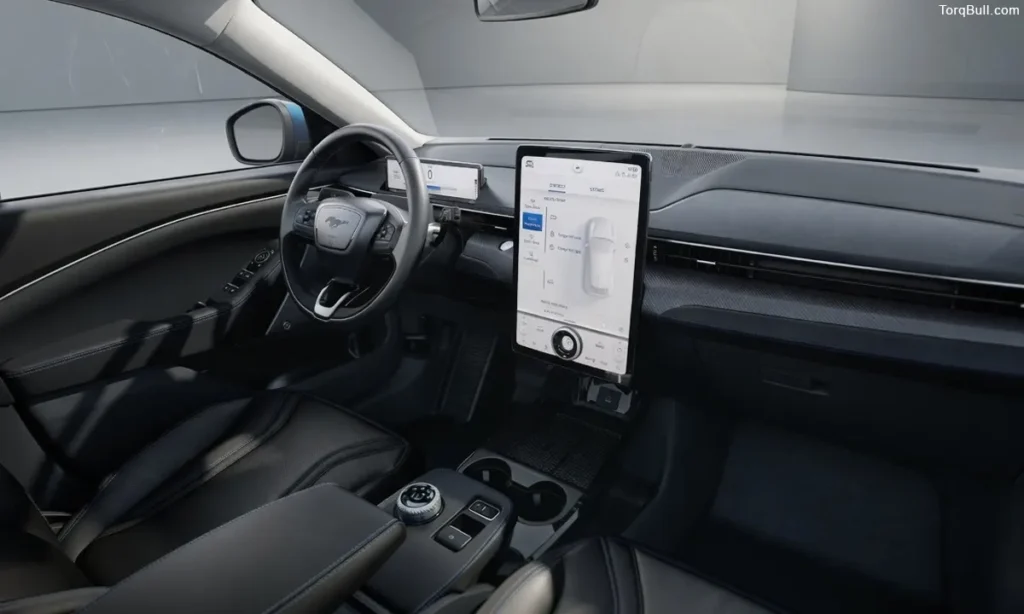
The Ford Mustang Mach-E features Ford’s SYNC 4A system with a 15.5-inch touchscreen alongside physical climate control buttons that many drivers find safer and more intuitive than the Model 3’s touchscreen-only approach. Apple CarPlay and Android Auto are standard across all Mach-E trims — a meaningful daily convenience advantage. Ford also provides over-the-air update capability, though the frequency and scope of Mach-E updates are less comprehensive than Tesla’s deployment cadence. The Mach-E’s cabin uses soft-touch surfaces throughout and provides a more conventional premium feel than the Model 3’s stark minimalism.
Tesla Model 3 vs Ford Mustang Mach-E — Complete Comparison Chart
| Category | Tesla Model 3 (2026) | Ford Mustang Mach-E (2025) | Winner |
| Starting Price (before incentives) | $38,380 | $39,840 | Model 3 (slight) |
| After Federal EV Credit | ~$30,880 | ~$39,840 (no credit) | Model 3 (significant) |
| Body Style | Sedan | Crossover SUV | Depends on need |
| EPA Range (best config) | 363 miles (Premium RWD) | 320 miles (Extended RWD) | Model 3 |
| Cargo Volume (seats up) | ~23 cu ft | 29.7 cu ft | Mach-E |
| Cargo Volume (seats down) | N/A (no fold) | 59.7 cu ft | Mach-E |
| Front Trunk | 3.1 cu ft | 81 litres (~2.9 cu ft) | Tie |
| 0–60 mph (base) | 5.8 sec | 6.3 sec | Model 3 |
| 0–60 mph (performance) | 2.9 sec (Performance) | 3.3 sec (GT/Rally) | Model 3 |
| Peak DC Charging | 250 kW | ~150 kW | Model 3 |
| Charging Network | Supercharger (2,000 US) | CCS + NACS adapter | Model 3 |
| Apple CarPlay / Android Auto | No | Yes (standard) | Mach-E |
| Rear Seat Headroom | 37.7 inches | More (crossover body) | Mach-E |
| Rear Legroom | 35.2 inches | 35.9 inches | Tie |
| Autopilot / ADAS | Autopilot standard | Ford Co-Pilot360 standard | Tie |
| Heat Pump (winter efficiency) | Yes (Highland gen) | Yes (standard in 2025) | Tie |
| 5-Year Depreciation | ~57% | ~65% (GT) | Model 3 |
| NHTSA Safety Rating | 5 Stars | 5 Stars | Tie |
The Verdict: Which Vehicle Matches Your Life?
The Model 3 is the correct choice for buyers who primarily want a sedan — who are comfortable with the lower ride height, the limited cargo volume and the touchscreen-centric ownership experience — and who drive significant annual mileage where the range advantage, Supercharger network reliability and federal EV credit savings compound into a substantial total cost of ownership advantage. The Model 3 is also the correct choice for buyers whose primary use case is solo commuting and occasional road trips, where its efficiency advantage is expressed in fewer charging stops and lower annual energy costs.
The Mach-E is the correct choice for buyers who need the practical utility of a compact SUV — meaningful cargo space, a higher ride height, ease of loading for families with children or outdoor gear — alongside the transition to EV ownership. It is also the better choice for buyers who use Apple CarPlay or Android Auto as a primary navigation and entertainment interface and who want physical climate controls alongside a touchscreen infotainment system. Car Connection’s conclusion is balanced and accurate: both are among the best-rated EVs in their respective body styles — the Mach-E was Best Car to Buy in 2021 and the Model 3 earned the same recognition from its sister publication in prior years — and neither represents a compromise for its target buyer.
The comparison ultimately resolves to a single question: sedan or SUV? If the answer is sedan, the Model 3 is better in every technical specification that matters. If the answer is SUV — which is the answer for the majority of American primary vehicle buyers — the Mach-E is the more practical and equally well-engineered answer.